Drafted 31 March, updated 12 April 2025
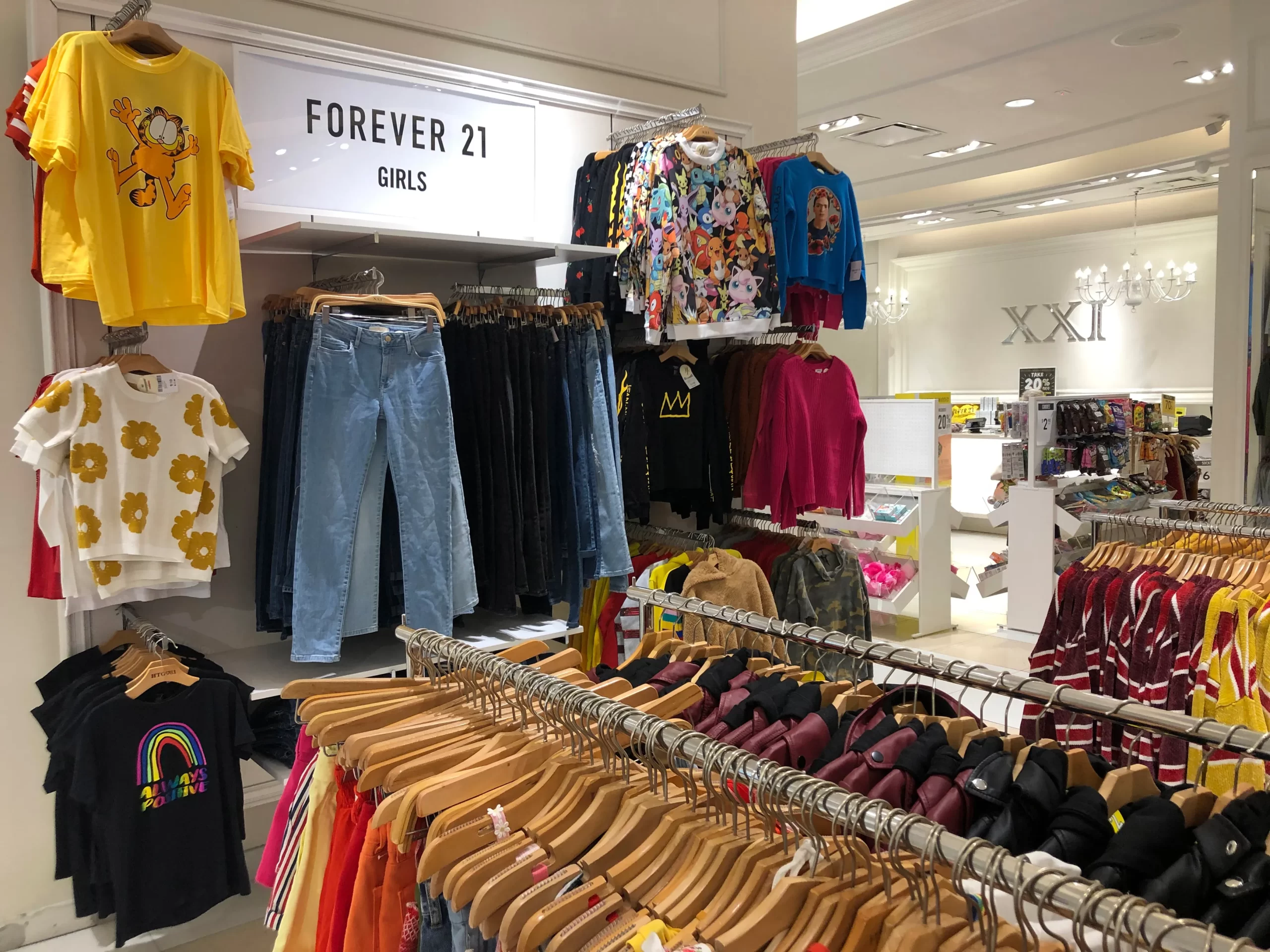
Forever 21 was young once and ready to change the world, one incredibly cheap top at a time. It helped popularise fast fashion in the 2000s by making imitations of catwalk looks and then selling them cheaply in chaotic mall shops. Along with H&M, Zara and Topshop, he sparked much discussion about how ecologically indefensible fast fashion was, with viral videos showing fast fashion waste piled up in real mountains(climbed by goats!) along the coast of Ghana.
So it must be a good thing that Forever 21 is bankrupt and closing about 350 shops, right? Maybe this latest generation of under-21s is finally done chasing empty trends with disposable looks? Surveys show that 63% of Gen Z prefer to support brands that share their values and 72% consider sustainability an important factor in their purchasing decisions.
Yet despite the chaos that fast fashion has brought to the planet, particularly in the global south, nothing has stopped it, or is likely to stop it. Forever 21 died not because of increased consumer awareness, but because of profits: it could not keep up with even faster fashion. In its bankruptcy statement, it blames competition from its online-only competitors Shein and Temu, both with roots in China – sellers of ultra-fast fashion – for its demise.
It’s not that people don’t want to be ethical consumers. It is just that sustainability in fashion is not something most people can afford if they still want to dress in the latest fashion.
“Unfortunately, I think it’s pretty attractive to buy a $7 pair of jeans if you’re not rich,” Ken Pucker, professor of practice at Tufts University’s Fletcher School and former chief operating officer of Timberland, told me last year…
Founded in 1984 in Los Angeles, Forever 21 thrived on consumer impatience, giving people what they wanted before they even knew they wanted it. Clothing at traditional retailers could take 10 months to go from sketch to shop. Forever 21 took a month
Buyers were fascinated by the pace and price. So how did these clothes get made so cheaply? A 2016 U.S. Department of Labor investigation found that some California garment workers employed by Forever 21’s suppliers were earning only $4.50 an hour (the state minimum wage was $10) putting labels and other trim on tops in a basement in downtown Los Angeles…

Shein did not win by being more careful with his workers. The 2022 documentary ‘Untold: Inside the Shein Machine’ by the British channel Channel 4 included footage of employees working up to 18 hours a day making hundreds of garments with a daily wage of only $20, which could drop to $7 if they made mistakes, with one day off per month. In May 2024, an investigation by the Swiss watchdog group Public Eye found similar conditions at Shein’s suppliers.
Shein, which tried to go public in London after efforts in the US were thwarted, in part due to forced labour issues, pledged to clean up working conditions. Following Public Eye’s investigation, the company admitted to cases of child labour in its supply chain. And while the company had 5,800 suppliers in 2023, it performed fewer than 4,000 audits.
As the largest polluter of fast fashion, Shein sold about 1.3 million new styles in 2022. (Zara sold about 35,000.) Shein almost doubled its carbon emissions from 2022 to 2023 to 18.4 million tonnes, which is more than the annual emissions of four coal-fired power plants. (Zara’s owner Inditex produced about the same. Nike produced less, with 10.5 million tonnes)…
Nowadays, 44% of Gen Z in the US make at least one purchase from Shein every month. But don’t blame the young: having been weaned on Forever 21, Temu ‘s most likely buyers are millennials, followed by Generation X. In this uncertain economy, it’s not just what people want.
It is all that many Americans can afford.
Read : US-China trade war: US tripling of duties on small parcels deals further blow to Shein and Temu
And after the duties and the inflation they will generate, it will be even worse. Under Temu in Italy tries to pass itself off as Italian.