by Pasquale Raicaldo
Autumn and winter too mild, crops sprout early. And even in Italy – from Sicilian oranges to radicchio in the North-East – it is no longer time for certainty: ‘Tough times for agriculture, but genetics can be a valuable ally’
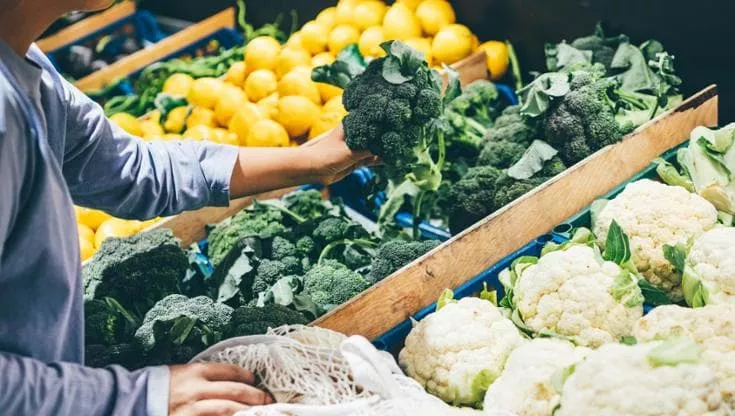
The latest alarm comes from the UK, where a spring without broccoli, cauliflower and other Brassicaceae is announced. The finger is pointed once again at climate change: too mild autumn and winter temperatures, with crops sprouting early. And the Guardian ‘s report also recounts the difficulty of integrating the market with the continent’s crops, where flooding has prevented many farms from planting in time for the spring harvest. But the point, points out the Met Office, the UK’s national weather service, of the Department for Business, Energy and Industrial Strategy, is that such cases will become increasingly frequent due to the ‘clear trend of rising average winter temperatures in the UK, a direct effect of human-induced climate change’.
Less severe winters, increasingly frequent extreme rainfall: agriculture has to deal with climate schizophrenia. Agronomist Hannah Croft, who works with the Riverford company, can only shrug: ‘We have seen losses in UK cauliflower harvests due to significant rainfall in the autumn, while mild temperatures have brought winter cauliflowers in early’. Guy Barter, a horticulturist with the Royal Horticultural Society, said he was surprised by the early ripening of cauliflowers: the harvest was brought forward by as much as six months in his Surrey plot. “We planted them at the usual time,” he explains, “but they grew a lot during the wet months of July and September and during a particularly mild autumn.
Shrinking Sicilian oranges
The unpredictability of harvest times for vegetables and fruit is a circumstance that has to be reckoned with at all latitudes. “Excessive rainfall has caused problems in the radicchio harvest in the Treviso area, while the drought in Sicily has resulted in, for example, the harvesting of small-calibre oranges, which are much less appreciated, wrongly, by consumers, and there is a consistent reduction in the production of artichokes,” notes Lorenzo Bazzana, Coldiretti economic manager. “And there are many unknowns linked to next spring, when in recent years sudden frosts and hailstorms, with significant temperature changes, have caused damage to plants that have just come out of their vegetative rest period.
As early as 2022: Stefano Mancuso: “Plants under stress are getting smaller”[/vc_column_text]