[vc_column_textWalmart captures huge grocery share but Amazon remains the lowest-priced online retailer
Following Walmart’s latest quarterly earnings report, which revealed that grocery categories did particularly well during the third quarter, Numerator revealed that Walmart has captured 21.2% of grocery market share over the past year. This far outpaced grocery retailers such as The Kroger Co., at 9.3%; Costco Wholesale, at 8.5%; Albertsons Cos., at 5.1%; and Publix Super Markets, at 4.2%
One of the reasons for this growth is Walmart’s low prices, mainly because inflation-weary consumers are spending their money where the best deals are, and discounter Walmart has been able to offer them.
“Providing low prices every day to our customers and members remains a priority and we continue to lower prices in the United States across our assortment of national brands and private labels,” said John David Rainey, EVP, CFO of Walmart during the company’s earnings call. “During the quarter, we recorded price reductions on approximately 6,000 items in our assortment, including approximately 3,000 items in the grocery sector.”
The fact that, in the late 1980s, Walmart made a turn towards groceries gives the company an atout that Amazon failed to realise even after its purchase of Whole Foods in 2017.
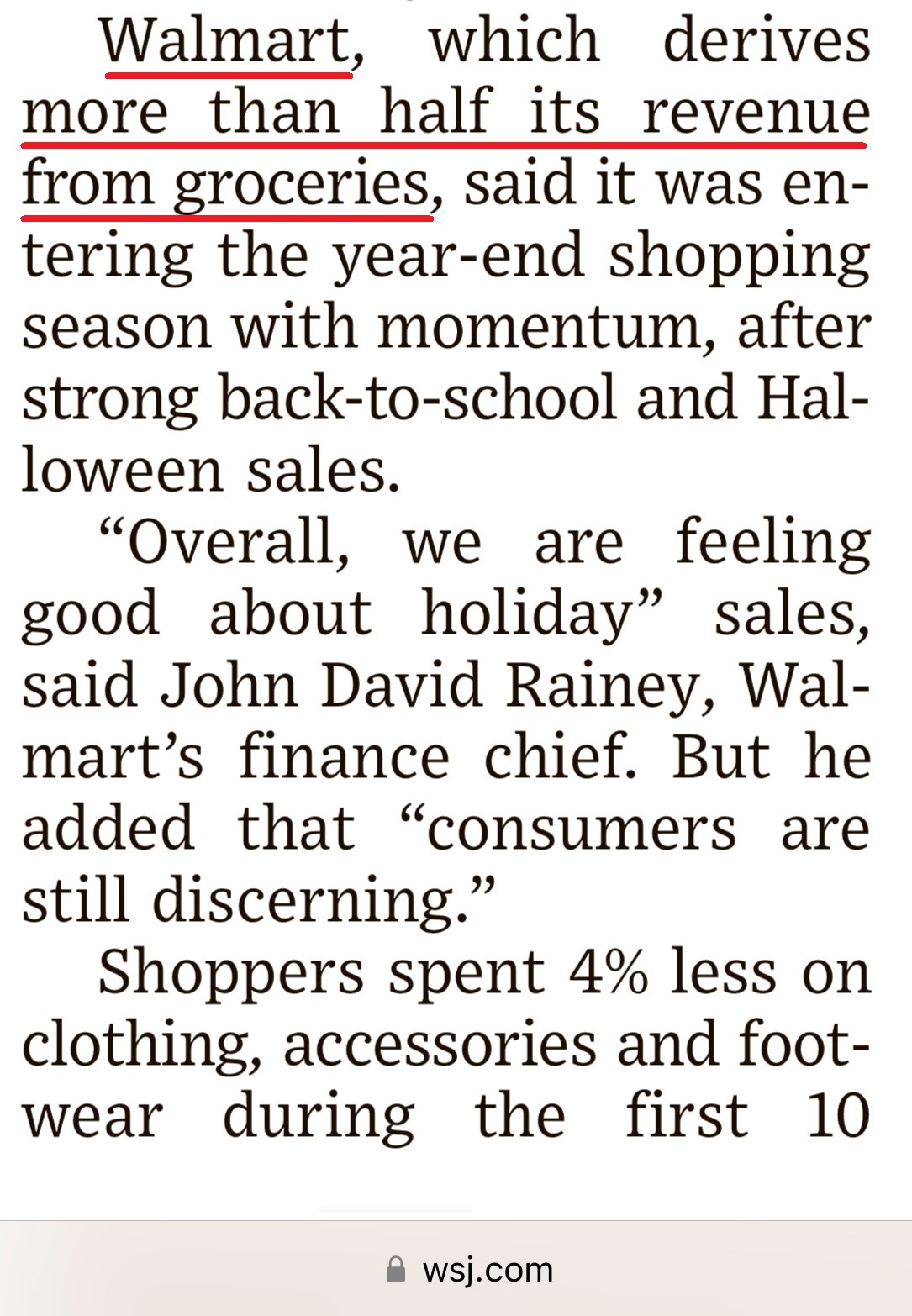
Today, more than half of Walmart’s sales are in packaged food (groceries, The Wall Street Journal 25 November 2024). This is no small advantage because non-food is not falling behind due to inflation.
While Walmart is popular, an independent study by Profitero found once again that Amazon offers the lowest online prices compared to all major US retailers. The annual ‘Price Wars’ study, which compares the online prices of over 13,000 products from 22 major US online retailers, showed that Amazon is once again the leader, with an average price advantage of 14% over its rivals. However, competitors have closed the gap compared to last year, when Amazon had a price advantage of 16%.
Amazon was found to offer the lowest prices in all 15 product categories analysed by the study, including baby, beauty, packaged food and beverages, health and personal care, household items, pet supplies, vitamins and supplements.
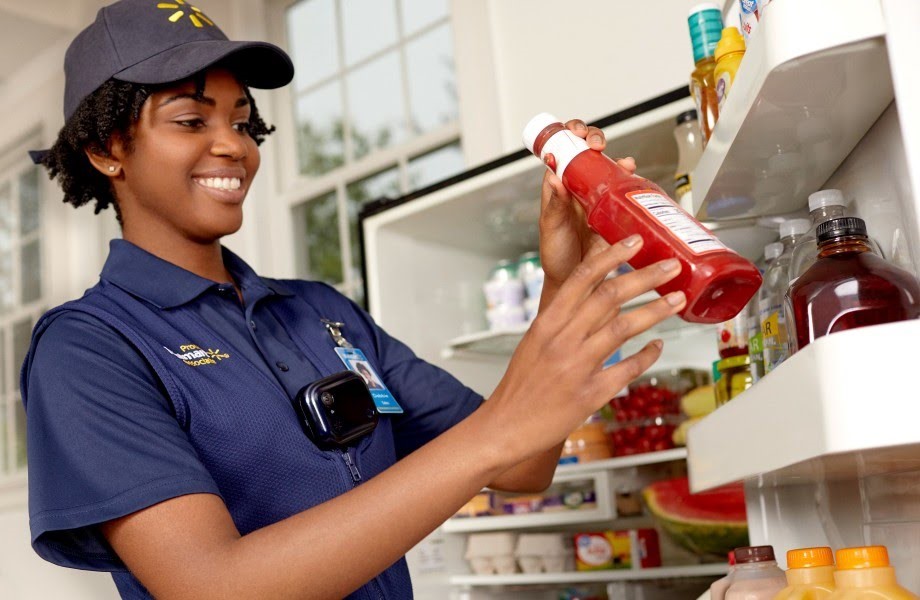
But, most likely Amazon – despite this supremacy – has a much lower market share in groceries than the supermarkets mentioned above, not least because Amazon, for example, cannot reach the fridges in 45 million American homes, as Walmart does.