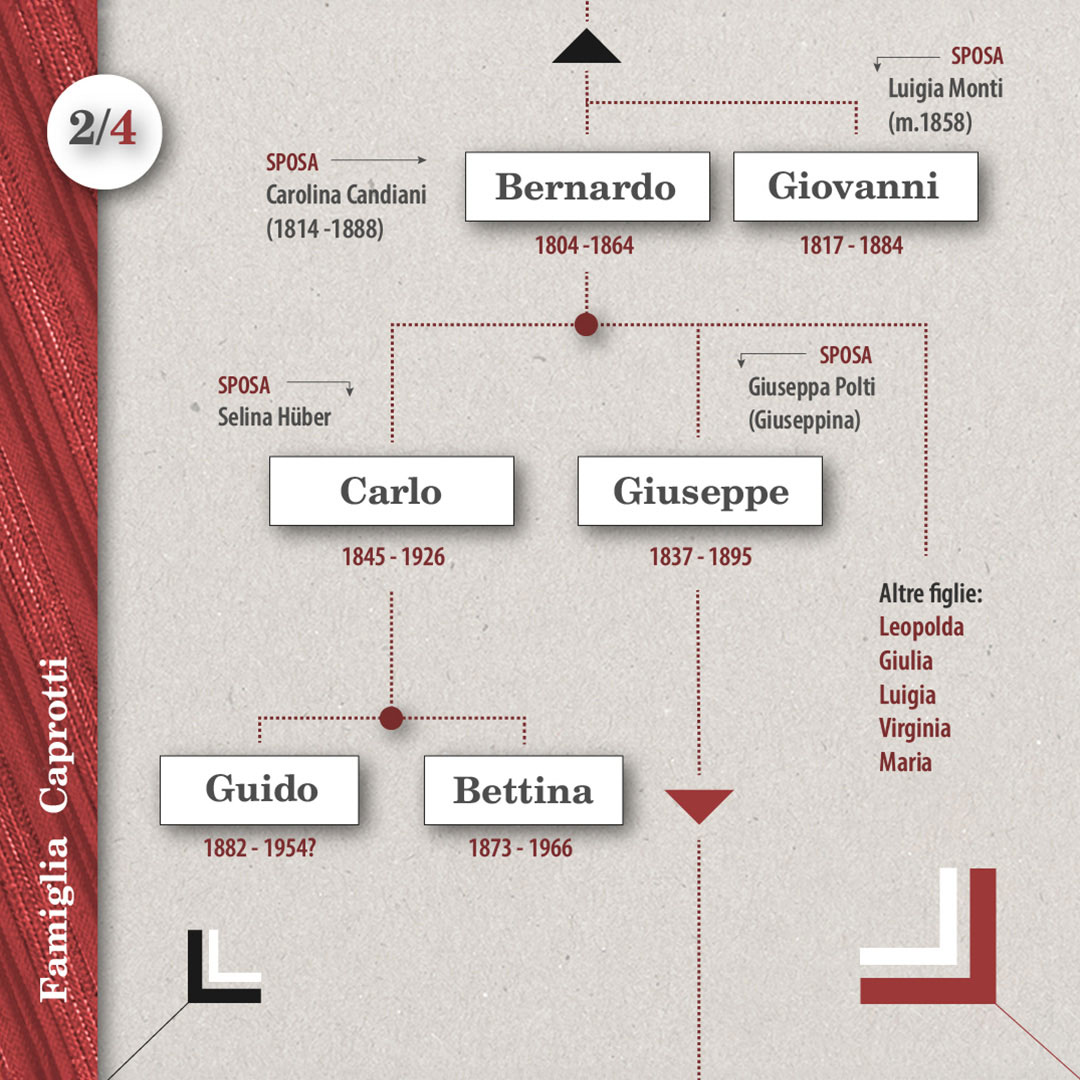
When their father Bernardo died in 1864, the company passed to his two sons, Giuseppe and Carlo. The latter, however, was still a minor, so for the first few years it was Giuseppe alone who managed it. In 1868, having liquidated the inheritance of their mother and sisters, the two brothers decided to keep all the assets left to them by their father, including Caprotti, in common for nine years. And this decision was absolutely necessary in order to be able to deal with the many problems that the national and international contingencies of the period, mainly with regard to the supply of raw materials, presented to every production entity that was closely dependent on them.
Moreover, the company is still based on an almost pre-industrial production system: a few simple machines, many warehouses, workers-farmers weaving mainly at home. In 1866, there were about 1500 of them. Giuseppe and Carlo embarked on a widespread project to mechanise the company in order to bring it up to market competitiveness.
However, when Carlo, in 1872, chose to break away from the company much earlier (only three years after the agreement) and, as a result, asked for his share to be liquidated, Giuseppe had to take on a debt of 150,000 lire to be paid in seven instalments up to 1875, forcing him to mortgage his agricultural property (ROMANO, p. 27). The financial commitment is very heavy, Caprotti must forcibly apply for a loan, which is granted to him on a nine-year basis by the devoted employee Mauro Rho, who thus finds himself a partner in the company (obviously with decision-making power secondary to Giuseppe’s).
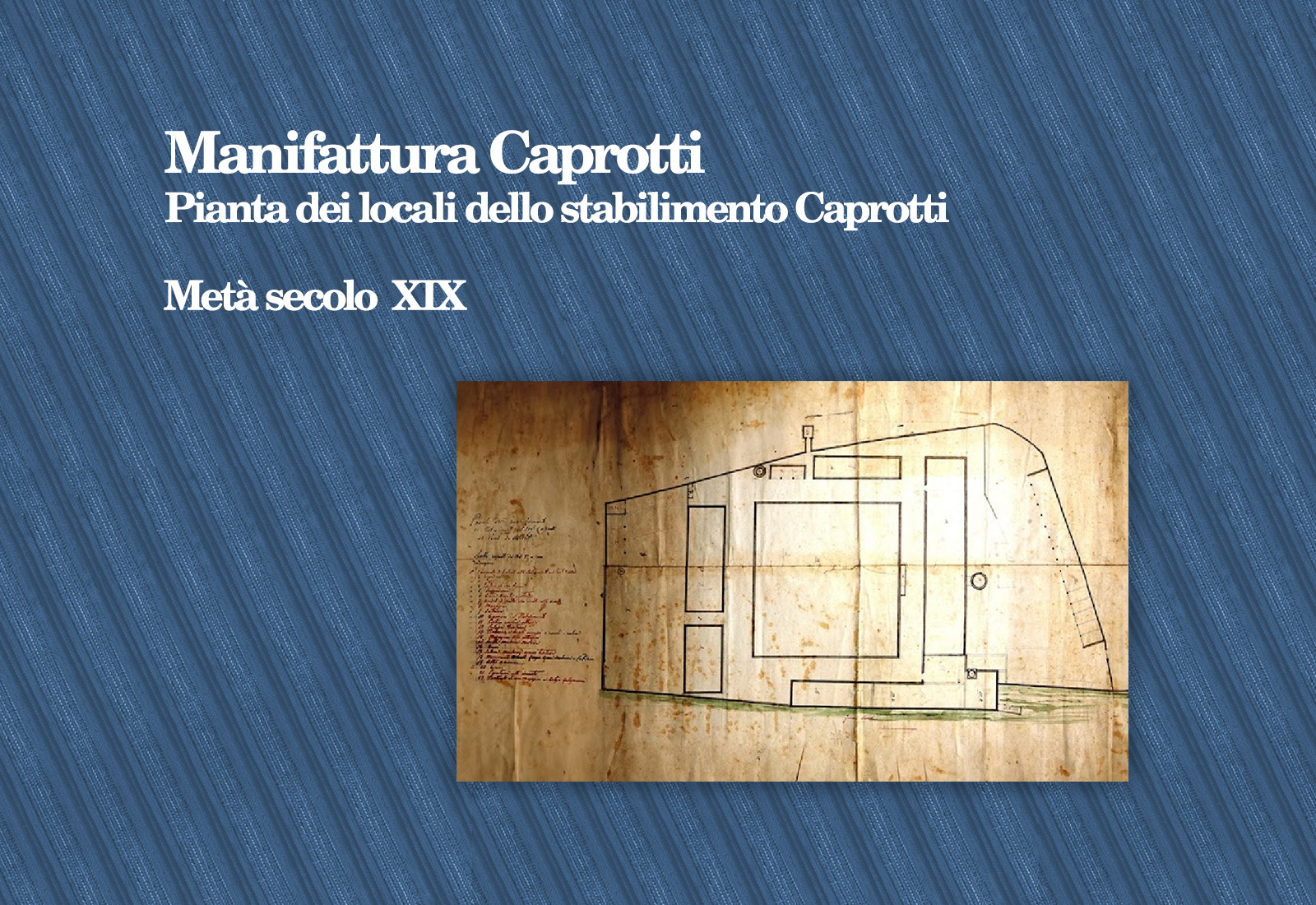
At this point Giuseppe started off again with a series of important investments: a new, vast premises for dyeing, a new weaving room in which he had 132 more modern looms installed, thus arriving, in 1885, at something over 300 machines between looms and preparatory machines.
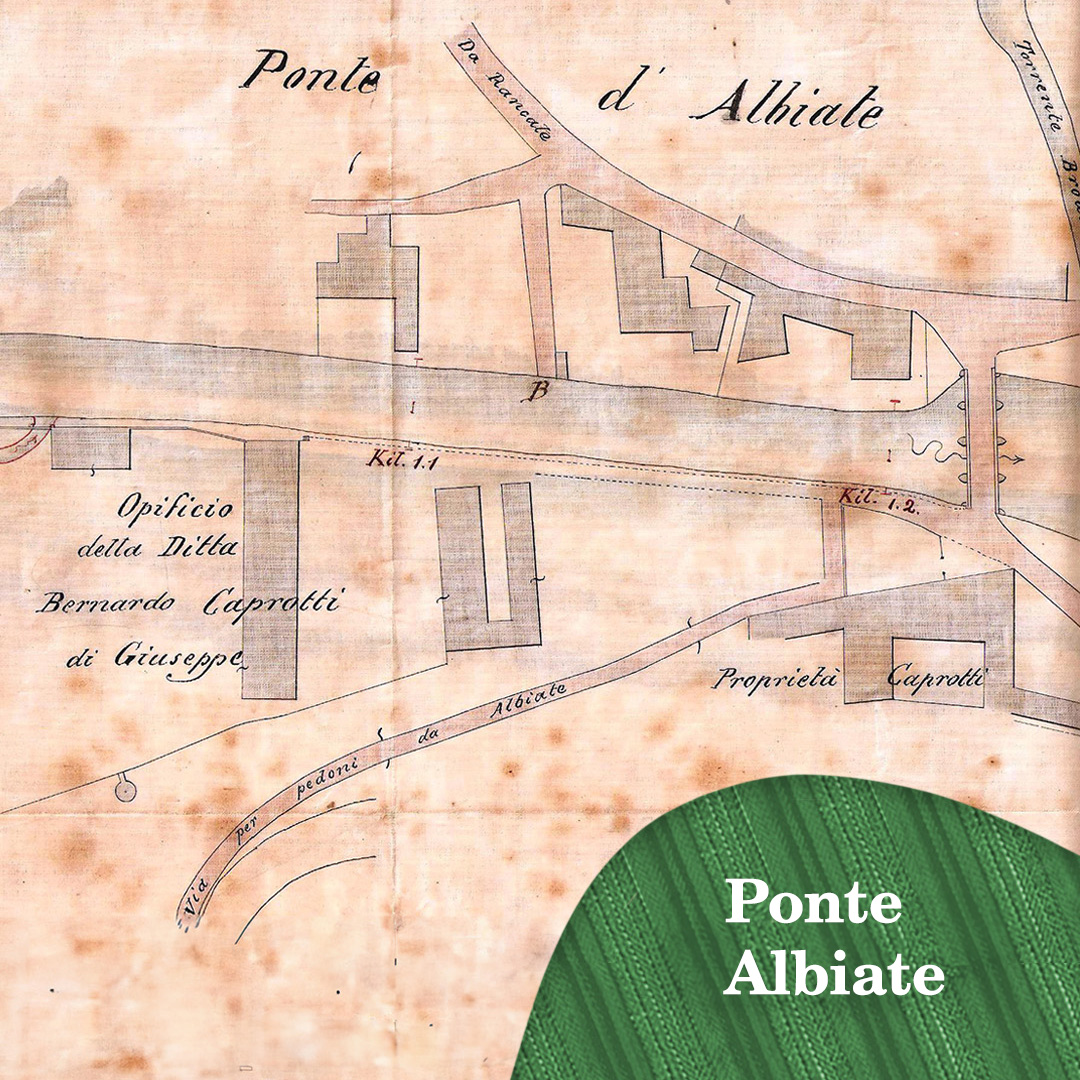
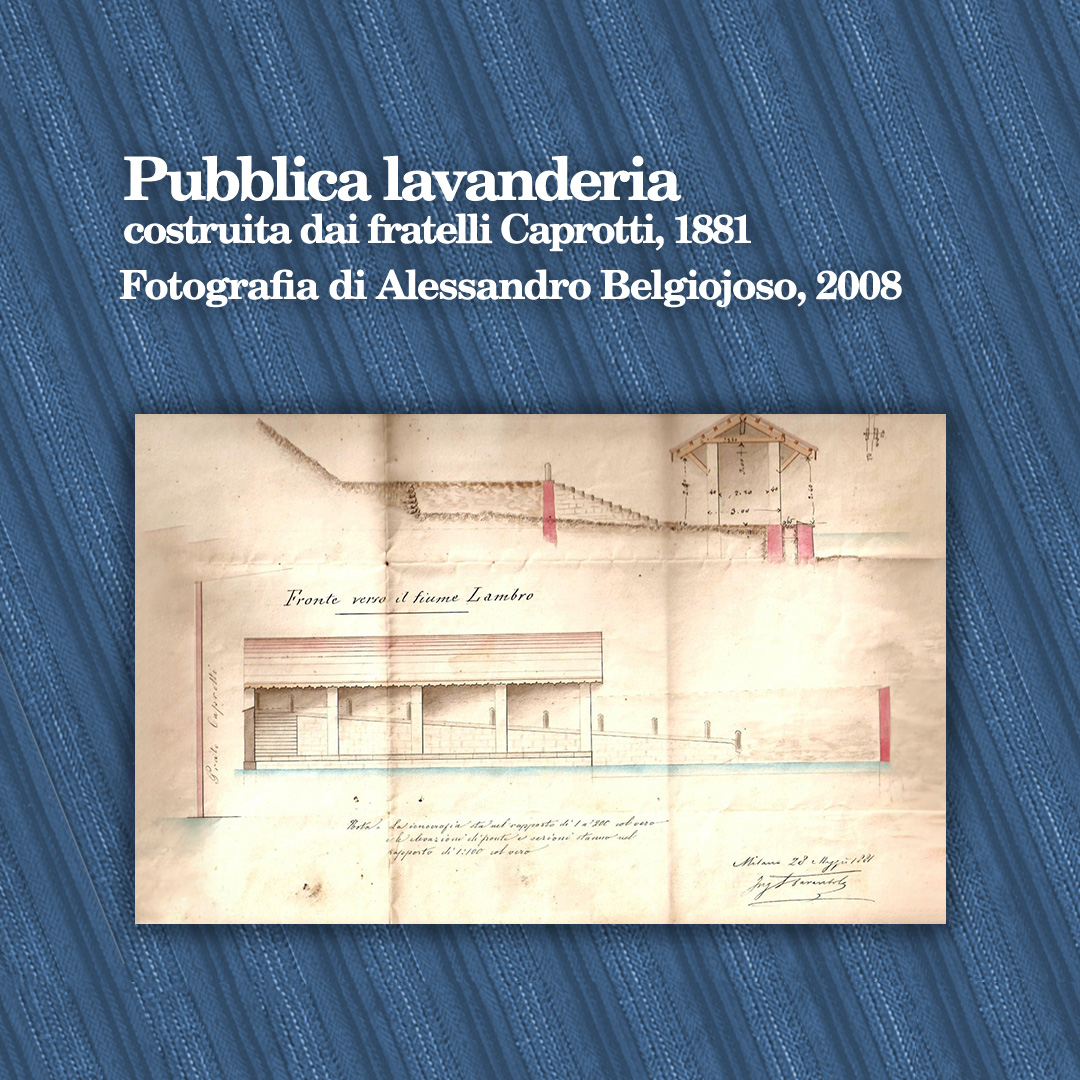
This exponential growth in production machinery required energy, motive power, which would not only avoid dangerous work stoppages but also reduce production costs. With this in mind, Giuseppe immediately began working to obtain a derivation of the Lambro river to guarantee a greater flow of water to his factory, which was completed in 1881. As the municipality of Albiate ceded part of its land near a ford of the river to allow such a derivation, Giuseppe undertook to build a public laundry with access to the ford, of which documentation and drawings remain and which would be completed by his sons. Thanks to the increased water flow, a large water wheel was installed first and, only three years later, in 1884, a Franco Tosi boiler was installed, which had to attract entire villages to its passage, transported by a specially-built wagon pulled by 16 horses, to which the engine was also added a few months later. No less attention was paid to the lighting, which after almost comical adventures with oil lamps ended up using the most modern and effective version, electricity.
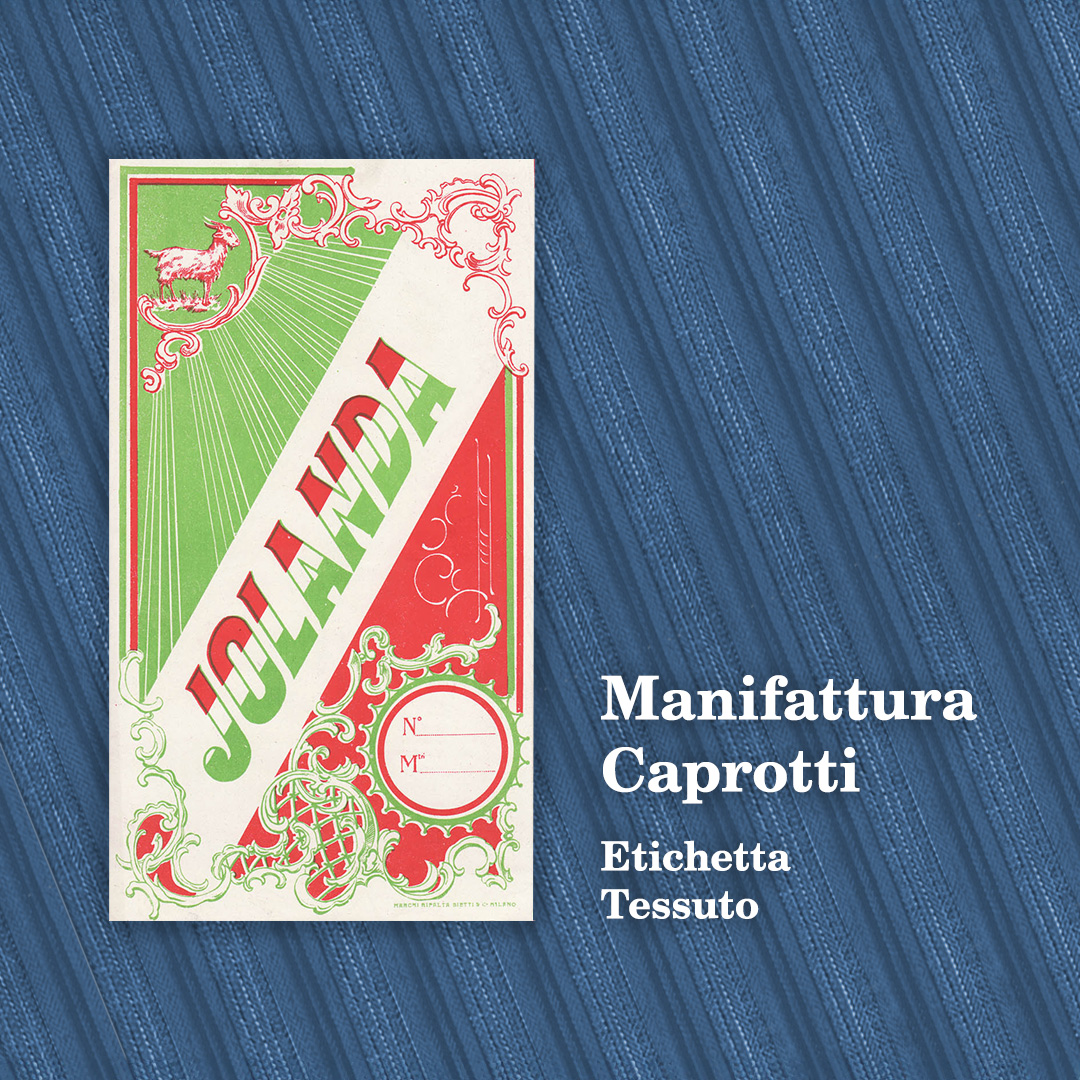
Giuseppe had an idea in mind, an idea that made him spend thousands of lire at a time when the cotton market, especially the domestic market, was beginning to encounter considerable difficulties: and the idea was overseas expansion, taking his products to the Americas, lands of Italian immigrants, and to Africa, a practically virgin market.“The company’s records show that fabrics produced in Albiate in the following years regularly arrive in Argentina, Uruguay, Peru and Brazil. The trademark is the drawing of a goat, to which Giuseppe dedicates great attention, with the intention of imprinting it in the memory of customers of Italian origin who, on the other side of the Atlantic, want models similar to those sold at home.” (CAPROTTI, Le Ossa dei Caprotti, p. 24).
Sources:
Albiate (MB), Villa San Valerio, Villa San Valerio Archives, Giuseppe Caprotti Archives, Giuseppe Caprotti Archives (1837-1895).
Bibliography:
G. CAPROTTI, “Le Ossa dei Caprotti. Una storia italiana’, Milan, 2024/3.
R. ROMANO, “I Caprotti. L’avventura economica e umana di una dinastia industriale della Brianza”, Milan, 1980 (especially pp. 28-31).
G. CAPROTTI, “Mostra: la meccanica della Manifattura Caprotti“, 09/10/2024.
ID., “Le Ossa dei Caprotti”. I Caprotti e l’acqua: il cotonificio a Ponte Albiate, 1840 – 2000. Cues from the book.
ID., Le Ossa dei Caprotti. The Caprotti and textiles: Jolanda, Marina and the Caprotti goat, 1840 – 1918. Cues from the book.
ID., “La famiglia Caprotti, innovazione e tradizione in una manifattura italiana: Albiate e la Svizzera“, 09/10/2024.
ID., ‘La famiglia Caprotti, innovazione e tradizione in una manifattura italiana: operai dal prigione di San Vittore‘, 13/10/2024.
E. SÀITA, “I Caprotti : private aspects, from the Risorgimento to the Second World War“, 08/11/2022.