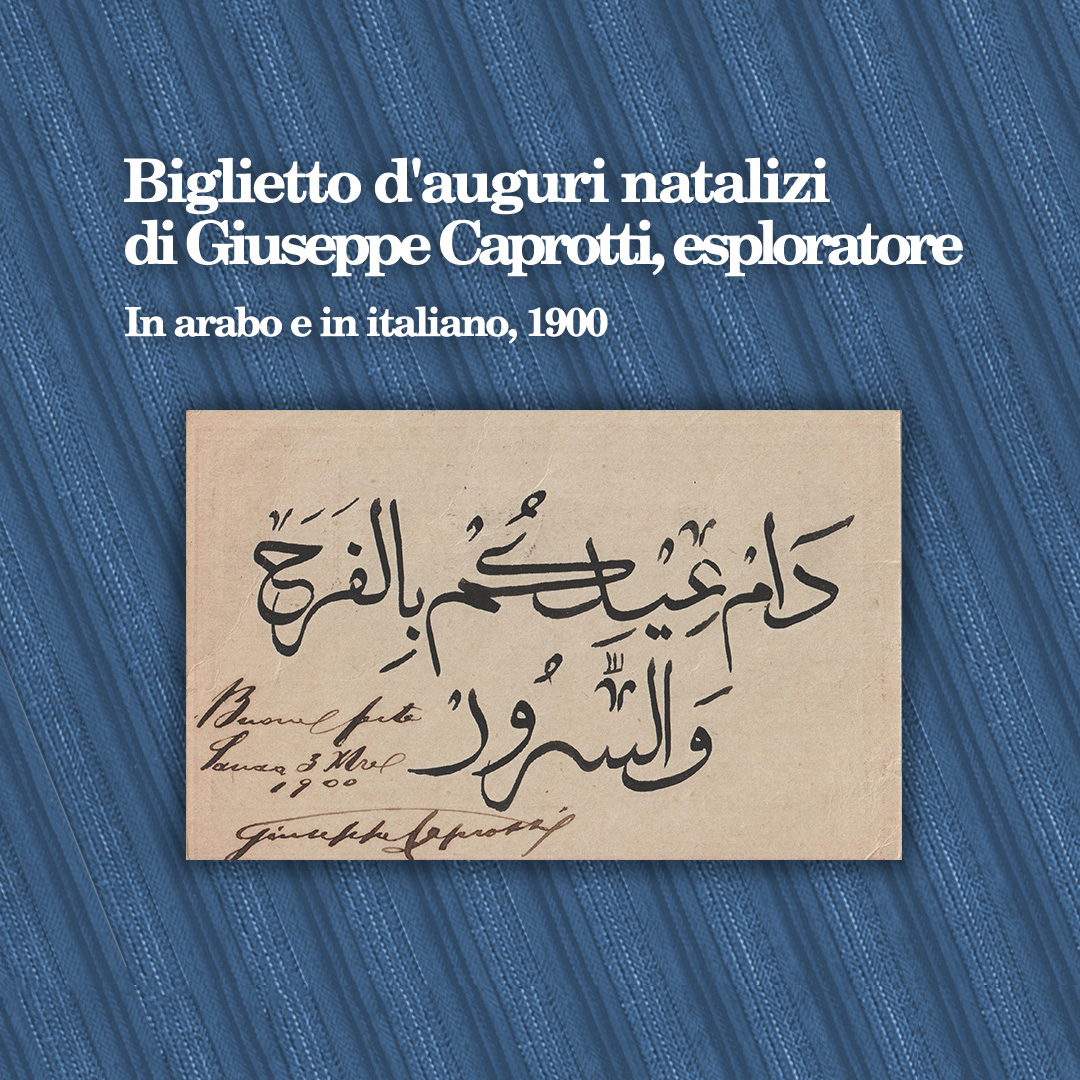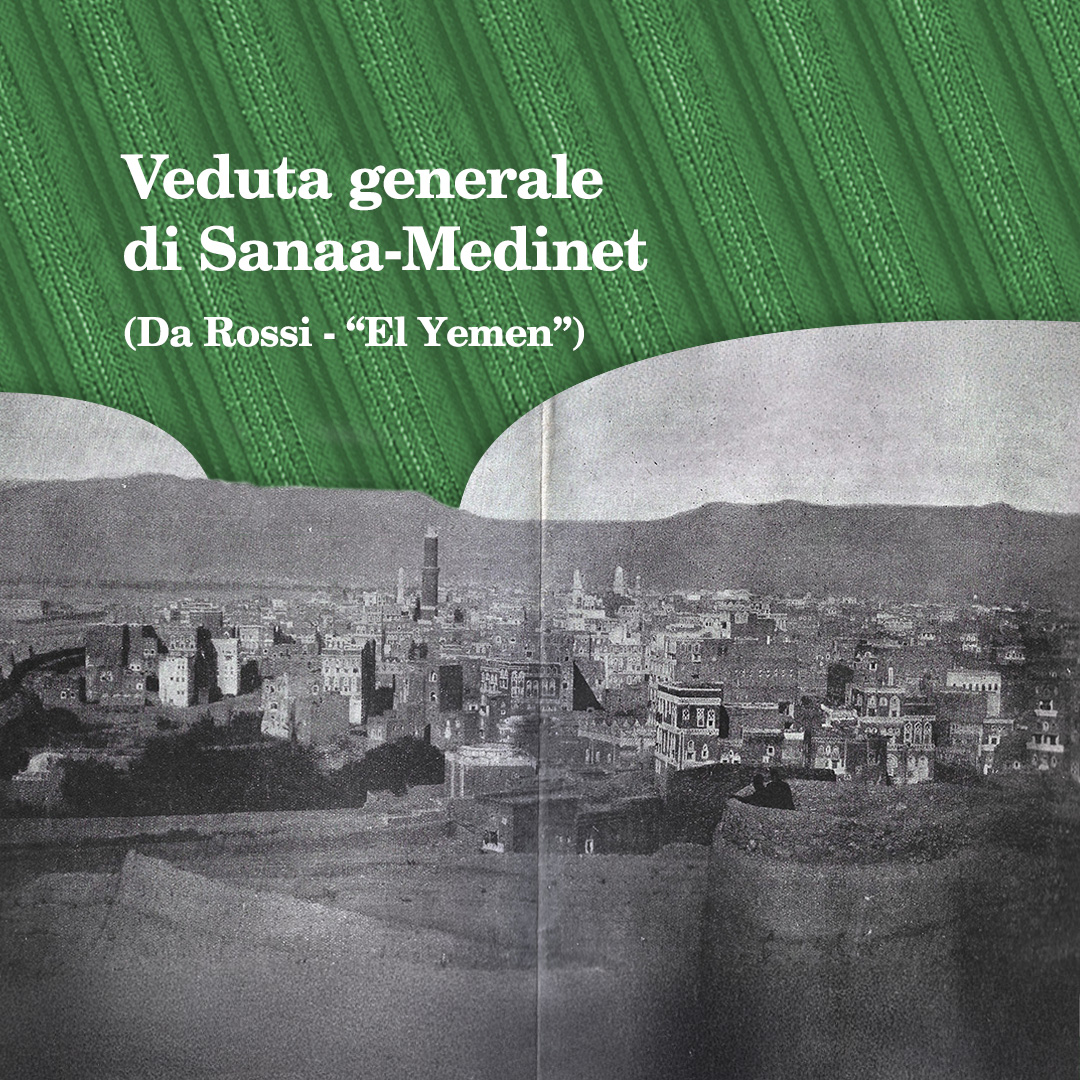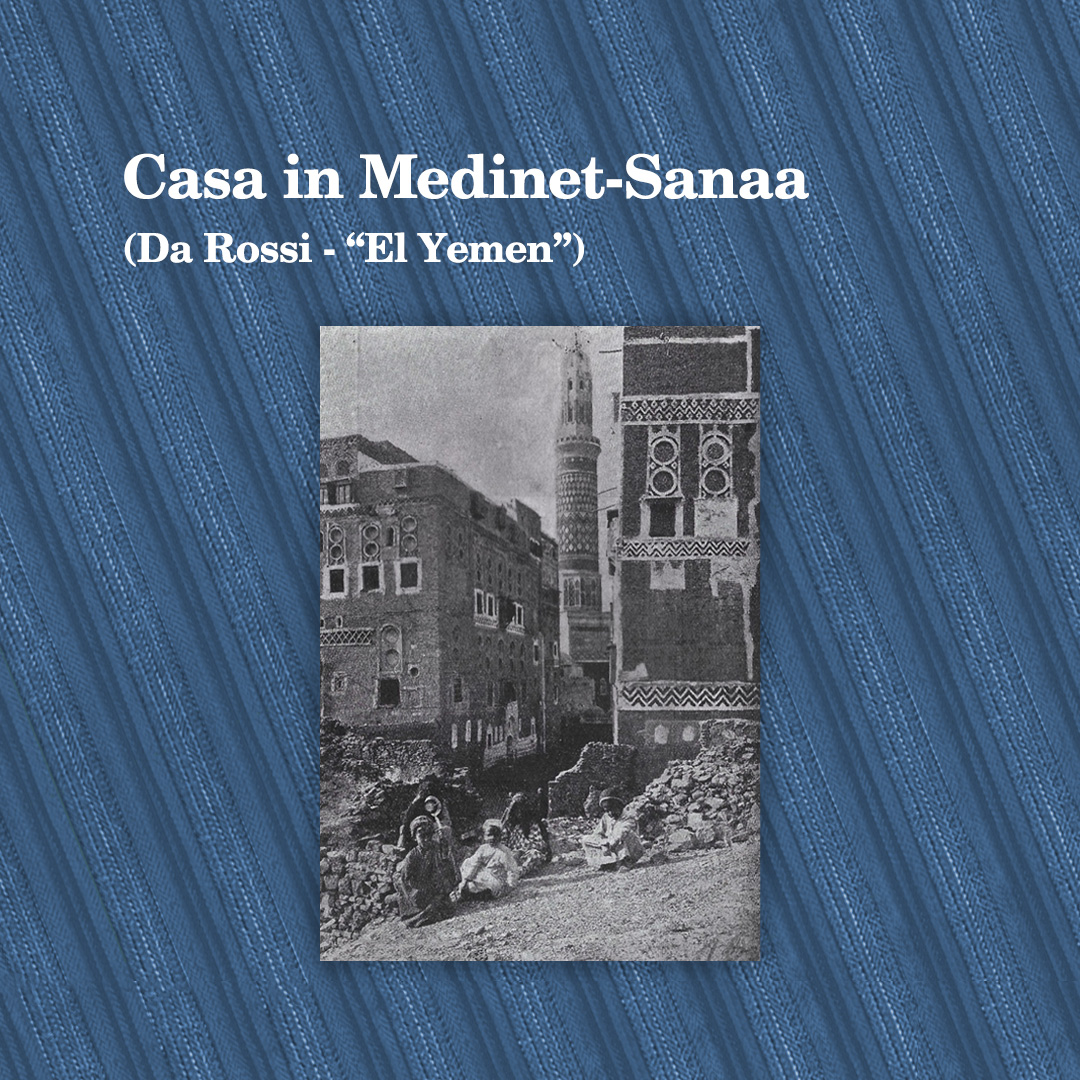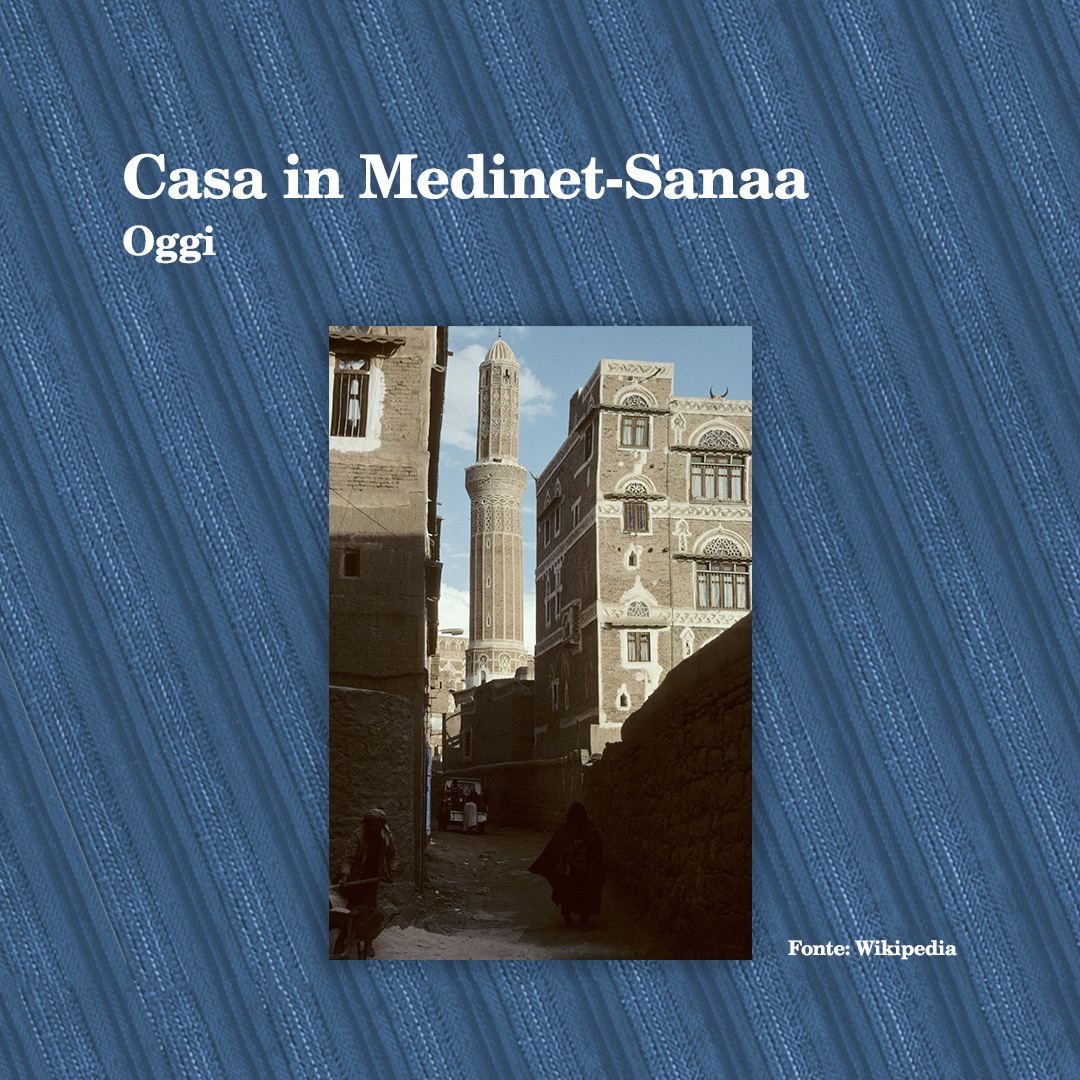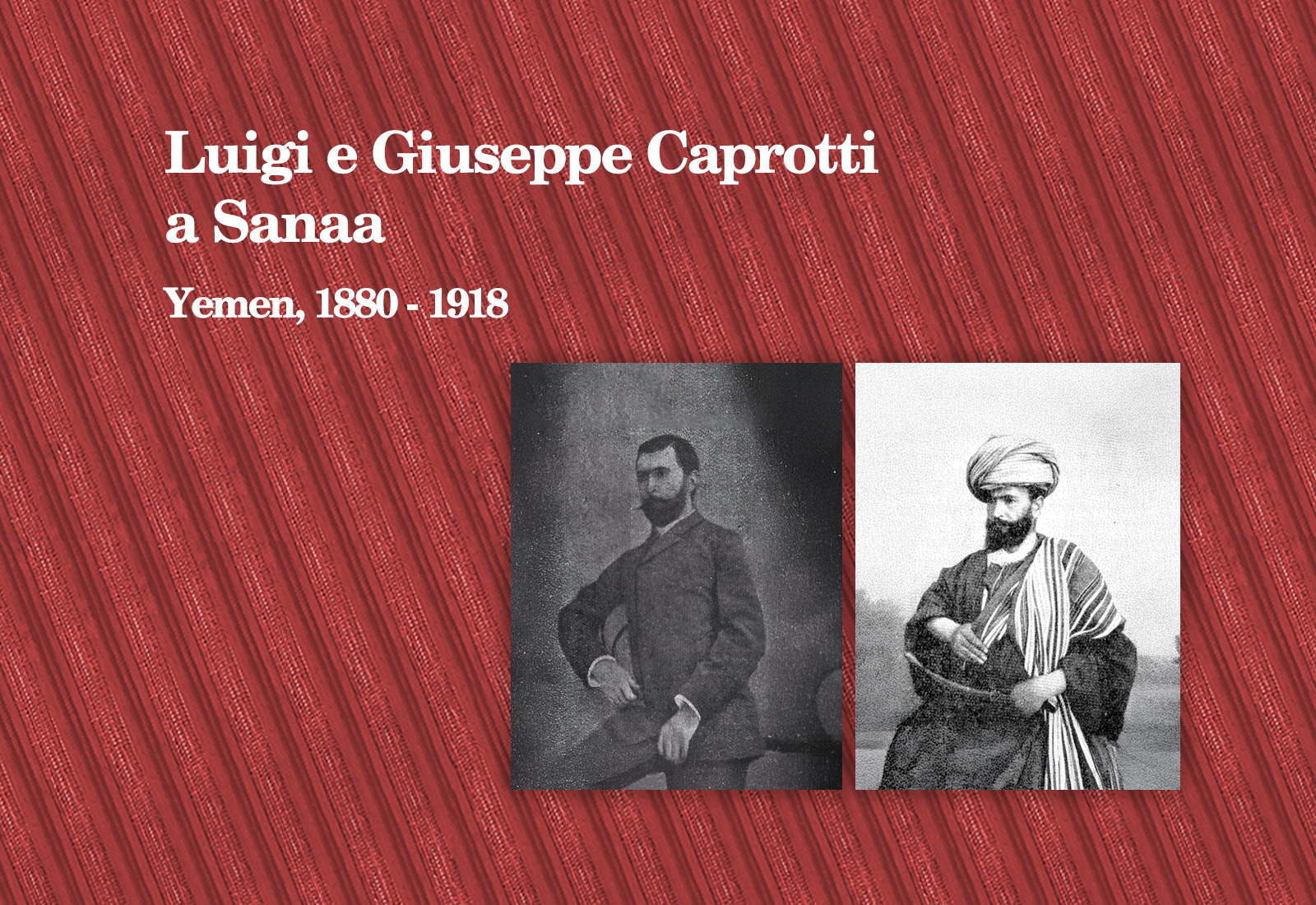
‘The African continent and Arabia, even before being a business, represent an ideal of adventure. The great-great-grandfather Giuseppe [(1837 -1895)] subscribes to numerous magazines, finances geographical explorations and commercial expeditions (…). He maintains assiduous relations with two of the most famous Italian explorers of the time. The first is named exactly like him, Giuseppe Caprotti: he is a distant relative, born a few kilometres from Albiate, who lives in San’a’. Caprotti the explorer spent thirty years in what is now the capital of Yemen, contributing to the diffusion of coffee in Italy – the Arabica variety, the most prized, came from the Yemeni city of Mokha – (…). The industrialist Giuseppe instructed the explorer Giuseppe to track down ancient coins and antiques that were shipped to Italy (…)’, (CAPROTTI, Le Ossa dei Caprotti, pp. 24-25).
The Caprotti brothers, Antonio’s sons, were born in a suburb of Besana Brianza (MB), Luigi in 1858 and Giuseppe in 1862. In 1879, Luigi, having completed his studies and after a brief work experience in a Lombardy company, left in his early twenties for Massawa, Eritrea’s main port, as a delegate of the ‘Commercial Exploration Company for Africa’. From there he went on to Eritrea and Sudan, where he started a series of successful trades that were interrupted by a revolt. He then moved to the Arabian Peninsula and settled in Sanaa, the capital of Yemen.
At the time, Yemen was a region of great strategic and commercial interest, but also little known to Europeans. It was divided between Ottoman Turkish control in the north and British influence in Aden (in the south), rich in potential resources, but also characterised by political instability and environmental difficulties.
Luigi [Caprotti] opened a branch of the Genoese trading house Sante Mazzucchelli and Augusto Lopez Pereira in Sanaa, and being the first European retailer ever to establish himself in the interior of Arabia, he had to ‘discover’ what kind of products could be found there, and so he immediately established excellent relations with the locals to get them to bring him ‘every kind of rubber, resin and myrrh’, and ‘without a library, without scientific means and instruments’ he set up a small commercial chemical laboratory to analyse the quality of the goods he found (ROSSI, ‘El Yemen‘). In July 1885, Luigi was joined by Giuseppe, fresh from his studies, and their warehouse and house represented ‘the hearth, the meeting point’ for the no more than three to four Europeans who had travelled so far into the heart of the Arabian Peninsula. In 1888, the two brothers decided to set up their own business, ‘after all, my brother,’ wrote Giuseppe the explorer to Giuseppe the entrepreneur on 22 November 1888, ‘ is an agent of the Royal Ottoman Empire with a salary, in addition to accommodation, servants, lighting, etc., of 4,000 francs, which will always be enough to cover all expenses‘. He continues: “We intend to do the export trade already well underway, as well as a little importing of those current articles, which are easy to sell, all the more so as we already have an indigenous clientele that we have known for four years, with whom we have always worked until now to the complete profit of the M[azzucchelli] & P[ereira]house. (…)”. The umpteenth rebellion, however, bloody and robbery (first of all, all the camels disappeared, requisitioned by the army, and it was not possible to receive or send anything), caused the project to be partly aborted; Giuseppe, having to rely on someone for protection, renegotiated his collaboration with the Mazzucchelli & Pereira house (Luigi Caprotti to Giuseppe Caprotti, entrepreneur, letter from Sanaa, 23 February/7 March 1889).
Unfortunately, in that same 1889 Luigi, struck down by typhoid fever, died after about ten days and was buried in San’a by Giuseppe alone, as the other Europeans – including Eduard Glaser, an orientalist from the University of Vienna and author of an emotional letter on his friend’s death – had been away for several months at that time (Rossi, ‘El Yemen’, pp. 36-38). It should be noted that neither Giuseppe the explorer nor his family, in the documentation that has remained to us, makes even a single mention of this very serious bereavement; however, after March 1889, there are no more letters from Luigi, who is both mourned by the locals and affectionately remembered by those western travellers who always found hospitality and refuge in his home.
Remaining the only Italian and one of the very few Westerners resident in Sanaa, Giuseppe the explorer makes good use of his late brother’s teachings. He continued his commercial activity on his own, working for seven years in the employ of the Ottoman Tobacco Regia, devoting himself at the same time to the export of coffee (a product whose cultivation he also promoted in the Italian colony of Eritrea, sending there seeds and seedlings of fine quality), and to the import of the numerous foodstuffs and various consumer goods for which Yemen depends on foreign countries.
He lived there for 34 years, returning to Italy only for short stays in Magenta with his sister Carmela. As Pier Francesco Fumagalli writes in his essay on the occasion of the centenary of Caprotti’s death, ‘he demonstrated his human qualities by being the architect of good relations between the consular authorities, the Turks of the ruling Caliphate and the Zaidites of the country, who were often in revolt; at the same time, he developed his own commercial ventures and established what he called “The Only European Company in Arabia” (“The Only European House Established in the Interior of Arabia”), as indicated in his commercial [letter] charter. Thanks to this enterprise, he was able to import Moka coffee, which later became famous in Europe, directly from his places of production. He also carried out humanitarian work for the inhabitants afflicted by famine and the war between the Zaidites and the Ottoman Turks in 1891 and 1904, which earned him recognition from the Jewish community. In his letter of 11 August 1910, he took an interest in the construction of a Jewish school and, in his efforts to support the Jews of Sanaa, he passed on to them, in 1911, one thousand francs that the Universal Israelite Alliance of Paris had sent to the Italian consul in Hodeida to help the old, widows and the poor. He was also related to the promoter of modern Zionism, Theodore Herzl. The two Caprotti brothers, as a result of the help they gave to the Jews of Sanaa, were registered as “Righteous Among the Nations” in the Golden Book of the Keren Kayyemet le-Israel (Israel Support Fund) in 1967.” (FUMAGALLI, Giuseppe Caprotti, p. 42).
During the First World War, Giuseppe remained in Sanaa, but after the defeat and dissolution of the Ottoman Empire he became suspicious of the Imam and returned to Italy, where he died in 1919. Now old, for the time, and tired, he makes a wise decision to return to his homeland, to his family. But he must have greatly missed the country he loved so much, and of which he left even lyrical descriptions: ‘As I have already written to you, the harvests are extraordinarily favourable. In the meantime, it is an immense pleasure to take long walks through fields cultivated (…) with grains, lentils and other products. I am old in the village, and until this year I have never had the opportunity to see the Gâ Sanaa cultivated in this way. From the hills overlooking Gabel Nurqum, the view is marvellous: from there you can dominate the whole immense green plain, which is now partly beginning to whiten due to the ripening of the grain (…)’ (Hermann Burchardt Archive, Letter from Giuseppe Caprotti to Hermann Burchardt, Sanaa, 25 September 1908).
Sources:
Albiate (MB), Villa San Valerio, Villa San Valerio Archives, Giuseppe Caprotti, Giuseppe Caprotti explorer.
The National Library of Israel, Giuseppe Caprotti 1869-1919, Giuseppe Caprotti, 1900-1909, סימול ARC. Ms. Var. 525 02 01.1 Hermann Burchardt Archive, Hermann Burchardt Archive.
Bibliographical references:
L. BELTRAMI, Eugenio Griffini Bey, MDCCCLXXVIII-MCMXXV, Milan, 1926
G.B. ROSSI, El Yemen, Arabia Felix o Regio Aromatorum. Appunti di geografia, storia, usi e costumi (…), Torino 1927.
M. CARAZZI, Giuseppe Caprotti, entry in Dizionario Biografico degli Italiani – vol. 19 (1976), from https://www.treccani.it/enciclopedia/giuseppe-caprotti_(Dizionario-Biografico)/
I. SANZÒ, 1897 – 1926. Over 100 years of relations between Italy and Yemen, in ‘Bilqis. La Regina di Saba”, publication edited by the Embassy of Yemen in Rome, no. 2, June 2012, pp. 24-26.
P. F. FUMAGALLI, “Giuseppe Caprotti (Pobiga Di Besana Brianza, 1862-Magenta 1919): Quelques notes biographiques’, in ‘Chroniques du Manuscrit au Yémen’, no. 9 (28)/Juillet 2019, ‘Giuseppe Caprotti de Brianza (29 mars 1862-15 mai 1919). In memoriam’, pp. 36 – 40.
A. D’OTTONE RAMBACH, ‘Giuseppe Caprotti et son double – Entre manuscrits et monnaies yemenites’, in ‘Chroniques du Manuscrit au Yémen’, no. 9 (28)/Juillet 2019, ‘Giuseppe Caprotti de Besana Brianza (29 mars 1862-15 mai 1919). In memoriam’, pp. 46 – 55.
G. CAPROTTI, “Le Ossa dei Caprotti. Una storia italiana’, Milan, 2024/3.
(f.p.) Ambrosiana, the Arabic manuscripts digitised, in Terra Santa, 7 March 2025.
BIBLIOTECA AMBROSIANA, “Arabic manuscripts in the Biblioteca Ambrosiana. The digital collection“, presentation of the Project, 4 March 2025.