Drafted 7 July, updated 12 July 2025
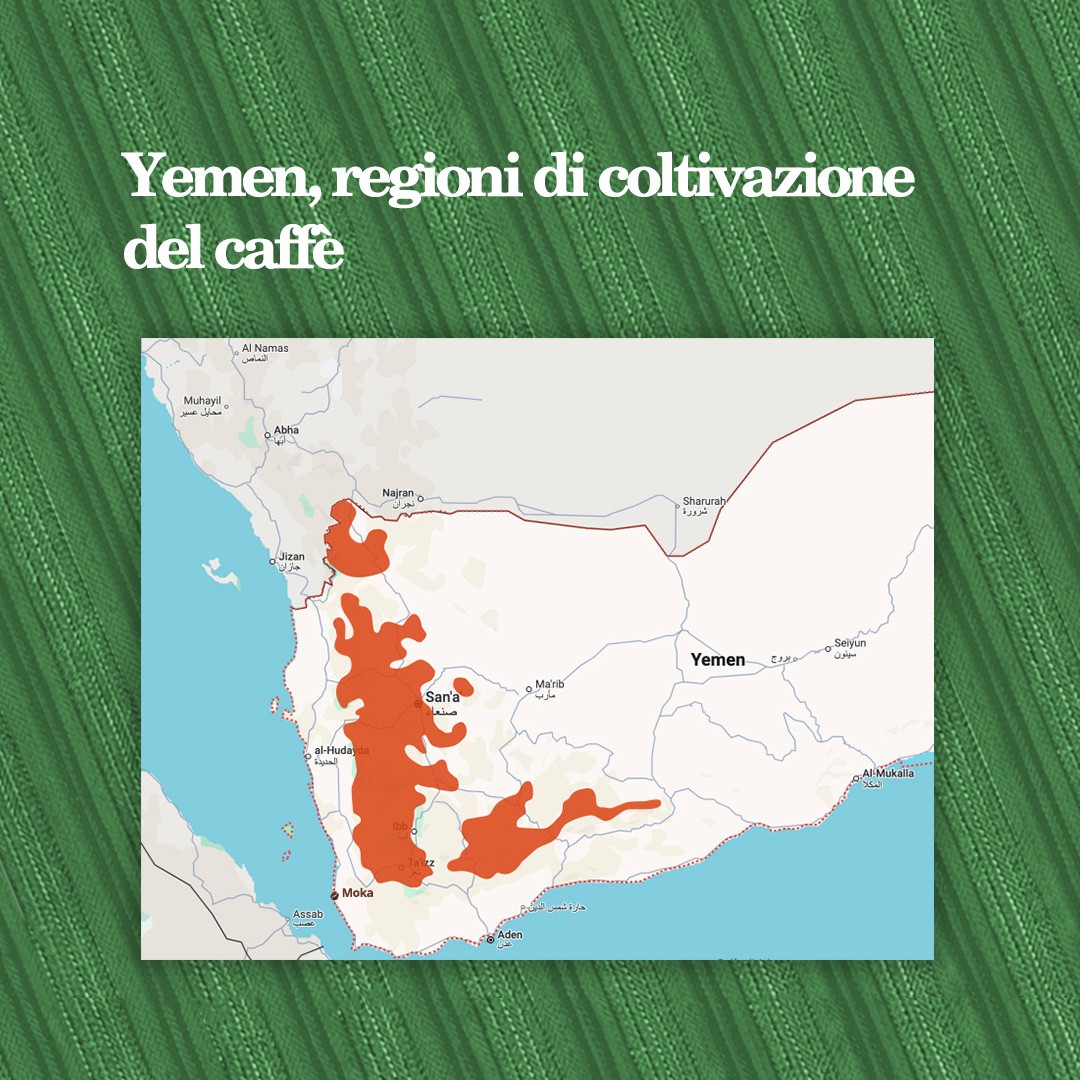
Ethiopia and Yemen have always contended over the historical origins of perhaps the world’s most popular drink; for the latter, the history of ‘black juice’, as it is called in ancient times, is deeply intertwined with the origins of the drink itself.
If coffee was discovered in Ethiopia (‘coffee was imported to Yemen from the Galla countries and from Harrar, where it is also called bun as in the country of Kaffa, when at the fall of the Imiarite empire (*), the Habase (Abyssinians) conquered Yemen, a century before the Hegira‘, ROSSI, El Yemen, p. 25), it is in Yemen that its cultivationwasdiscovered it is in Yemen that its cultivation and consumption as a drink became popular, especially among Sufi monks (followers of Sufism, a mystical current of Islam), who use it to stay awake during their long prayer sessions.
Initially, coffee was consumed in the form of infusions and decoctions, such as the gheischer ( Jesha coffee , Ethiopian) tasted by Giovanni Battista Rossi when he travelled the country in the late 19th century (ROSSI, El Yemen, p. 23).
(*) South Yemenite neo-Sabean kingdom active between 110 BC and 520, whose population was pagan, Christian but also Jewish, which partly explains the story of Giuseppe the explorer.
The port of Moka, its rise, its decline
The popularity of coffee consumption in Yemen began in the 15th century, and in the 16th-17th centuries, Yemen and the Red Sea became the scene of conflicts between Egypt, the Ottoman Empire and European powers for control of the market in Coffea arabica (the name given to it by the great botanist Linnaeus); indeed, until the end of the 17th century, the world’s coffee supply came almost entirely from Yemen. The port city of Moka would long be famous as the main coffee exporting centre of Arabia; the term ‘mocha’ and its variants became part of European languages as synonyms for the high quality coffee of Coffea arabica, still cultivated on the highlands of Yemen and still the finest Arabica in the world today.
Yemeni traders, particularly those from the port of Moka, controlled the coffee trade, maintaining a near-monopoly for a long time and trying to keep control also over the cultivation and export of the plant, eventually failing to do so as both the berry and the plants took the world’s routes more or less legally, in every possible way.
Western trading companies were run by the English, the Dutch (1614-1738) and, for a short period, the Danes and French. Between the 19th and 20th centuries, conflicts between European powers and the Ottoman Empire, and those between the latter and the imams of Yemen, contributed to the port’s decline, accelerated by the development of coffee plantations on the island of Java (now in Indonesia) by the Dutch and the rise of the South American coffee industry (early 18th century).
The British moved their base of operations in the area from Moka to Aden in 1839, followed by other European trading nations, and this sealed the port’s fate. Today, most of the once fine public buildings, residences and mosques are in ruins. Moka also lies on a sandy and arid stretch of coastline, and the action of the wind that continuously carries sand as well as the insufficient water supply have further contributed to its decline. Today, the port of Moka is only able to berth small boats, a far cry from the large galleons or trading ships of the past.
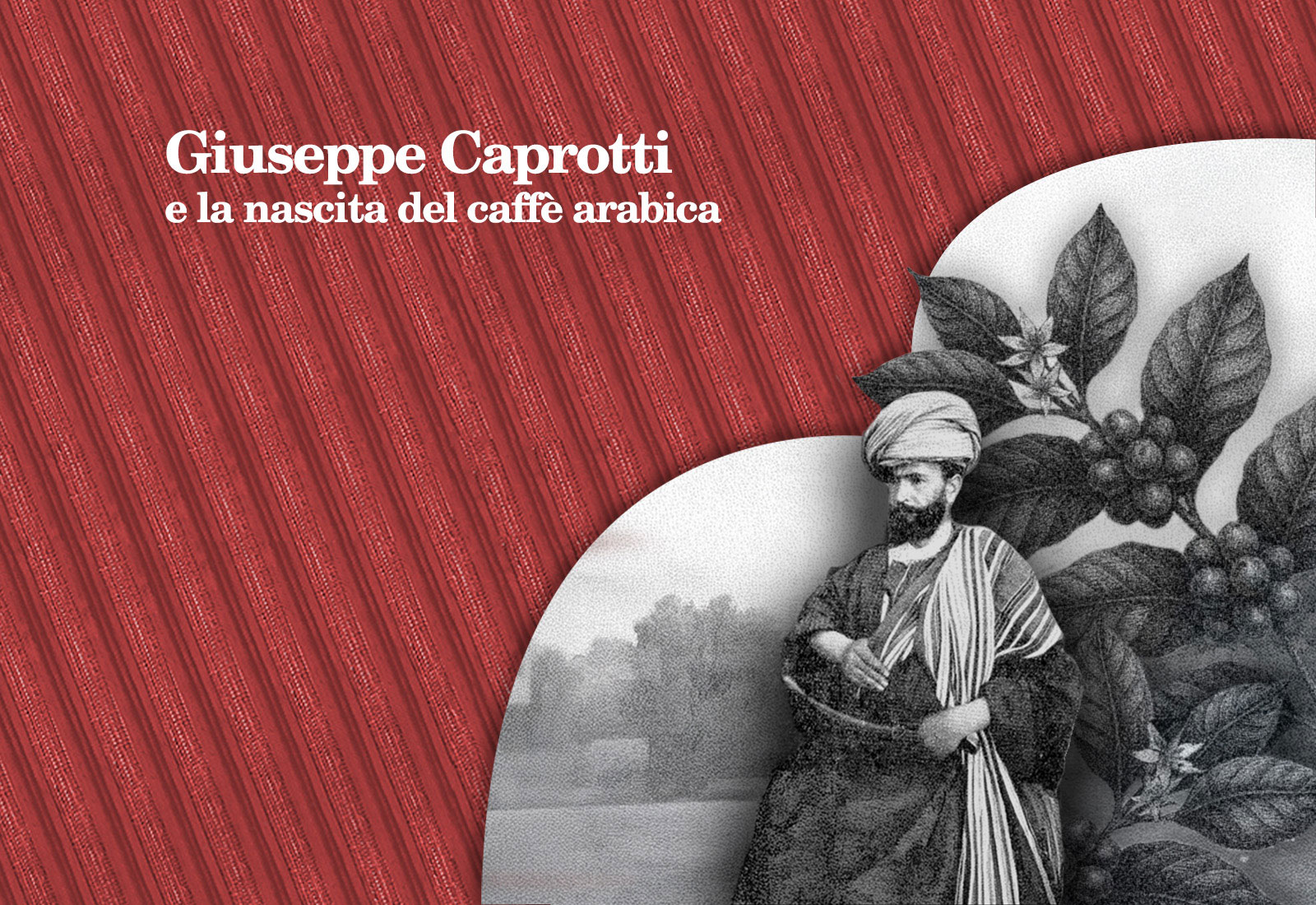
Among the traders who deal in coffee is Giuseppe Caprotti, namesake of my paternal great-great-grandfather, Giuseppe, known as Beppo, and his contemporary, an explorer and trader, who was for a long time the only permanent western resident in Yemen in the last decades of the 19th century.
From his correspondence we know that he traded large quantities of ‘Moka Coffee’, calling it by its ancient name. He exports the coffee by ship, wrapped in palm leaves to keep it fresh. It is not clear from the letters kept in the Caprotti archive in Albiate whether he exports everywhere, but his destination is certainly Italy, where he has my great-great-grandfather [Giuseppe, known as Beppo] as a customer, since it is sometimes said in the letters that he has reserved a certain quantity out of the total available for him (see, for example, the letter from Carlo Caprotti, Giuseppe’s brother and attorney-general, to Giuseppe Caprotti, Magenta, 30 May 1889).
Legends about the discovery of coffee
There are many legends surrounding the ‘magic’ bean, in addition to what has already been written at the beginning of this article.
The best known is disputed between the two coffee countries, and is that of a shepherd named Kaldi, Ethiopian for the one, Yemeni for the other, who notices that at night his goats do not rest, on the contrary, they prance about happily without a shadow of sleep. Searching for the causes of such strangeness, Kaldi goes to a wise hermit, taking with him the branches and fruits of the plants on which his animals feed, and the hermit explains to him the properties of the plant, which he also uses.
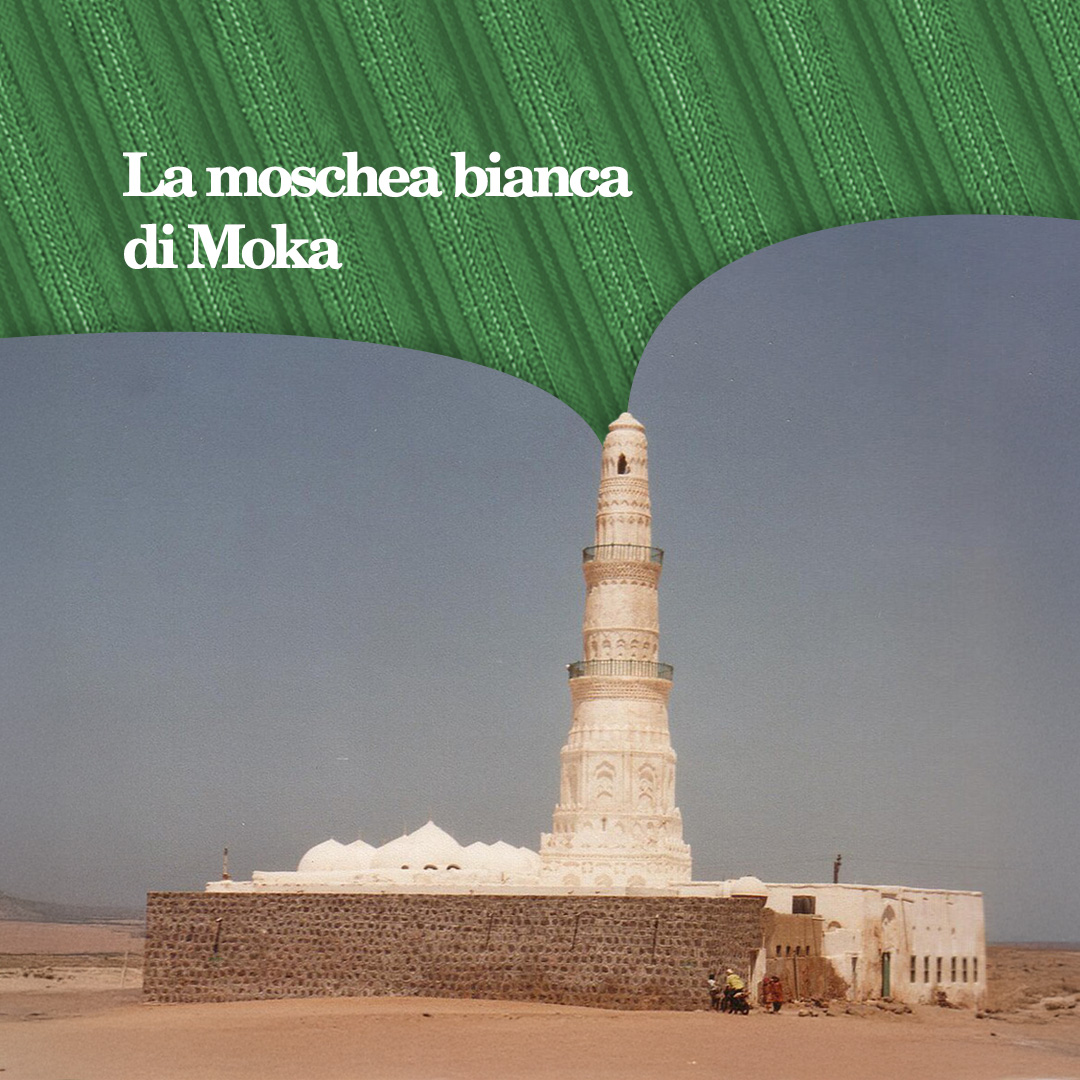
A wise hermit is also the protagonist of the birth of Moka as a coffee town, where at the beginning of the 15th century Sheikh Shādhilī lives in a poor hut, the only one on the deserted beach, welcoming anyone who comes to his door with an exquisite and invigorating drink. Fame spreads, the concourse of people becomes a stream, then a business; around the hut rises a village, from the village a city, soon tingling with shopkeepers and speculators. History aside, Sheikh Shādhilī really existed and is the protector of Moka, where John Baptist Rossi sees his burial mosque (ROSSI, El Yemen, p. 26).
The sick prophet Muhammad could not be missing either, to whom Allah sends the archangel Gabriel with a dark drink that gets him back on his feet; and among the many stories that are still told, the most absurd of many speaks of an enormous fire that destroys a vast territory where spontaneous coffee plants grow, and the aroma released by those flames makes known something delicious and strong that will have fortune in the four corners of the world.
In Istanbul, coffee arrived in 1554 and, in Venice, Prospero Albini wrote to Giovanni Morosini about it in 1591. But it was not imported for the first time until 1615.
From Venice it passed to Genoa from where it was imported, it is not known whether first to France or England. The fact remains that while in France in 1644 it was so little known that at the court of Louis XIV a cup of coffee was a rarity, in London in 1652 there was already a public café
Sources:
Albiate (MB), Villa San Valerio, Villa San Valerio Archives, Giuseppe Caprotti explorer, Giuseppe Caprotti Archives.
Bibliography:
G.B. ROSSI, ‘El Yemen, Arabia Felix o Regio Aromatorum. Appunti di geografia, storia, usi e costumi (…)’, Turin 1927.
History of Yemen. Written and fact-checked by R. Burrowes, M.W. Wenner, The Editors of Encyclopaedia Britannica & Others, Last Updated: Jul 1, 2025
Mocha, Yemen. Written and fact-checked by The Editors of Encyclopædia Britannica, July 20, 1998; most recently revised and updated by K. Pletcher.
I. SANZÒ, ‘1897 – 1926. Over 100 years of relations between Italy and Yemen’, in ‘Bilqis. La Regina di Saba”, publication edited by the Embassy of Yemen in Rome, no. 2, June 2012, pp. 24-26.
G. CAPROTTI, “Le Ossa dei Caprotti” : Giuseppe Caprotti explorer: coffee and Brianza. Cues from the book.