Drafted 6 May 2025, updated 23 May 2026.
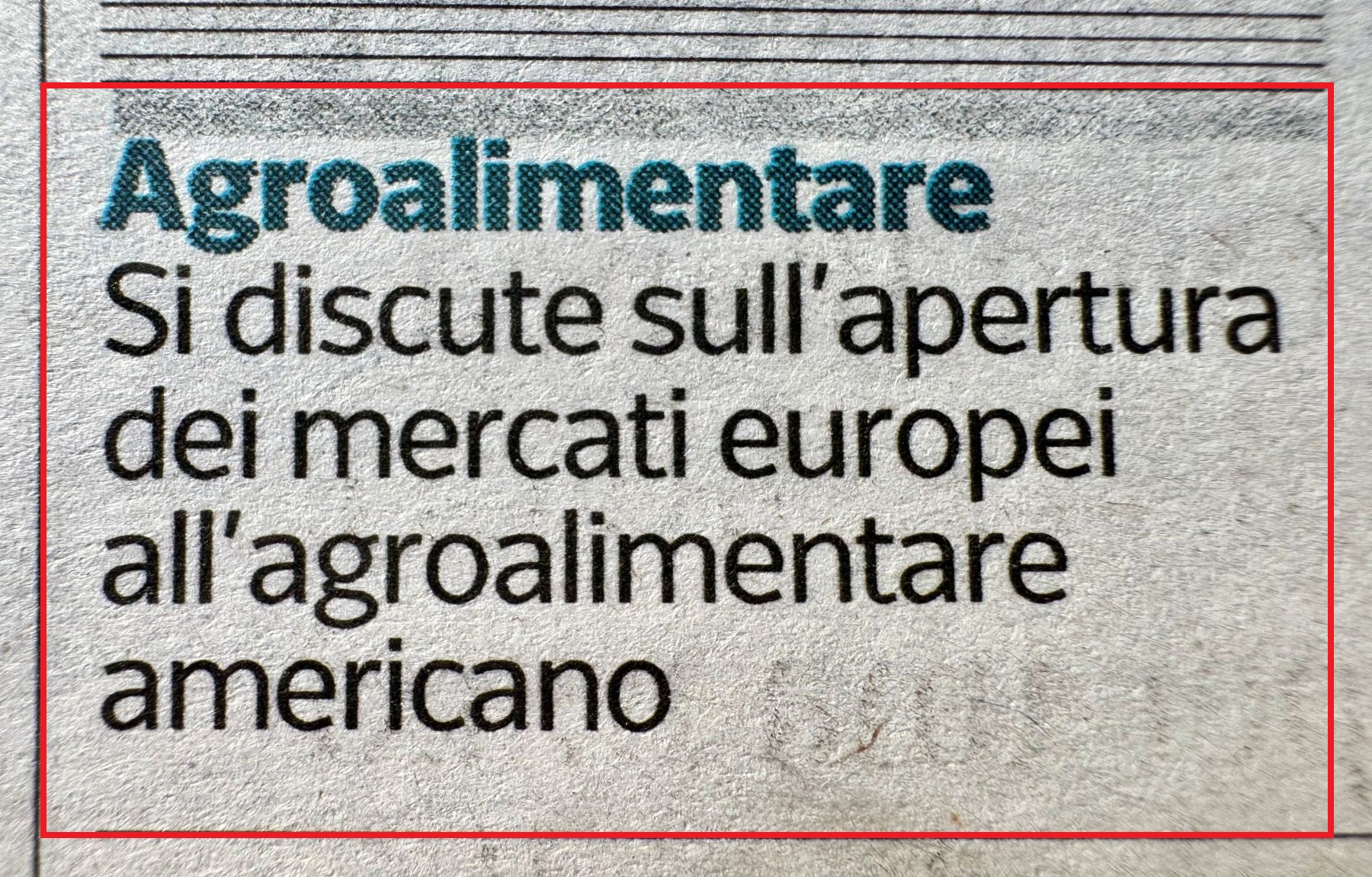
On the cover is a sentence found in Corriere della Sera on 1 August 2025, and it is what we fear most: a loosening of quality standards for European food, with a possible invasion of ‘Made in USA’ products.
It is disheartening to see the ‘first power in the world’, which has been the model for my family both on my father’s side but also on my mother’s side (her grandfather owned Marelli, set up according to the Fordist model) in the midst of a mess created by a few ill-advised advisers of Donald Trump: Peter Navarro, Howard Lutnick and Stephen Mirran .
We are talking about the trio who think the tariff policy is smart and think they know how to handle it.
The amusing premise is that we seem to have gone back decades.
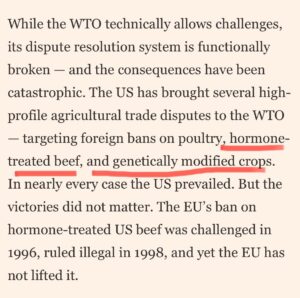
I talked about it more than 10 years ago, about a ‘dead and buried’ treaty, the TTIP (Transatlantic Trade and Investment Partnership), with the possible US-branded pitfalls on food that Peter Navarro, would like to resurrect.
In a nutshell, to oversimplify, in 2015 I wrote:“In the EU, there is a particular fear of possible lowering of quality standards for food, mainly with regard to the possible introduction of hormones, antibiotics and GMOs from the US.”
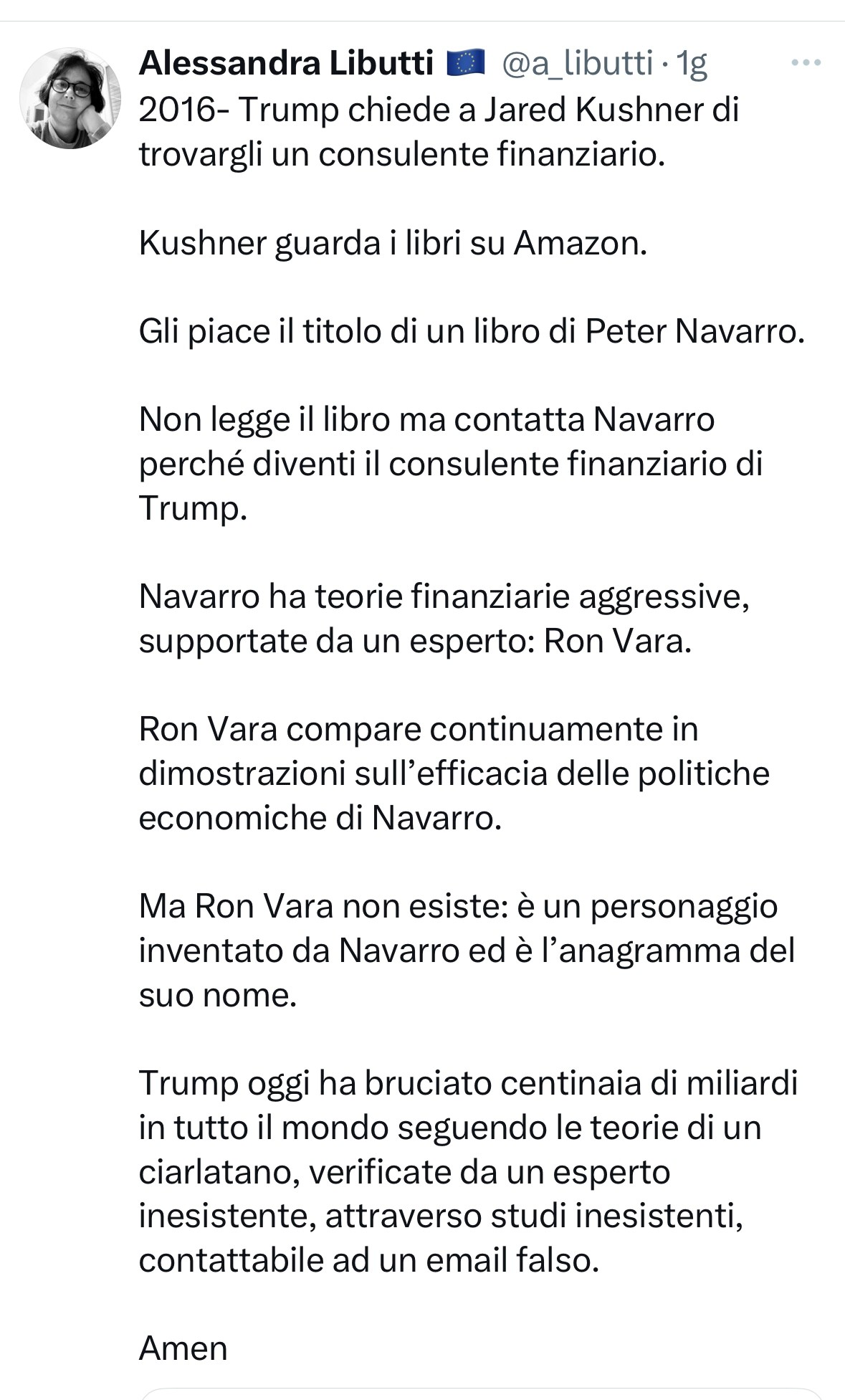
The funny thing is that Navarro, a big supporter of these theories and duties, was “found” on Amazon by Jared Kushner, Donald Trump’s son-in-law…
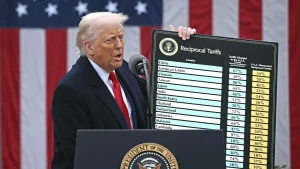
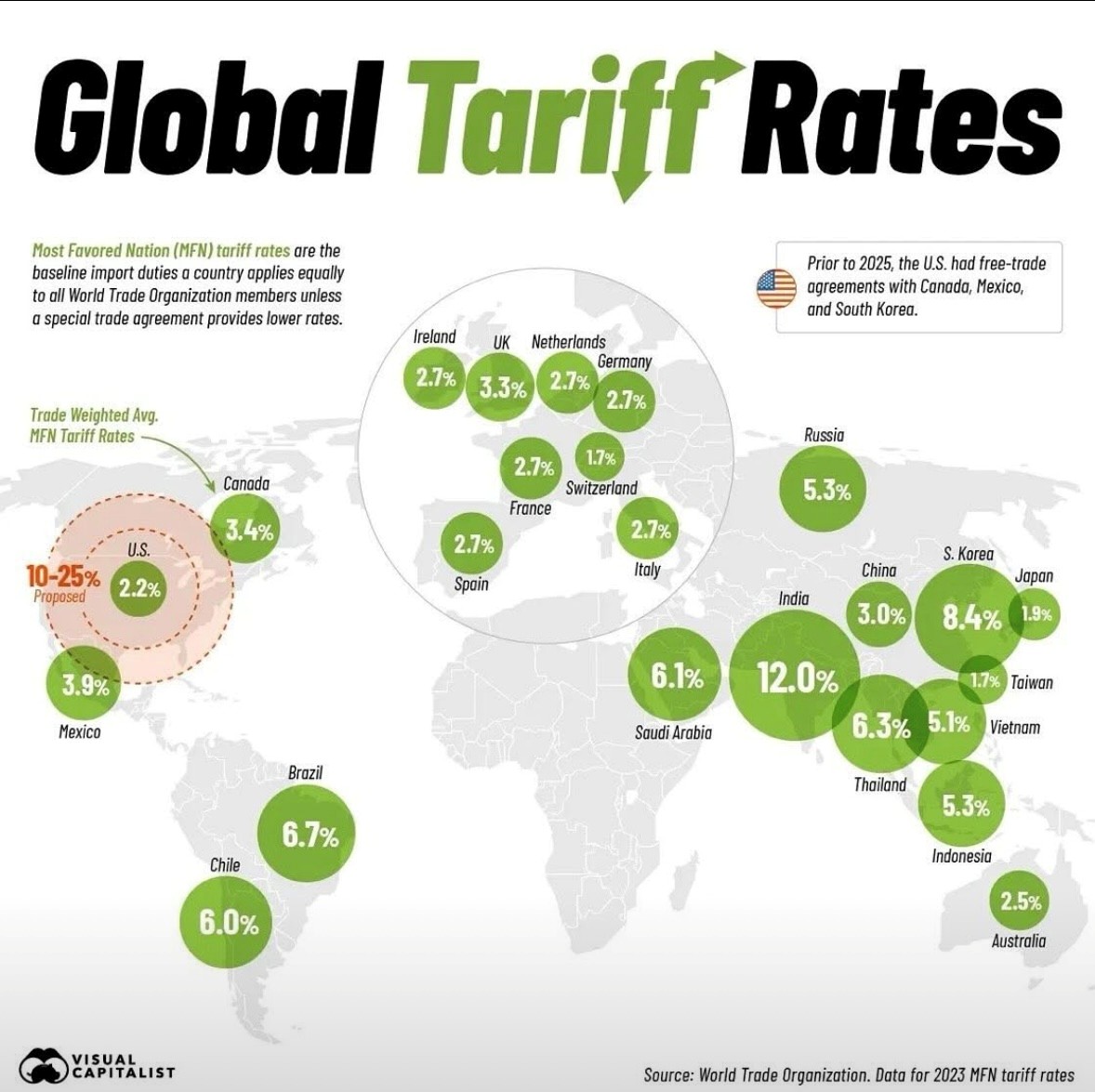
Below are the real duties (source: Luciano Capone, il Foglio). Today – 2 July 2025 – the outstanding tariffs on the US are 21%.
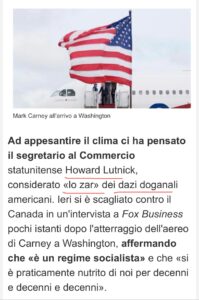
Lutnick completes the picture, into which would enter “58 alleged bureaucratic obstacles to Made in the USA
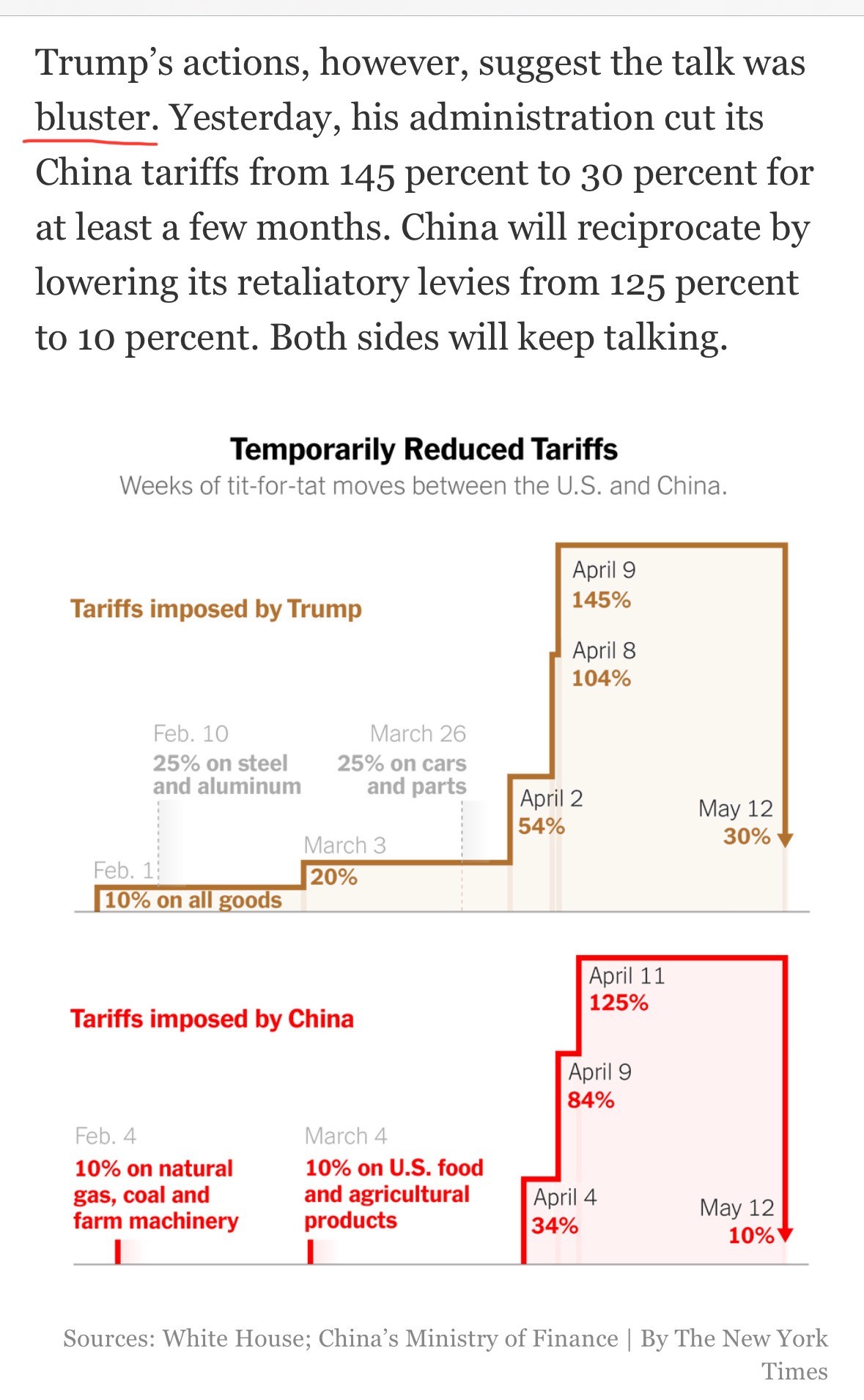
Applying those decreed by Trump, before the last agreement, would double the cost of non-food products imported from China.
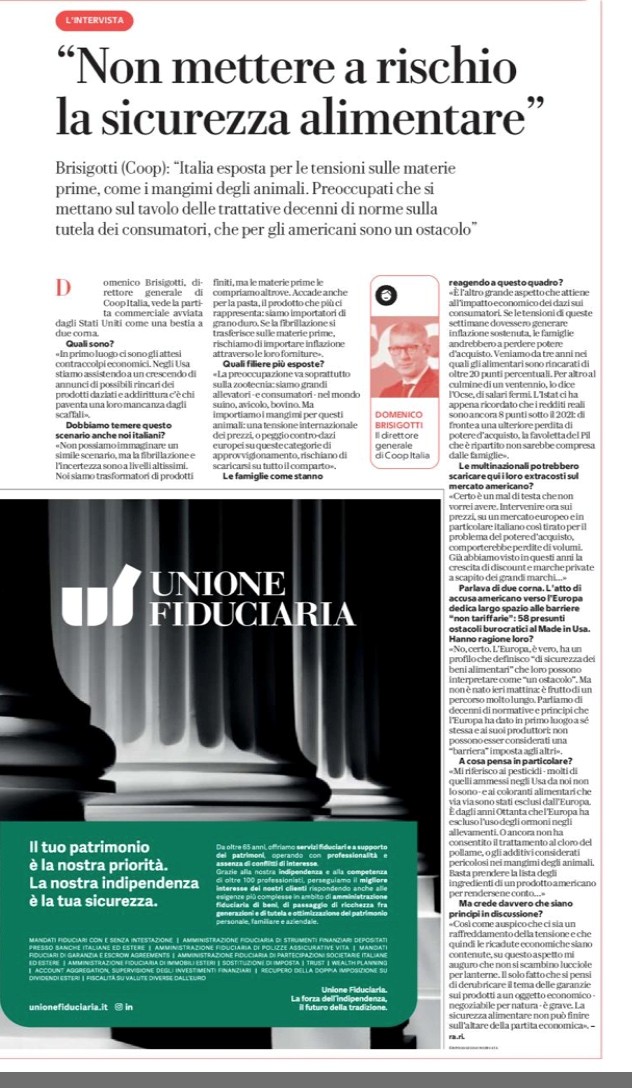
Returning to food , Domenico Brisigotti, general manager of Coop Italia’s Repubblica AF of 5 May 2025 interesting comment on “58 alleged bureaucratic obstacles to Made in USA
” … europe, it is true, has a profile that I define as food safety that they can interpret as an obstacle. but it was not born yesterday morning: it is the result of a very long journey. we are talking about decades of regulations and principles that Europe has given primarily to itself and its producers…”
What are you thinking about in particular?
“I’m referring to pesticides – many of those permitted in the US are not – and food colouring agents that have been excluded from Europe. It is since the 1980s that Europe has excluded hormones in livestock.
Or has not allowed chlorine treatment of poultry, or additives considered dangerous in animal feed. One only has to look at the list of ingredients of an American product to realise this…
food safety cannot end up on the altar of the economic game ‘.
And at the beginning of June , Maura Latini, president of Coop Italia… warned: in order to avoid US duties, one can negotiate on everything, but not on food quality, a strong point in EU rules.
Moreover, wanting to go back decades, dusting off claims that do not take into account the evolution of the world and the reality of the markets.
In fact, Walmart has declared that it willraise prices because of Donald Trump’s trade war. He has declared that – on duties – he will stick to the 9 July deadline with Europe, although it is not clear whether he will charge 10% or 50% (it sounds like a joke but it is not: “All outcomes are still possible, they said, including a failure of the talks, which could lead the US to re-impose the 20% tariff from April or the 50% level threatened in May” ).
“...Above all, the Americans will aim to dismantle as much as possible of the non-tariff barriers to trade, i.e., the welter of technical regulations, requirements, regimes, import licences and standards adopted by the EU to defend its production.
The list of measures deemed discriminatory by the US, denounced in Trump’s 2025 Trade Barriers Report, is 34 pages long.
They range from the import of bananas, which despite a legal dispute with Italy still holds sway, to chemistry, passing through Pfas (widely used chemical compounds, resistant but also persistent in the environment), GMOs, herbicides such as glyphosate (which the EU admits, but many of its states do not), wine labels, meat (hormones and the import of live animals are banned).
Also on the table are barriers to services, starting with taxes on digital ones. And the ‘external’ dimension of a possible agreement in principle between the US and the EU will not be missing. Trump’s number one goal is to contain China, and even with a possible agreement with the Europeans, he will try to create obstacles for Beijing’.
The British, in order to avoid 25% tariffs on steel and aluminium, agreed to buy US meat and ethanol (Le Monde, 31 May 2025). And on taxes on big tech companies, such as Amazon, the Europeans gave in.
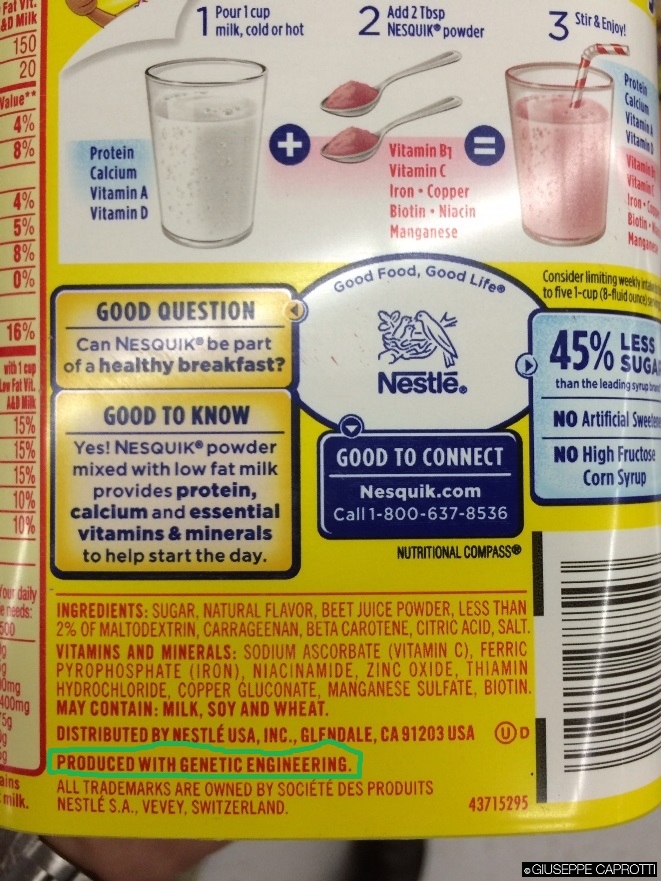
Below : Nesquik produced with genetic engineering (which can be used to produce GMOs) in the US, where very ‘fancy’ labelling flourishes even more than in Europe.
A final positive note from 28 August 2025: “… Regarding ‘non-sensitive’ agribusiness, there is the opening of tariff quotas for fish and agricultural products where European domestic demand is strong and the competitive impact low: fresh and processed fruit and vegetables, dairy, seeds and soya, nuts, pork and bison.
‘Sensitive’ dossiers such as beef, poultry, rice and ethanol remain excluded…’
The knots will come to the boil shortly, before summer 2026: The EU reaches a provisional agreement to finalise the trade agreement with the US.
E : Which US foodstuffs will enter Europe at zero duty.
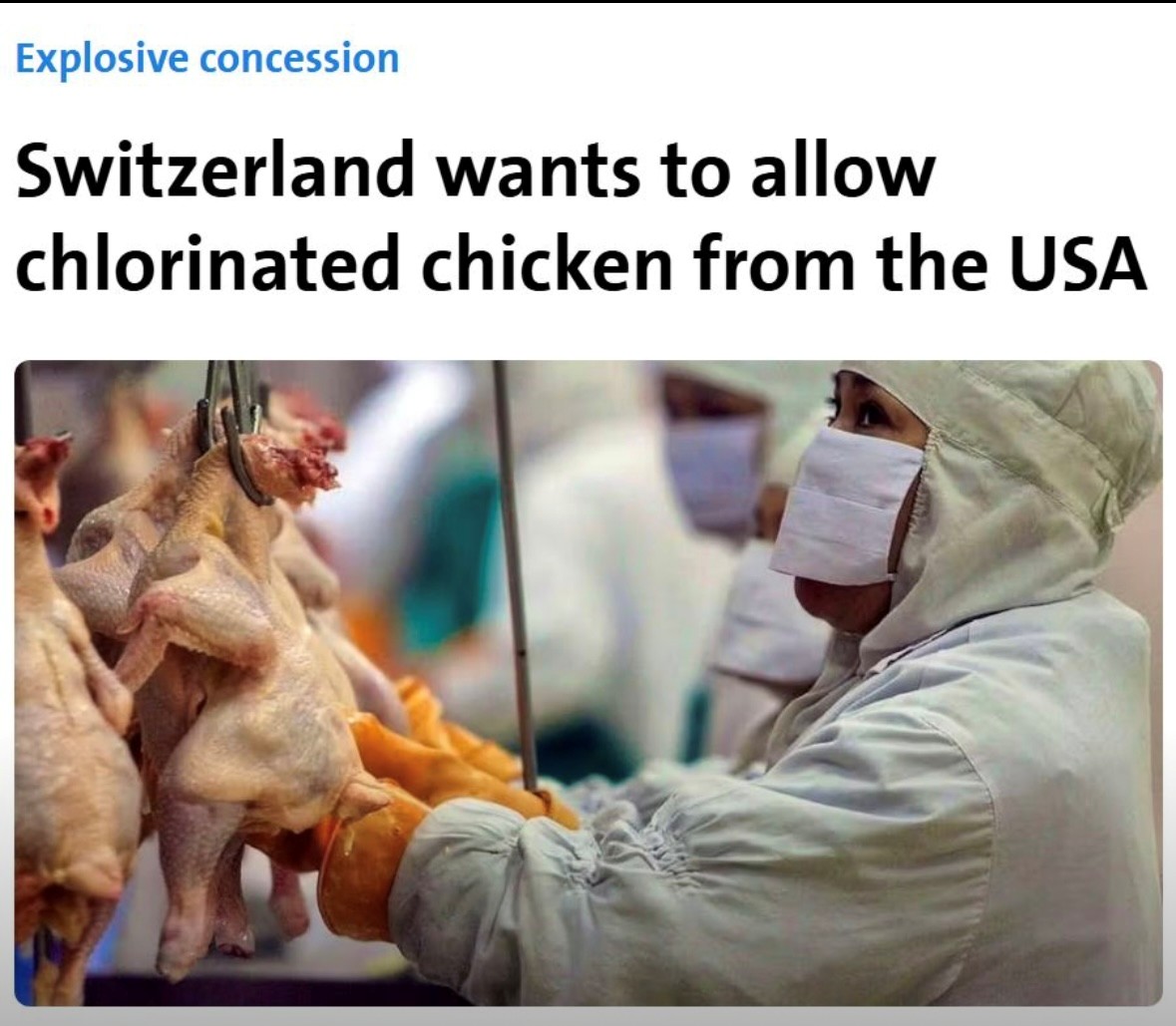
Below : Switzerland, to avoid 39% duties, would be willing to buy chlorinated chicken