Gianni Albertini and the impossible enterprise

The voyage on the pack refers to the value of enterprise, to the importance of the help that one man can give to other men. It is a hymn to hope that must not die. Albertini will do other things in life. His work and passion for golf will absorb him completely. Of that adventure there is little emphasis. If he thinks about it, he weeps.Today, when everything is spectacle, appearances, narcissism, selfishness, a virtual bubble in which the false is confused with the true, that journey is not just a testimony to courage, it is an adventure driven also by a moral duty. It was enough for Albertini to know that he had done what was right. Not out of duty, but because it was right to do so. A universal lesson.

Peppino and Peppino Caprotti: America’s uncles and the Marshall Plan

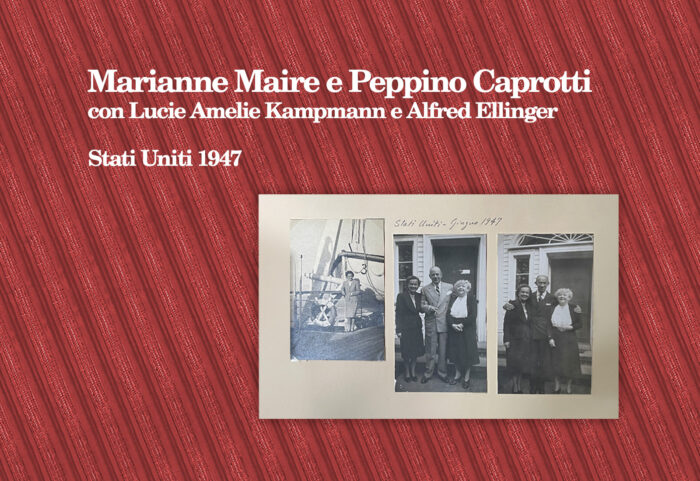
In 1893 Lucie Amélie Kampmann, one of my great-grandmother Fernande's sisters, my grandmother Marianne Maire Caprotti's mother, married Baltimore-born Julian Ellinger and moved with him to the United States. Their son Alfred, grandmother's cousin, will be the conduit for obtaining Marshall Plan funds for Manifattura Caprotti.

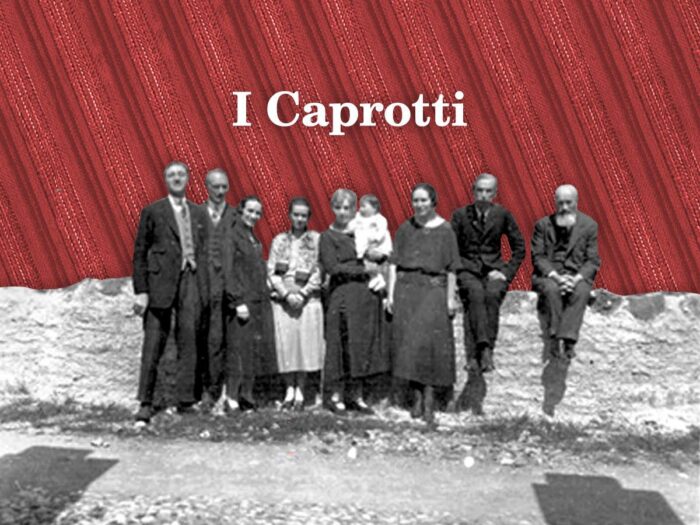
The Caprotti family: from textiles – with Manifattura – to Esselunga

The Caprotti story begins with Antonio del fu Giovanni Battista (1685). The family’s origins lie in agriculture and textiles, until 2009 when, partly due to a sharp drop in orders, the company’s top management decided to close the Manifattura after more than 179 years of activity. In the meantime, the Caprotti family took part in the founding of Esselunga in 1957

The story of the family that created the Esselunga myth

After years of meticulous research and historical reconstruction, my new book Le Ossa dei Caprotti is out. At the centre of the narrative, the events of my family from the textile business at the beginning of the 19th century to the birth and development of Esselunga, debunking myths and legends

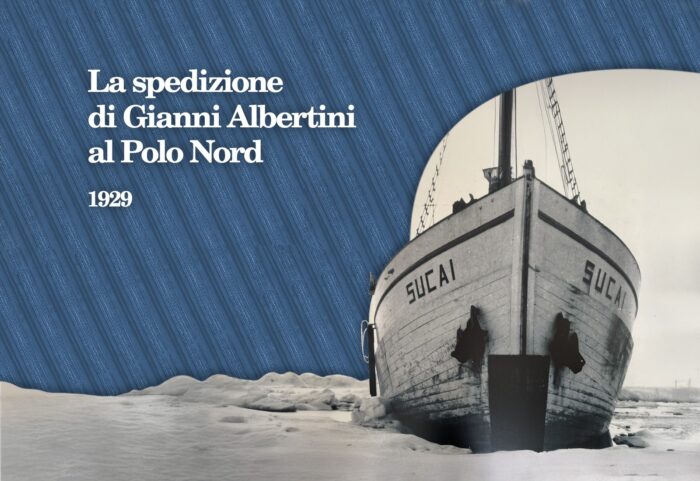
Gianni Albertini: The Arctic Expedition in Search of the Missing of the Noble Expedition (1929)

Gianni Albertini had experienced at first hand, as a member of the expedition, the tragedy of the airship Italia, which had crashed into the North Pole pack in the spring of 1928, and of six crewmen who had remained in the airship's envelope, disappeared in the fog and were never found again. He feels obliged to search for the missing, encouraged by their relatives. The expedition is prepared with an organisational speed that is astonishing even by today's standards, less than three months, and according to criteria of particular efficiency and intelligence.

Gianni Albertini: supporting the Dirigibile Italia expedition (1928)

In the spring of 1928, the airship 'Italia' expedition, commanded by Colonel Umberto Nobile, set off. The aim was to fly over the North Pole for the first time with a precise programme of geographical exploration and scientific research. Unfortunately, the enterprise ended in a dramatic shipwreck, which mobilised a gigantic chain of rescue operations in which Gianni Albertini, one of the most experienced mountaineers and mountain guides, also took part. He experienced the drama first-hand and knew the Arctic for the first time.

Gianni Albertini: mountaineer, explorer and husband of great-aunt Ida Quintavalle

Gianni (Gianni) Albertini graduated in engineering at a very young age and became such an expert in rock, mountains and snow that he opened several new routes to the summit of Mont Blanc in the 1920s. An adventurous flyer (he tried to break the record for flying between London and Cape Town in 1938), he owes his fame to the Heimen-Sucai Arctic expedition of 1929, set up to search for those missing from the Nobile expedition the year before. He married Ida Quintavalle, twin sister of my maternal grandmother Luisa Quintavalle.