James Hugh Angleton: World War II and Service in the OSS
James Hugh Angleton's pre-war experience, skills and knowledge made him a valuable asset to American intelligenceJames Hugh Angleton: the post-war period, the return to the United States
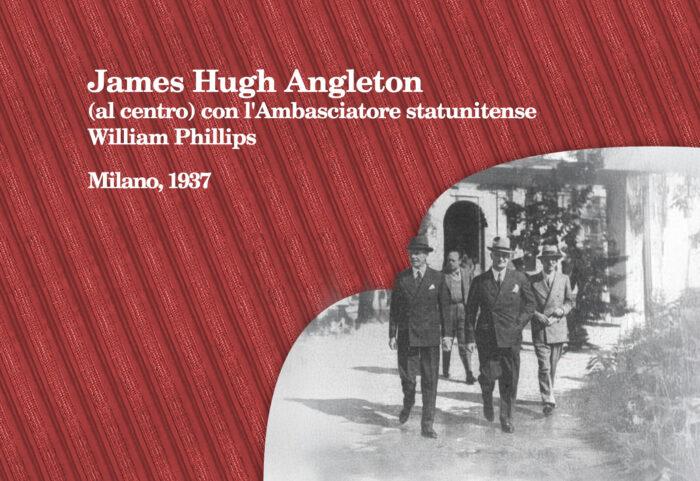
James Hugh Angleton is the President of the US Chamber of Commerce in Milan in the 1930s; he knows how to get into the 'right places' and manages to build up a network of acquaintances useful for keeping his finger on the pulse of the country's economic and political situation. He left Italy during the war in September 1941, only to return two years later as a military and intelligence agent. After the war he settled in Rome, where he continued his activities and resumed his position as President of the US Chamber of Commerce, but in the 1960s he returned permanently to his hometown in the US, where he died in 1973.James Hugh Angleton (1888 – 1973): early years, family, Italy
The life of James Hugh Angleton exemplifies the challenges faced and opportunities grasped by middle-class Americans in the 20th century. Born into a modest family in Illinois, he embodies the American dream of a 'self-made man'. His life is marked by professional choices that lead him to become a successful entrepreneur and a major player in trade between the United States and Italy, particularly during a period of political turmoil and war. A decorated wartime counter-espionage officer, he perhaps played a key role in the birth of Esselunga.Marco Brunelli, Caprotti’s friend – enemy
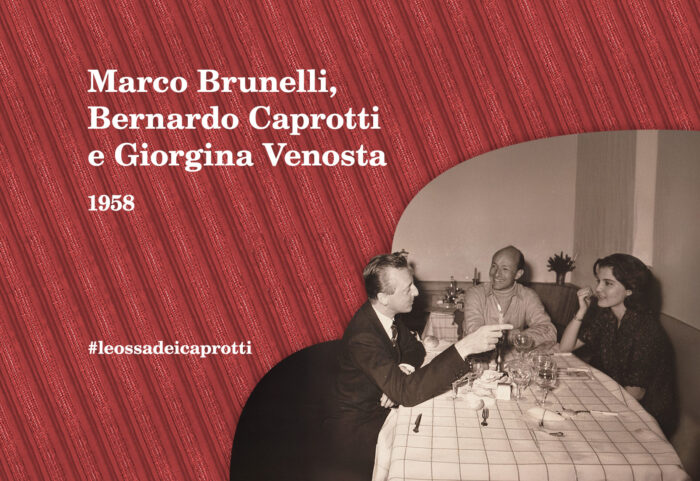
The entrepreneur who was to become one of the protagonists of large-scale distribution in Italy was born as an antiquarian, and one of the most highly regarded in Milan. His was the organisation of a memorable exhibition at the Villa Reale, in 1955, dedicated to the 'Venetian 18th century'; among the lenders of the works were the most beautiful names in the city and beyond, including my grandmother Marianne [Maire in Caprotti]. And among the most important art collectors of the period who were also Brunelli's clients was James Hugh Angleton, president of the American Chamber of Commerce in Italy.Guido Venosta, the ‘illustrious creator of the Association for Cancer Research’
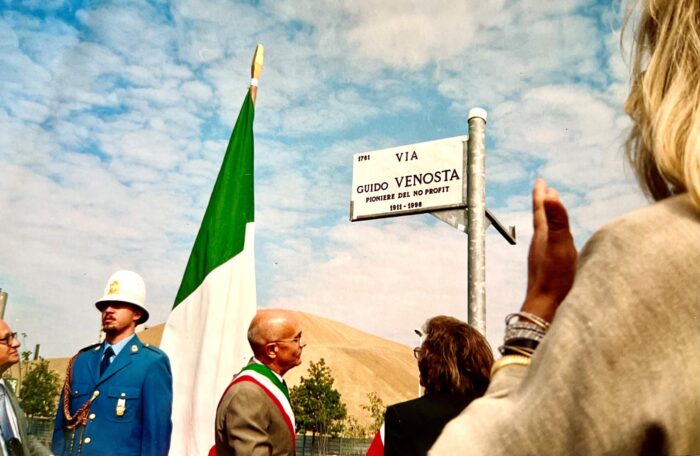
“If Italian oncological research is today at the forefront in the international arena, a certain amount of credit goes to Guido Venosta”
Umberto Veronesi and Giuseppe Della Porta in Fondamentale, 5 April 1998
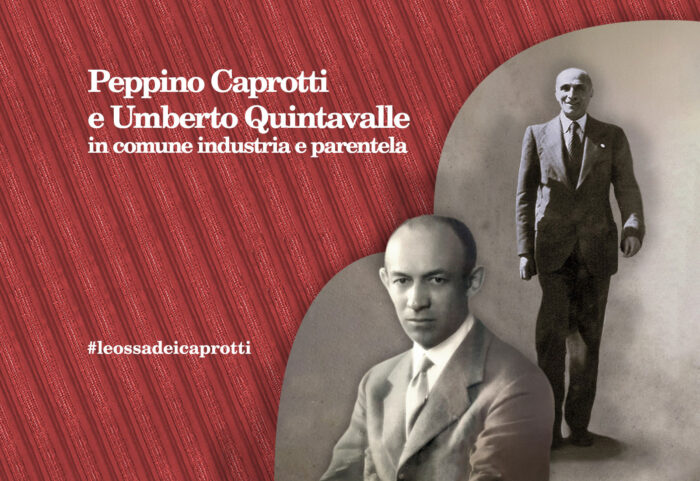
Ercole Marelli and Manifattura Caprotti: first industrialists, then relatives
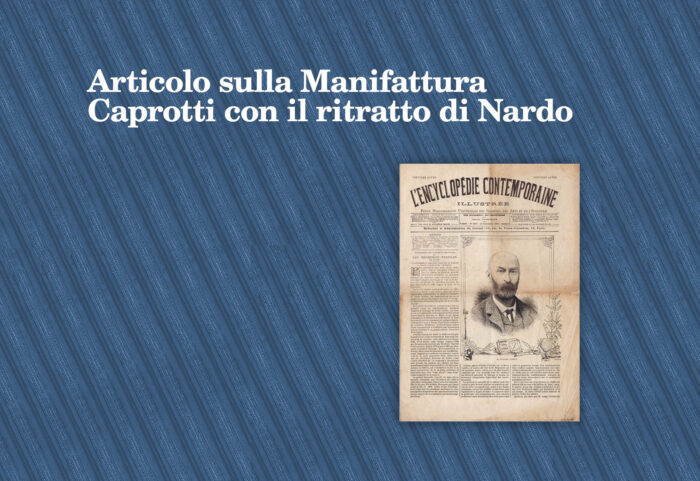
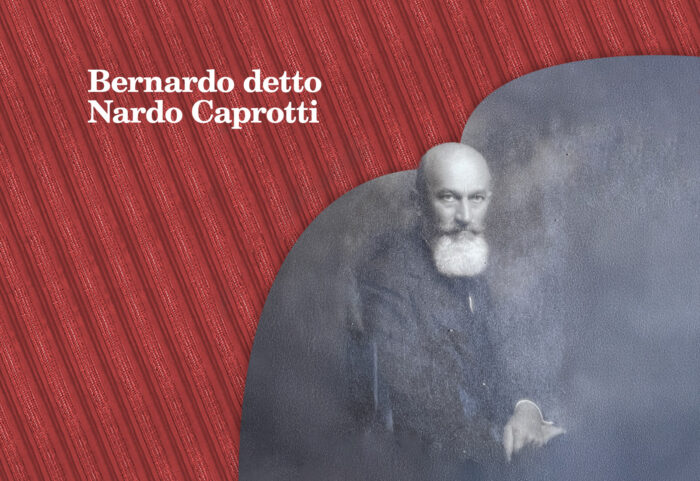
The comparison between Ercole Marelli and Manifattura Caprotti highlights not only the differences in industrial sectors - Marelli, founded in 1899, operates in the electromechanical sector, Caprotti, founded as an industry in 1840, operates in the textile sector -, but also how both represent significant histories of Italian industry, and exploring their stories offers interesting insights into economic and social dynamics in Italy.Aldo Bassetti and the Friends of Brera
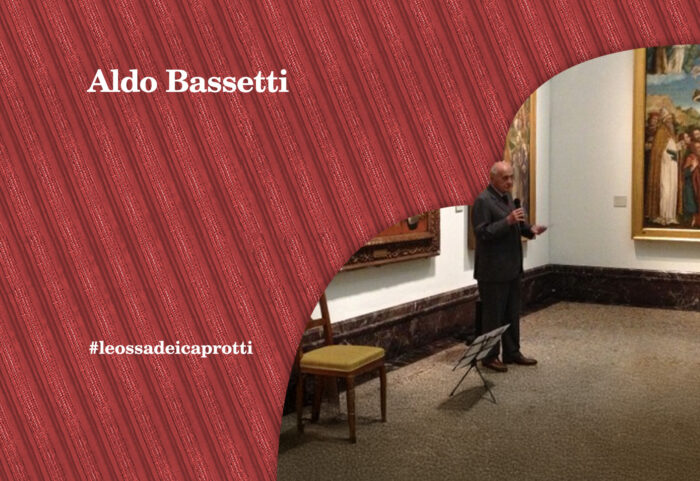
Aldo Bassetti's initiative and energy in the field of art as well, with his long commitment as President of the Amici di Brera from 2007 to 2020 and then as Honorary President until his death in 2021, is perhaps one of the things that is most noticeable about him when writing not only about the projects, some of them very important, to which he gave life, but also about his many initiatives.Political-entrepreneurial commitment: Aldo Bassetti and ‘La Repubblica
Aldo Bassetti played a crucial role in the founding of 'La Repubblica', launched in 1976, together with other partners including Carlo Carla Caracciolo and Eugenio Scalfari with whom, a decade earlier, he had already helped save the weekly 'L'Espresso'.Aldo Bassetti. The political-entrepreneurial commitment: the ‘Piccolo Naviglio’ company and the ‘Espresso’
Almost by chance, in the early 1960s, Aldo Bassetti found himself joining a group that would save the weekly 'L'Espresso'. It is called 'Piccolo Naviglio', and includes, in addition to Bassetti, young heirs from some of Italy's major industrial dynasties: in fact, in addition to Bassetti, there are Roberto Olivetti and Vittorio Olcese.Aldo Bassetti, politics and culture: the Turati Club
The Circolo Culturale (later Club) Turati was founded in 1961 with a board of directors consisting of Aldo Bassetti and, among others, Vittorio Olcese and Eugenio Scalfari with whom, in those very years, he went into partnership to save the weekly 'L'Espresso'.The entrepreneur: Aldo Bassetti, beer and ‘family’ water
After the First World War, the Bassettis thus acquired two of the oldest Italian breweries, Spluga in Chiavenna and Birrificio Angelo Poretti in Induno Olona. Thanks mainly to the latter, Aldo Bassetti took his beer to southern Italy and imported and distributed the great Danish brands Tuborg and Carlsberg. In addition to beer, Bassetti invested in mineral water, for example producing Frisia mineral water in the Spluga plant, which in the 1980s became the first to be marketed in Milan.