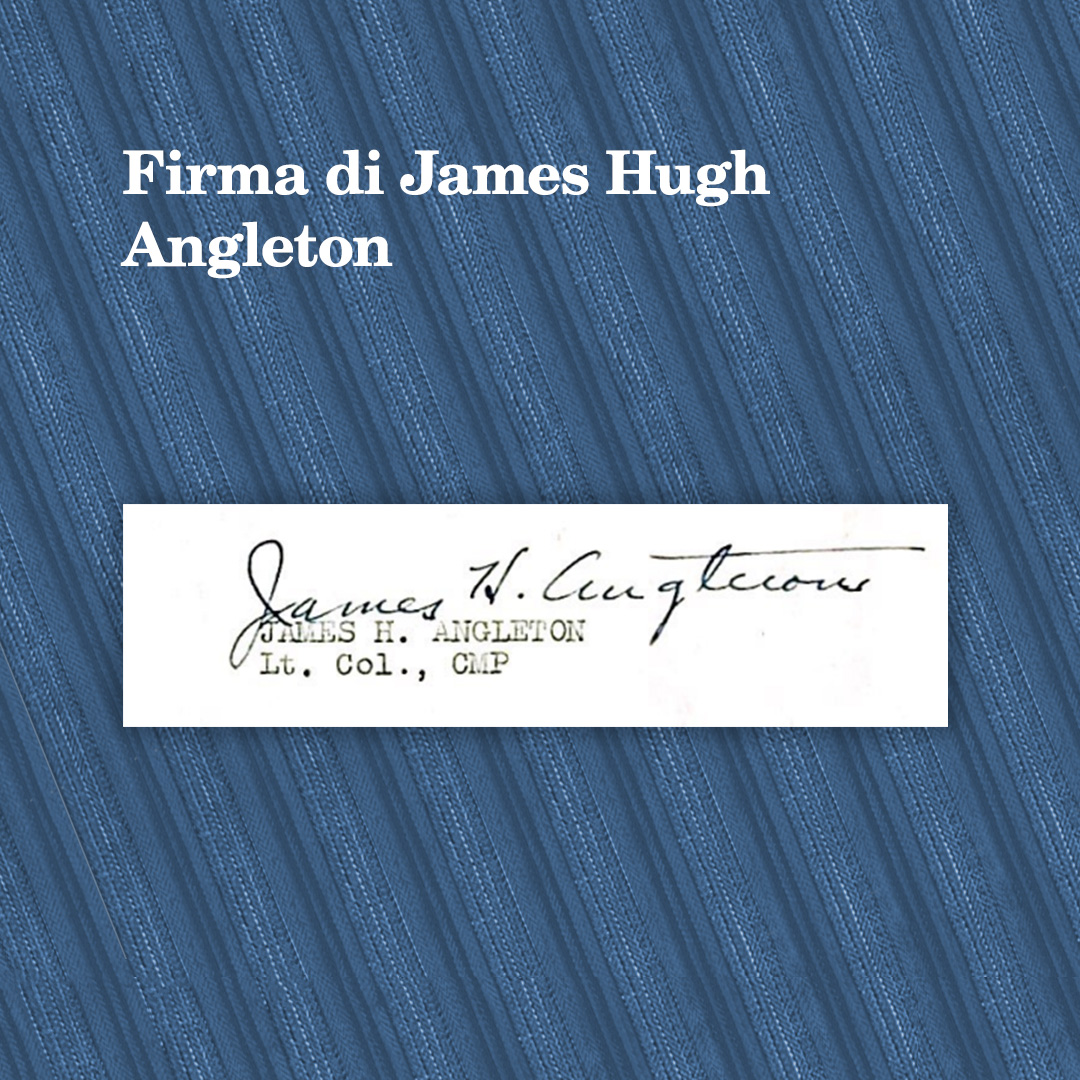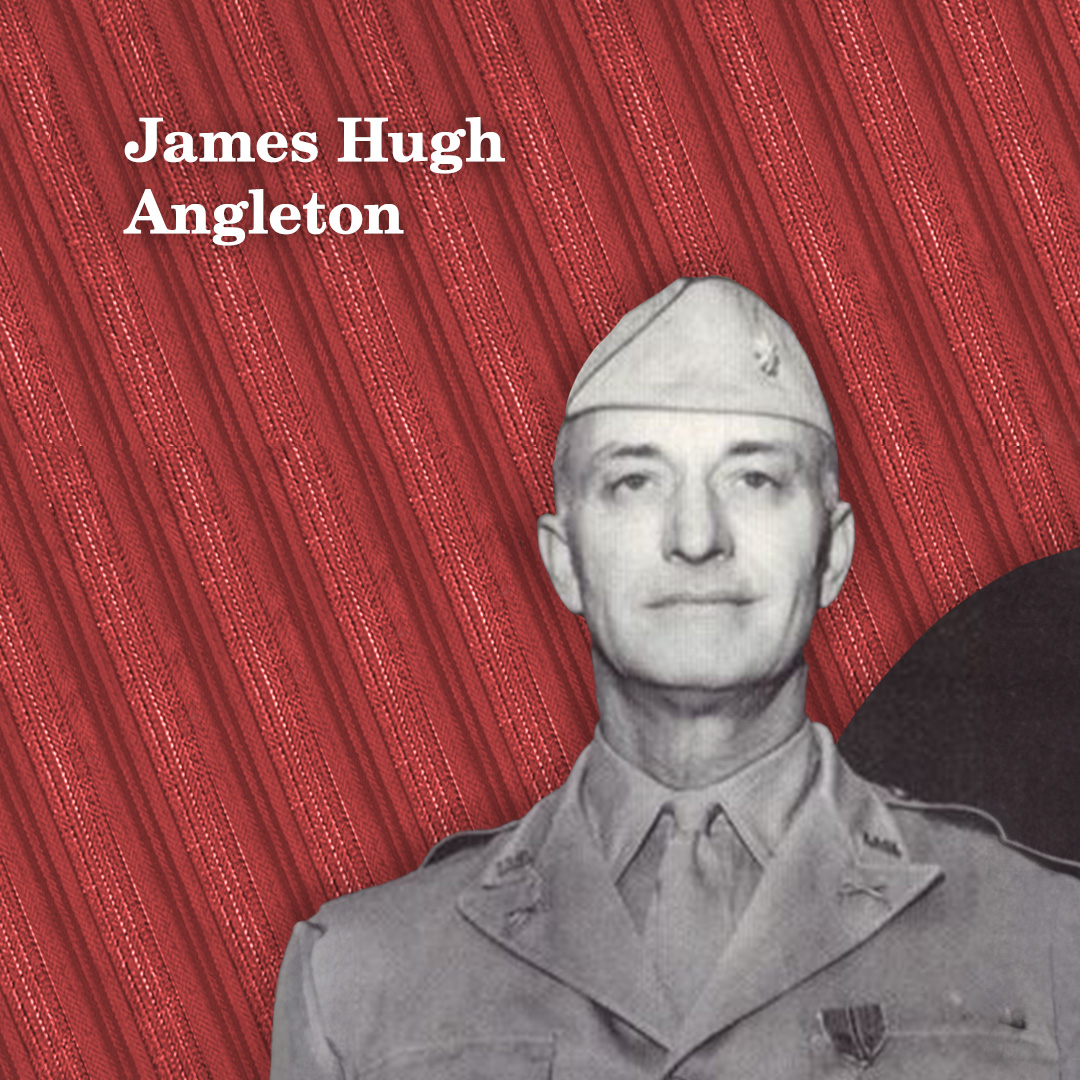
James Hugh Angleton, a man with an entrepreneurial background, President of the American Chamber of Commerce in Italy and a person with an extensive and valuable network of contacts in Italy, found himself operating in a crucial context during the World War. His pre-war experience, skills and knowledge made him an invaluable asset to American intelligence. His missions, ranging from economic intelligence gathering to involvement in sensitive operations such as the transfer of Japanese diplomats to the Vatican, highlight the importance of local knowledge and interpersonal relationships in the success of military operations.
Shortly before the United States’ official entry into the war, in December 1941, James Hugh Angleton, president of the American Chamber of Commerce in Milan (and father of the future CIA chief during the Cold War, James Jesus Angleton), returned home with his family, his wife and three of their four children. Already an officer during the First World War, he was recalled and with the rank of major sent to the School of Military Government in Charlottesville, Virginia. He did not pass the qualifying examination, and indeed, the examining officer in his report reiterated the point by describing his Italian as ‘poor’: after eight years spent on the Peninsula, it was basically made up of words and phrases related to commerce, for the rest, the candidate was unable to hold a conversation and did not write correctly. However, given his many contacts and his experience in Italy, as well as the fact that he is a person with a lot of potential, the elderly officer (Angleton is now over fifty) is considered decidedly useful, and is given a second chance which he succeeds in taking.
Indeed, when the time comes Angleton, with the rank of lieutenant colonel, joins the staff of General Mark Clark, commander-in-chief of the 5th Army that would lead and win the Italian campaign from 1943 to ’45.
From July ’43, he was part of the OSS (Office of Strategic Services, the forerunner of the CIA): he managed to speak three languages (in addition to Italian, also French and German), but above all, from his years at the American Chamber of Commerce in Italy, he maintained many high-level contacts, both civil and ecclesiastical, which he knew how to use. From 10 September 1943, two days after the Armistice, to 10 August 1945, the day on which he returned to the United States and his mission ended, he acted as an informer, administrative officer, liaison officer, propaganda officer and ‘general intelligence’ officer (i.e. any task related to espionage), following the army as it gradually moved up Italy, from Salerno to Naples, then Florence, Rome and finally Milan. His service is described as ‘very satisfactory’.
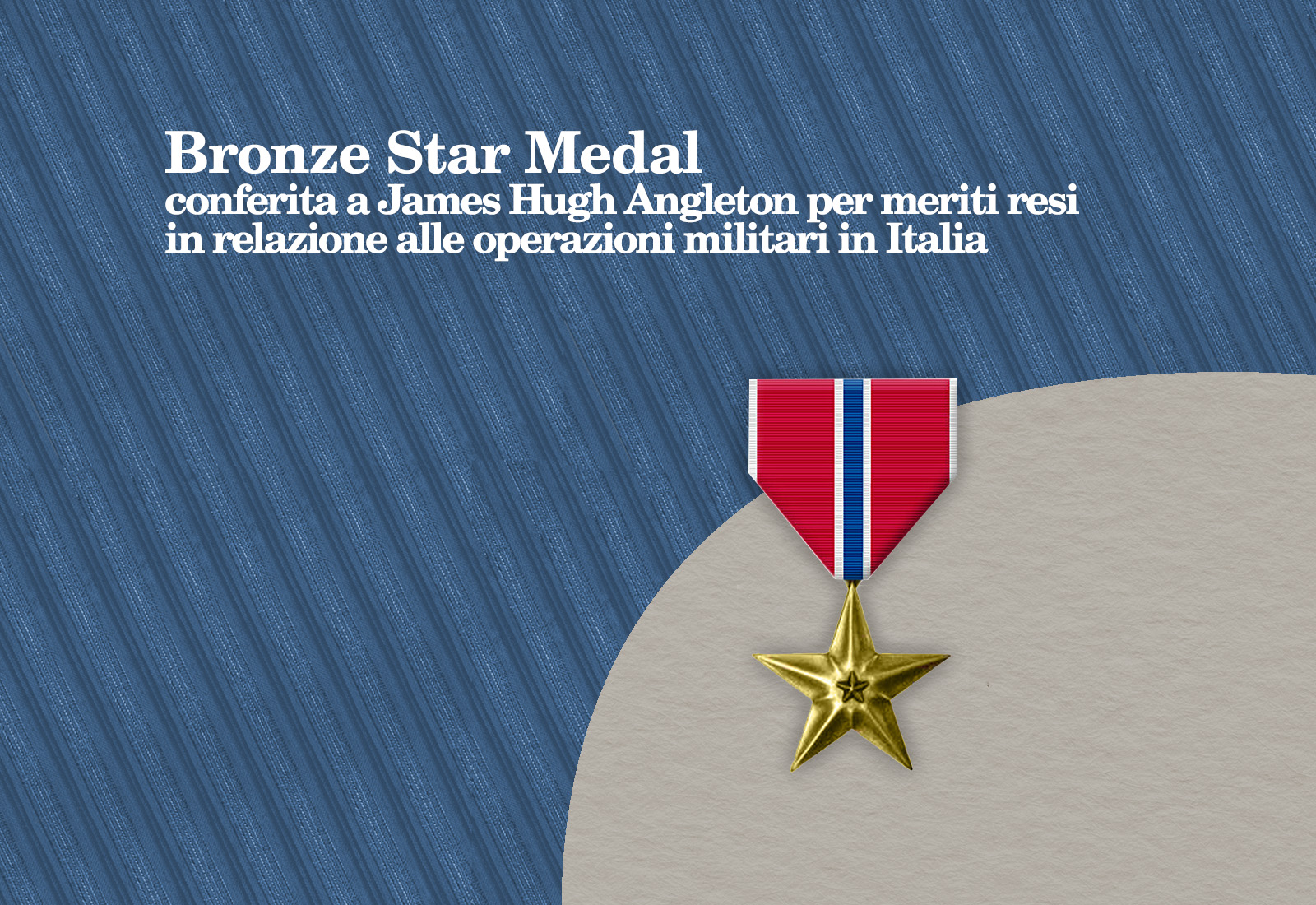
The notes in his military file at the OSS testify to honourable conduct, which earned him a Bronze Star Medal ‘for merits rendered in connection with military operations in Italy from 15 August 1944 to 26 June 1945’. The summary of the motivation could have been taken from a novel or a war film: ‘As Liaison Officer between the Office of Strategic Services and the Allied Military Government of the Fifth Army, Lieutenant Colonel Angleton provided valuable and necessary information for the completion of the Allied Military Government’s mission in Italy. Shortly after the Fifth Army liberated Rome, he participated in the discovery and raid on a secret German radio school, seizing important codes, files and valuable documents that led to the arrest of twenty people who would otherwise have been dangerous to Allied security. He also carried out the extremely delicate mission of organising the surveillance and subsequent transfer to the Vatican of Japanese diplomats accredited to the Holy See. With the Fifth Army’s spring offensive in northern Italy, Lieutenant Colonel Angleton travelled to each newly conquered city, gathering valuable and accurate business information from former business associates on factories, warehouses, supply depots and key personnel to be contacted by the military authorities. His profound knowledge of Italian business affairs, both in the export and import sectors, and his skill and discernment in bringing valuable information to the attention of the Allied military government, as well as his consistently sound advice on economic matters, were of great help to the officers of the Allied military government in carrying out their difficult mission in the industrial areas of northern Italy.’ This is why he is considered an officer whose motivation, practical intelligence, emotional stability and social relationships are ‘Above Average’ and therefore recommended for higher command.
On the other hand, it was his many connections that got him into the German radio school. And his emotional stability must have helped him a lot when he collaborated in the military police investigation into the partisan bombing of Via Rasella (in which many German soldiers died), personally interrogating the notorious Quaestor of occupied Rome, Pietro Caruso, and when he assisted in supervising the recovery from the Fosse Ardeatine of the bodies of Italians killed in reprisal.
For merits rendered to the Italian government, James Hugh was also awarded a Silver Medal for Military Valour and the Cross of Commander of the Order of Saints Maurice and Lazarus.
The OSS would have liked to keep him, such an officer: but he expresses the desire to return to Italy and stay there, if he can find suitable accommodation, both as a civilian and as a soldier. And he returns to Italy, as a civilian, as soon as things have calmed down a bit after the storm of the war.
Angleton’s story is linked, in Italy, to that of Marco Brunelli the entrepreneur who was to become one of the protagonists of large-scale distribution in Italy was born as an antiquarian, and one of the most highly-rated in Milan. His is the organisation of a memorable exhibition at the Villa Reale, in 1955, dedicated to the ‘Venetian 18th century’; among the lenders of the works were the most beautiful names in the city and beyond, including my grandmother Marianne [Maire in Caprotti]. And among the most important art collectors of the period who were also Brunelli’s clients was James Hugh Angleton, president of the American Chamber of Commerce in Italy…
…It was James Hugh Angleton, a key man in commercial relations between Italy and the United States, an art collector as well as the father of James Jesus, the first head of the CIA station in Rome, who spoke to Brunelli about the American tycoon’s idea of opening a chain of supermarkets in Italy [the future Esselunga] as he had already done in other parts of the world. Rockefeller, among others, founded IBEC in 1947, a company whose aim was to combine the goal of fair profit for investors with the philanthropic one of helping the poorest countries in the development of the basic economy, in order to improve their bleak living conditions…
Sources:
U.S. ARCHIVE.ORG, James Hugh Angleton OSS Personnel File, 10 October 1945.
GENEANET – T. DOWLING, Family Tree of James Hugh Angleton.
“James H. Angleton Dead at 84; National Cash Register Officer“, The New York Times, March 7, 1973, Page 46.
Bibliography:
J. MORLEY, The Ghost. The secret life of CIA spymaster James Angleton, New York, St. Martin’s Press, 2017.
Spartacus Educational, James Angleton.
@FaceBook group, post 12 January 2021.
G. CAPROTTI, Le Ossa dei Caprotti. Una storia italiana, Milan, 2024/3.
ID., Le Ossa dei Caprotti. The Caprottis and the Supermarkets: James Hugh Angleton, father of James Jesus, 1960s. Cues from the book.
ID., Le Ossa dei Caprotti. The Caprottis, the birth of Esselunga and US counter-espionage: James Hugh and James Jesus Angleton. Cues from the book.
ID., James Hugh Angleton, the spy who facilitated the birth of Esselunga, 17/11/23.
ID., Le Ossa dei Caprotti. An Italian story, beyond the false myth of Esselunga’s founder, 09/02/2024.