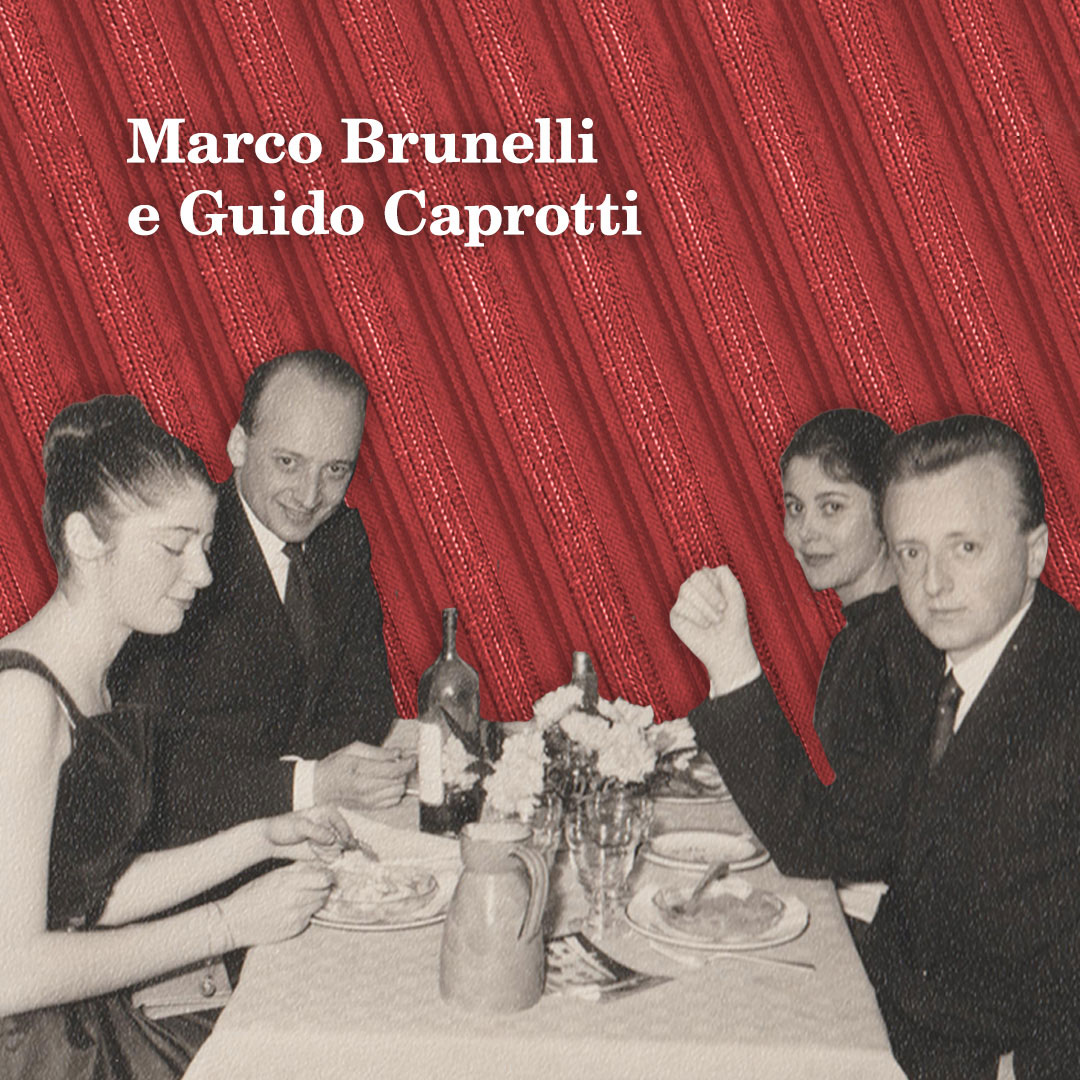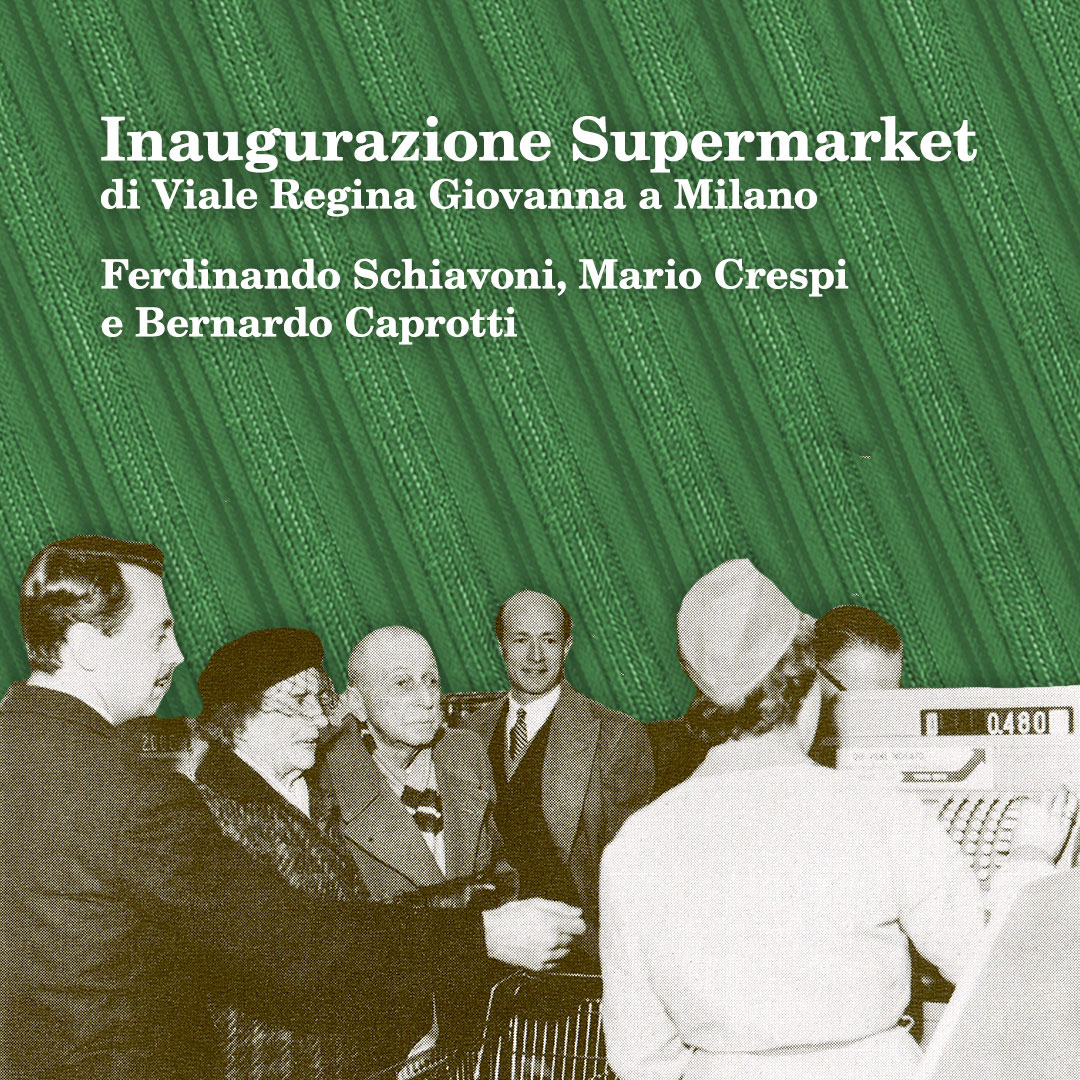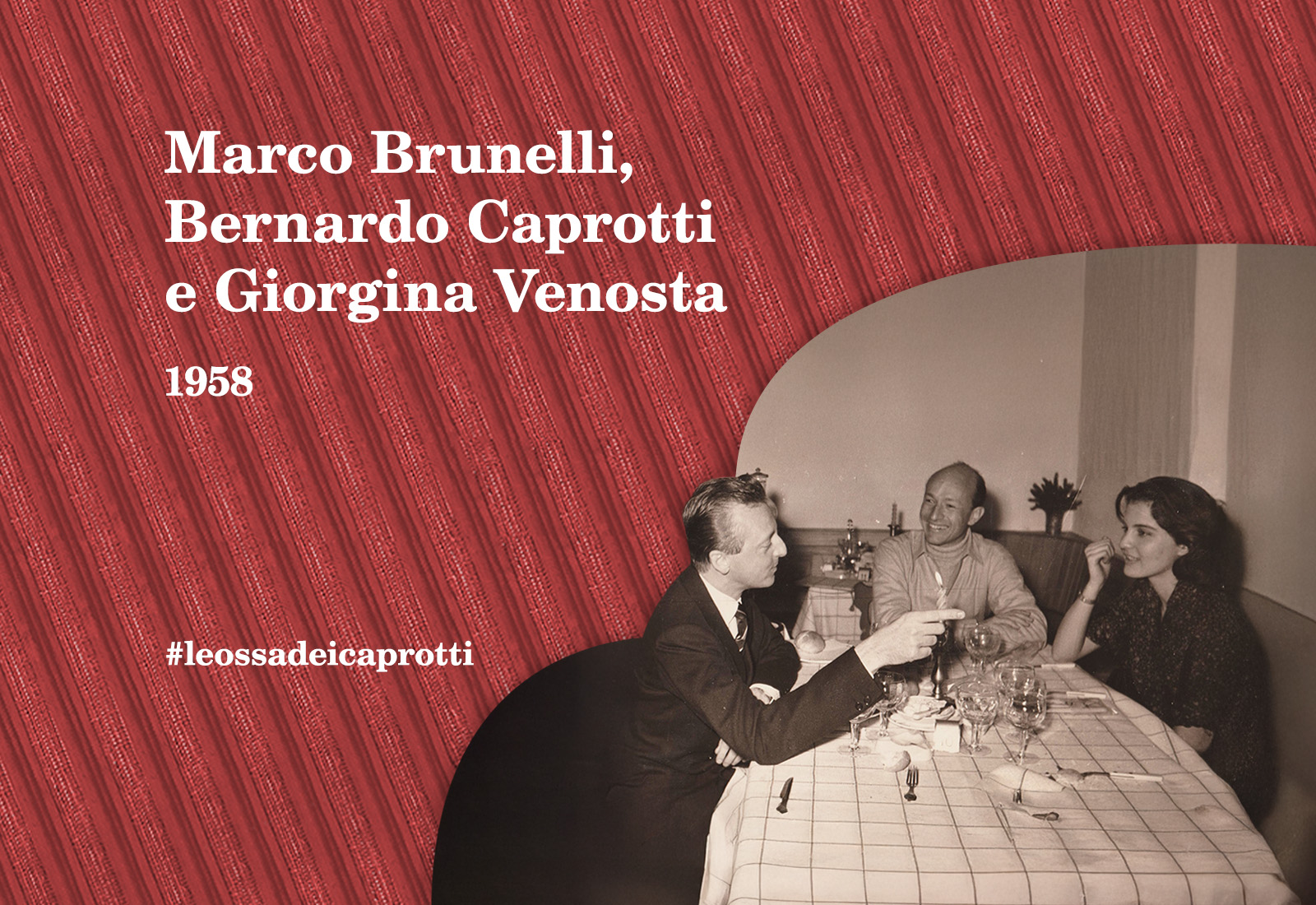
Marco Brunelli, Bernardo Caprotti and my mother Giorgina Venosta
From the text of my speech at the Franco Parenti Theatre held on 22 May 2024:
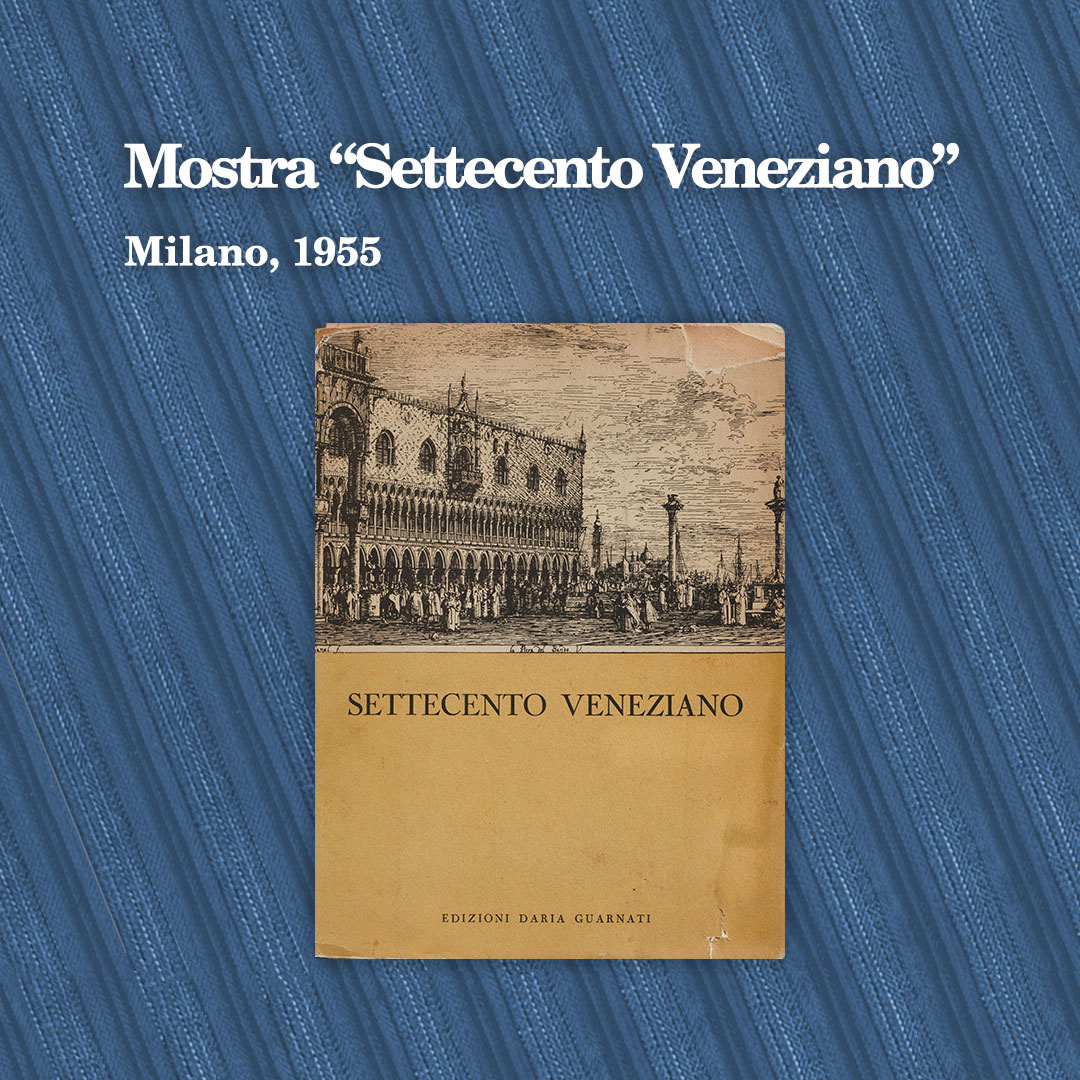
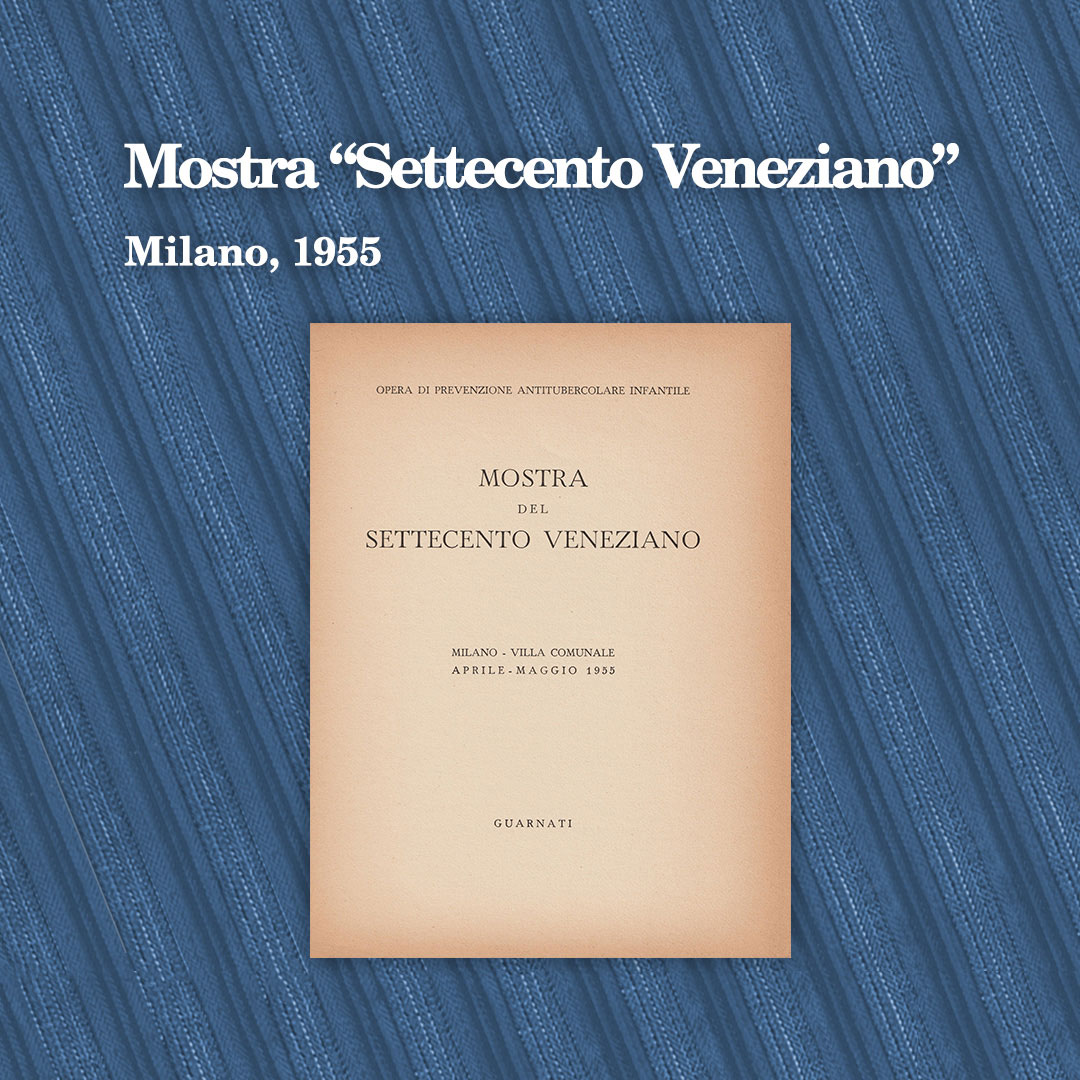
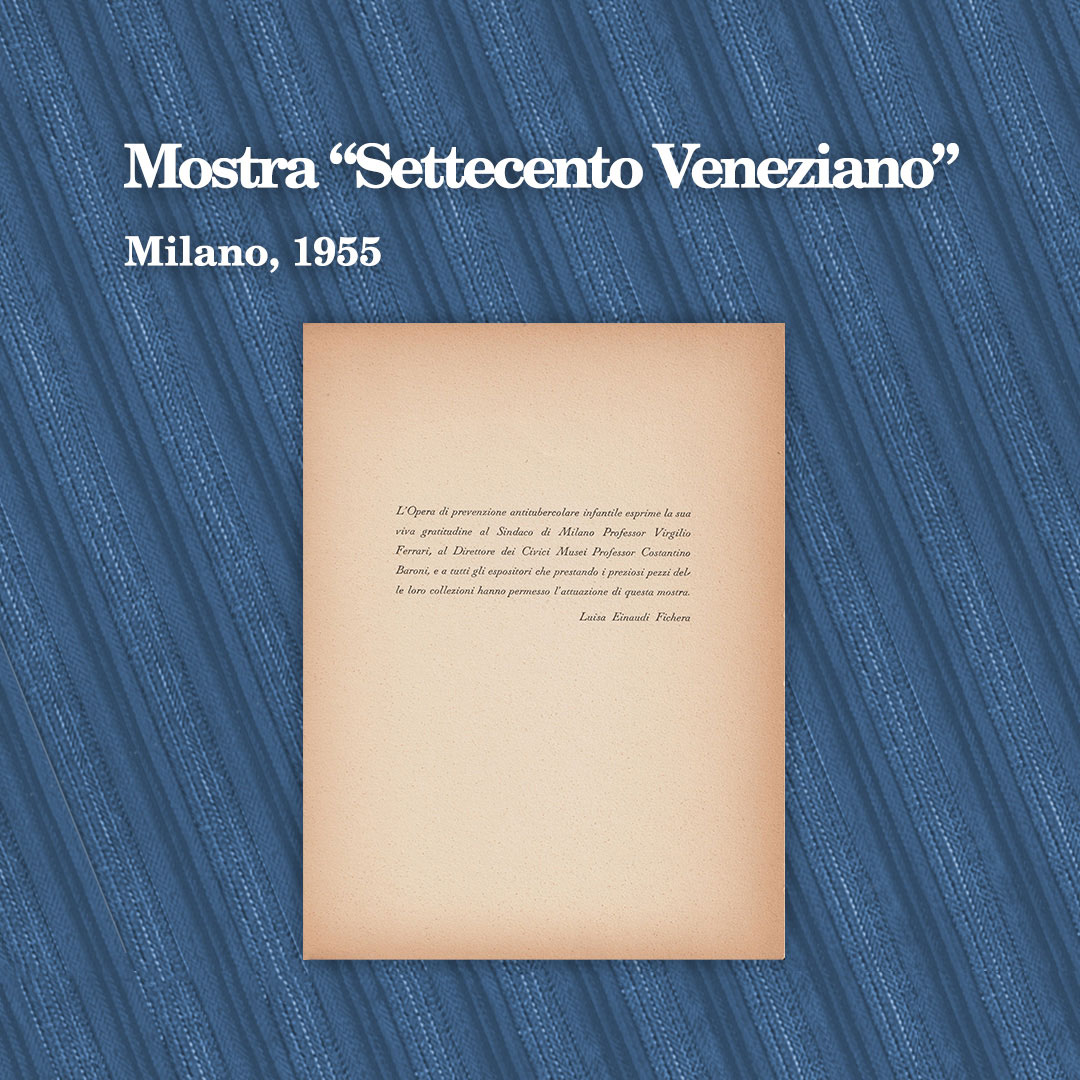
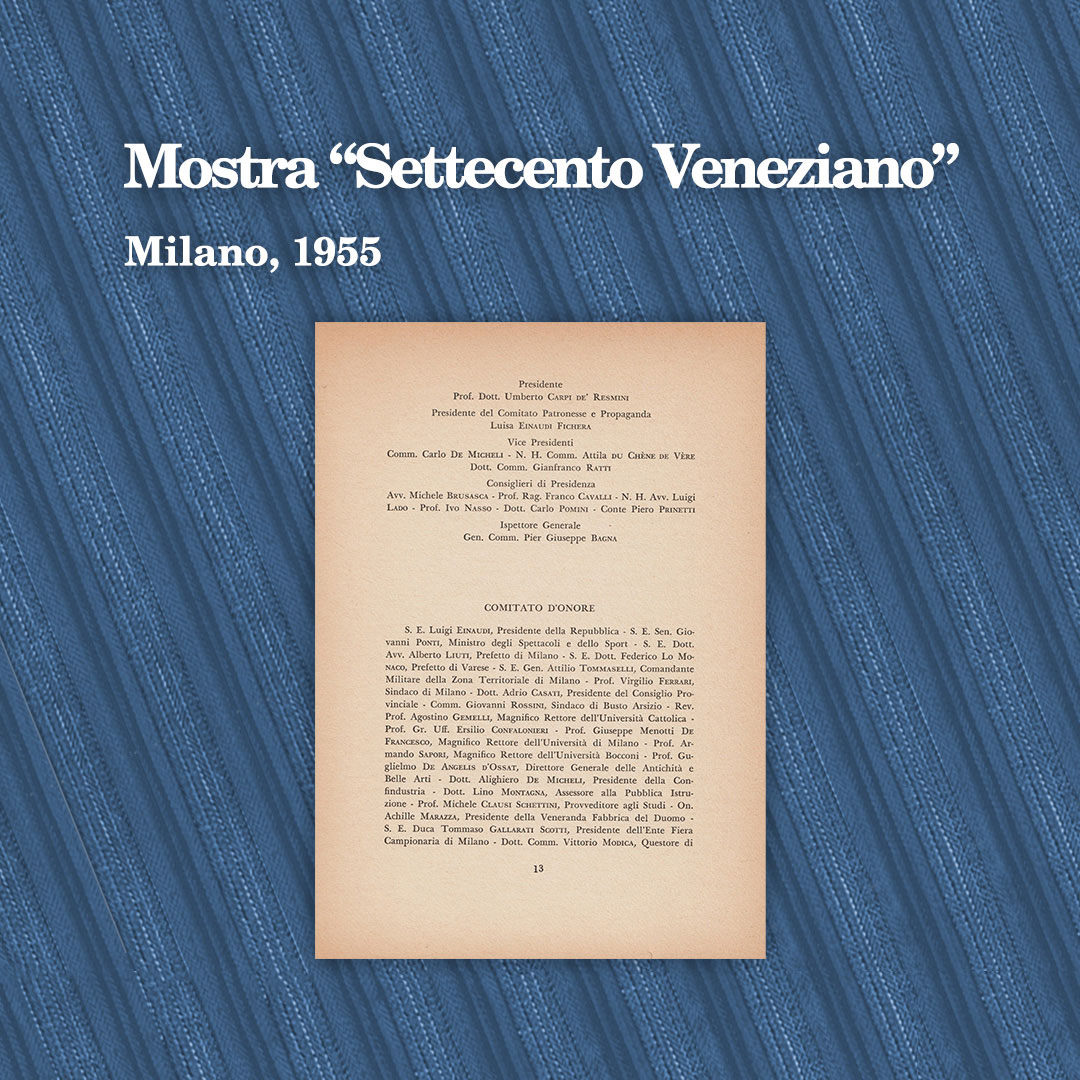
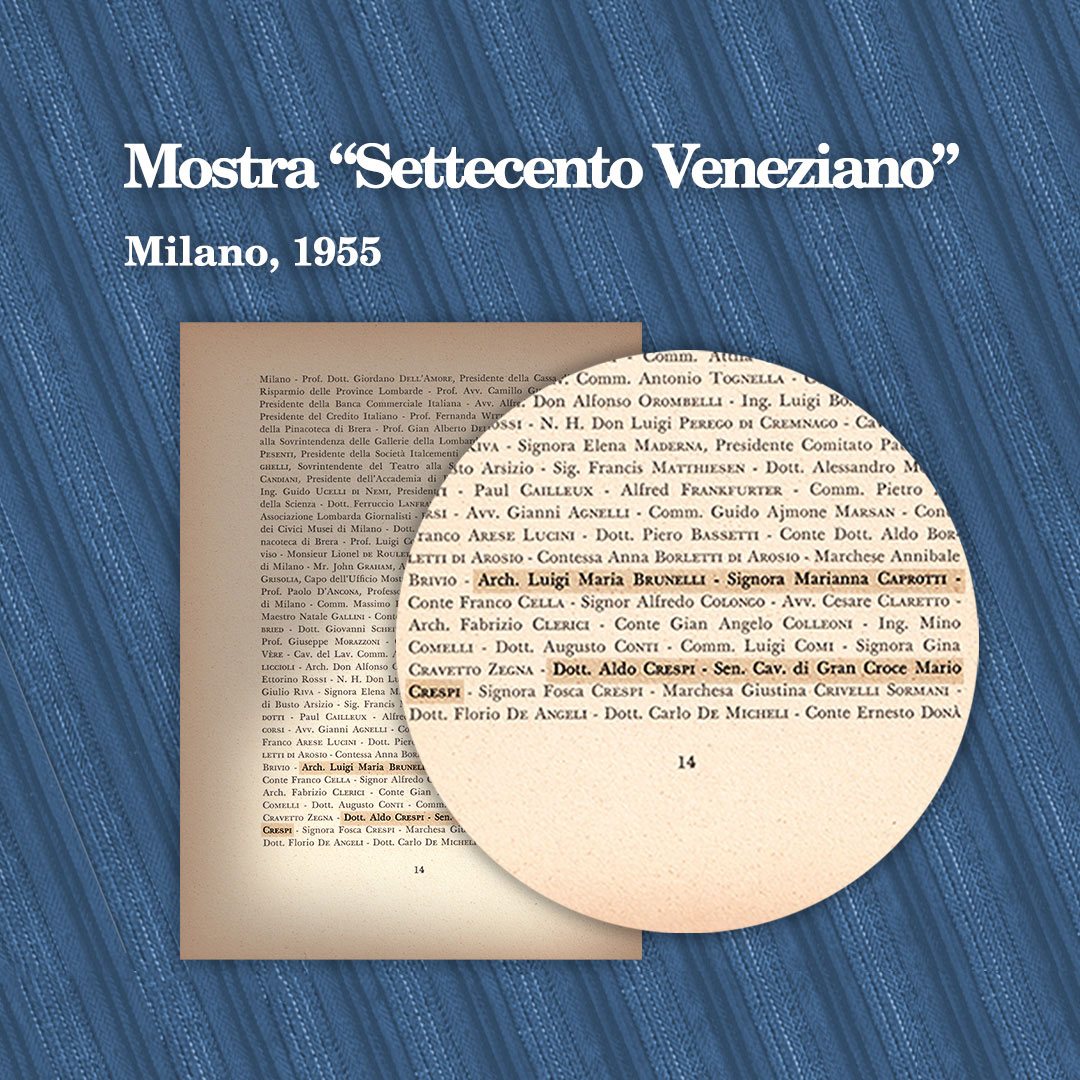
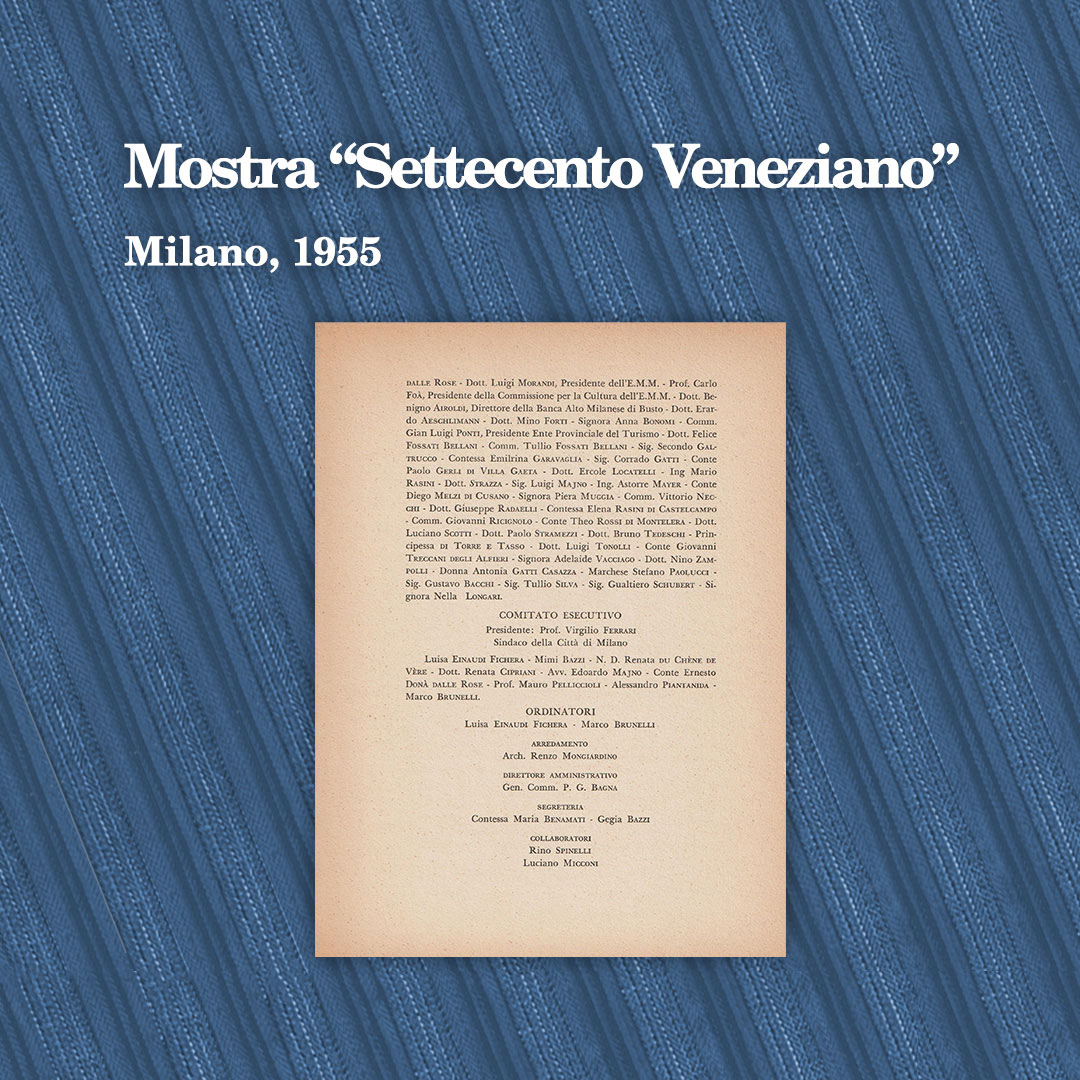
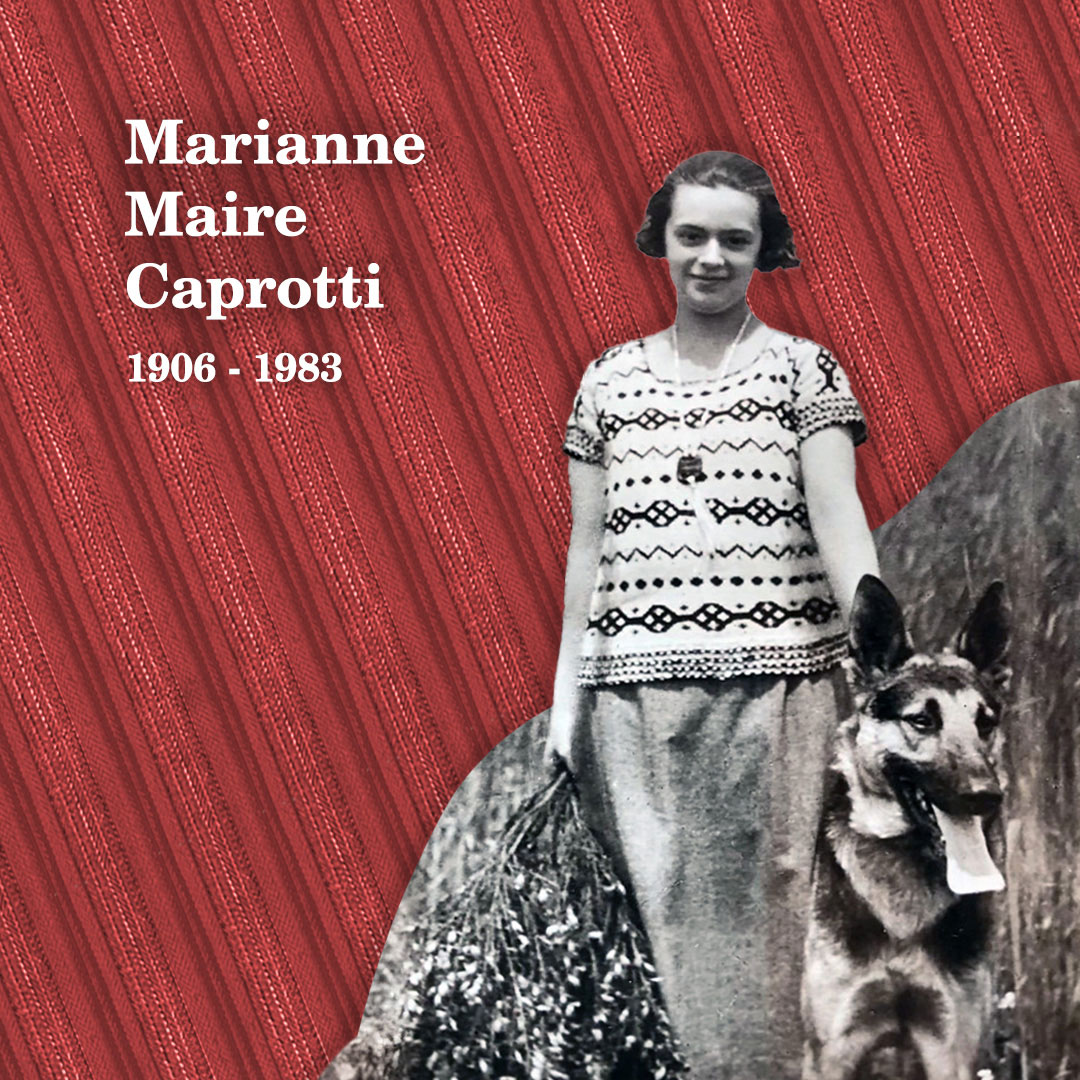
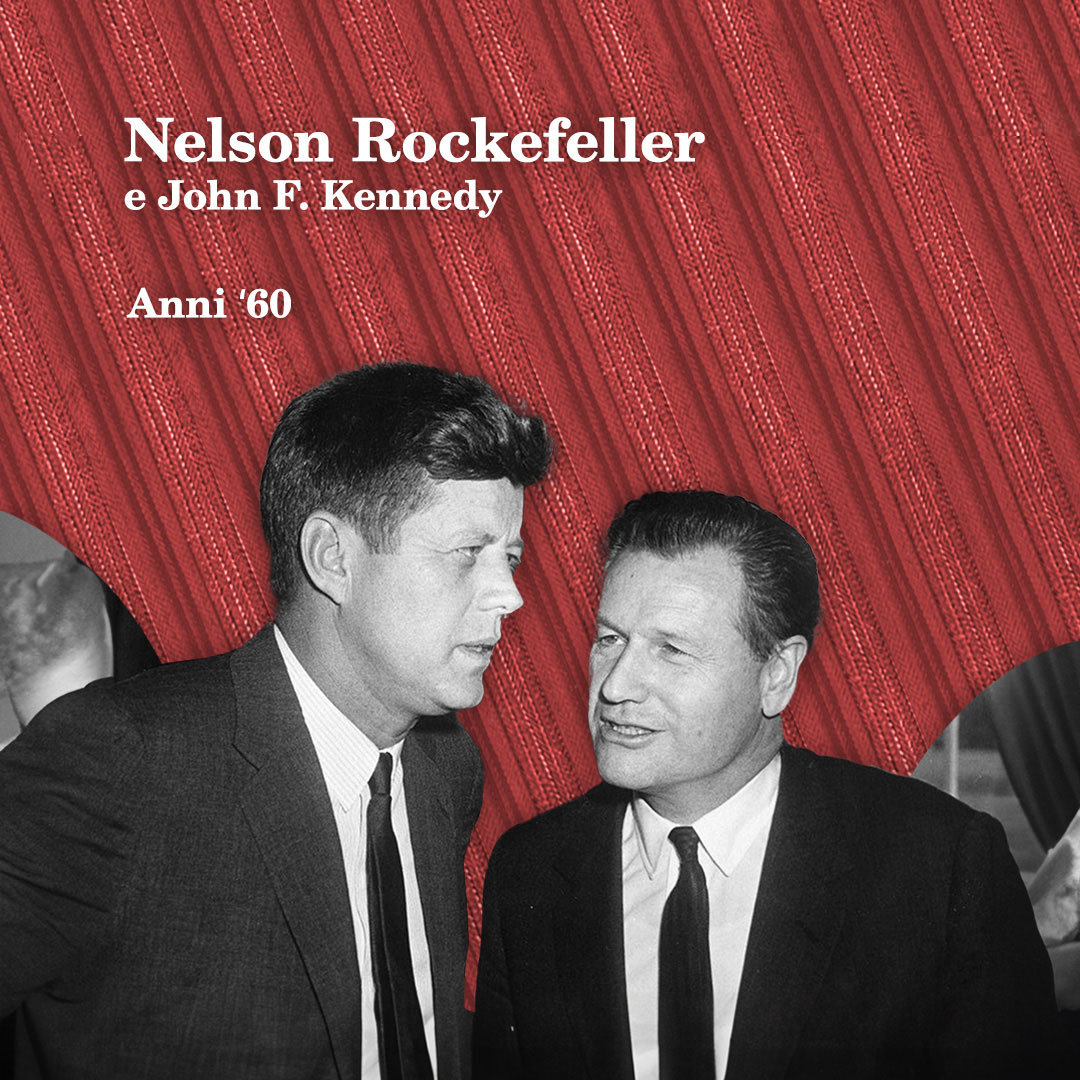
“In 1952 his grandfather [Peppino Caprotti] died and his grandmother [Marianne Maire in Caprotti] came into the picture. The grandmother had a great deal to do with it in the sense that she also took on the role of art lover in her grandfather’s place and was on the promotion committee of the 18th-century Venetian exhibition that Marco Brunelli promoted in 1955 and where she met the counter-intelligence colonel sent by Rockefeller to sound out the birth of Esselunga, which would be founded two years later. In this exhibition, the grandmother, Brunelli, the Crespi family, who would also be partners in Esselunga, and the OSS, the acronym before the CIA, cross paths.
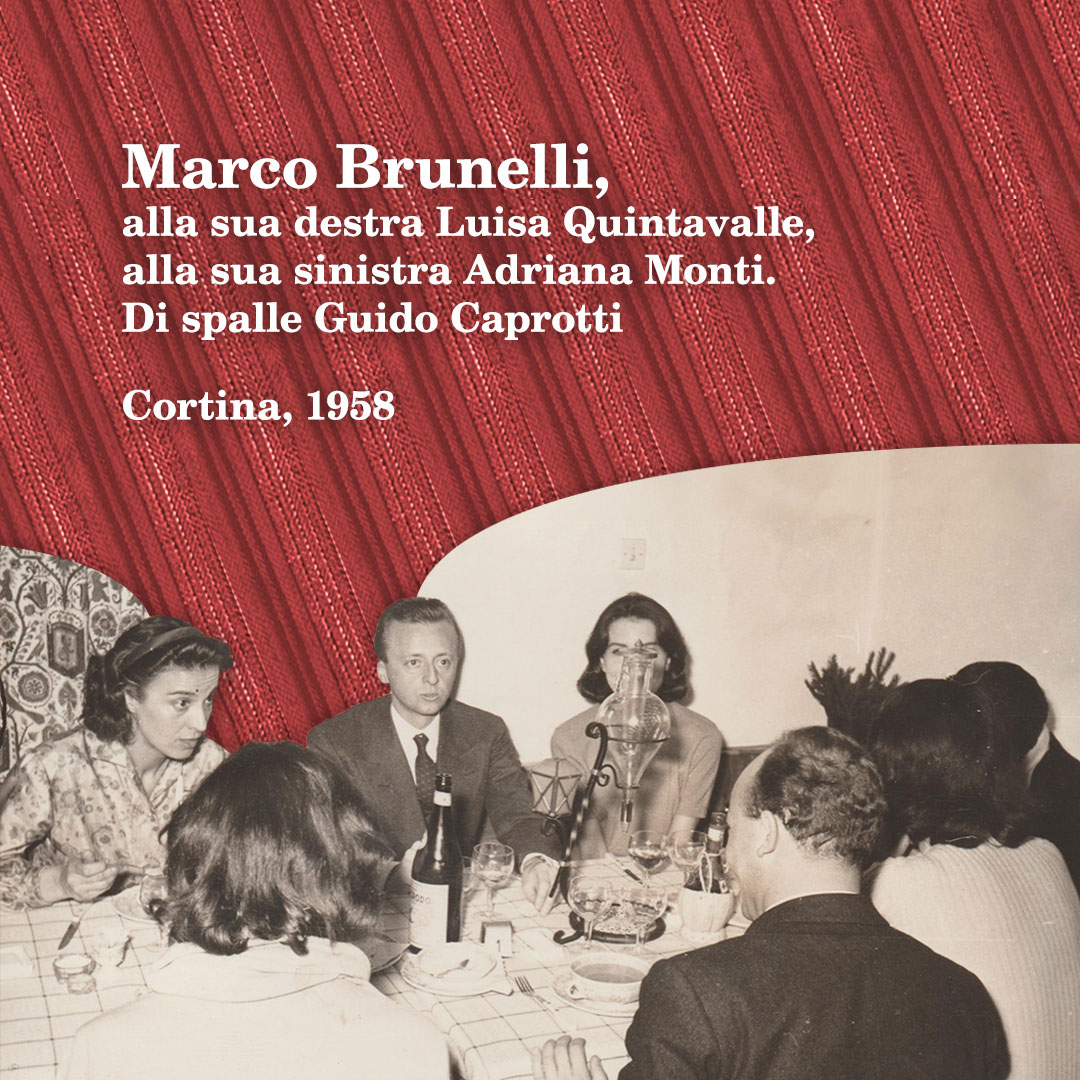
Below is an unpublished photo: it’s Marco Brunelli, the first president of Esselunga at dinner in front of Guido Caprotti, my uncle, my maternal grandmotherLuisa Quintavalle and here, unfortunately hidden, my mother Giorgina’s best friend [Adriana Monti]. I am in Cortina in 1958. This is to say how important this friendship was. Marco Brunelli was “family” (*) as the Americans say, and so this is a bit of the beginning of the birth of Esselunga, seen from another angle’.
(*) ‘family’. And the Caprottis and Marco Brunelli were also linked by a passion for art.
Marco Brunelli was born in Milan on 2 December 1927. He co-founded the supermarket chains Esselunga (in partnership with Nelson Rockefeller, the Crespi family, Bernardo and Guido Caprotti) and Supermercati GS (in partnership with , Guido Caprotti); he is also the founder and owner of the Finiper group (now Finiper Canova, operating under the Iper la grande i brand through its subsidiary Iper Montebello). In addition, he is the owner of the Unes chain and has served as chairman of Carrefour Italia.
In 2004, he was awarded the National Order of the Legion of Honour ‘for his contribution to collaborative relations between Italy and France’(Marco Brunelli, entry in ‘Wikipedia, the free encyclopaedia’ ). In the same year, he was awarded an honorary degree in Marketing at the Faculty of Economics of the University of Parma(Università degli Studi di Parma, Laurea ad honorem a Marco BRUNELLI, 20 May 2004).
The entrepreneur who was to become one of the protagonists of large-scale distribution in Italy started out as an antiques dealer, and one of the most highly-rated in Milan. His was the organisation of a memorable exhibition at the Villa Reale, in 1955, dedicated to the ‘Venetian 18th century’; among the lenders of the works were the most beautiful names in the city and beyond, including my grandmother Marianne [Maire in Caprotti]. And among the most important art collectors of the period who were also Brunelli’s clients was James Hugh Angleton, president of the American Chamber of Commerce in Italy.
The contacts between Brunelli and Angleton would lead to the debunking of one of the most established myths of large-scale distribution, the birth of Esselunga, which had its beginnings in the toilette of the Hotel Palace in Sankt Moritz, where a young Marco Brunelli and his close friend Guido Caprotti unwittingly overheard a conversation between Cesare Brustio, whose family was a shareholder, along with the Borletti family, in Rinascente, and an acquaintance. Brustio explains that Nelson Rockefeller, one of the richest and most influential men in America, wants to send some of his men to Italy to open supermarkets, and is looking for partners willing to remain in the minority. The two sniff out the deal and rush to report what they hear to Guido’s older brother, my father Bernardo. All together they succeeded in stealing the deal from the Brustio and Borletti families and, in alliance with Rockefeller, they managed to open Italy’s first modern supermarket (G. CAPROTTI, Le Ossa dei Caprotti, Milan 2023, pp. 42 – 43).
It is a beautiful story, but at the very least a fictional one: one summer’s day in 2019 Marco Brunelli agreed to meet me at his home, and although with difficulty, because decades later talking about Esselunga’s affairs still causes him much pain (he does not even want to hear Bernardo’s name, for him he is still ‘the Unnamed’), he tells me a very different story.
It is James Hugh Angleton, a key man in commercial relations between Italy and the United States, an art collector as well as the father of James Jesus, the first CIA station chief in Rome, who tells Brunelli about the American tycoon’s idea of opening a chain of supermarkets in Italy as he has already done in other parts of the world. Rockefeller, among others, founded IBEC in 1947, a company whose purpose is to combine the goal of fair profit for investors with the philanthropic one of helping the poorest countries in the development of the basic economy, to improve their bleak living conditions. The operation is not lacking in political implications – demonstrating how capitalist economics is able to provide more and better for the needs of the poorer classes than the Soviet economy can – and this is probably why James Hugh Angleton, a former espionage agent during the last war and father of the CIA chief in Rome, took an interest in the project.
Moreover, the correspondence and papers kept at the Rockefeller Archive Center, which I have had the opportunity to consult, make it clear beyond any doubt that, in the early stages of Esselunga’s affairs, the Caprotti brothers played an extremely marginal role (one of IBEC’s managers writes that he couldn’t even tell which of the two, between Bernardo and Claudio Caprotti – Claudio was still a minor – was the eldest – the episode can be found on page 60 of ‘Le Ossa dei Caprotti’), and that Brunelli was extremely skilful in slipping through the gap left by the withdrawal of other potential partners, involving in the operation his brotherly friend Guido and my father, who would later prove, as we know, to be just as skilful.
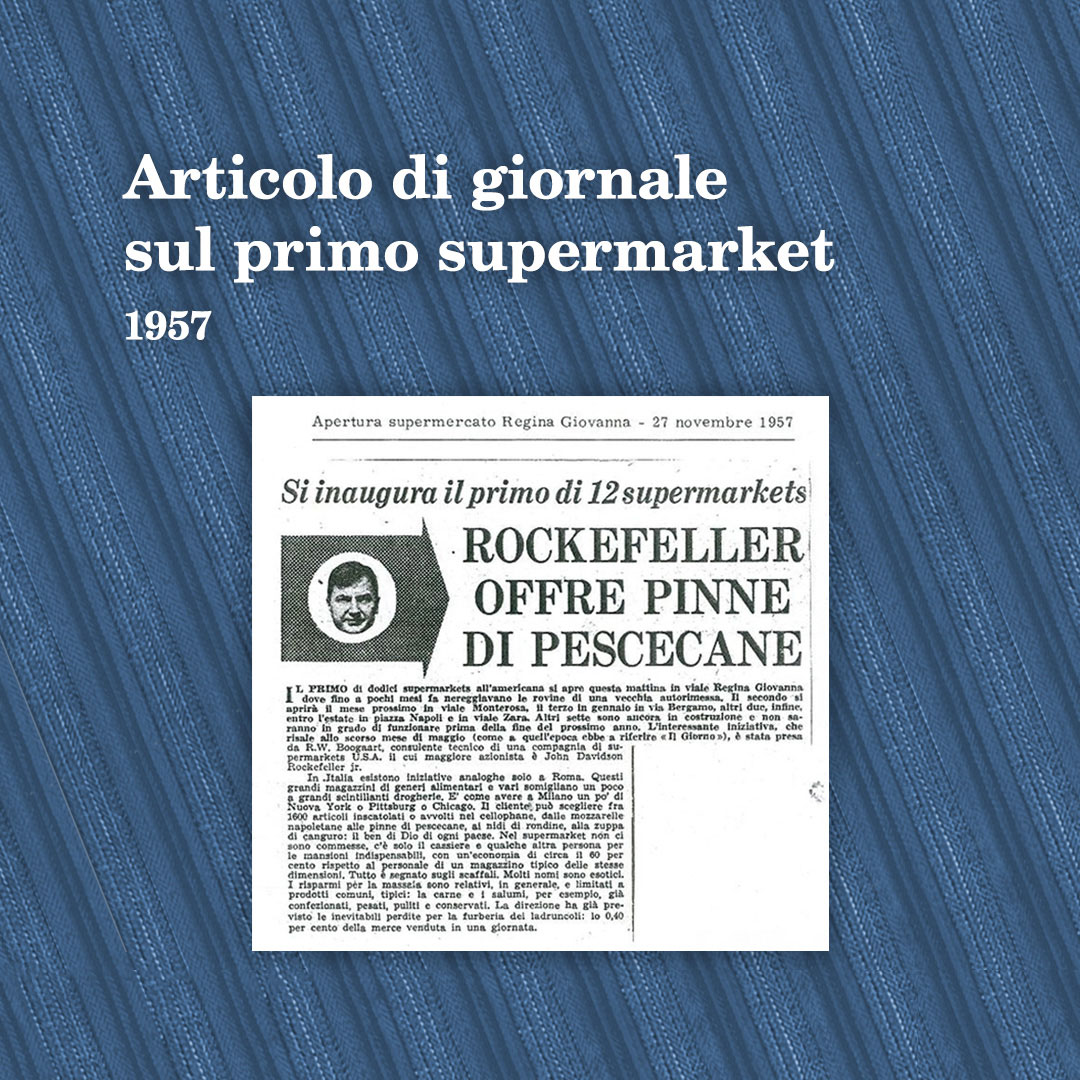
So it was that, with other Italian partners and American capital and discipline, the first ‘Supermarkets’ shop was opened in 1957, in Viale Regina Giovanna in Milan. It was a huge success, as would be the subsequent shops opened, albeit amidst a thousand difficulties that the combative American tenacity eventually crumbled, not only in the Lombard capital but also in other cities and regions. The arrival of large-scale organised distribution changed forever an important part of Italians’ lifestyles, and certainly the life of our family, which until then had always been in charge of the cotton mill located in Brianza, Albiate, for 200 years.
In 1965, IBEC sold its holdings and withdrew from the Italian field to invest in other countries. And here, the already tense situation between Brunelli and Bernardo, who had caused the rupture of the precious friendship with Guido years earlier, reaches its limits: the proposal that the Caprotti brothers (in essence Bernardo Caprotti himself) make to him to take over the majority share of the Americans is unacceptable; then, by putting a really big sum on the table – 4 million dollars at the time, also resulting from the investment of their mother, their grandmother Marianne – they secure control of the company, which from that moment on will be destined to become the Caprotti’sEsselunga, Bernardo’s in particular.
Brunelli, who rightly considers it his creation, since it was he who had offered this opportunity to the three brothers and is one of only two direct interlocutors with Rockefeller, retires, but since then he has broken off all direct contact with the family, at least as far as Bernardo is concerned. In fact he was very close to my mother, Giorgina Venosta, and her second husband, Aldo Bassetti; he wrote to me when my mother died in 2021, he was present at the funeral ceremony for Aldo the following year, and he always came to the commemorations for Uncle Guido.
Once out of Esselunga, Brunelli certainly did not remain idle. Already in 1960, with Guido [Caprotti], he founded the ‘Romana Supermarkets ‘, the first nucleus of the future GS Supermarkets (and an operation that was the first cause of the end of his friendship with Guido himself). In 1974, in Montebello della Battaglia, near Pavia, he opened one of Italy’s first hypermarkets and set up Finiper Spa, the group’s financial holding company in the large-scale distribution and real estate sectors. The success of the supermarket inserted in a shopping centre is assured, relying on the services of autonomous but integrated chains such as pizzerias, cafeterias, ice-cream parlours and proprietary restaurants, the Caffè Portello, CremAmore and Ristò brands that everyone knows by now. After Montebello, Brunelli continued along this path, always looking for innovation within everyone’s reach: in 1996 he bought the large Portello Nord area, on which part of the disused Alfa Romeo factories stood, and built Iper Portello there, a large shopping centre not outside the but integrated into the urban fabric and which, in fact, is included in a large urban and commercial revitalisation project for the San Siro area.
In 2002 came the purchase of the Unes supermarket network, and the year before that of the huge area on which the Alfa Romeo plant in Arese stood. At 74 years of age, Brunelli launched the largest and longest real estate operation he has ever conducted, which lasted 15 years and which he personally supervised, using archistars such as Michele De Lucchi. Thus was born ‘Il Centro’, a shopping centre with over 200 shops, the Iper hypermarket, a certified low environmental impact and a welcoming environment.
Today Finiper Canova, Brunelli’s company, after half a century in business, has 10,000 employees and a 2023 budget that exceeds 3 billion in turnover and 200 million Ebitda, a result never achieved before. It finances projects for the construction from scratch or for the redevelopment and renovation of existing spaces, expanding, diversifying and above all innovating the services offered, encouraging generational change among employees, always keeping a close eye on the evolution of social customs and the resulting demands in order to propose, as a result, offers in line with the market but always accompanied by a constant search for innovation [R. PACIFICO, Finiper Canova celebrates 50 years with the best result ever, in “Mark Up”, 15 May 2024; E. NETTI, Anniversaries, the Finiper Group celebrates 50 years of innovation, in “Il Sole 24 Ore”, 28 April 2024].
External Bibliography (CITED):
G. CAPROTTI, Le Ossa dei Caprotti. Una storia italiana, Milan 2023 (in particular Chapter 2, Arrivano i Marines, pp. 42-74).
R. PACIFICO, Finiper Canova celebrates 50 years with the best result ever, in “Mark Up”, 15 May 2024
E. NETTI, Anniversaries, the Finiper Group celebrates 50 years of innovation, in “Il Sole 24 Ore”, 28 April 2024.
Marco Brunelli, entry in “Wikipedia, the free encyclopaedia”.
University of Parma, honorary degree to Marco BRUNELLI, 20 May 2004;