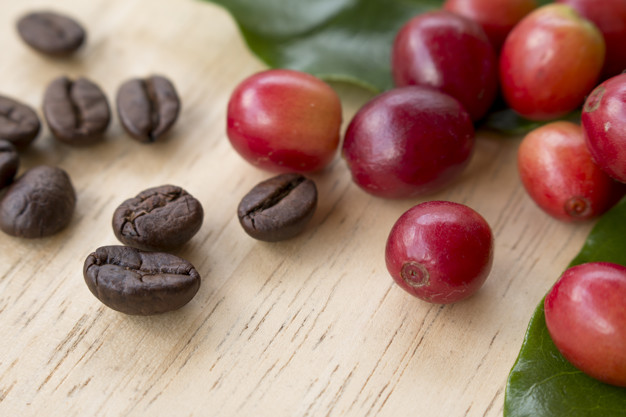
Coffee, the world’s most popular drink, is under threat. Global warming, soil depletion, wars, genetic erosion and other interrelated factors are threatening its survival – and not just in the case of the two most widely used varieties, Arabica (Coffea arabica), which is particularly vulnerable to excessive heat, and Robusta (Coffea canephora), which requires large quantities of water, but also for all the others. These are varieties about which, until recently, little was known; not all are suitable for roasting, yet they too are at risk.
According to a 2019 study, which analysed 124 species of wild coffee according to the criteria of the International Union for the Conservation of Nature (IUCN) and its ‘Red List’, in germplasm collections (where seeds are preserved) and in protected areas around the world, 60 per cent of species are at risk of extinction, 45 per cent are not present in any collection (and could therefore easily be lost forever) and 28 per cent are not present in any protected area. Furthermore, current conservation measures are insufficient and inadequate to address the current risks…