[vc_column_textDrafted 25 May, updated 17 December 2024
‘I farmer can’t explain wheat at an all-time low,’ writes agricultural entrepreneur Gerolamo Chiappini to Corriere della Sera on 18 September 2024. And below is the answer to his questions.
I am well aware that we have to import as much foreign durum wheat as we need to cover our domestic needs and the export of pasta.
With just under 1.3 million hectares and a production of around 4 million tonnes, we manage to cover 2/3 of our domestic needs. The rest of the durum wheat, around 2.5 million tonnes, we import from abroad.
But I also know that, if we do not take action, what we will be telling the world in a few years’ time is that Italy will be forced to import more than 40 per cent of its durum wheat to meet its domestic needs, because in the meantime, domestic production of Italian durum wheat has declined further.
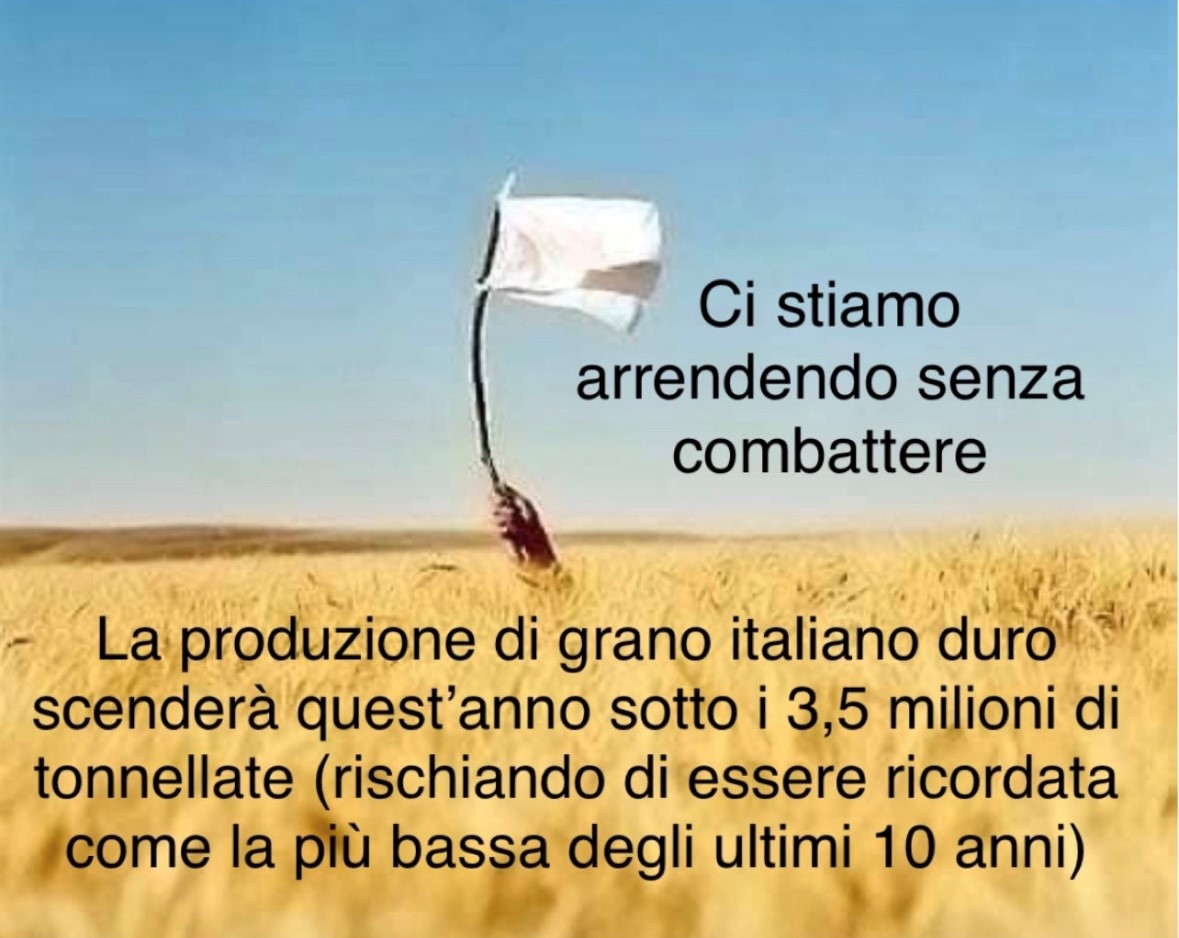
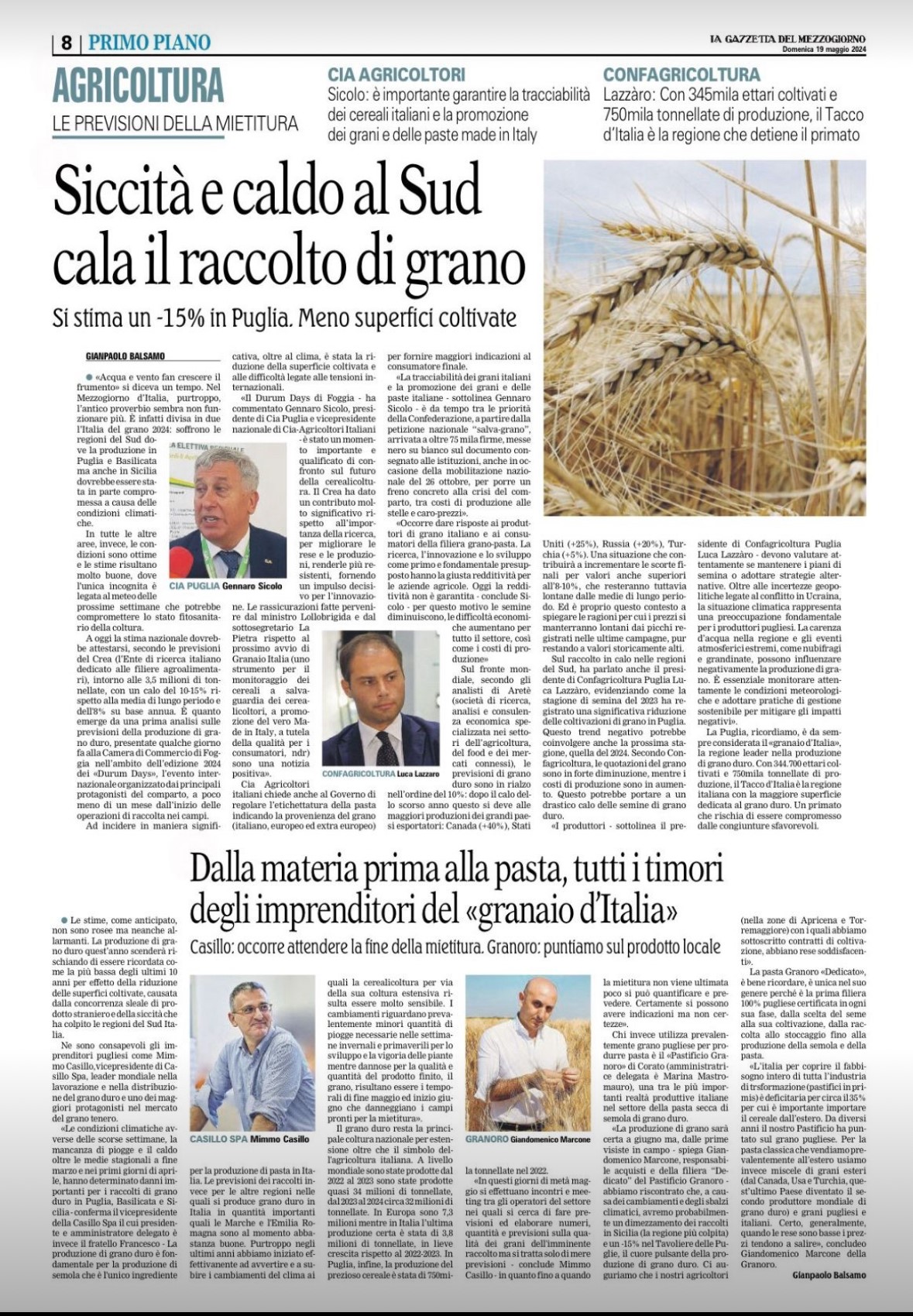
And in fact this year we will have to import more ships loaded with foreign durum wheat. Durum wheat production will fall below 3.5 million tonnes this year (risking being remembered as the lowest in the last 10 years) as a result of the reduction in cultivated areas, caused by unfair competition from foreign products, and the drought that has hit southern Italian regions. This is the first estimate one month before the start of threshing, released by Cai – Consorzi Agrari d’Italia.
It is the effect primarily of the collapse in prices caused precisely at the time of sowing by the invasion of foreign durum wheat, reduced by 11% compared to the previous year, dropping below 1.2 million hectares with peaks of 17% in the central and southern areas, from where about 90% of the national harvest comes. In 2023, almost 900 million kilos of Russian and Turkish wheat arrived, an invasion never before recorded in the history of our country, according to an analysis by the Centro Studi Divulga. A veritable flood of product that, added to that of Canadian wheat, has impacted domestic wheat prices. Added to the foreign competition were the effects of the weather, with the drought reducing durum wheat production in Apulia by between 20 and 30%, while in some areas of Sicily it was as much as -70%.
At serious risk of succumbing is our cereal cultivation (a drop of about 130 thousand hectares in durum wheat cultivation) because without Granaio Italia we are practically disarmed and our country is a free destination for wild imports.
No one wants to return to a supposed and hypothetical golden age, in which each community is fully self-sufficient. Not least because current climate change does not allow it.
But are we really convinced that wheat, one way or another, will always be there?
Thinking about a national agricultural policy today seems contrary to EU practice, or even poorly justified by market laws.
In this sense, incentivising and supporting the national production of durum wheat, is not a romantic appeal to a past, nor a question of national sovereignty, but a question of necessity. It means going back to producing more to shelter ourselves from speculative market logics.
[vc_column_textConfirmation comes from France: ‘Continuous rainfall has upset the calendars. It is difficult to sow wheat when tractors are stuck in the mud. At the time of the first estimates, the Ministry of Agriculture can only note this. The size of the fields has shrunk as a result of the rainwater.
At the same time, Russia, which has always dominated the market, will dominate even more with record harvests of between 90 million and 94 million tonnes.
Conclusion:
Russia has always wanted control of the Bosporus and grain. But it seems that ‘taking back the Black Sea’ (from Ukraine) has not been enough to shift the balance in this food war that Russia is, unfortunately, winning.
Perhaps even Coldiretti is realising this, saying EU: duties on Russian wheat, principle of reciprocity needed.
Of course, among the protagonists in the events concerning agriculture, there is always climate change.
The increasing dependence gives Moscow more influence over European agricultural production.
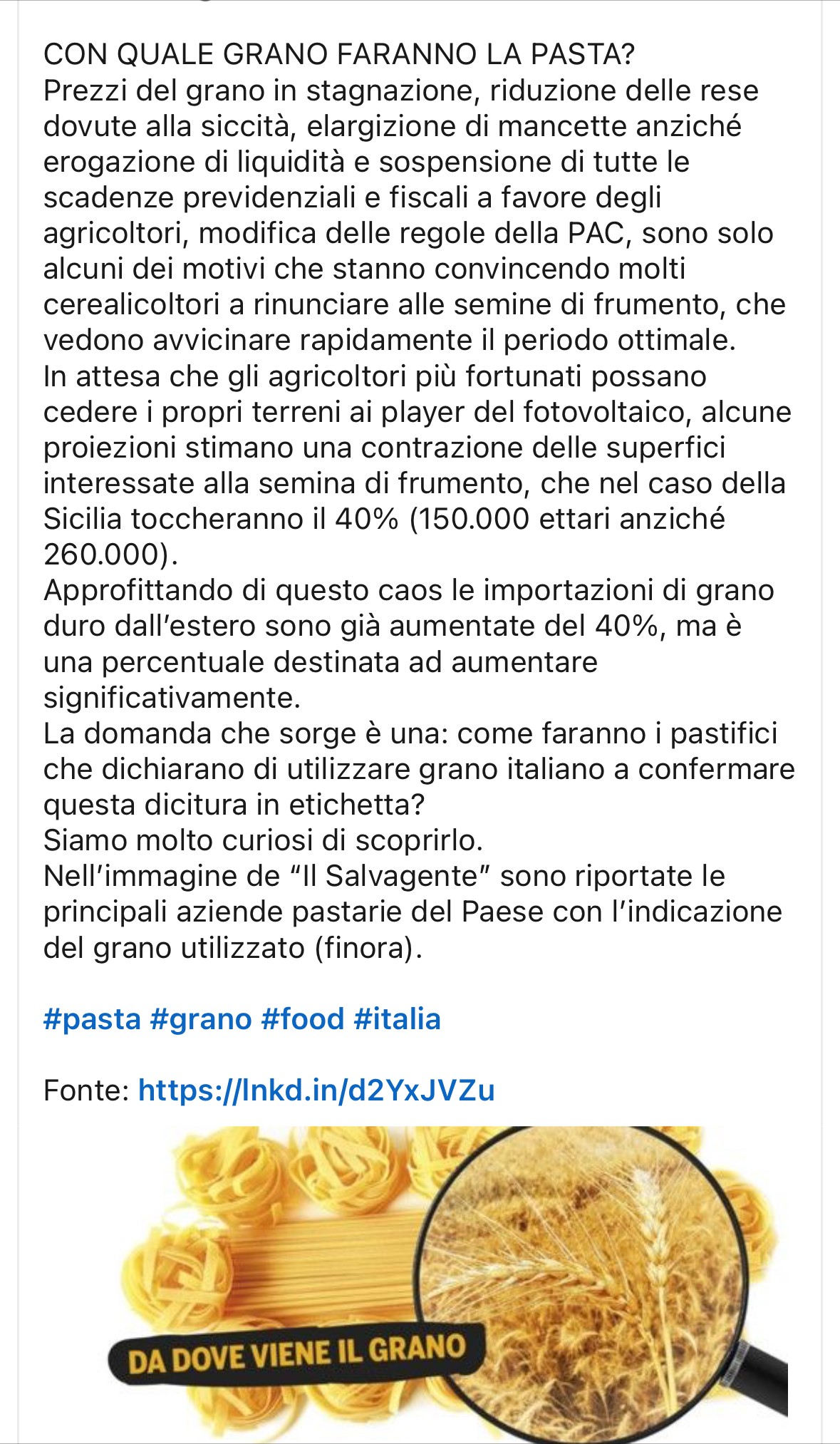
Below : a “protest” post on wheat.