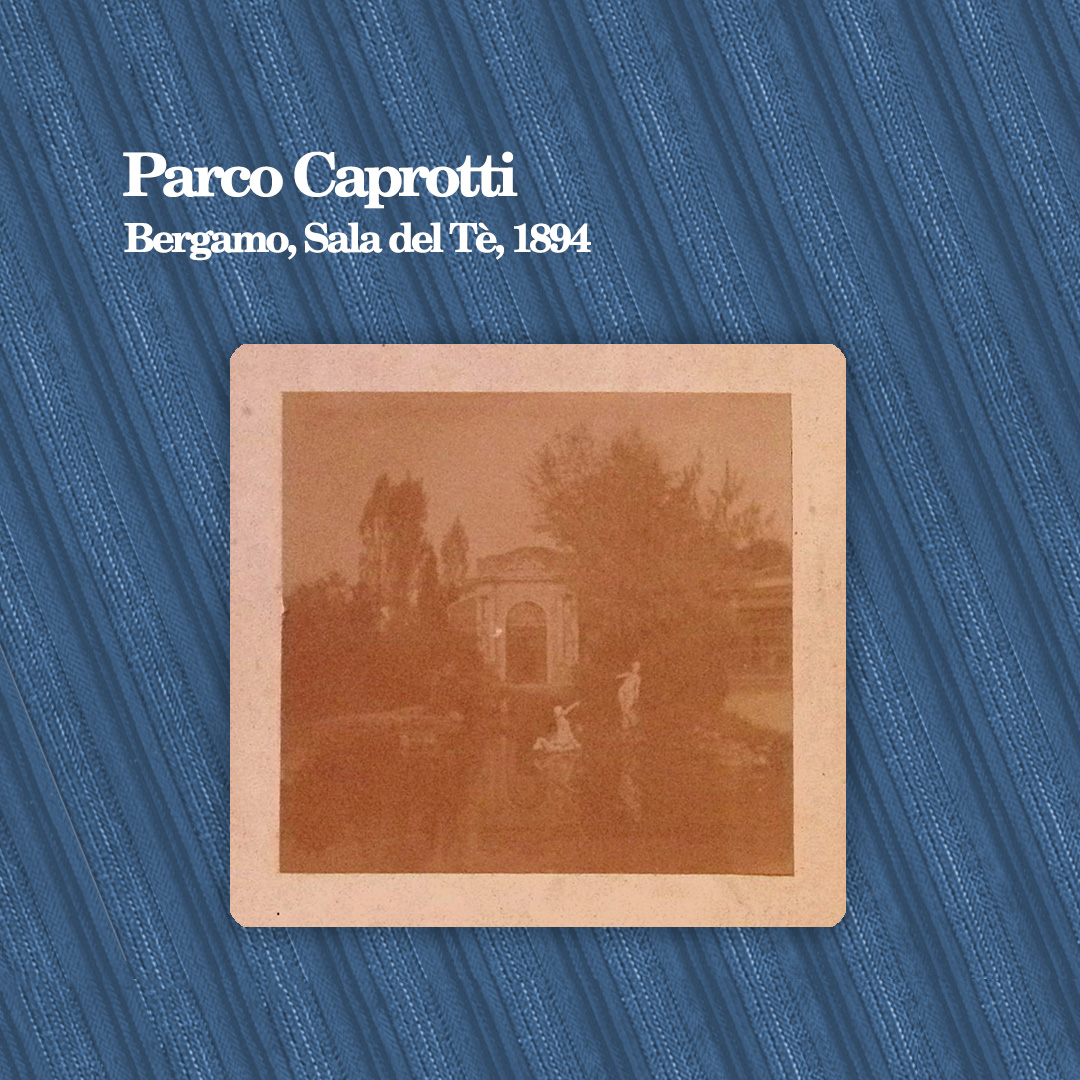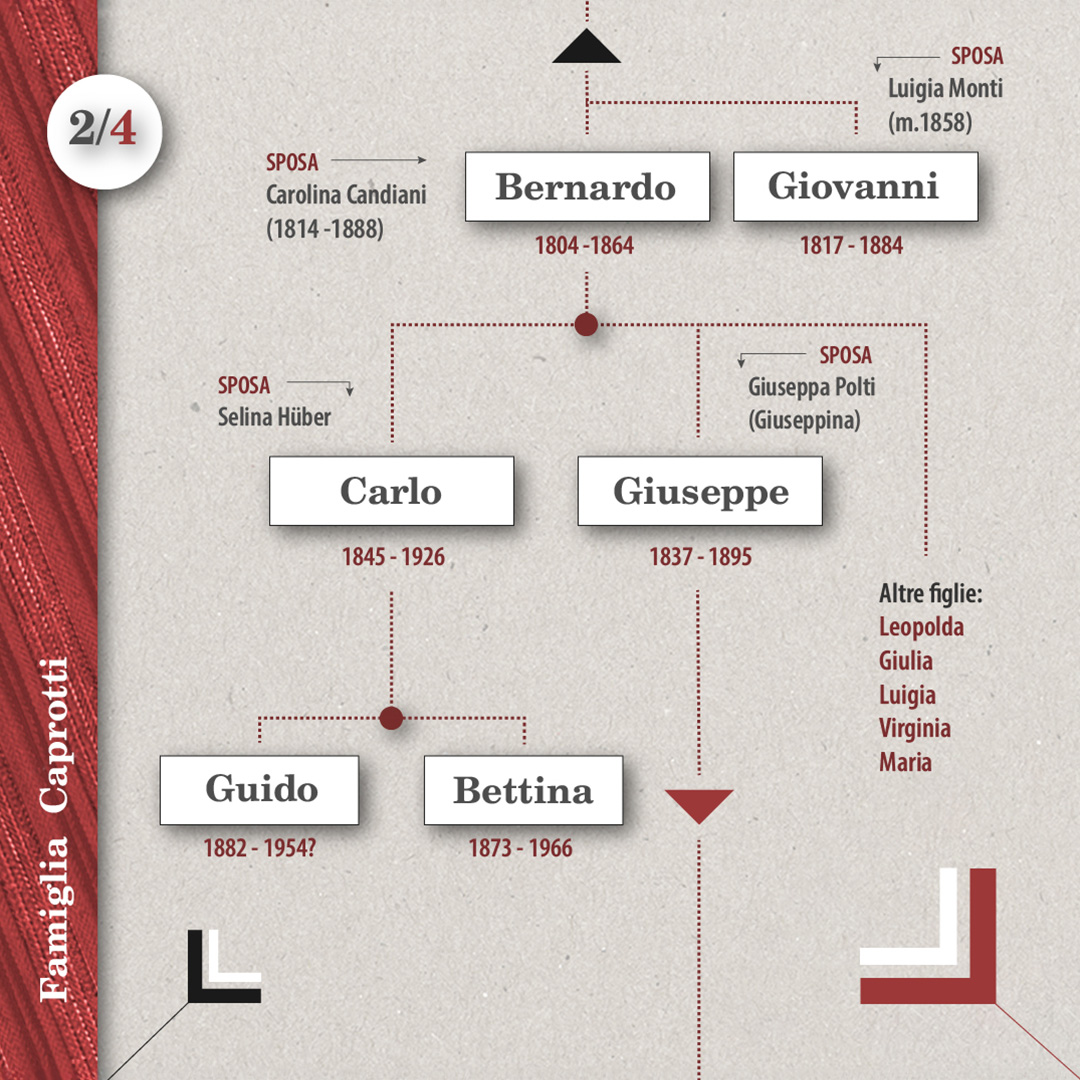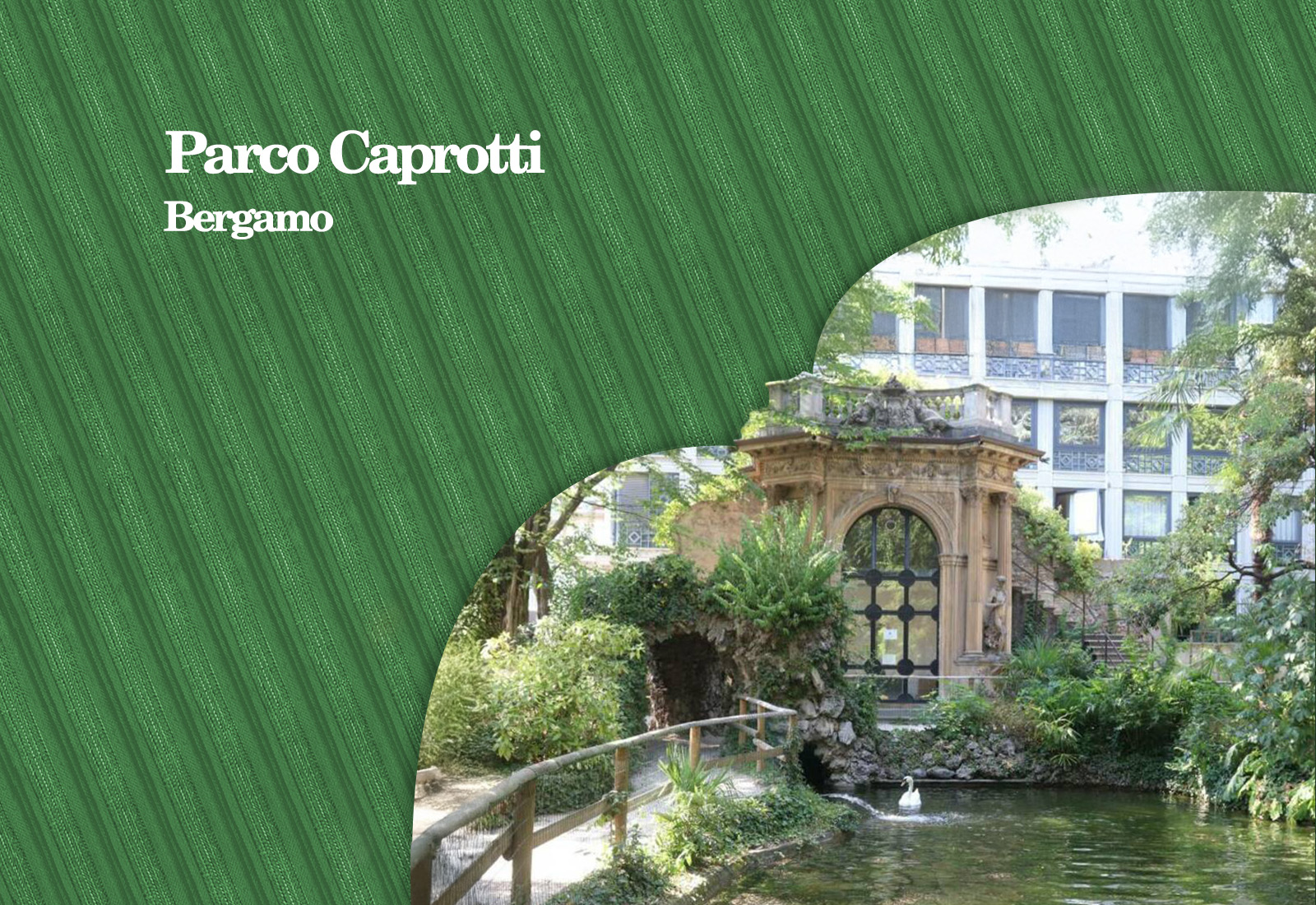
As an industrialist and public figure in Bergamo society, Carlo chose a stately home in what is now Via Tasso, with a large park of 5.61 perches (over 3600 square metres), designed and organised by Carlo himself. The palace still exists; there are still photographs of the interiors of the period, furnished in the opulent and crowded taste of the late 19th century, not without references, in the paintings, to the Risorgimento in which the young Caprotti yearned to take part, trying to do so, but remaining on the sidelines, deeply disappointed. And the park still exists, wanted by Carlo as a romantic English garden (i.e. where tree species can grow in controlled disorder), recently restored and opened to the public. You can still see the so-called ‘Tea Room’, a pavilion in neo-Renaissance style where in fine weather people would go to refresh themselves and chat after a walk, built in 1890 on the lines of similar buildings (see for example the Coffee House in the park of Villa Trotti-Bentivoglio in Verano Brianza, built around the same time). The building has remained virtually unchanged over time, as shown by a photograph in my archive that bears the inscription ‘Spring 1894’ on the front.
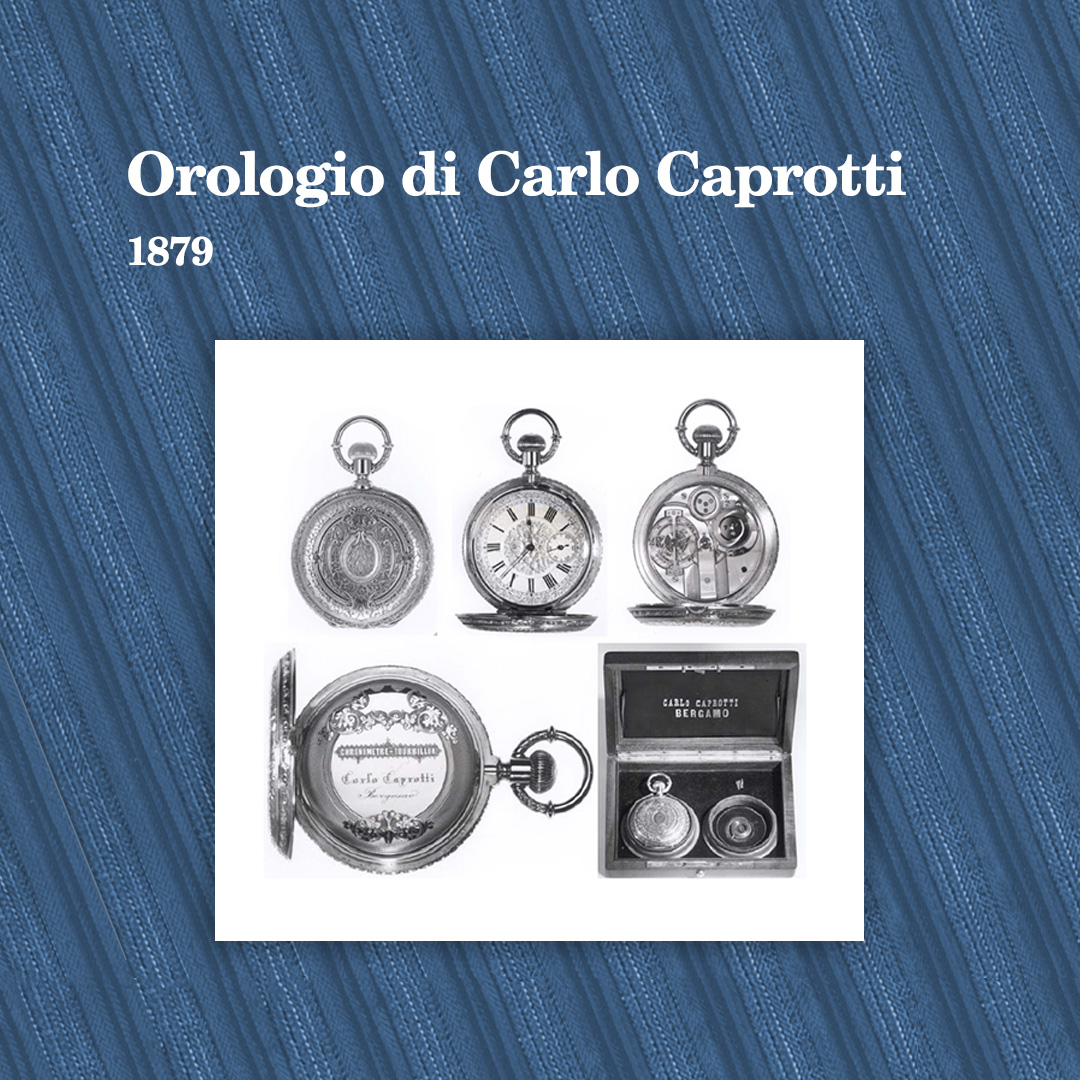
Carlo loved beautiful things, and mechanics, after so many years studying and applying it in so many machines, must have become for him not only a means but also a passion. He designed with a Swiss master watchmaker, Ernest Guinand, a chronometer with a tourbillon (a small motor that turns the heart of the watch) of such refinement that it was included in the collections of the Musée d’art et d’histoire in Geneva. The precious object was stolen with others from the museum some 20 years ago, and never found again; fortunately, we are left with a catalogue image that was published on the website of the exhibition ‘Per filo e per segni‘.
Carlo also lived the last part of his life as an adventure: in fact, he spent a good part of the year in Algiers, caravanning through the desert and sending exotic postcards, except in the end, when he would no longer return to the African skies to spend his last months in Bergamo with his family. We still do not know why he made this choice, apparently dictated by personal reasons; but it is certainly very much in keeping with his character.
Sources:
Albiate (MB), Villa San Valerio, Villa San Valerio Archives, Giuseppe Caprotti Factory Archives, Giuseppe Caprotti Archives (1837-1895).
Bibliography:
G. CAPROTTI, “Le Ossa dei Caprotti. Una storia italiana’, Milan, 2024/3.
R. ROMANO, “I Caprotti. L’avventura economica e umana di una dinastia industriale della Brianza”, Milan, 1980.
M. CANGELLI, “Parco Caprotti, un viaggio incantevole fra natura e finzione”, article in “Bergamo News”, 17 July 2022.
Per filo e per segni. Innovazione e creatività dell’ industria tessile a Bergamo tra XIX e XXI secolo, multimedia and interactive exhibition, Bergamo, 2008 (ref. ‘Rivista di Bergamo’, January-March 2008, monographic issue dedicated to the exhibition).
M. GELFI, Capitali svizzeri e nascita dell’industria cotoniera a Bergamo, in “Archivio storico bergamasco”, n.s., n. 3, September-December 1995, pp. 4-41.
E. SÀITA, “I Caprotti : private aspects, from the Risorgimento to the Second World War“, 08/11/2022.