

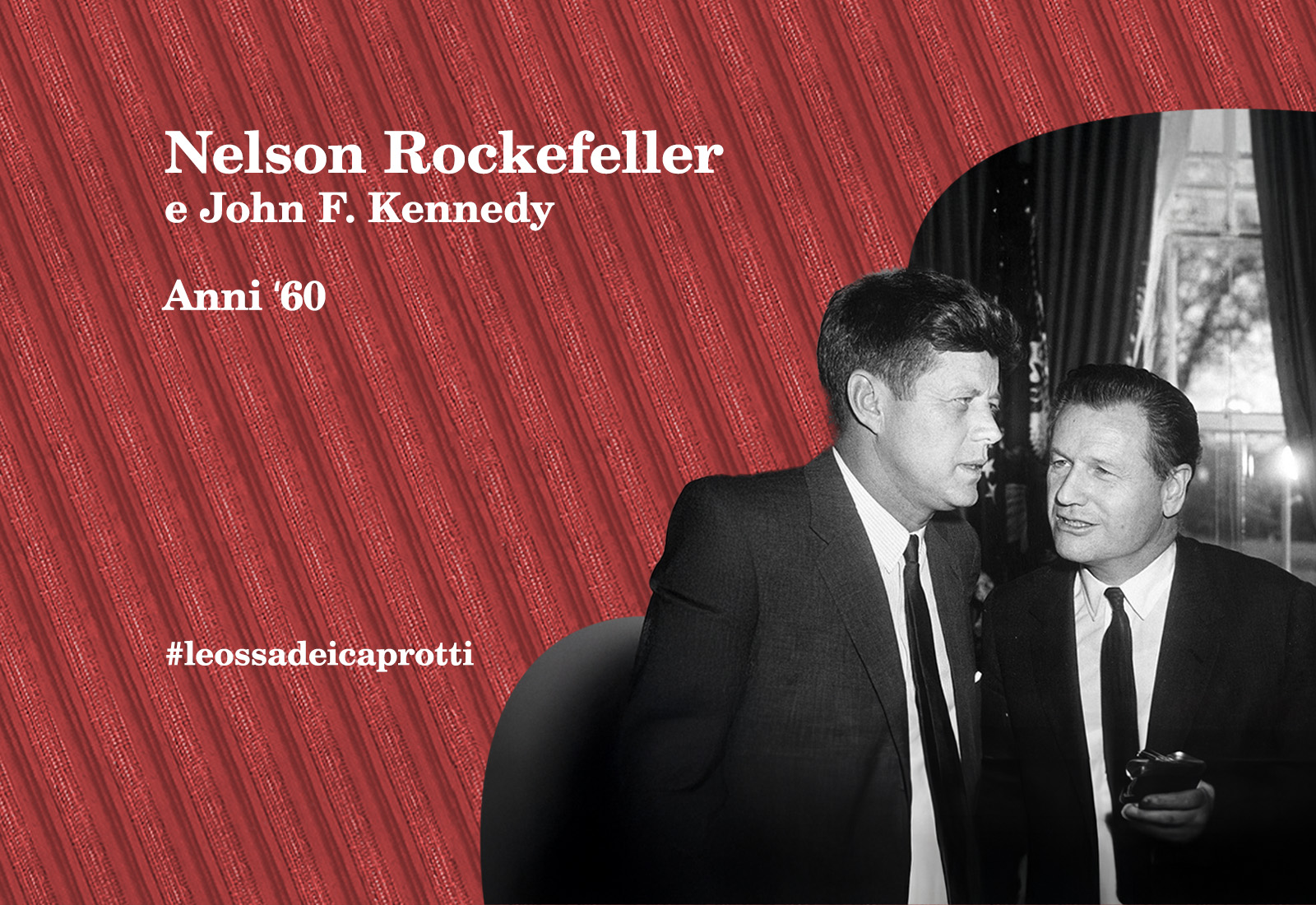
“Today we can observe that Nelson Rockefeller nurtured political ambitions for most of his life. In 1959, two years after founding Esselunga, he became governor of the state of New York. He participated three times in the Republican Party primaries for the nomination of the candidate for President of the United States (…).
Then, after the Watergate scandal, when Gerald Ford replaced Richard Nixon as president, he was called to be his vice-president.
The IBEC he founded and ran (1947-1977), (…) was one of his best ideas and deserves further study. (…).
At the heart of what we would today call his mission was not only profit, but also the economic and social growth of the expansion area. The idea came to Rockefeller in 1937, during a business trip to Venezuela; he returned believing in the need for private investors to also assume social responsibilities in economically depressed countries (…).
No other private enterprise ‘has ever had as a corporate objective the opening of new businesses in developing countries […] which entailed the risk of huge capital losses’: IBEC acted by lowering prices (industrial and retail), building affordable housing, mobilising savings and fostering a better distribution of the fruits of economic progress. It did indeed incur many losses, but the overall project was a success:
iBEC operated in 5 continents (Latin America, North America, Europe, Asia and Africa) and 33 countries with 200 companies, and was mainly involved in the foundation and management of supermarkets, services for agriculture, milk production and distribution, mutual funds, construction for the middle class, poultry farming (…). ” (p. 56).


