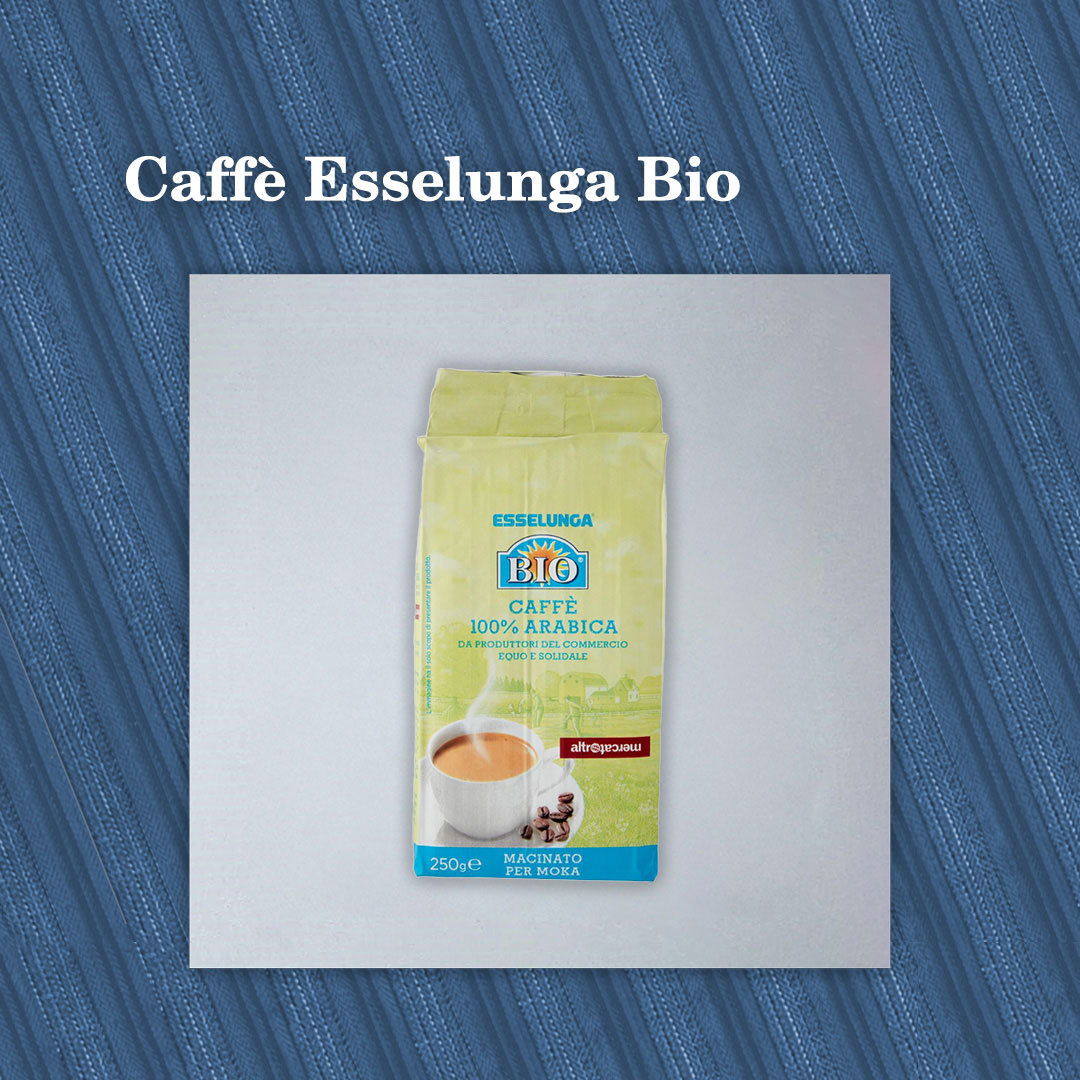
The brand: Equo Solidali Bio Esselunga
— by Giuseppe Caprotti
Of all the projects I have worked on at Esselunga, the organic and natural products initiative is undoubtedly the one closest to my heart, because alongside its business objectives, it also carried a strong social dimension.
It was an idea that had been in the making for a long time. I still remember a conversation with my father, in our kitchen at home, back in 1987. At the time, we were already selling some fruit and vegetables grown using integrated pest management techniques; I remember the strawberries in particular. I felt very strongly about the issue and had made it my own. He, less so.
The move towards organic took place in several stages:
- In the early 1990s, third-party organic products were introduced into Esselunga, displayed on the shelves under the suppliers’ own brands;
- In 1995 , the ‘Naturama’ range, produced using integrated pest management, was launched;
- In 1998, fair trade products under the CTM Altromercato brand were introduced;
- In 1999, the ‘Esselunga Bio’ range was launched. Some of these products were produced directly by Esselunga;
- In 2001, the first products bearing the ‘Per chi ama la natura’ (For those who love nature) Ecolabel were launched, following strong opposition from Henkel, which had lobbied in Brussels against Esselunga;
- Also in 2001, Esselunga’s organic fair trade bananas hit the shelves;
- In 2002, the ‘Esselunga Bio’ fair trade products were launched, produced in collaboration with CTM Altromercato.
The idea for the Esselunga Bio range was conceived in 1999, during a long car journey back to Milan from central Italy. The project was ambitious: over a hundred products to be brought onto the shelves all at once, within seven months. The launch took place on 8 November 1999.
“With the launch of our organic range, we also achieved a second objective: our fiercest competitor, Coop, often boasts at conferences and in the press about its left-wing, ethical policies, and the fact that in future they will stock private-label organic products. So we’ll beat them to it, getting our organic products onto the shelves whilst they’re still just talking about them. (…) Organic products prove to be a powerful tool at a very difficult time for the supermarket sector. We even create two new brands, even more closely aligned with the values that Coop considers its strongholds: ‘For those who love nature’, an Ecolabel certified by the European Union, and ‘Equo Solidali Bio Esselunga’, which we produce in partnership with Altromercato. These are hugely significant innovations in the world of mass-market consumer goods.” (pp. 185–188).
Whilst we were launching the Esselunga Bio products, Coop was still debating the pricing of itsownorganic brand range.
In my mind, the positioning was premium:

Private Label, own-brand products
“Anything eco-friendly annoys [Bernardo] and I try to avoid his criticism: I had developed and launched the range of fair-trade organic products whilst he was distracted by other matters” (p. 188 of *Le Ossa dei Caprotti*).
My father couldn’t stand my interest in the environment and corporate social responsibility, and he didn’t just disapprove. He called me a ‘social worker’, saying I struck him as ‘a left-winger, like Nanni Moretti’. At a company conference, in front of five hundred employees, he made a surprise invitation to an expert from Federchimica who declared that ‘organic doesn’t exist’. In the supermarket cafés, refurbished in the Californian style, he had the internet stations and organic products removed; and when a supplier delivered a bag of organic salad containing a live frog, he seized the opportunity to attack the entire organic range.
The decision to pair the organic logo on certain products (coffee, sugar, bananas, cocoa) with the Fair Trade logo, in collaboration with Ctm Altromercato – a social enterprise that is now the leading organisation in this field in Italy – is one of the three key strengths driving Esselunga’s organic range to success. The other two are the baby food range (small pasta shapes, baby food purées, juices), developed in collaboration with Macedonio Melloni in Milan, and fresh organic milk. Neither baby food nor fresh organic milk had ever been launched under a private label before. Ctm is, at present, amongst Esselunga’s top 50 suppliers.
Customers are clearly told that, even when choosing a supplier, they can support small producers – mainly from developing countries – by ensuring they have work free from exploitation and an adequate income, rather than relying on large multinationals. Esselunga is the first chain in Italy to launch its own-brand organic products using fair trade raw materials.
Bananas are the most telling example. At Esselunga, they were among the ten best-selling items, whilst the global market was dominated by Chiquita, Dole and Del Monte, which together controlled 63 per cent of it. In the search for an alternative, the Naturama banana was introduced, followed by the Esselunga Bio Ctm Altromercato banana, grown mainly by Ecuadorian campesinos, which remained the only (Naturama first, and the Esselunga Bio from 2001 onwards) on the shelves between 1999 and 2004. There was no shortage of pressure: in June 2003, my father wrote to me saying that Mr Freidheim, the head of Chiquita, had pointed out to him that we were the only company in Italy not to stock his bananas.
At the 2001 SANA trade fair in Bologna, in the Esselunga pavilion, Paolo Brichetti, then managing director of CTM Altromercato, was standing next to me. On that occasion, the Greens tried to claim political ownership of the organic movement: Alfonso Pecoraro Scanio was determined to meet me at all costs. I politely declined.
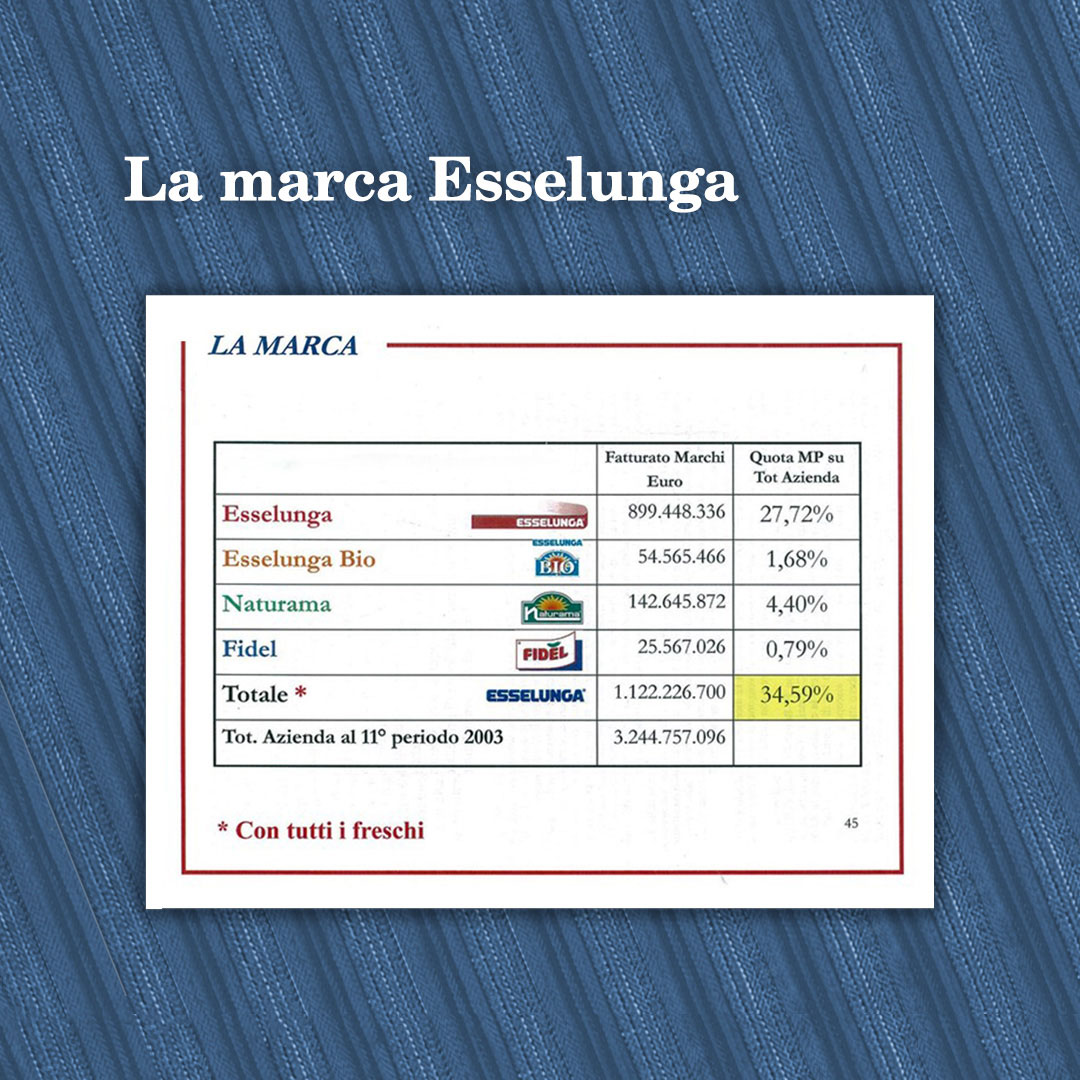
The figures speak for themselves: four years after the launch, in 2003, organic products, Naturama’s integrated pest management products, fair trade items and the ‘For those who love nature’ range accounted for around 9 per cent of food turnover, amounting to 290 million euros.[1] Based on the first nine months of 2003, CTM Altromercato’s annual turnover can be estimated at 12.9 million euros: its standing amongst suppliers and its growth rate show just how much customers appreciated those products.[2]
Furthermore, the Esselunga Bio CTM Fair Trade own-brand products are the leading ones in Italy within the large-scale retail sector.
Sources of additional information
- Esselunga Bio, ‘The Organic Adventure’ 2
- Esselunga Bio, or ‘The Organic Adventure’ (G. Caprotti and G. Puglisi): foreword by G. Caprotti for the 1987 kitchen discussion
- Bananas: the birth of the own-brand (at Esselunga and elsewhere)
- Le Ossa dei Caprotti (Feltrinelli, 2024): epithets, agreements with Federchimica, bars, a frog in the salad.
[1]‘Food’ also includes detergents and toilet paper. The company’s turnover in 2003 was 3,965 million euros, of which almost 18 per cent was non-food. Source: Giuseppe Caprotti archive, in ‘Esselunga Bio, the organic adventure’ 2, giuseppecaprotti.it.
[2]Annual estimate by Giuseppe Caprotti, based on sales figures for the first nine months of 2003. Source: Giuseppe Caprotti archive, ibid.