Compiled 16 September, updated 22 September 2025
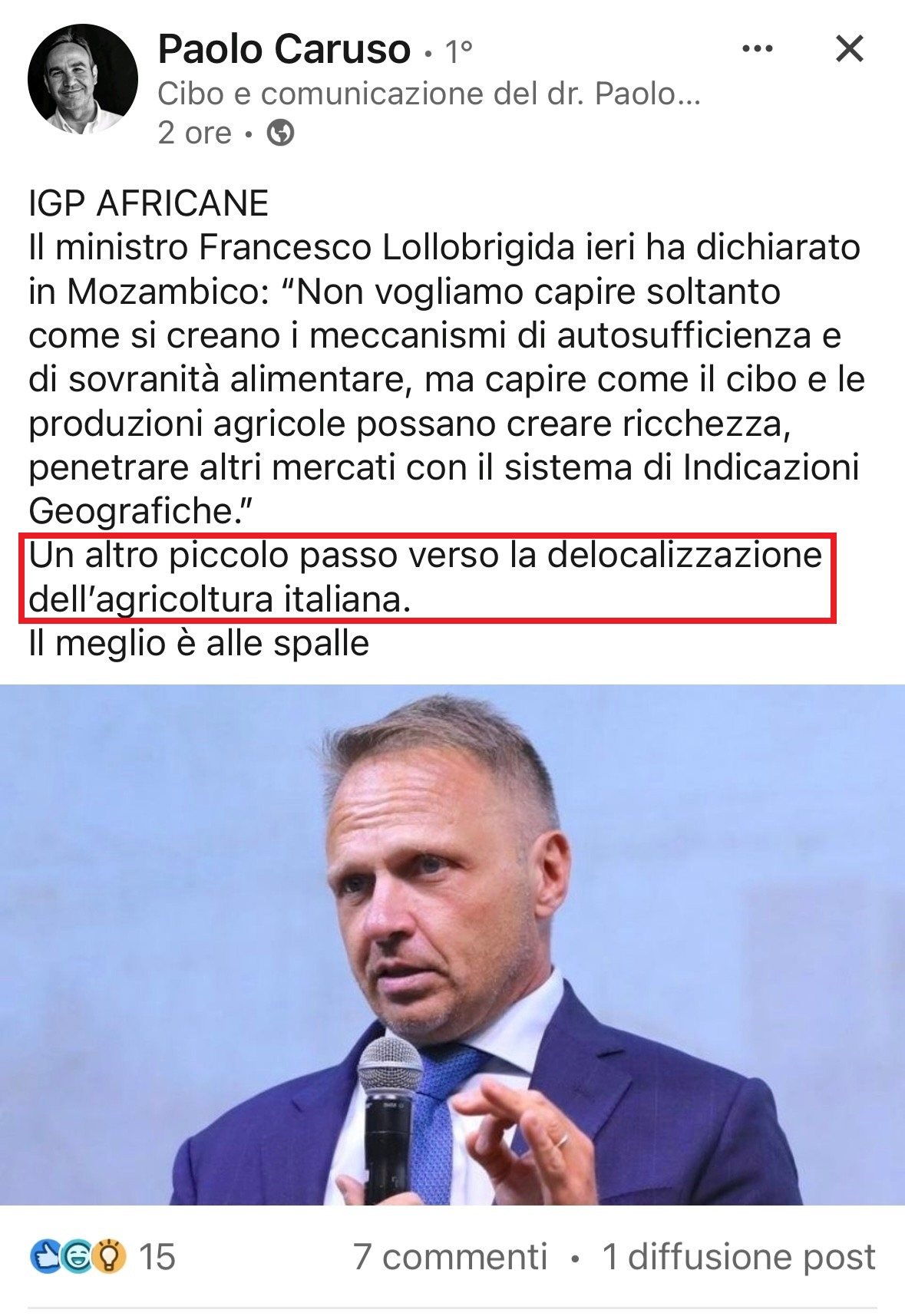
A few days ago, Minister Francesco Lollobrigida’s statements on typical geographical indications raised a real hornet’s nest among Italian farmers:
… The role of agriculture in creating wealth
“We are here with our companies and our agricultural machinery. Italian agricultural machines cost more, but they are more reliable, more durable and create more wealth. We,’ warned the minister, ‘have to put Mozambican companies in a position where they can use them. We do not only want to understand how to create the mechanisms of self-sufficiency and food sovereignty, but to understand how food and agricultural production can create wealth, penetrate other markets with the Geographical Indications system. Our Ministry is investing, together with cooperation, in women entrepreneurs and representatives of the Ministry are also here to understand how to do more’.
The Italian way to cooperation: loyalty and shared growth
“On these objectives, we put our heart and willingness with a model that is typical of our country. You cannot just make commitments for the future, you have to turn around and look at what has already happened. I believe that Italy has always shown loyalty to the nations with which it has compared itself. Our entrepreneurs have always behaved loyally, seriously, with commitment, they have worked to grow and increase their wealth, because an entrepreneur must do so, but at the same time to help others to do the same. It is with this spirit,’ Lollobrigida concluded, ‘that I am here.
Investments of USD 160 million are planned. The Mozambican minister: ‘Essential for relaunching agriculture’
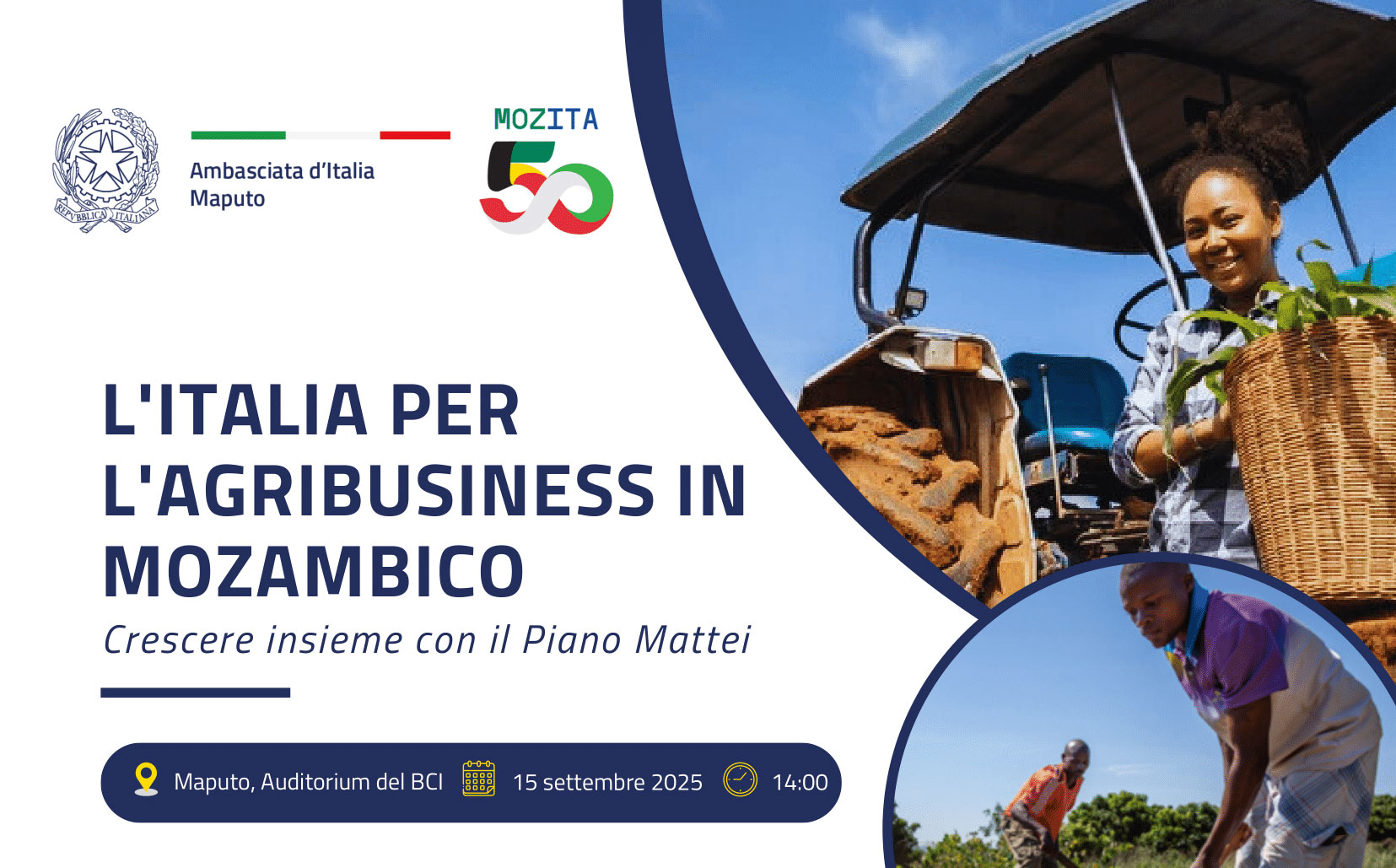
In turn, the Mozambican Minister of Agriculture, Roberto Albino, emphasised that the partnership with Italy is essential for the projects underway in the country. “We foresee investments of around USD 160 million, which are essential for revitalising agriculture and consolidating our rural development strategy,” he said. During the mission, several legal instruments were signed to make development and cooperation projects operational, some of which also involve energy, with the participation of companies such as Eni, exploring the link between agriculture, energy and wealth.
From 2018 to 2024, the value has risen to more than € 20 billion.
In essence, despite all the claims of ‘sovereignism’ (e.g.: the Coltivaritalia plan), we are giving up on relaunching Italian agriculture by subsidising and pushing African agriculture.
Paolo Caruso uses a phrase that seems perfect to me: ‘Another small step towards the delocalisation of Italian agriculture’.