Drafted 1 March, updated 11 March 2025
While Nestlé and Unilever are looking for buyers to divest their vegetable meat brands (although some in the West still believe this) it seems that China is moving in this direction:
China in search of the ‘holy grail’ of meat
By Jacob Dreyer
(OPINION SECTION)
New York Times print edition published the weekend of 30 November/1 December 2024
SHANGHAI – In late September, 11 Republican members of the US Congress sent a letter to the Directors of National Intelligence and the Department of Agriculture’s Office of Homeland Security to sound the alarm over a new emerging threat from China. They claimed that China was aiming to become the world’s leading producer of meat alternatives – part of a ‘targeted attempt to dominate global food supply chains’ that could pose a serious food security risk to the US and its allies.
It’s the kind of reaction we often see in Washington these days, where everything China does is interpreted through the narrow – and often distorted – prism of national security, regardless of whether or not the overall impact is good for the rest of the world. As if trying to make our gas-guzzling vehicles obsolete with their electric models were not enough, it is now thought that the Chinese Communist Party even wants to ‘hit’ our hamburgers and holiday turkeys.
On one point, however, the letter was right: China is serious about trying to achieve breakthroughs in so-called ‘meats of the future’, a concept that includes laboratory products, plant-based or other forms of alternative proteins. As China’s appetite has grown, in 2021 the government included the creation of a domestic alternative protein industry among the goals of its national economic development strategy. It has become a central part of a broader plan to secure the food supply, and significant funding is now flowing into new research initiatives.
Of course, geopolitical rivalry with the US is almost certainly one of China‘s motivations : it wants to become food self-sufficient in case tensions with the US escalate to the point of armed conflict.
But there is much more to consider. The traditional method of producing meat – clearing forests to feed huge herds of cattle that emit greenhouse gases, whose meat is then shipped through global supply chains – is damaging the planet. If scientists could figure out how to grow meat in the lab at a sustainable cost and on a large scale, it could become the standard food of tomorrow. And if China is willing to invest in potentially world-beneficial technologies, Americans should not see this as a national rivalry, but as an inspiration for how our protein markets could evolve as well.
One reason Beijing wants to secure supplies for a huge population is that China now imports a significant portion of the meat it consumes from the United States. Older Chinese generations painfully recall the famines in the decades before the era of economic reforms that began in the late 1970s. President Xi Jinping has insisted that one should no longer be satisfied with just soup for dinner, but that there should also be a nice piece of real meat on the plate. Chinese leaders are aware that serious food security consequences could emerge if relations with the US deteriorate further.
The new concern about food supplies is growing as relations between China and the US become more strained. China has almost 20% of the world’s population but less than 10% of arable land. Its dependence on imported meat and other agricultural products-including a large chunk of feed for its gigantic pig sector-worries those who fear that President Donald Trump (and others) will identify these American supply chains as an ‘Achilles’ heel’.
But can the planet bear a significant increase in livestock production? Livestock accounts for 10-20% of global greenhouse gas emissions and meat consumption is expected to continue to grow for decades as developing countries follow China’s lead. As Patrick Brown, founder of US food company Impossible Foods, said in 2020: “Every time we put a new piece of meat on the market, it’s like taking a step towards suicide.”
In the US, the idea of increasing the production of alternative proteins-such as those made from peas or wheat-has attracted great interest among financiers. However, the reality has often turned out to be more complicated than it seems: growing tissue in the lab still requires a lot of experimentation, and the road to a better, cleaner approach is not without obstacles.
China has moved ahead faster than the US in the renewable energy sector and now supplies much of the world with solar panels, wind turbines and electric vehicles. The Chinese government is adopting the same large-scale strategy for agribusiness, with massive investments in both imported food storage and genetically modified crops. In Xinjiang, for example, intensive salmon farms are being experimented with, while in other areas Siberian tigers and new industrial farming projects are being introduced on a large scale.
Many Americans remain sceptical about protein from non-animal sources; however, the Chinese have been eating soya derivatives (such as tofu) for centuries. It is not hard to imagine that Chinese investors could reduce meat consumption if necessary or if the authorities demanded it and switch to an approach based on alternative protein sources. In a context of scarcity or state intervention, people could support public solutions for protein production in controlled environments. Should such lab-grown or genetically modified meat solutions become economically competitive, it is conceivable that China could spread them on a global scale, as it has already done with solar panels, wind turbines and electric cars.
There are those who argue that there are good ideas in the US to produce healthier and more sustainable proteins, but so far China’s ability to invest massively and accelerate the supply chain – a bit like what happened with Tesla, Elon Musk’s electric car company, which also started in the US – has not been seen. However, China has since established itself as the world leader in solar panel production. Likewise, it could use its industrial expertise and vast research resources to reduce the cost of ‘artificial’ or cultured meat, eventually offering it at affordable prices worldwide.
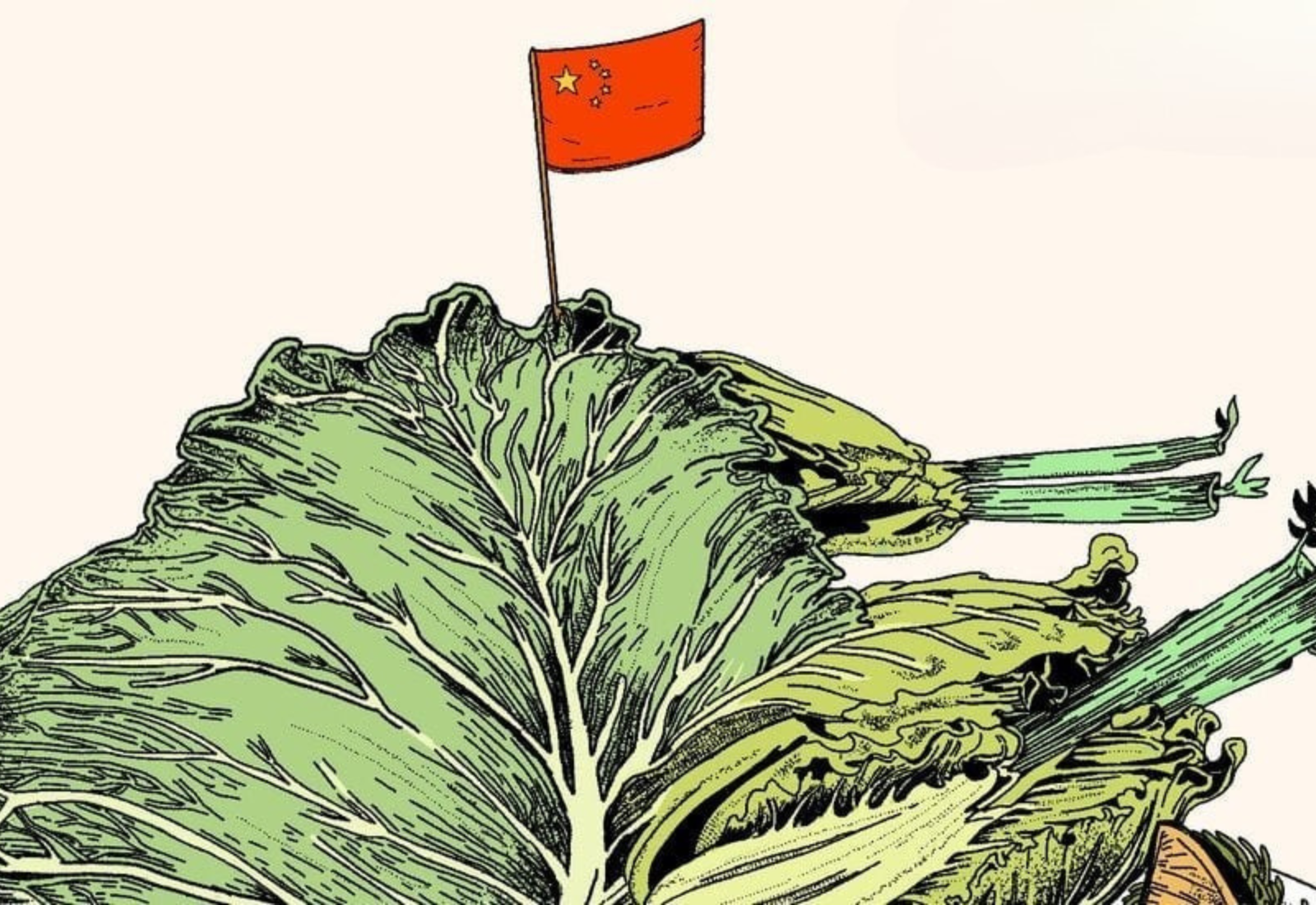
Jacob Dreyer is an American editor and writer. Below: the cover of his article.
Conclusion:
...The initial idea was to plant one’s banner in an industry that seemed capable of promising unlimited fertility and which, not insignificantly, definitely winked at the semantic halo of sustainability, a buzzword that is so popular. Following in the wake of brands like Beyond Meat and Impossible Foods, in other words, but with the usual firepower of the giants in question.
The aforementioned wake has burnt itself out, it seems. Take the example of Beyond Meat: shares trading at $239 in July 2019, two hundred jobs cut in October 2022, share value collapsed to $10.26 in May 2023.
A downturn after a rocket start is physiological and understandable. What has throttled BM’s parabola, however, has above all been inflation, the soaring cost of living that has never returned to previous levels: veg meat, already tending to be more expensive than traditional alternatives, has remained the preserve of those who can afford it.
Nestlé and Unilever are therefore pulling out of the game: what scares them off, evidently, is a market sucked in by inflation and threatened by the shadow of Robert Kennedy Jr, the stars and stripes health secretary, who described them as ‘ultra-processed’ products (Dissapore)..
We shall see, I think shortly, who, between western multinationals – influenced by disappointing sales and political decisions – and China – oriented by the single party – will have been right.
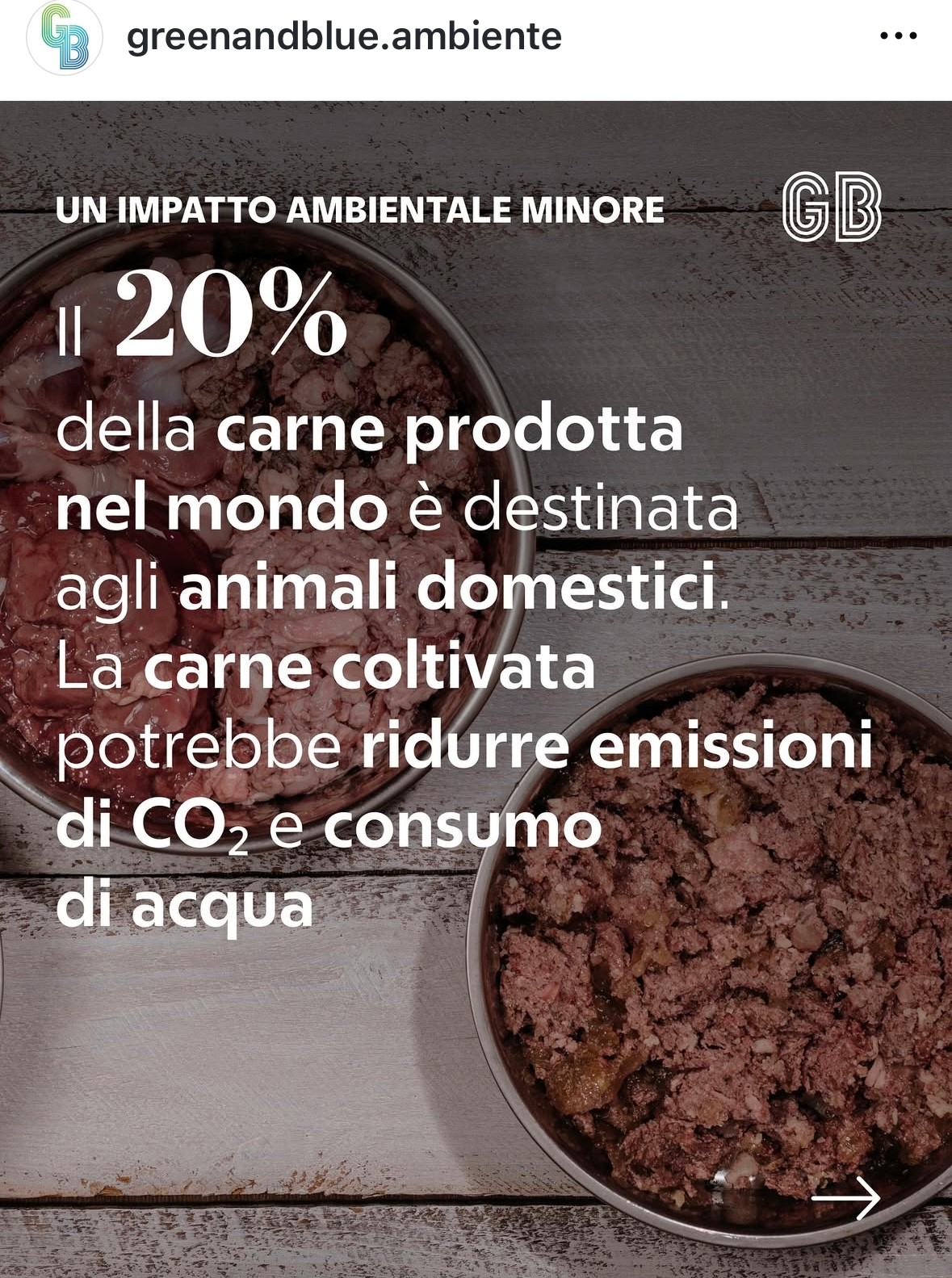
Below is a claim about the environmental value of cultured meat