Drafted 23 September 2022, updated 22 October 2025. Above an image of the ‘battle’ over the retirement age in France (2023).
We have already talked aboutsilver economy on several occasions.
ISTAT’s final projection for Italy is disturbing: 11.5 million residents will be missing from the roll-call in 2070.
In the chart below the current situation (2023)
In 20 years more than 10 million people will be living alone in Italy
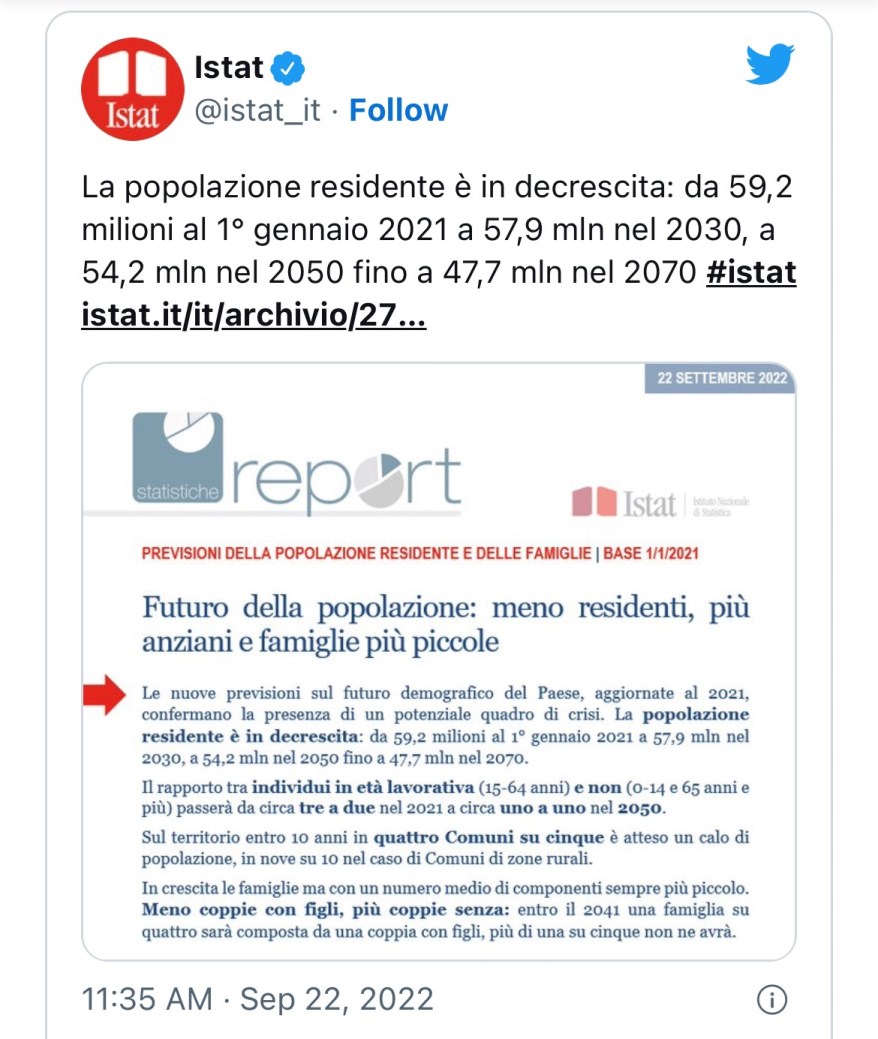
Istat updates its report on the country’s demographic future to 2021. “The prolonged decline in the birth rate increases the number of people without children, while the increase in marital instability, as a result of the greater number of dissolutions of couple ties, results in a growing number of lone individuals and parents”
22 September 2022
AGI – “The decline in the number of families with nuclei stems from the long-term consequences of the socio-demographic dynamics taking place in Italy: the ageing of the population, with the increase in life expectancy, generates a greater number of single people; the prolonged drop in the birth rate increases the number of people without children, while the increase in marital instability, following the greater number of dissolutions of couple ties, determines a growing number of single individuals and parents”.
This is what Istat notes in its report on the new forecasts on the demographic future of the country, updated to 2021. ‘Lone persons, however associated with the concept of family, however micro, are mainly responsible for the absolute growth in the total number of families. Men living alone,’ Istat explains, ‘will increase by 18.4 per cent, reaching more than four million in 2041. Single women would increase even more, from 4.9 to almost 6 million, a growth of 22.4 per cent. Single-person households, especially because of their age composition, have an important social impact: it is, in fact, mainly in old age that the number of single people increases a lot’.
If already in 2021 “the share of single persons aged 65 and over represents half of those living alone, in 2041 it would reach 60 per cent. In absolute terms, the number of single persons would reach 10.2 million ( 20%), of which 6.1 million will be 65 years and older ( 44%). In 2021, among men living alone, about one in three will be over 65 (32.3%), while among women the ratio rises to more than three in five (63.1%). Over the years, the forecasts show a scenario in which the incidence of men and women aged 65 and over in the total number of one-person households increases substantially, so that in 2041 men would make up 42.5% and women even 72.2%”.
The report explains that ‘increased survival among the elderly, many of whom are lonely, could lead to increased care needs in the future. The longer survival, characterised, it is assumed, also by a better quality of life, could allow these people to play an active role in society: for example, as is already the case today and probably in the future, by supporting their children’s families in the care of their grandchildren and guaranteeing them economic support, participating in the economic cycle as consumers of care services but also as capital investors’.
From 57.9 million residents in 2021 we should decrease to 47.7 million in 2070 according to ISTAT.
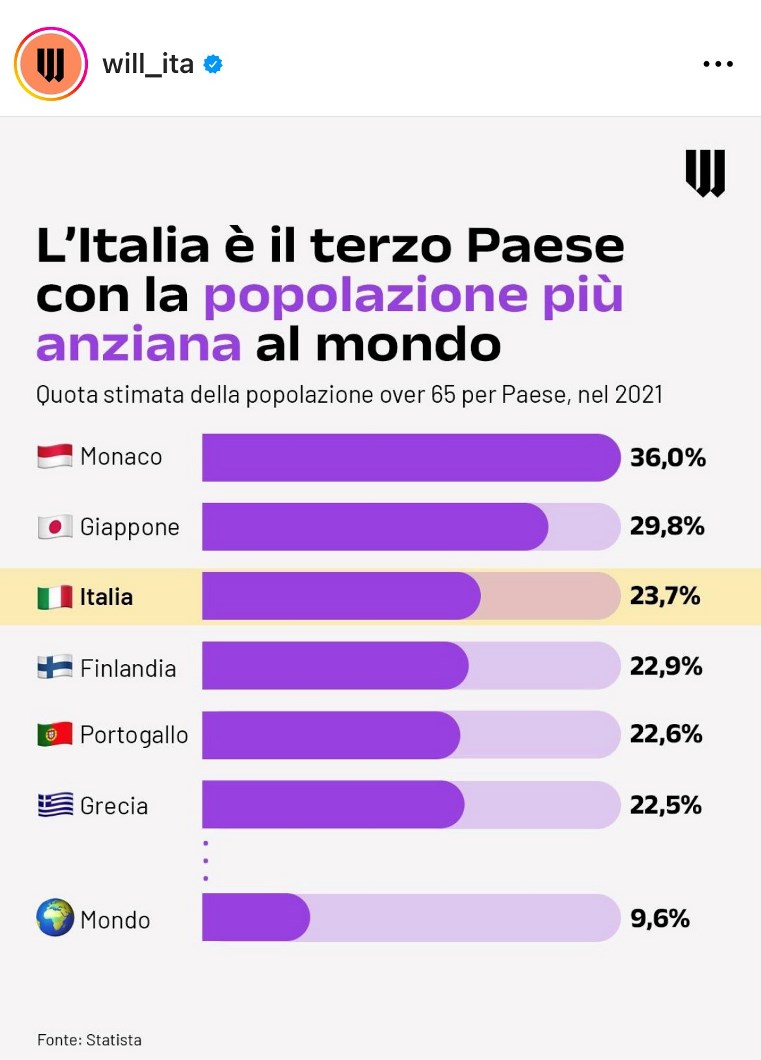
Basically, we are one of the countries with the oldest population in the world. And we will lose even more residents.
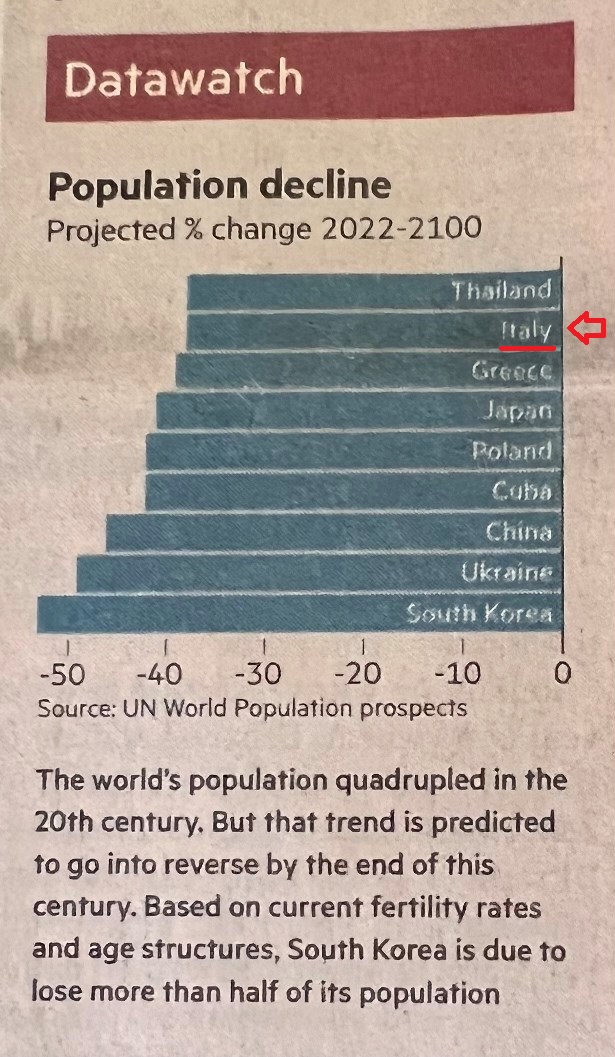
But it is not over because we are in the world’s ‘top ten’ for population decline (Financial Times 2 November 2022, based on UN data, below).
To better understand the graph below: according to UN projections, South Korea is expected to lose half its population. We a little less.
To put it simply, theUN is more pessimistic thanISTAT: Italy’s population could fall by almost 40% in less than 80 years, to about 23.6 million residents (from 59.2 million).
Conclusion : I will not go into the merits of purely political issues, such as the reception of migrants, the denatality, family policy and the haemorrhaging of young Italians, who emigrate and never return.
I merely note that these demographic changes already represent a challenge and an epoch-making change for the entire consumer world whose marketing must already begin to evolve now to serve a new army of single, elderly people.
Then there is the question of the missing workers, which you will find in the Corriere della Sera considerations of 20 November 2022.
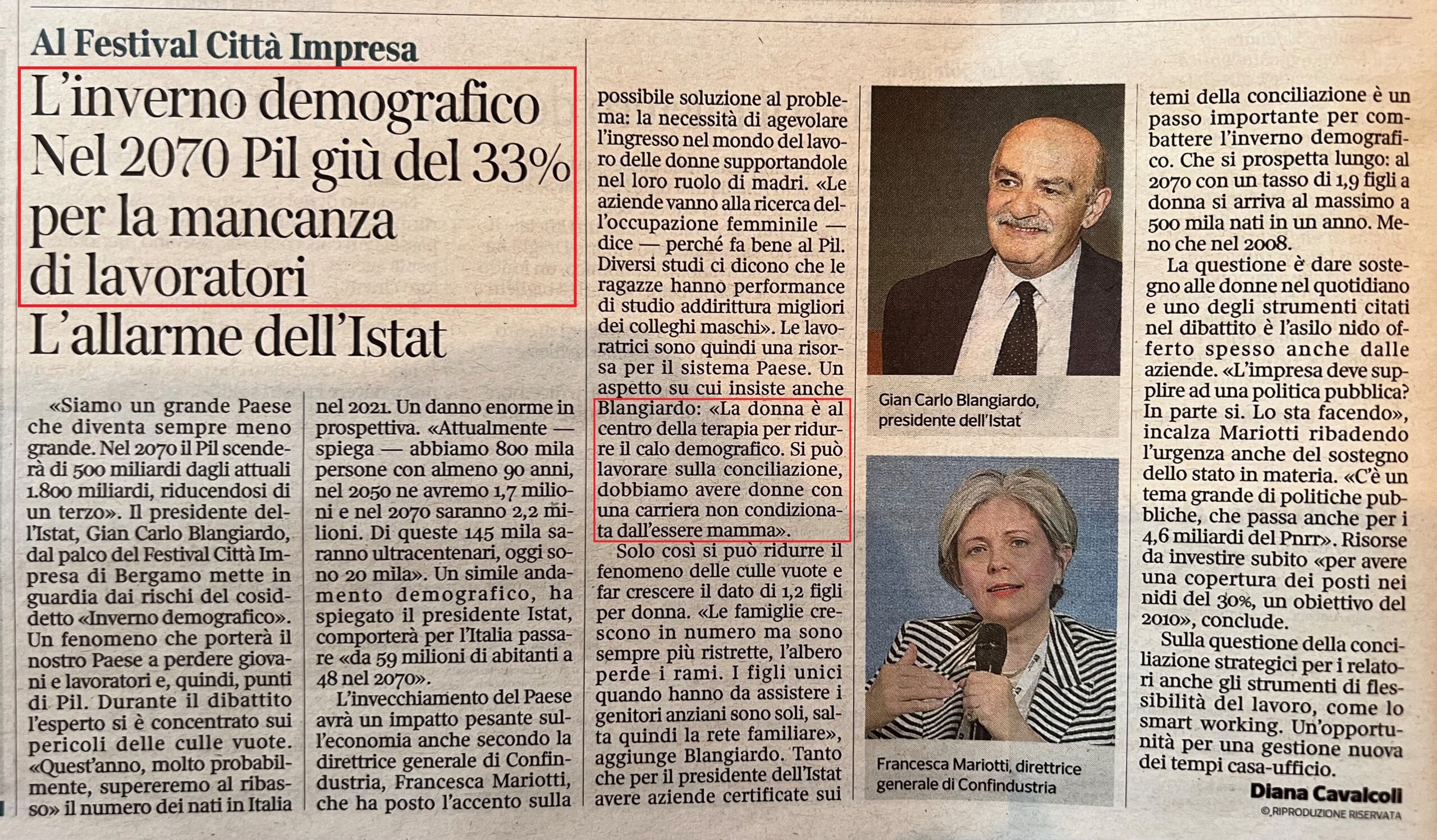
The problem, although less pronounced than in Italy, also exists elsewhere:
- the ageing population ‘is already affecting’ the credit ratings of governments . Higher rates combined with rising pensions and health care costs are bound to weigh on states’ finances ( South Korea, Taiwan and Japan are the countries that will have the biggest problems going forward).
- In 2000 the world fertility rate was 2.7 births per woman, comfortably above the ‘replacement rate’ of 2.1 at which a population is stable. Today it is 2.3 and falling. The 15 largest countries by GDP all have fertility rates below the replacement rate. This includesAmerica and much of the rich world, but also China andIndia, neither of which are rich but which together account for more than a third of the global population.
All this will affect the economy and politics.
Then there is the everyday life of families, in Italy, where the economic argument raised by Enrico Ferrazzi strikes me as noteworthy: two salaries, in a family, are no longer enough.
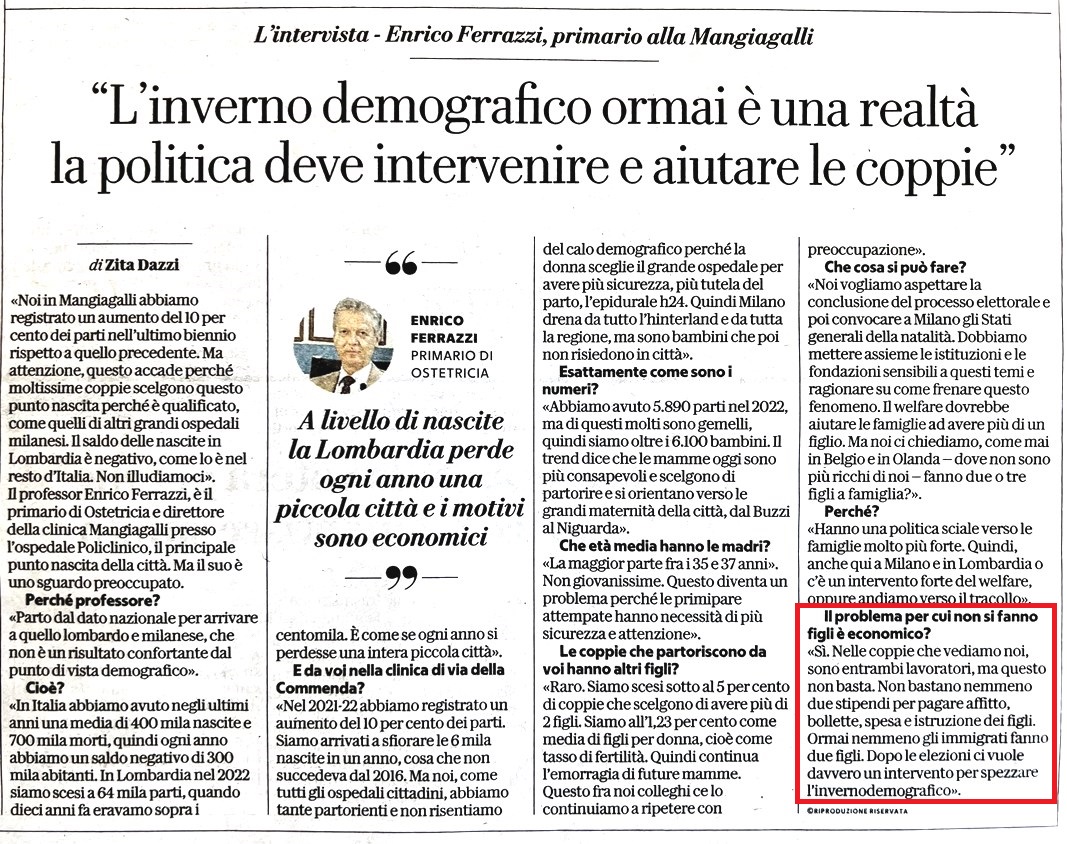
And let us remember that this topic intersects with that of Italianhealthcare , which is collapsing: how will all these elderly and lonely people be treated?
Below is an example concerning healthcare in Lombardy (Corriere dell’sera, 15 March 2023).
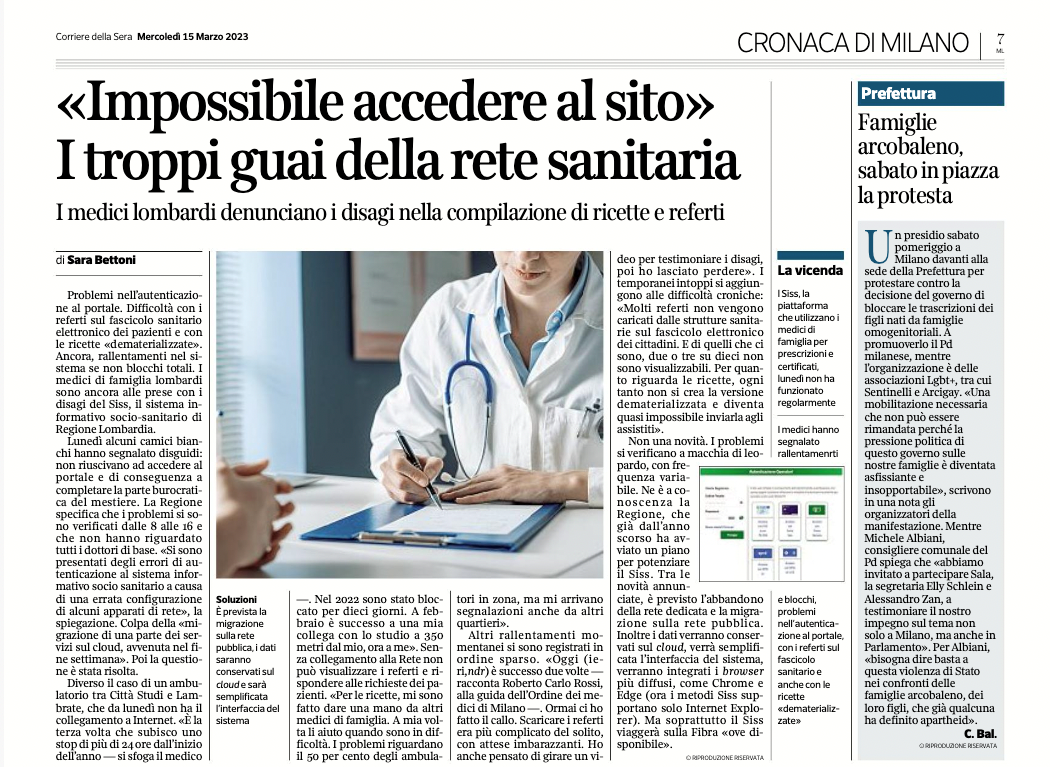
It seems that the lesson of Covid-19 has not been assimilated. and translated into new projects and ‘facts’.
Read also :
Italy: births at the lowest level since 1861, the year of unification.
Shocking birth rate: 5 million fewer workers by 2040
Why should we care about rural depopulation in Europe, (it is also mentioned here, in 2025).
Italy risks a hefty bill from increasingly empty cradles: in September we will lose 134,000 students. From the decline in the workforce down 11%, spending on health and long term care goes up (2025)
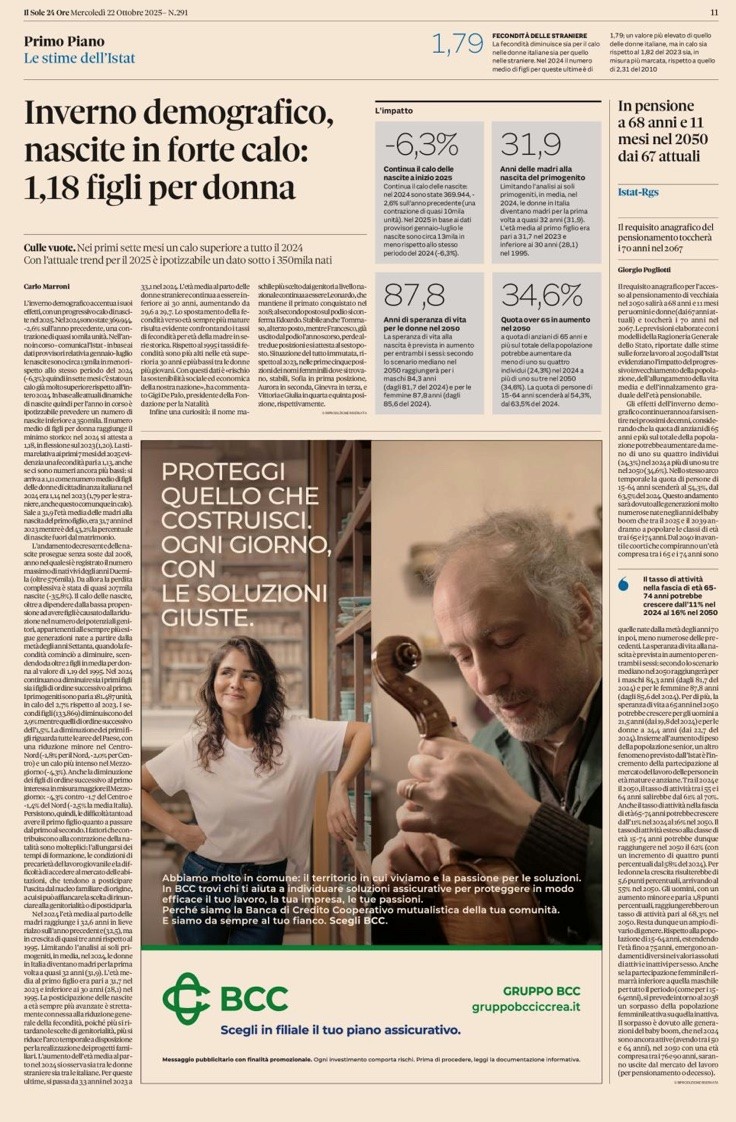
Below: an article from 22 October 2025