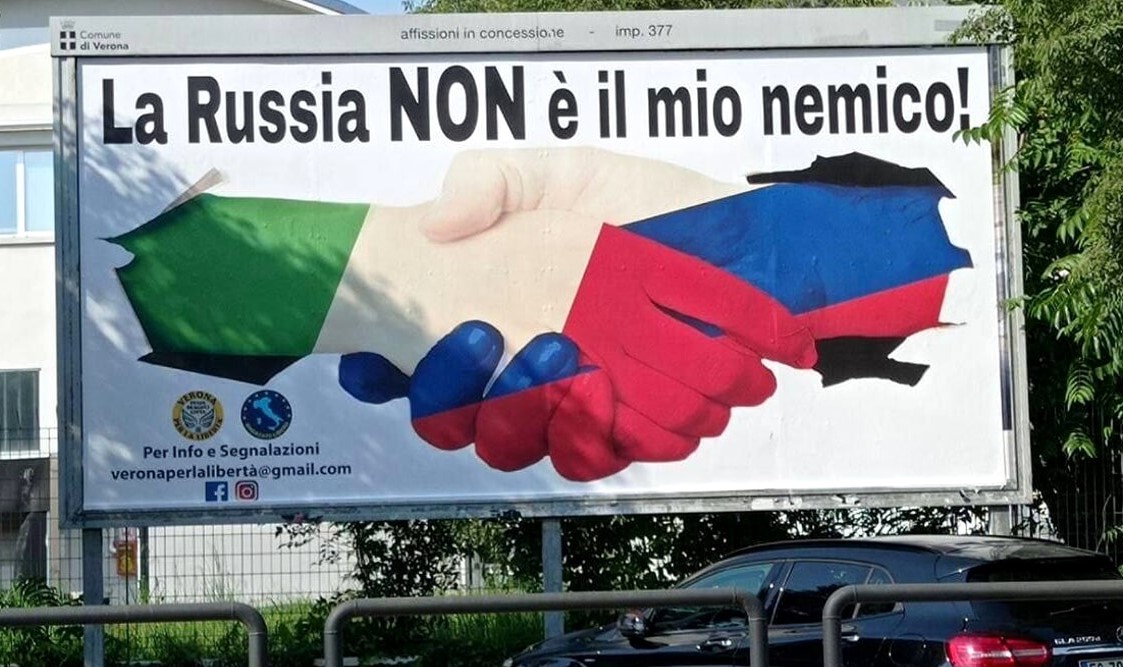
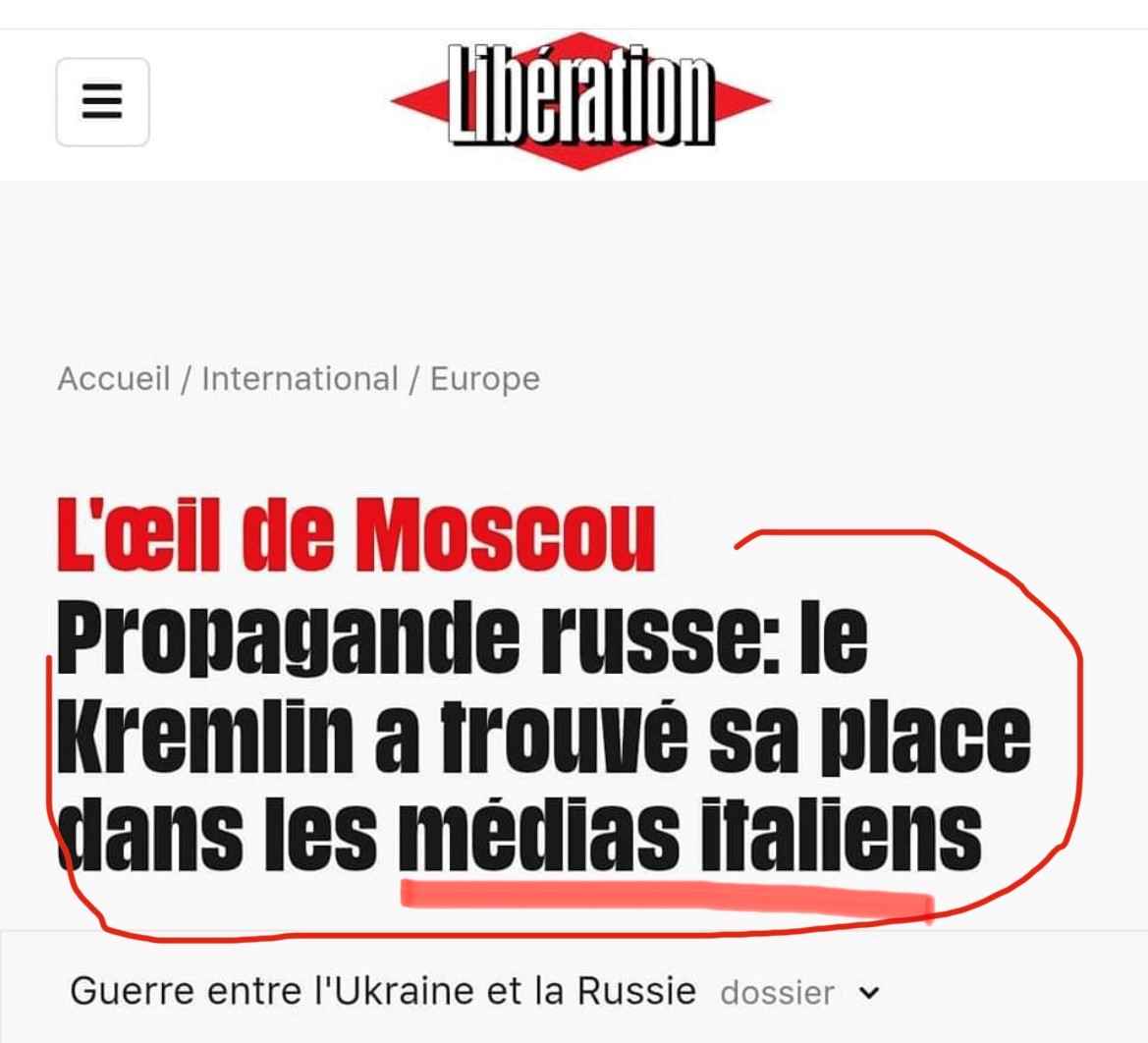
[vc_column_textAbove a sign that appeared some time ago in many Italian cities. In this context – read about it: Russian propaganda between bots, bitcoin and donations. And in Russia, as in the former USSR, food bartering resurfaces – Le Monde – in December 2024 – revealed that thousands of influencers, including French citizens, were approached by people close to the Kremlin to spread pro-Russian propaganda
And the killing of General Kirillov has resurrected one of the many episodes of disinformation spread by the Russians in recent years.
Kirillov, Putin’s poison man. With a role also in Italy
From Novichok against dissidents to chloropicrin in Ukraine. Kiev had just sentenced him in absentia. His command also had a strategic role in setting up Russian defences against Covid: he managed the controversial operation ‘From Russia with love’ in Bergamo
General Igor Kirillov is not only the highest-ranking officer murdered by Ukrainian 007s in punitive expeditions into the heart of Russia: his role was even more important than the hierarchical position, because he commanded one of the key structures of the Putin power system. Since 2017, Kirillov had been at the head of the RKhBZ, an acronym for units dedicated to defence against nuclear, bacteriological and chemical attacks. A sector that was almost forgotten in the rest of the world at the end of the Cold War while it received an extraordinary boost from the Kremlin.
Although autonomous, the top-secret research institutes that developed the latest generation of poisons, such as the infamous Novichok used to target dissidents, fugitives and opponents in several EU countries, still belong to this military network. It was also his officers who contributed to the chemical attacks carried out by Bashar Assad’s regime against rebel neighbourhoods, suffocating children, women and the elderly. A mission entrusted to Kirillov’s deputy: General Sergey Kikot.
Kirillov’s command then played a strategic role in setting up the Russian defences against the Covid. It was he who managed the ‘From Russia with love’ operation that sent the RKhBZ’s top experts led by Guido Kikot to Bergamo, the epicentre of the pandemic, to study the virus and obtain the information needed to develop the Sputnik vaccine. After all, research into bacteria turned into weapons requires a network of scientific and industrial intelligence that the Russians exploited to the full during the great epidemic.
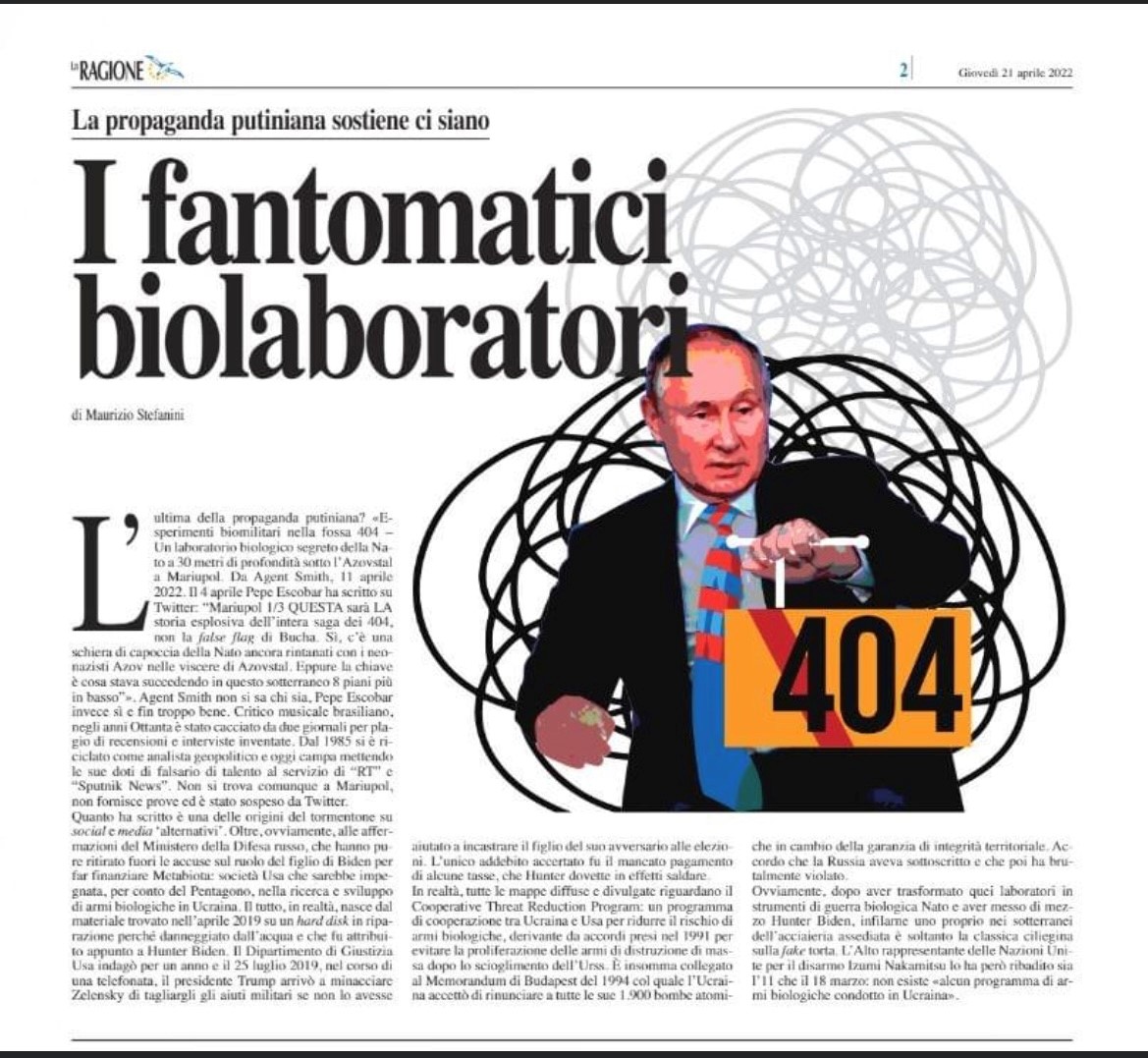
Kirillov was also an expert in ‘information warfare’, drafting and disseminating a series of artfully calibrated news stories against the Ukrainians and NATO. It was he who put his face into the disinformatsjia campaign on the secret virus study centres implanted by the US administration in several Ukrainian cities, showing documents recovered from Moscow troops and photos of the scientists involved.
In those laboratories,’ Kirillov claimed, ‘new diseases were being prepared and it just so happens that it was only American pharmaceutical companies that were enriching themselves with Covid: a cascade of dietrologies that easily caught on in conspiracy circuits, crediting Kiev as a breeding ground for epidemics on behalf of Washington. In his periodic press conferences, he had also accused the Ukrainians of importing radioactive materials to build a ‘dirty bomb’, of spreading mosquitoes with drones to spread malaria, of carrying out attacks with asphyxiating gases against politicians installed by Moscow in occupied areas.
That of chemical weapons is one of the most controversial chapters of the conflict. The British government has accused the Russians of using them and subjected Kirillov to sanctions. The Americans have also made the same accusations. But they called the RKhBZ men into question for the use of tear gas and asphyxiants for ‘riot control’, i.e. designed to disperse street demonstrations. In addition, the use of chloropicrin, an asphyxiating gas dating back to the First World War, was allegedly detected. Non-lethal substances of questionable effectiveness on the battlefields of the Donbass or Kursk. Kiev intelligence, on the other hand, believes that two thousand Ukrainian soldiers were intoxicated by K-1 ammunition, equipped with a warhead containing a mixture of CS irritant gas and CN suffocant, dropped on the trenches by drones.
Kiev intelligence, on the other hand, believes that two thousand Ukrainian soldiers have been intoxicated by K-1 ammunition, equipped with a warhead with a mixture of CS irritant gas and CN suffocant, dropped on the trenches by drones in at least 4,800 incidents. And for this, Kirillov was branded a ‘criminal’ yesterday: a sentence carried out in a matter of hours, hitting him directly in the capital. An action so reckless as to appear as a provocation to the Russian nomenklatura, which now meditates a devastating revenge.
Thanks to Gianluca Di Feo – whom I had met more than 10 years ago, when he worked for l’Espresso – for this insight.
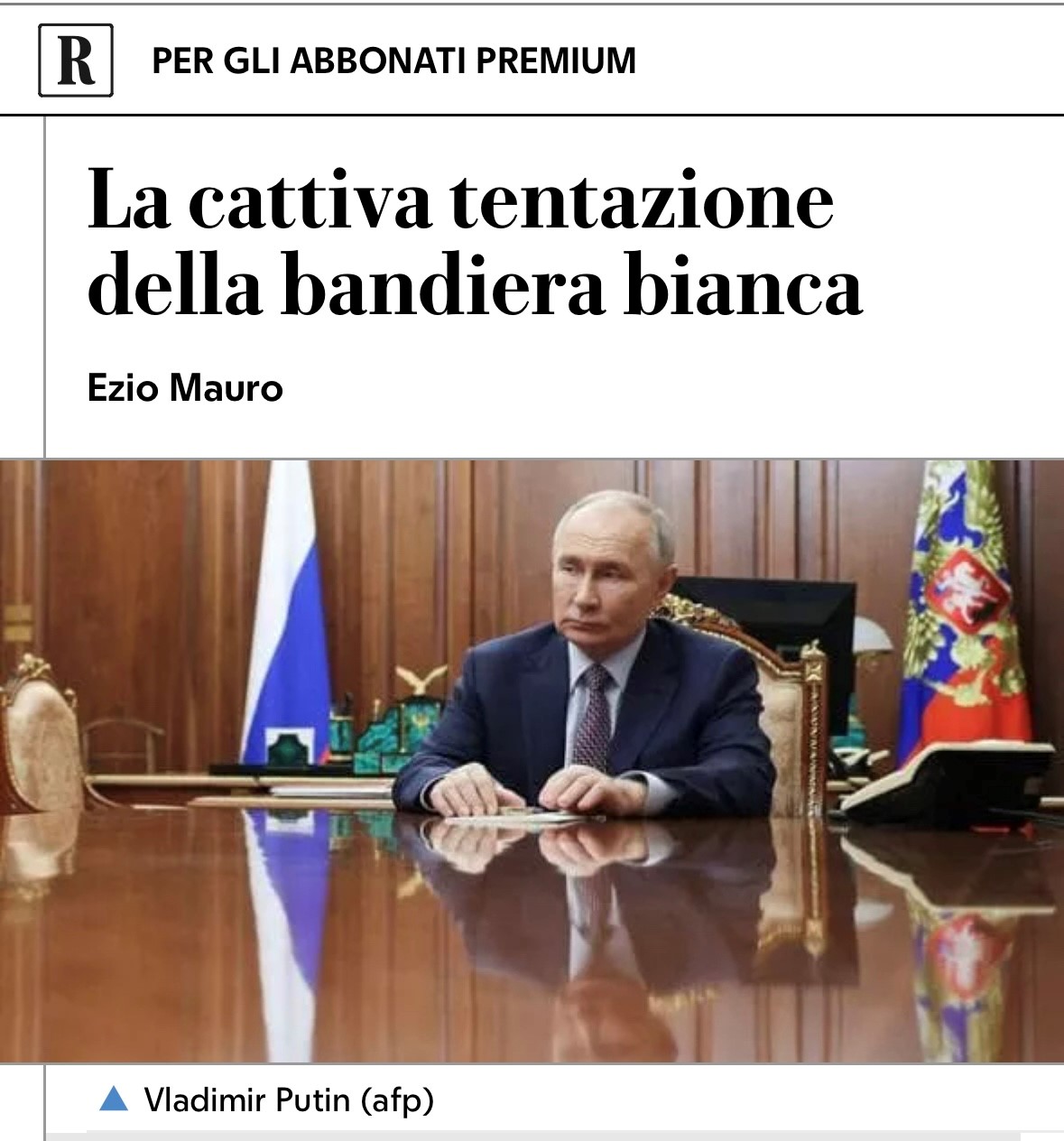
Kirillov did an ‘excellent job’ and indeed, today, much of Italian public opinion would be in favour of Ukraine’s surrender to Putin’s Russia, without looking too much at the conditions imposed by Russia and the possible consequences of raising the white flag.