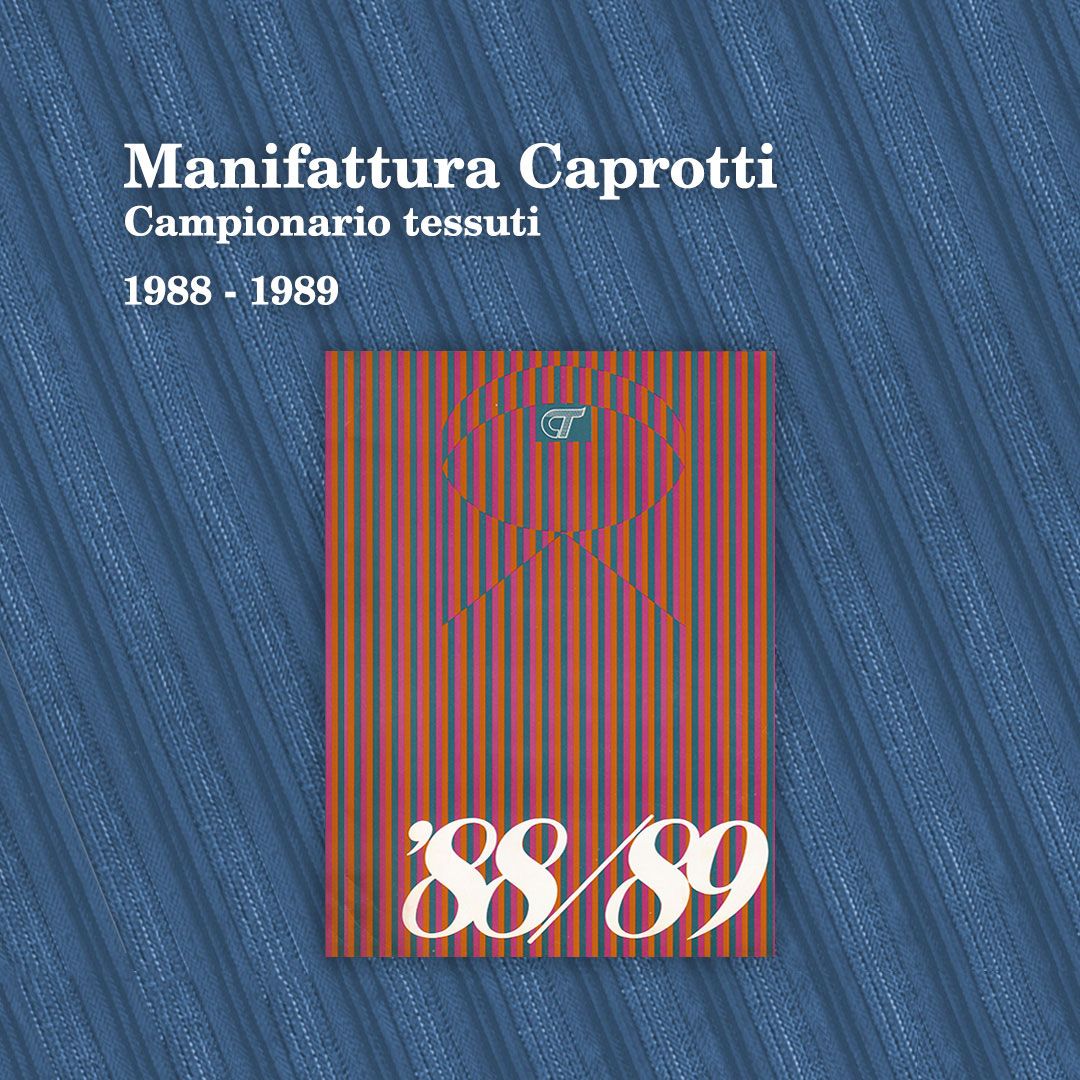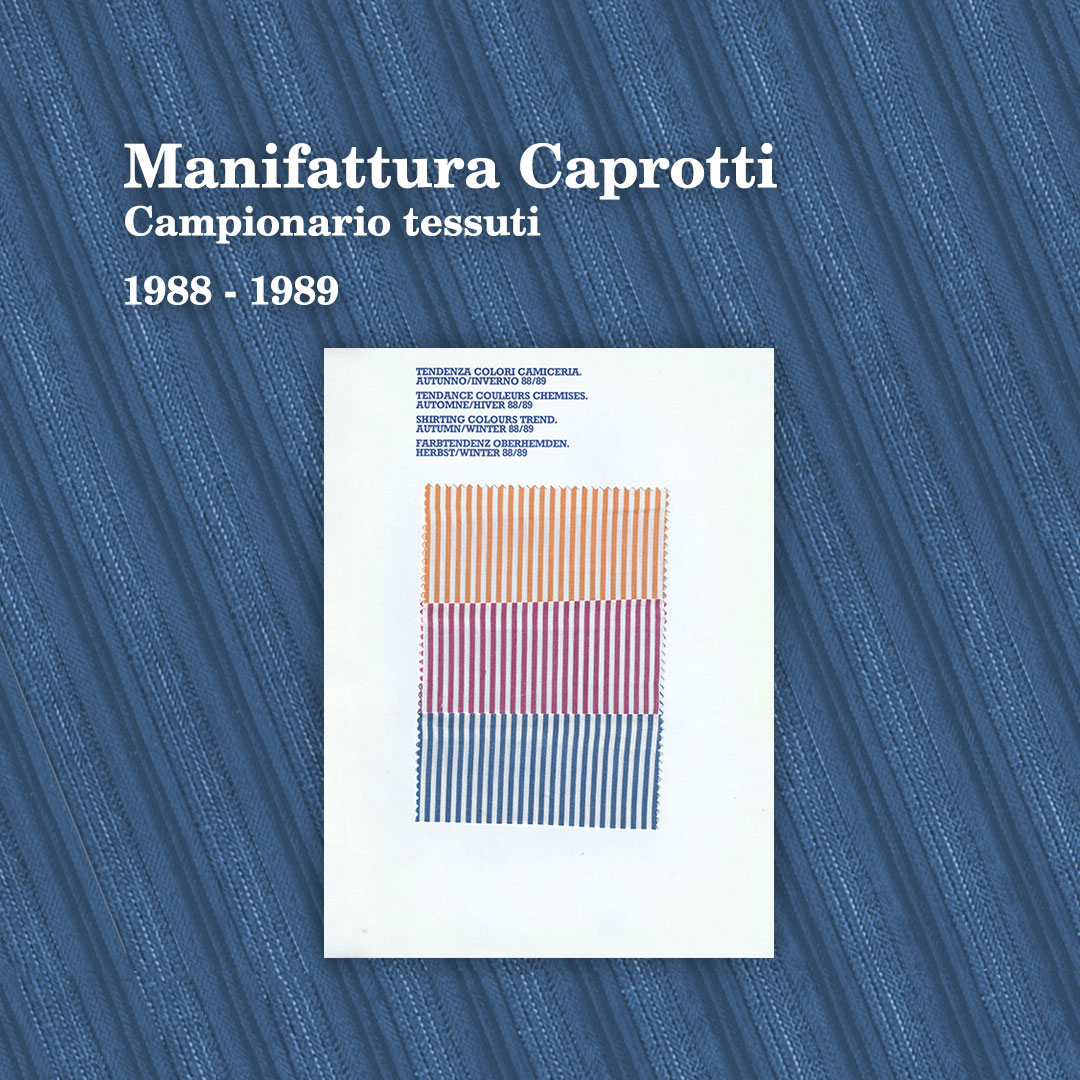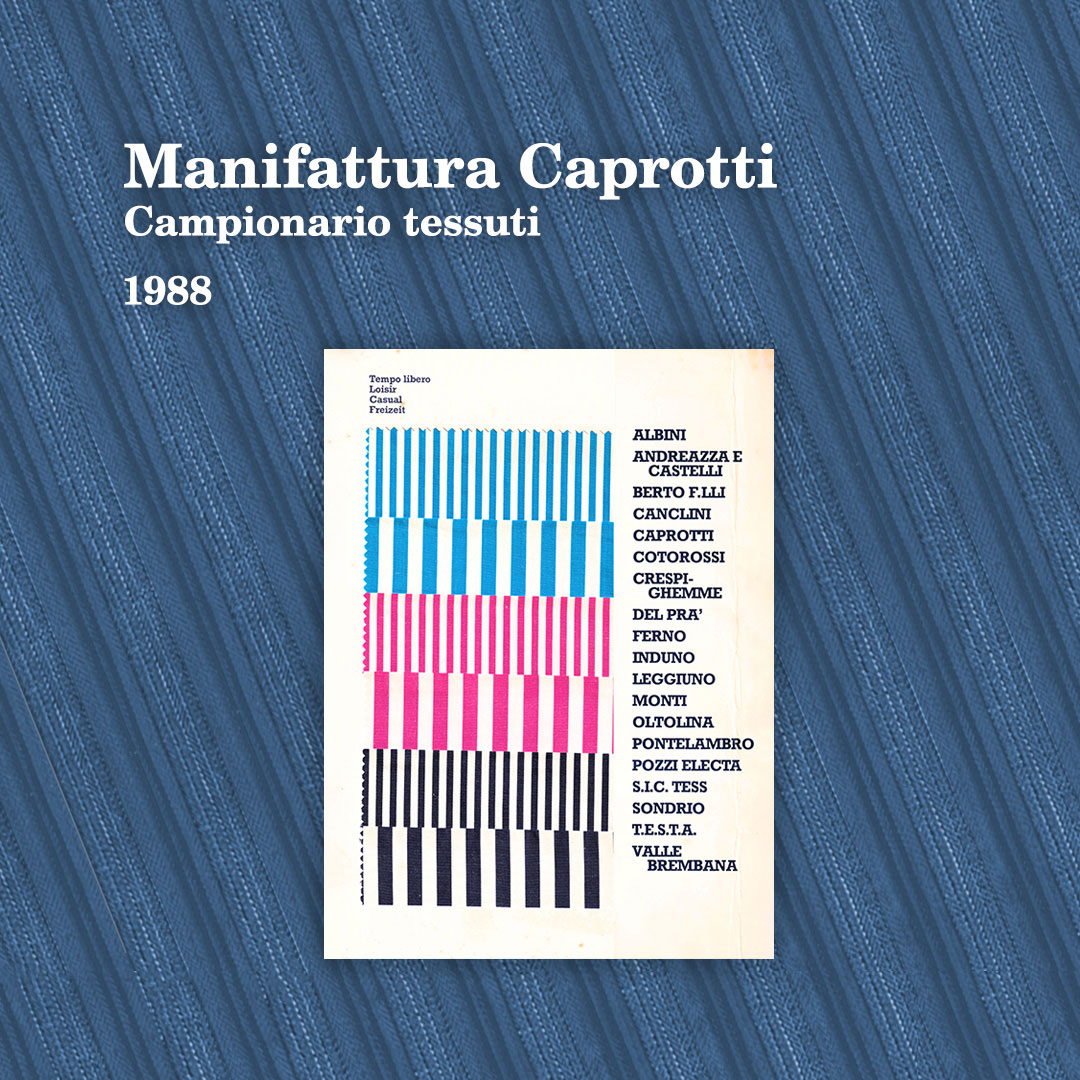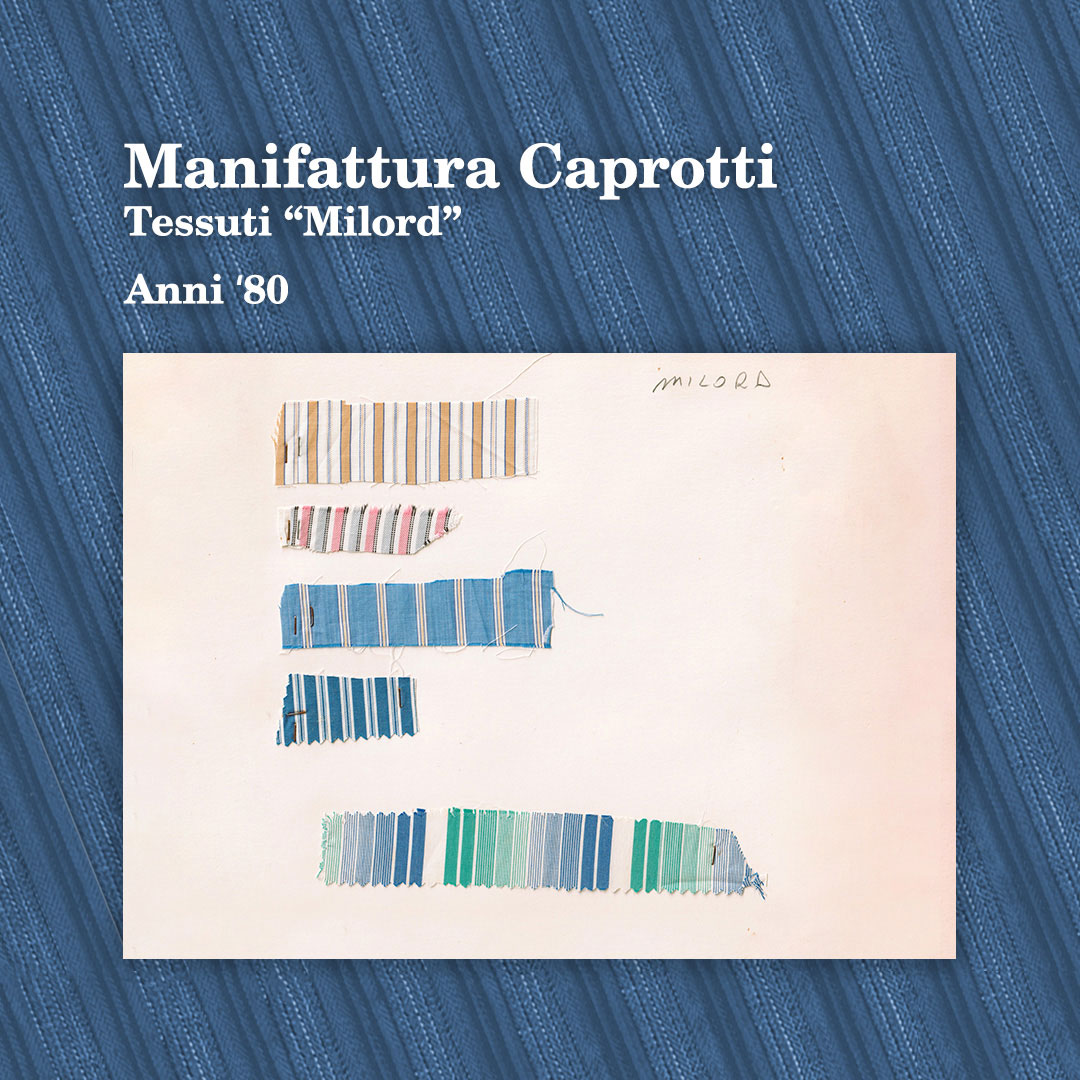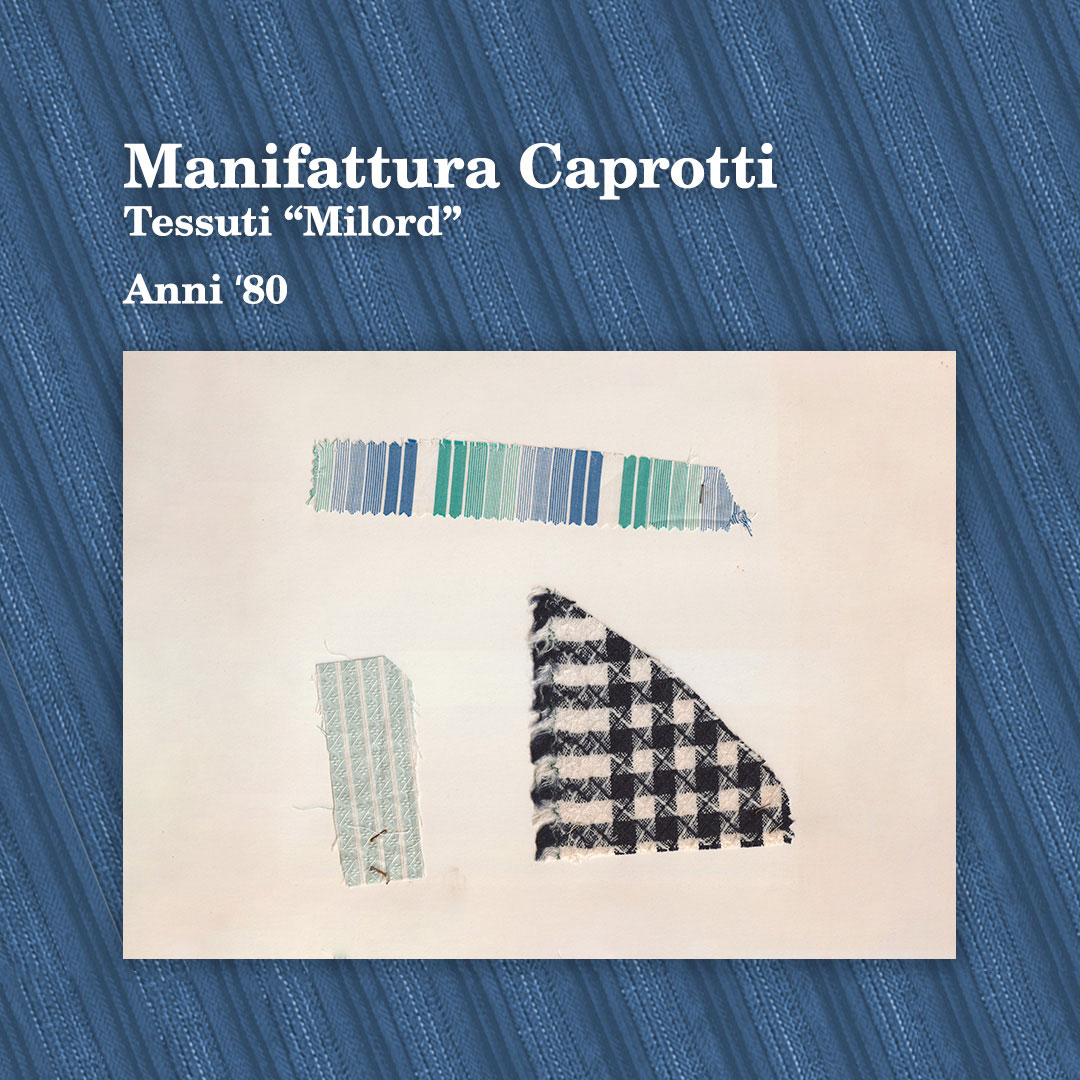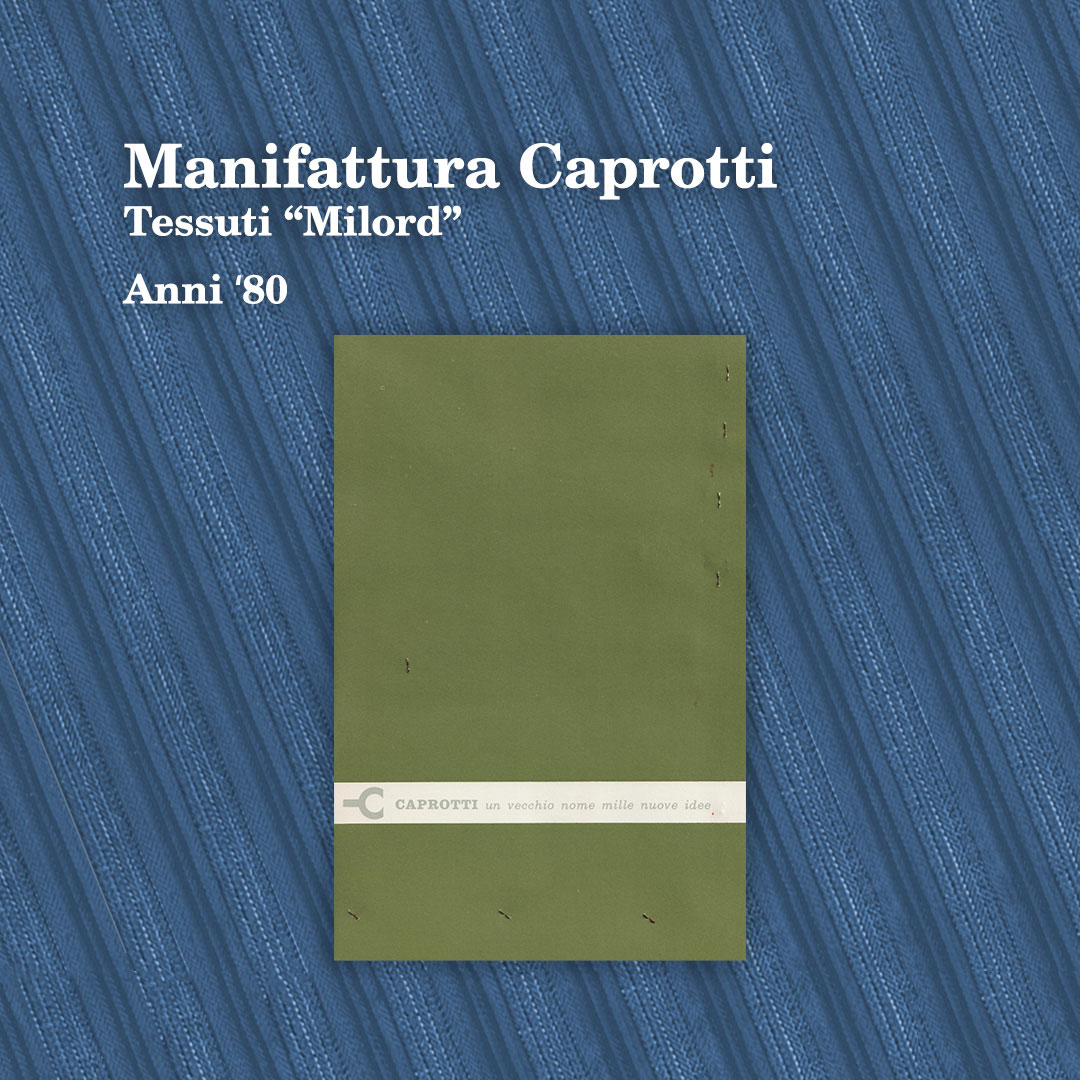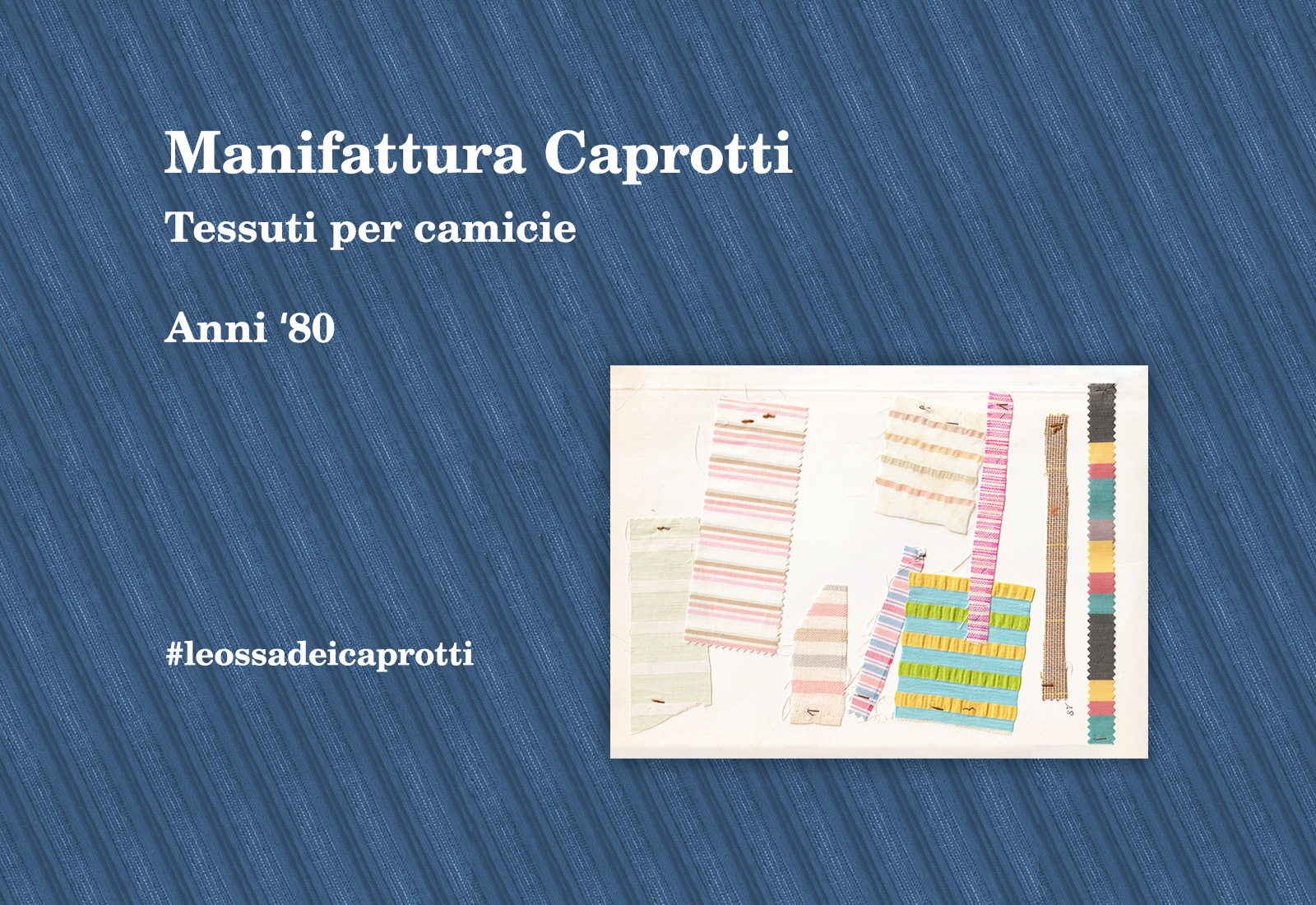
One of the great merits of the Manifattura Caprotti Archives is the vastness of its production samples. Conserved from the early 1840s to the beginning of the following century, it counts dozens and dozens of samples of fabrics produced by The Caprotti family, which customers sent to the factory as examples for the requested supply. In addition to these, thanks to the availability of Aristide ‘Mentore’ Zotti, a former employee of the factory, and his son Luca, whom I thank most sincerely, I was able to view some examples of the company’s modern sample books dating from 1970-80. These are sample books that were sent or shown to potential customers, cartons with stapled cuttings of fabrics suitable for ‘free time’ shirts (produced and presented by the CT – Consorzio produttori italiani tessuti per camiceria (Consortium of Italian shirting fabric producers, of which Caprotti family was also a member), and others presented by Caprotti alone (‘un vecchio nome mille nuove idee’, reads the slogan on the back of the cardboard backing), such as the striped ‘Milord’ with its cheerful colours and light jacquard pattern that was so fashionable at the time.
But if the old fabrics produced by the Albiatese factory had distinctive features, such as the bright colour shades for which their cottons were so popular (and the booklet with the formulas for dyeing, still in the archives, was jealously preserved), the materials and patterns of the fabrics of a century later did not. They were beautiful, of course, but anyone could have produced them, as indeed happened. And the company suffered severely as a result.