

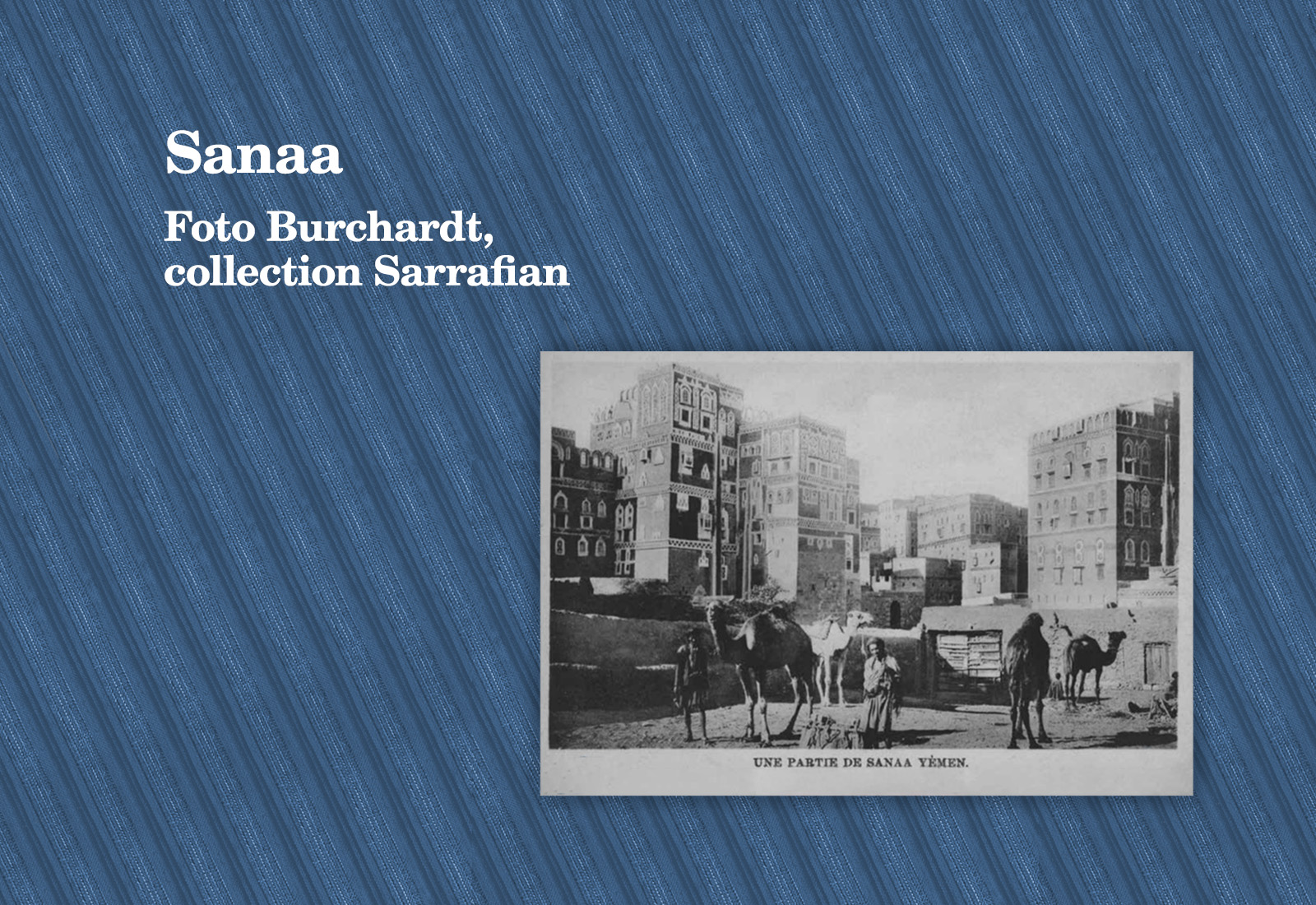
“His great-great-grandfather Giuseppe subscribes to numerous magazines, finances geographical explorations and commercial expeditions, participates in the Committee for the expedition to Scioa that intends to open up trade with Ethiopia, enthusiastically joins the Society for Commercial Exploration in Africa, whose ships regularly call at Massawa, and subscribes to the African Society of Italy and the Italian Geographical Society. He maintains assiduous relations with two of the best-known Italian explorers of the time. The first is named exactly like him, Giuseppe Caprotti: he is a distant relative, born a few kilometres from Albiate, who lives in San’a’. In what is now the capital of Yemen, the Caprotti explorer will spend thirty years (…). The industrialist Giuseppe commissioned the explorer Giuseppe to track down ancient coins and antiques that were shipped to Italy, circumventing the strict laws of the Turks who dominated the region at the time (…). The second explorer is the famous Gaetano Casati, who was born in Ponte Albiate and is a childhood friend. (…) when the explorer was held prisoner for a long time (…), Giuseppe worked energetically to collect funds for an expedition that would attempt to free him and to push the government in Rome to intervene.(…).
Beppo also has many other interests: he reads – or would like to read – everything from the most disparate magazines to novels, and collects stuffed birds, amassing almost 400 specimens from all over Europe; it was his way of travelling from a standstill, more in keeping perhaps with his introverted and melancholic nature than that of his brother Carlo, a likeable, extroverted traveller first out of obligation and then out of passion, which must have aroused some envy in him. (ROMANO, I Caprotti, p. 248 ff.).
Even more important, as mentioned, was his interest in Africa and exploration. In addition to antiques, so fashionable at the time, and coins, which enabled him to build up a respectable numismatic collection, Beppo also had his namesake Beppo Caprotti send him something equally precious: Yemenite coffee, still highly prized today, which Giuseppe traded in large quantities. The industrial Giuseppe buys it often, by the sacks: a business opportunity, always sought after by the Caprotti’s underneath all their passion. However, I like to think that by selling his sacks of coffee, his great-great-grandfather contributed to the spread of the drink in Italy as we know it.
Sources:
Albiate (MB), Villa San Valerio, Villa San Valerio Archives, Giuseppe Caprotti Factory Archives, Giuseppe Caprotti Archives (1837-1895).
Bibliography:
Jean-François Breton, Micheline Breton. LES PHOTOS D’HERMANN BURCHARDT DE LA COLLECTION SARRAFIAN. Tempora. Annales d’histoire et d’archéologie, 2011.
G. CAPROTTI, “Le Ossa dei Caprotti. Una storia italiana’, Milan, 2024/3.
R. ROMANO, “I Caprotti. L’avventura economica e umana di una dinastia industriale della Brianza”, Milan, 1980.
E. SÀITA, “I Caprotti : private aspects, from the Risorgimento to the Second World War“, 08/11/2022.
G. CAPROTTI, “Le Ossa dei Caprotti. Giuseppe Caprotti and the history of Arabica coffee, Yemen’s treasure. Cues from the book.
ID., “Le Ossa dei Caprotti”. Giuseppe Caprotti explorer: coffee and Brianza. Hints from the book.
ID., Le Ossa dei Caprotti. Giuseppe Caprotti explorer and Giuseppe Caprotti entrepreneur: fabrics and antiques. Ideas from the book.


