Giuseppe the explorer, like everyone else, is an all-round trader, dealing in all kinds of goods, and the highly prized Yemeni coffee is one of his workhorses. This leads him to deal with those who painstakingly cultivate it, the Yemenite Jews, whose large community enjoys Muslim tolerance but not sympathy, and is very poor. Caprotti finds a way to help them, and earns their gratitude.
He will be the one to expatriate them to Eritrea in good numbers to try to introduce coffee cultivation there. Luigi Rossi quoted the text of an article from ‘Il Sole’ of 24 July 1899, given to him by Carmela Caprotti, Giuseppe’s sister; in it, a note states that Giuseppe Caprotti had been ‘instructed by the governor of Eritrea to procure seeds, seedlings and coffee growers from Yemen, the original homeland of the precious berry, which is still today [1927] the main source of income of those industrious populations (…)’.
Amidst a thousand difficulties, Caprotti succeeded in moving some of the Jewish farming families from around Sanaa to Eritrea with seeds and seedlings. Good farmers but ‘very demanding’, the Jews from Sanaa were ‘led around’ half the colony by the governor in person, and finally chose a first site about two hours from Asmara, where a first, experimental plantation would be established (ROSSI, ‘El Yemen‘, pp. 28-29).
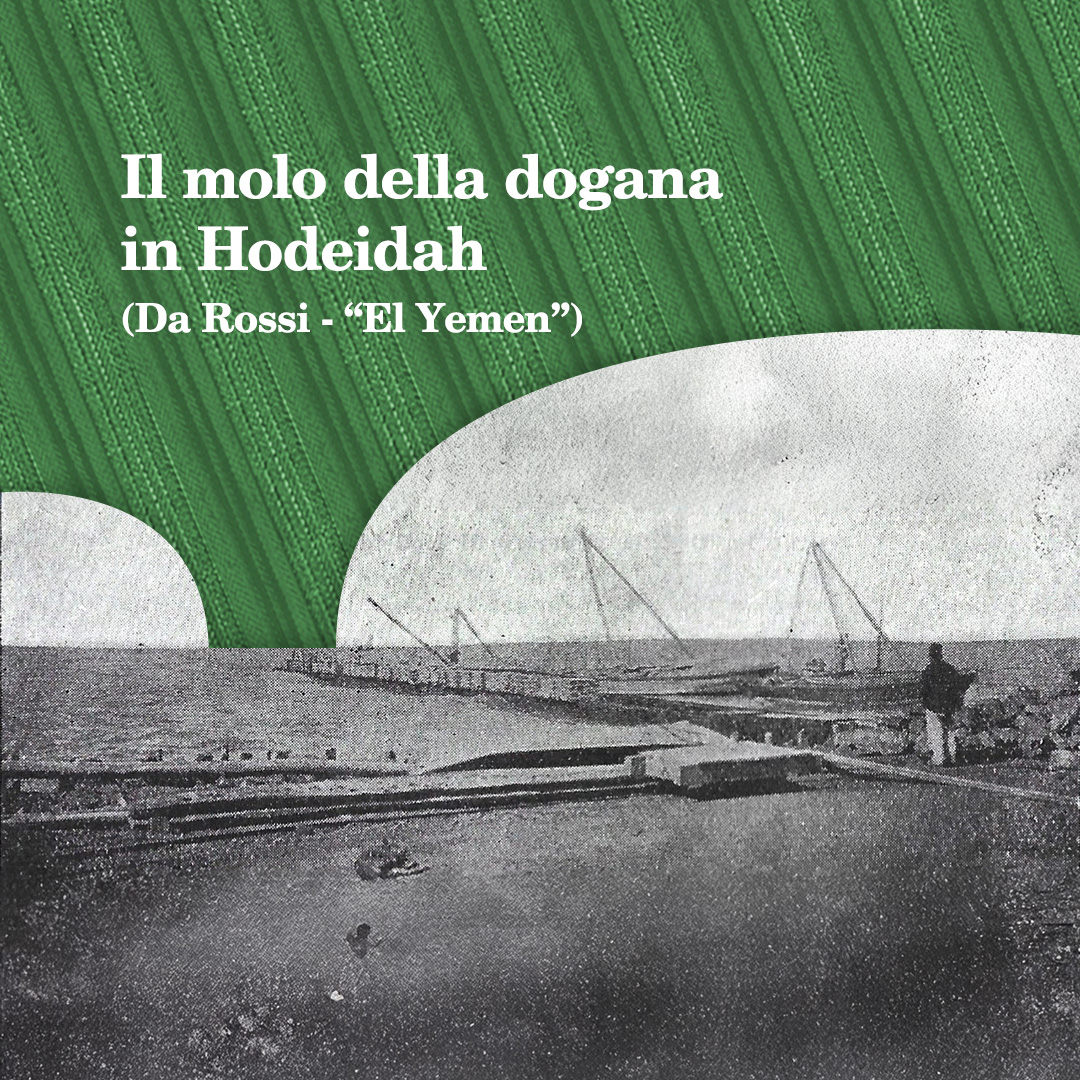
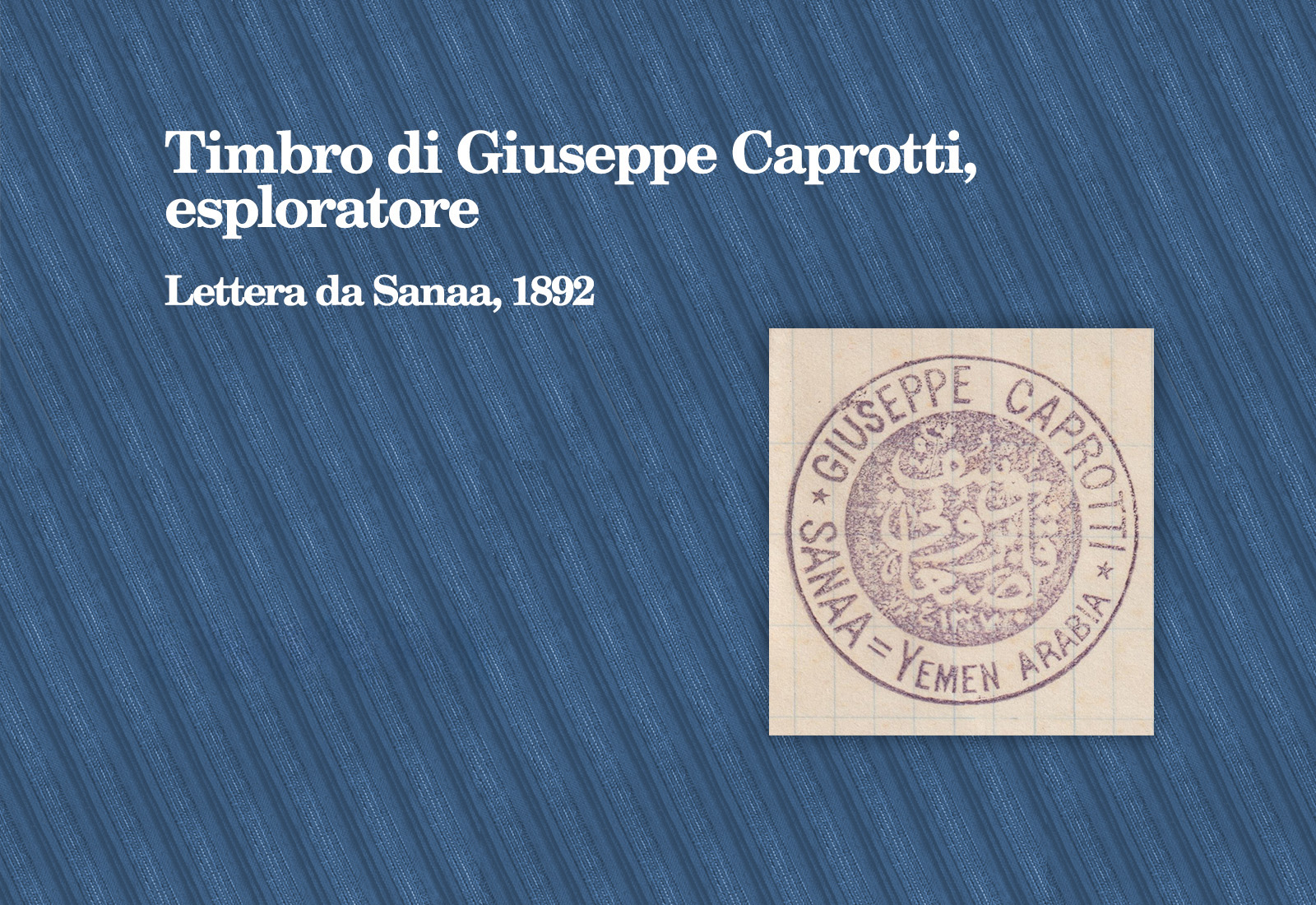
Among the destinations of Moka coffee was also a ‘very distant relative’ (as ROMANO, I Caprotti, p. 177), his namesake in everything, my great-great-grandfather Giuseppe Beppo Caprotti, known as Beppo. He is rich in interests of all kinds, and among these cannot be missing Arab antiquities, especially coins, which Giuseppe the explorer procured for him in large numbers. A champion, like all Caprotti’s, of combining the useful with the pleasurable, Giuseppe was not only interested in antiquities, but also in wonderful coffee, which he had shipped in large quantities. On 3 August 1888, Giuseppe Caprotti, at that time living in Magenta with his loved ones, sent his namesake ‘a collar with 46 kg (net weight) of Moka coffee (…). By his standard the price is L[ire] 4.65 a kilo. Take care to keep it well dry. (…)”. Between February and March 1889, Giuseppe’s elder brother, Luigi, announced that he had embarked 7 quintals of coffee at the port of Hodeidah ‘by Lloyd steamer (…), I am writing home for them to send it to you (…)’ (letter from Sanaa of 23 February/7 March 1889). On 30 May, the cargo had arrived, and Carlo Caprotti, Giuseppe’s second brother, wrote to the businessman Giuseppe [Beppo] that the coffee “is of excellent quality, perhaps superior to the one shipped so far“; at 4.80 lire per kg. he would have been happy to keep the desired quantity aside. On 10 June, a package, weighing 1 quintal, left by rail, arriving at Seregno station” It would have been nice to be there to see the faces and hear the comments of the local population who saw strange sacks with even stranger stamps and writings wandering around the countryside.
Sources:
Albiate (MB), Villa San Valerio, Villa San Valerio Archives, Giuseppe Caprotti explorer.
The National Library of Israel, Giuseppe Caprotti 1869-1919, Giuseppe Caprotti, 1900-1909, סימול ARC. Ms. Var. 525 02 01.1 Hermann Burchardt Archive, Hermann Burchardt Archive.
Bibliography:
L. BELTRAMI, ‘Eugenio Griffini Bey, MDCCCLXXVIII-MCMXXV’, Milan, 1926
G.B. ROSSI, ‘El Yemen, Arabia Felix o Regio Aromatorum. Appunti di geografia, storia, usi e costumi (…)’, Turin, 1927.
M. CARAZZI, “Caprotti, Giuseppe”, entry in Dizionario Biografico degli Italiani – vol. 19 (1976), from https://www.treccani.it/enciclopedia/giuseppe-caprotti_(Dizionario-Biografico)/
R. ROMANO, “I Caprotti. L’avventura economica e umana di una dinastia industriale della Brianza”, Milan 1980.
I. SANZÒ, “1897 – 1926. Over 100 years of relations between Italy and Yemen’, in ‘Bilqis. La Regina di Saba”, published by the Embassy of Yemen in Rome, no. 2, June 2012, pp. 24-26.
P. F. FUMAGALLI, “Giuseppe Caprotti (Pobiga Di Besana Brianza, 1862-Magenta 1919): Quelques notes biographiques’, in ‘Chroniques du Manuscrit au Yémen’, no. 9 (28)/Juillet 2019, ‘Giuseppe Caprotti de Brianza (29 mars 1862-15 mai 1919). In memoriam’, pp. 36 – 40.
A. D’OTTONE RAMBACH, ‘Giuseppe Caprotti et son double – Entre manuscrits et monnaies yemenites’, in ‘Chroniques du Manuscrit au Yémen’, no. 9 (28)/Juillet 2019, ‘Giuseppe Caprotti de Besana Brianza (29 mars 1862-15 mai 1919). In memoriam’, pp. 46 – 55.
G. CAPROTTI, “Le Ossa dei Caprotti. Una storia italiana’, Milan, 2024/3.