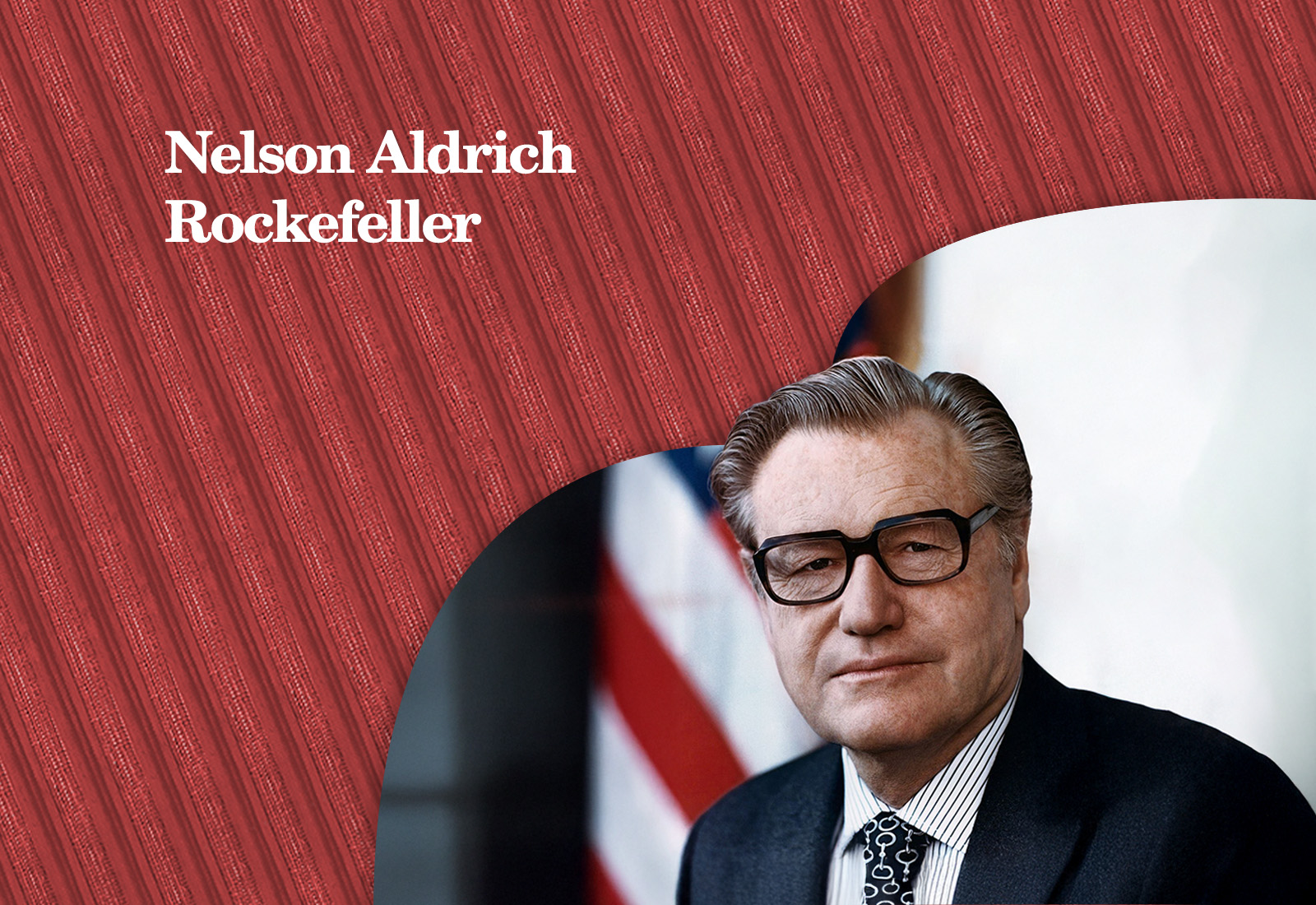
Nelson Aldrich Rockefeller was a complex figure who combined business, politics and culture in ways that had a significant impact on American society and international relations in the 20th century. His legacy continues to influence the debate on issues such as economic development and inter-American cooperation.
His early years, South America, philanthropic efforts, the Office of Intra-American Affairs
Nelson Rockefeller was born on 8 July 1908 in Bar Harbor, to John Davison Rockefeller, Jr., the son and heir of a wealthy oilman, and Abby Aldrich, a senator’s daughter. He received a high-level education, attending the best schools and graduating in economics from Dartmouth College in 1930. This educational foundation profoundly influenced his career in family businesses and philanthropic activities.
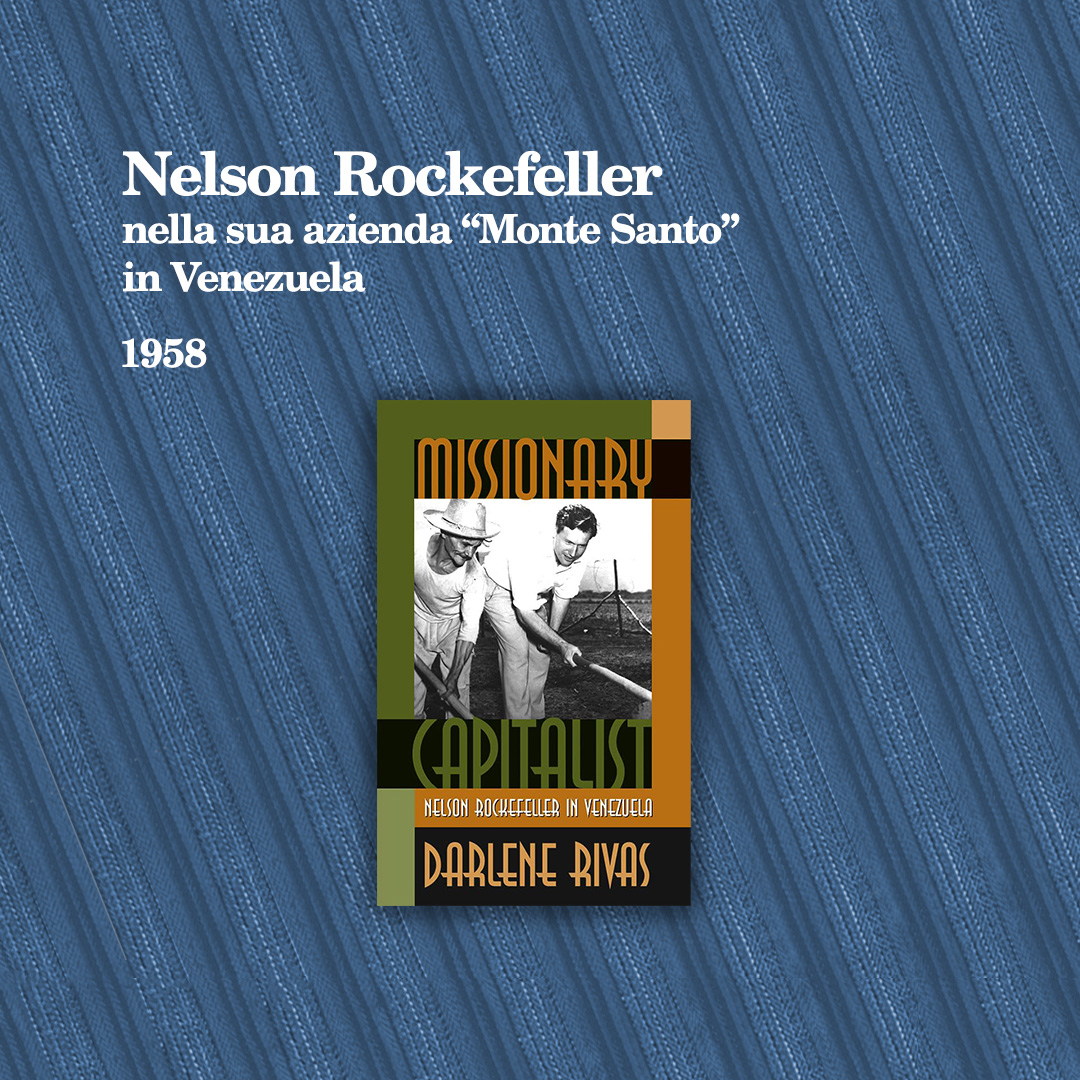
After graduation, Rockefeller held significant roles in various business sectors, including real estate and banking, but his true passion turned out to be the promotion of the arts and international development. In 1935, he became director of the Creole Petroleum Company, the Venezuelan subsidiary of Standard Oil, the big oil company in New Jersey. He fell in love with that land, and all of Latin America, which he visited extensively and whose knowledge had a lasting impact on his geopolitical vision. His tenure at Creole ended in 1940, but Rockefeller’s lifelong attachment was above all to Venezuela, his ‘first love’. Here, in 1953, he bought ‘Monte Santo’, a large agricultural property in the state of Carabobo that had belonged to Simon Bolìvar, legendary hero of Latin America’s independence movement in the early 19th century, and turned it into a model company.
Back in the United States, he founded with his four brothers John, Laurance, Winthrop and David the Rockefeller Brothers Fund to support philanthropic activities.
After one of his long visits to Latin America in 1939, Rockefeller prepares a memorandum for President Franklin D. Roosevelt, outlining his deep concern about Nazi influence and penetration in that part of the world. In the memo, he recommends a programme of US cooperation with nations across the South American continent to achieve better relations between them and help raise their standard of living together. Largely as a result of this memo, in 1940, President Roosevelt asked Rockefeller to initiate and direct a new programme known as the Office of Inter-American Affairs, and in December 1944, he appointed him as Under Secretary of State for the Affairs of the American Republic. In this position, Rockefeller initiated the Inter-American Conference on Problems of War and Peace in Mexico City in February 1945, which that same year led to the drafting of the Chapultepec Act, in which a basis for cooperation between the nations of the American continent in economic and defence matters was established. Afterwards, he resigned from his post to return to private life.
South America is therefore a passion and a commitment for Rockefeller, carried out with intelligence to the point of speaking about it – certainly also thanks to the name he carries and the resources he has at his disposal – at the highest levels of international politics. Even as a private individual, Rockefeller tries to pursue a programme of aid to the effective development of those countries through one of his creatures, the IBEC – International Basic Corporation, which aims to improve the basic economies of the least developed countries through the introduction of the ‘American system’.
Rockefeller, the politician
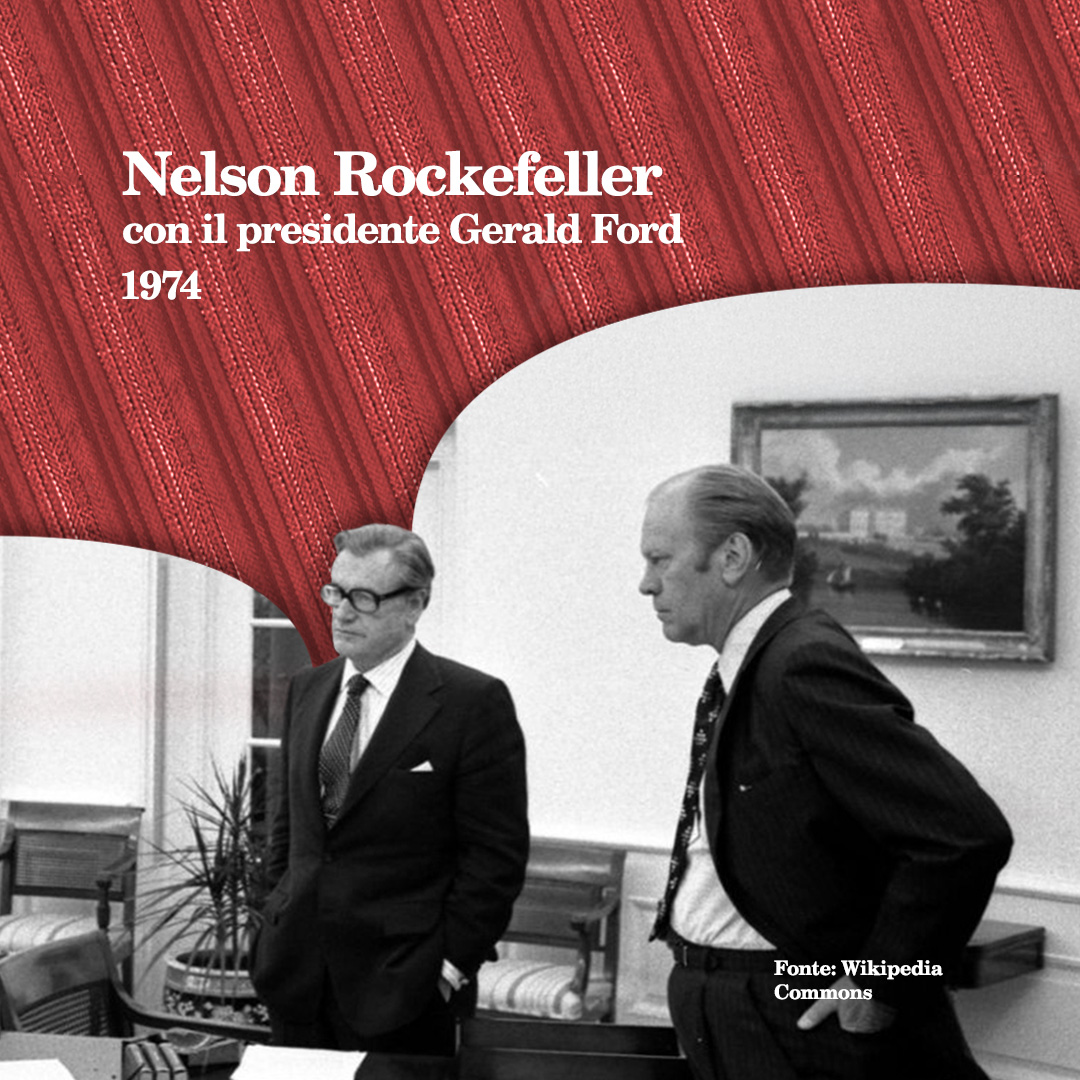
During the 1950s, Rockefeller continued to play a significant role in US politics. As chairman of President Eisenhower’s advisory committee on government organisation, he proposed important reforms that improved the efficiency of the American executive. He was also governor of New York from 1959 to 1973. He was re-elected three times, becoming the first governor in US history to serve four terms. His political career culminated in 1974, when he was appointed Vice President of the United States by President Gerald Ford after the resignation of Richard Nixon. During his term in office (1974-1977), Rockefeller continued to advocate progressive policies and promote international integration.
Finally retiring to private life at the end of his term, Nelson Rockefeller died in New York on 26 January 1979.
Nelson Rockefeller is the man who, at the end of the 1950s, imported the American ‘global’ shop, the supermarket, to Italy through the company he founded, IBEC, whose aim was profit linked to social and political goals, bringing basic welfare to all levels of the population, starting starting with basic necessities at affordable prices, which could have demonstrated, in the midst of the Cold War between the United States and the Soviet Union, that Western capitalism was also capable of generating benefits for all in the same way, and even more, than other economies. Among others, the Caprotti brothers, Guido, Bernardo Caprotti and, later, Claudio Caprotti, joined IBEC. With IBEC in 1957, they opened the first shop in Milan in Viale Regina Giovanna, the ‘Supermarket’; and when, in the mid-1960s, the Americans withdrew to take the supermarkets project to other countries around the world , the Caprotti brothers, who remained the sole owners, would turn the ‘Supermarket’ into the ‘Esselunga’, the oldest and at the same time most modern supermarket in the country. (G. CAPROTTI, The Bones, pp. 47 ff).
Sources:
Rockefeller Archive Center, Nelson A. Rockefeller papers, Biographical/Historical Note.
Venezuela inmortal, @Venezuela inmortal, 2020, Los Rockefeller en Venezuela, Instagram, 23 June 2020. Available at:[https://www.instagram.com/venezuela_inmortal/ ](Consulted on 29/05/2025).
Bibliography:
G. CAPROTTI, Le Ossa dei Caprotti. Una storia italiana, Milan 2024/3.
ID., The founding company of Esselunga was created in 1947 by Nelson Rockefeller, 14/04/2024.
ID., Luigi Guaitamacchi and Nelson Rockefeller’s directives in Esselunga, 10/11/2024.
ID., The Birth of Private Label Products in Italy, 08/02/2023.
ID., Le Ossa dei Caprotti. Caprotti and Supermarkets: US President John F. Kennedy with Nelson Rockefeller, 1960s. Cues from the book.
A. BARICCO, At the origins of Esselunga and European distribution, 06/06/2017.