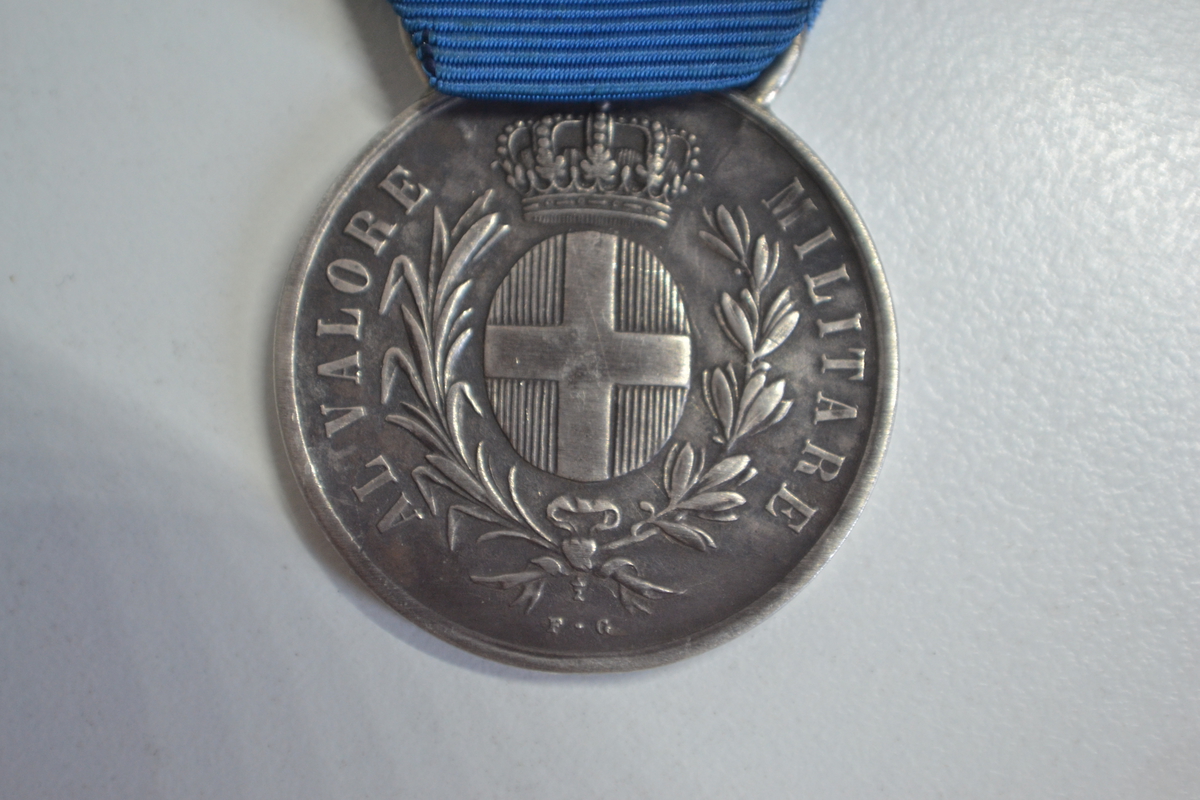
“My grandfather Guido Venosta and his two brothers also had an adventurous life. The most prominent was Luigi, the second son, ‘the most popular Italian ice hockey player’ of the 1930s, as ‘La Gazzetta dello Sport’ called him. At home we called him Uncle Gigi. I was lucky enough to know him, he was extremely nice. He made his debut on the national team against Hungary in the first game Italy played in a world championship, in 1930, and wore the blue jersey with the white Savoy cross for more than twenty games. Unfortunately, an illness forced him to miss the 1936 Olympic Games in Garmisch-Partenkirchen, when Italy achieved a historic victory over the United States. At the outbreak of the Second World War, several hockey players enlisted in the air force. Luigi and Camillo Mussi, comrades of the national team and of many derbies between the various Milanese teams, were sent to Libya. On 17 August 1940 they took part in a battle against the British in the skies over Sidi Barrani. Mussi’s Savoia-Marchetti was shot down, while Uncle Gigi was more fortunate: some machine-gun bursts hit his bomber, wounding the engine driver on board, but he managed to glide into a safe area. He was decorated with the silver medal for military valour’. (p. 83).
The family albums contain many photographs of Uncle Gigi as a hockey player in the major competitions of the time; only those of his father’s funeral in 1939 show him in an aviator’s uniform. The Sidi Barrani episode in which he played was impressive, so much so that it deserved some space in the unpublished memoirs of his older brother, my grandfather Guido, who probably heard it recounted by him:
The brother pilot fought as crew chief of an S73 bombing aircraft. After an action over Alexandria and the English fleet at anchor, his squadron on the way back was attacked by a squadron of Spitfires.
One of them, in particular, attacked my brother’s aircraft. (…)
The fighting was very hard. After a frontal attack that served to unhinge the main instruments on board, the Spitfire moved to the rear of the S73, continuing to fire its synchronised machine gun.
The second pilot fell. The aft gunner fell, hugging his machine gun. To his right my brother saw two S73s on fire. From one of them, Milo Mussi parachuted into the sea, whom we never saw again and whom our parents searched for years, hoping he was missing (…).
A lucky cloud allowed my brother to evade pursuit. He returned to Italian territory with dead and wounded; he was awarded a silver medal in the field.
This episode was recounted in full detail on British radio the very evening of the battle. (…)”.
Albiate, Villa San Valerio, Giuseppe Caprotti family Archives: Archive of Guido Venosta, Various documents, GUIDO VENOSTA, Memoirs, unpublished typescript, 1996, p. 34.
In the photo, Gigi Venosta is the last one at the back, in the breakaway, wearing the dark jersey.
Basic references:
Card of Luigi Venosta, a.k.a. ‘Gigi Venosta’ in https://www.eliteprospects.com