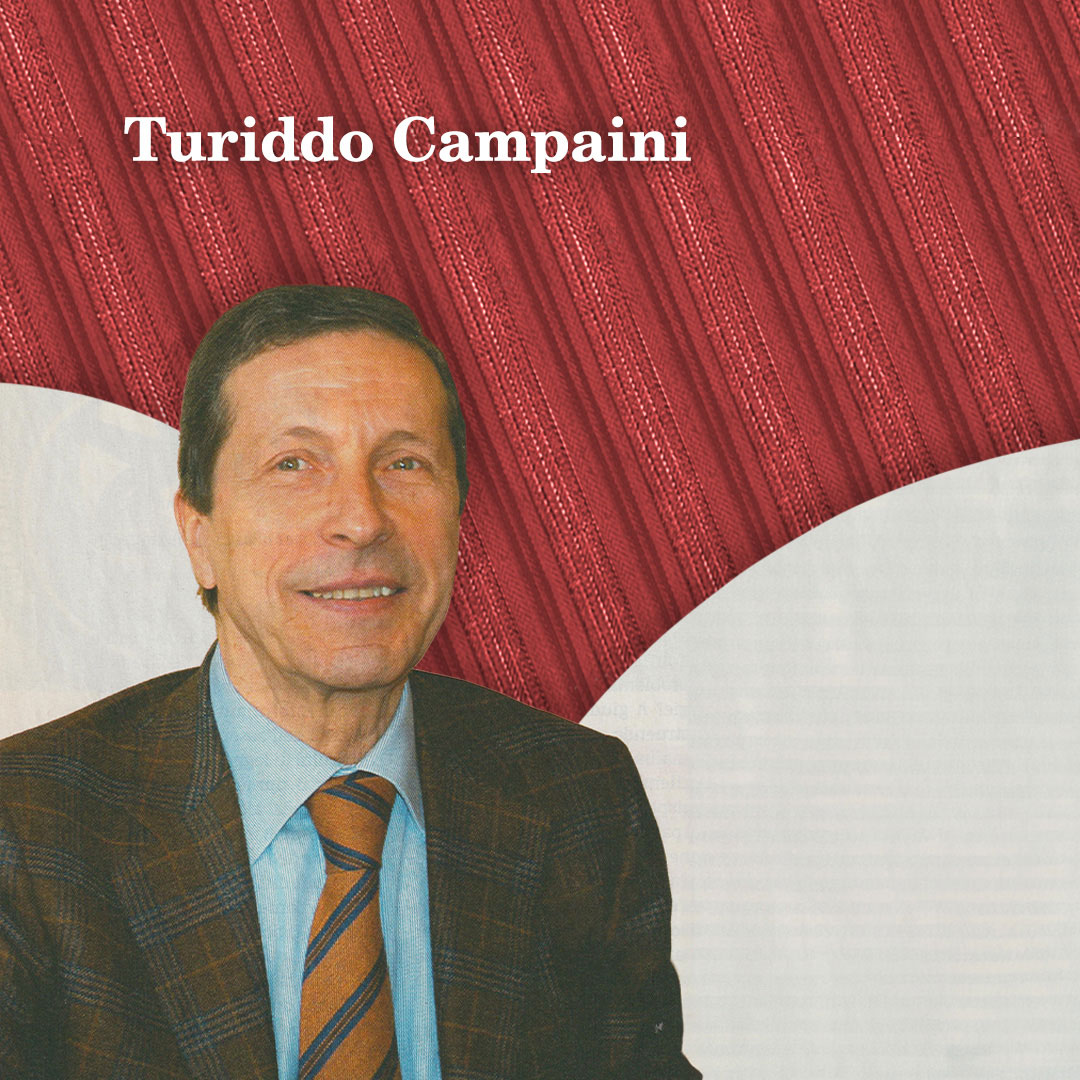
For me, the ‘war’ against the Coop is ‘an economic issue and a marketing issue at the same time. The Co-operative group has long been our strongest competitor in several areas of Italy, but its communication, from my point of view, sometimes runs on misleading news. ‘Coop is you, who can give you more’ is a beautiful slogan but it does not reflect the fact that, at the time, we often manage to have lower prices than them. So I move on several fronts: I wage war against the Coop on prices, especially in Tuscany where they are very strong [and are under the command of the able Turiddo Campaini, see. The Caprotti family and the Coop: Turiddo Campaini, an ‘enemy’ and a master]; with organic products I create the conditions to take away health-conscious and environmentally-conscious customers, often with left-wing ideas; in 2003 we publish our first social report, recounting our initiatives to contain price levels, respect product specifications and document every stage of the production process, broaden the range of food and drink to respect the needs of ethnic and religious minorities, favour economic activities and employment in the area by favouring small and medium-sized suppliers, and more. This is quite a snub, because at the national level at that time Coop still does not do this.
Another target of our offensive [against Coop] is tax breaks. At the suggestion of the lawyer Filippo Donati, we started to think of a dossier that would show how, from both the members’ and the social point of view, cooperatives are businesses like any other. It follows that the favourable conditions from which they benefit are state aid. We set up an internal working group and (…) gather all the necessary documentation to support our conviction. The dossier will then be taken to Brussels by Federdistribuzione and will change, at least in part, the taxation of cooperatives. Even Massimo D’Alema [national secretary of the Democratic Party of the Left from 1994 to 1998 and president of the Democrats of the Left from 2000 to 2007, ed. However, our father does not see all this work or pretends not to see it. Sometimes he even opposes our moves, like when he taunts me by calling me a ‘social worker’. It is an opposition that makes no sense because, at the beginning of the 2000s, Coop moved very aggressively and took away our clientele in the Tuscan market, the second largest for us. (…) I promote social policies, with the drawing up of the appropriate budget and with fair trade products, not only because I firmly believe in them. I also do it because it suits us in marketing terms, because it allows us to measure ourselves with facts on a terrain that the Coops feel is theirs. Bernardo doesn’t want to see and listen. Or, when we say that the only real advantage of the co-ops is financial, because with the social loan they basically bank the members, he writes to everyone to assert that Esselunga will never sell financial products to customers. He will only be interested in the dossier sent to the European Commission, even going to Brussels, once he has exonerated me (…).
And to say that, in the internal investigation commissioned in 2003 by my father himself on my management, one of the accusations made against me was that I had wasted the company’s resources and money on this very dossier, defined as ‘now of zero use’. It is a pity that, a few years later, the data collected in that study will be used when he will go against the Coop, both by going to Brussels as was already in our intentions, and by publishing Sickle and Cart in 2007 (CAPROTTI, Le Ossa dei Caprotti family, pp. 149; 187 – 188; p. 269).