

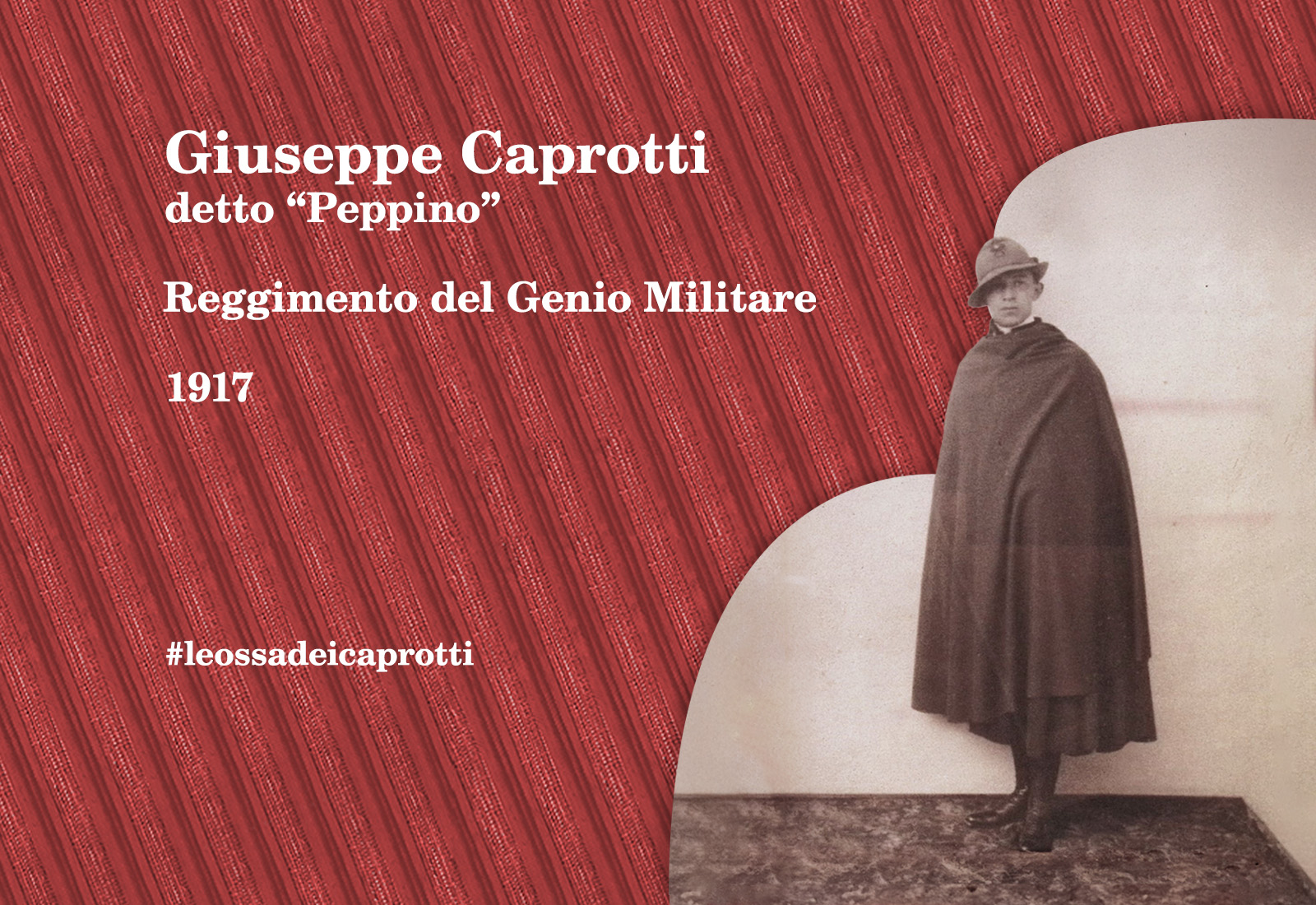
‘In 1917, when Europe was in the nightmare of the Great War and [Peppino] was attending grammar school, he was called to arms. He was assigned to the telegraph platoon of an Engineer Corps regiment in Parma. He was an enthusiastic and combative boy, partly because of his age, partly probably because of family habits (…). The slaughterhouse at the front was a few hundred kilometres from Parma and he was eager to be admitted to an officers’ school in the war zone. When his application was rejected, in May 1918, he sent his father a letter full of disappointment: ‘I curse the day I agreed to enter this regiment, I curse myself and those who, taking advantage of my esteem and honour, made a coward of me’, he wrote.
His father, our great-grandfather Bernardo, seemed to understand his son’s desperation and moved every pawn he could to please him (…). Peppino’s young age, however, kept him safe from the worst and the application was not accepted until after the end of the conflict. In April 1919, he was assigned to an Alpine regiment in Turin and then, having obtained the rank of second lieutenant after attending the Scuola allievi ufficiali di complemento (Military Officer Cadet School) in Caserta, he was sent to Albania. He stayed there for a few months, then caught malaria and was so ill that he was discharged’ (pp. 36 – 37).


