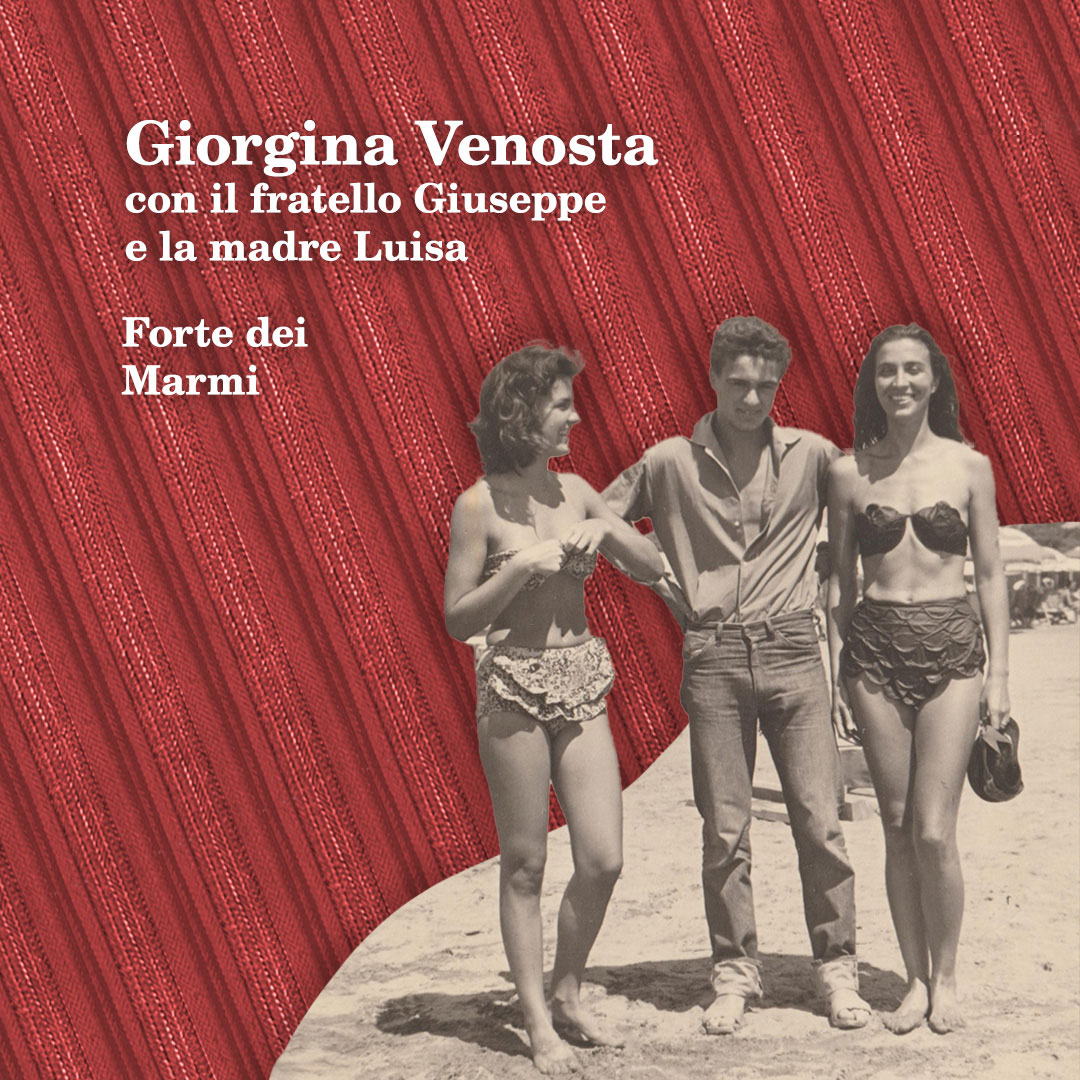
“My mother (…) grew up in a family belonging to the most prominent Milanese industrial bourgeoisie. She was a little younger than Guido Caprotti, the second of the three brothers, and with her friends she found herself frequenting the house in Forte dei Marmi where grandmother Marianne moved in the summer with the whole family. Grandmother Luisa also frequented Forte, with her children Giorgina and Giuseppe, now teenagers.
It was (…) in Forte dei Marmi that Giorgina met Bernardo. At the seaside, their company mingles, without paying too much attention to the age difference barrier and the fact that he is twice as old as his mother weighs less. (…) Her [Giorgina’s] attention is all on Bernardo.
She told me that, as the daughter of separated parents, what attracted her to him was also the idea of finally being part of a real family, which from the outside seemed united, with Marianne and their three children, apparently very close.
Bernardo has a ready wit, is intelligent and impresses the young woman with his stories. (…). Giorgina is (…) in a hurry to run away from home and Bernardo (…) has nevertheless decided that the time has come to find a wife. A young bride suits him just fine. (…)”. (pp. 85 – 86).
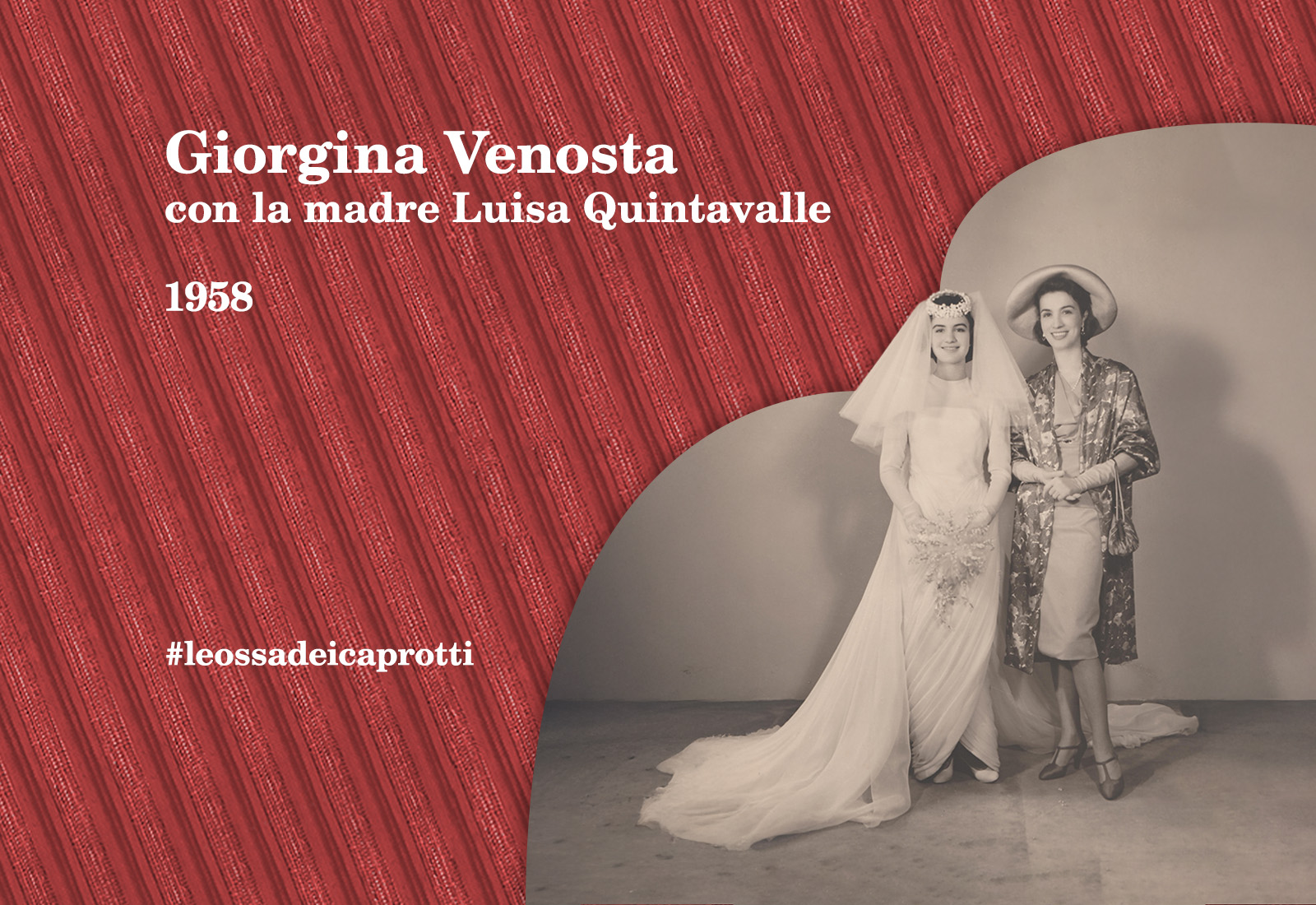
In the cover photograph, the young bride is portrayed with her mother Luisa Quintavalle in a photo taken by the favourite Studio Petri, who had already immortalised them 17 years earlier, at Giorgina’s birth. In the second, grandmother Luisa is on the beach in Forte dei Marmi with her children [Giorgina and Beppe] in the 1950s, the period when Bernardo and Giorgina were dating.