Drafted 17 December 2024, updated 16 January 2025
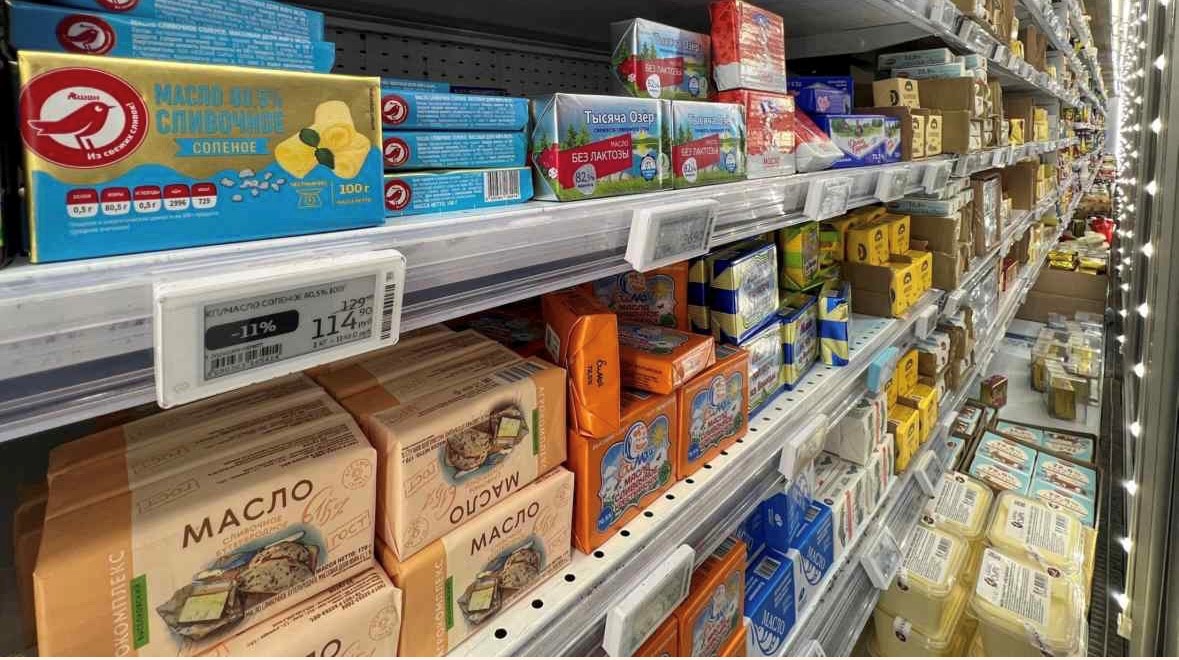
This article completes the economic picture already outlined in The thefts of butter and cheese highlight the cost of Russia’s war economy.
“Moscow has not finished paying the price for its ‘special operation’ in Ukraine”
Contrary to the propaganda discourse, it is a Russia threatened with stagflation and suicidally obstructing its future that will sit at the table of future peace negotiations, explains Stéphane Lauer, columnist at ‘Le Monde’, in his column.
While the Russian army has recorded in recent weeks its strongest advance on Ukrainian territory since the beginning of the conflict, on the economic front the news is more worrying for Moscow. The authorities’ methodical narrative that Western sanctions have only limited effectiveness and that growth is flourishing is becoming less and less credible. The noose of international embargoes and restrictions, despite attempts to circumvent them, is really choking the Russian economy. As for Vladimir Putin’s agreed war effort, it weighs heavily on the country’s budgetary resources, threatening its economic stability.
Until recently, Moscow had managed to maintain the illusion of unexpected resilience. After all, the gloomy predictions made at the start of the war have proved wrong. Not only has growth held, but thanks to a military-industrial complex running at full speed, domestic production has accelerated and unemployment has never been so low. But if one wants to understand what is currently at stake in Russia, it is best to look at inflation and the monetary policy pursued by the Central Bank of Russia (CBR).
The growing nervousness of Russian business circles is unmistakable. They have their eyes on interest rates, which reached an exorbitant 21% at the end of October, a rate not seen in more than 20 years. Now, the president of the institution, Elvira Nabiullina [also quoted here] is accused of all evils by business leaders. Their acrimony is understandable. With the cost of money so high, it becomes complicated to invest because finding projects that generate a return above the reference rates has become a mission impossible.
Russian Railways, the country’s largest employer, will reduce its investments by a third by 2025. The situation is even more worrying for Russian companies as more than half of their debt is at floating rates. Many are finding it increasingly difficult to make repayments, announcing a series of bankruptcies. As for the real estate sector, the government no longer has the means to subsidise loans to enable people to continue borrowing. The speculative price bubble, which has soared in recent years, is in danger of bursting.
False statistics
Andrei Kostin, head of Russia’s second largest bank, VTB, assured in an interview with Le Monde on 12 December that the country’s economy remained ‘in good shape’. However, a few days earlier, he had criticised CBR policy, saying that 8.5% inflation did not require a benchmark interest rate ‘three times that level’. But is the central bank president wrong or are the statistics on price developments wrong?
A report by the Stockholm Institute for Transition Economics published in September leans towards the second hypothesis, showing that the real level of inflation is vastly underestimated and that real gross domestic product (GDP) growth is overestimated. Data from the independent research group Romir indicate that the pace of price changes is twice the official rate. Far from being over-zealous, the CBR is only trying to limit the damage of inflation.
The problem is that its action goes against the current of fiscal policy. While Nabiullina is trying to curb high rates, Putin is keeping his feet on the ground by continuing to increase war-related spending. The defence budget will increase by 30% for the period 2025-2027 swallowing 40% of state spending. The headlong rush is therefore not about to stop. While inflation rose again in November to 8.9%, a further rate hike is expected on 20 December.
Propaganda has been able to distort economic reality for some time. But macroeconomic mechanisms remain intangible: fiscal stimulus in a supply constrained economy leads to inflation, not growth.
On the revenue side, too, the situation is tense. Gazprom can no longer replenish the state coffers to which it used to contribute 10%. Deprived of most of the European market, the gas giant is making a loss. These will be further aggravated by the imminent expiry of the agreement authorising transit through Ukraine, to which will be added the imposition of sanctions as of mid-December by the Kremlin’s financial arm, Gazprombank. Foreign exchange markets immediately reacted to the news by sanctioning the rouble, whose exchange rate reached its lowest level since the beginning of the war, further complicating the CBR’s task.
Reserves are melting away
The US is also preparing to impose new restrictions on Russian oil exports, targeting illegal purchases and the fleet of phantom tankers under flags of convenience that evade the sanctions regime. Russian oil tax revenues, which have fallen by 21% in one year, are expected to decline further in 2025, according to Bloomberg(*).
Finally, the liquid reserves of the National Wealth Fund of the Russian Federation are melting like snow in the sun. They have dropped from USD 185 billion in December 2021 to less than USD 54 billion today. But in a slowing economy, buying social stability by flooding the population with generous aid becomes more complicated, even as the Kremlin tries to raise taxes.
Contrary to the propaganda discourse, it is a Russia threatened with stagflation and suicidally obstructing its future that will sit at the table for the peace talks that seem to be looming. One must never forget that the effects of sanctions are gradual and cumulative. Moscow has not finished paying the price for its ‘special operation’.
(*) According to another source: Fossil fuel export revenues have plummeted from $1.2 billion a day to less than $600 million, making the financing of the war unsustainable.
Also interesting : Putin, the cracks in Russia’s (war) economy: Gazprom fires 40% of employees, wheat collapses
Gas sales more than halved since 2022, while Moscow’s wheat production fell by 20 per cent
Below : butter from Auchan Russia.