Written on 6 July, updated on 26 August 2026. Above: a barracuda off Filicudi
This isn’t the first time we’ve discussed alien species in the Mediterranean, but what’s striking now is the speed at which they’re spreading due to rising sea temperatures caused by climate change.
These non-native species don’t come from some distant planet, but simply from the other side of the world. From Japan, for example, or from Egypt, the Atlantic, or sometimes from nearby Greece. And in Italian waters — with everything already in place and perfect warm conditions — it usually decides to stay for good: the problem is the impact it could have, especially in the long term, on both biodiversity and our lives.
As this sweltering Italian summer gets under way, there are an increasing number of sightings, reports and images bearing witness to the presence of invasive alien species in our seas. This applies to the ‘new’ ones as well as to organisms already noted in the past but which are making a dangerous comeback, favoured either by the warm waters of the Mediterranean (which in June has already reached nearly 30 degrees in certain areas and is 5 degrees above the average for the period), or by ocean currents.
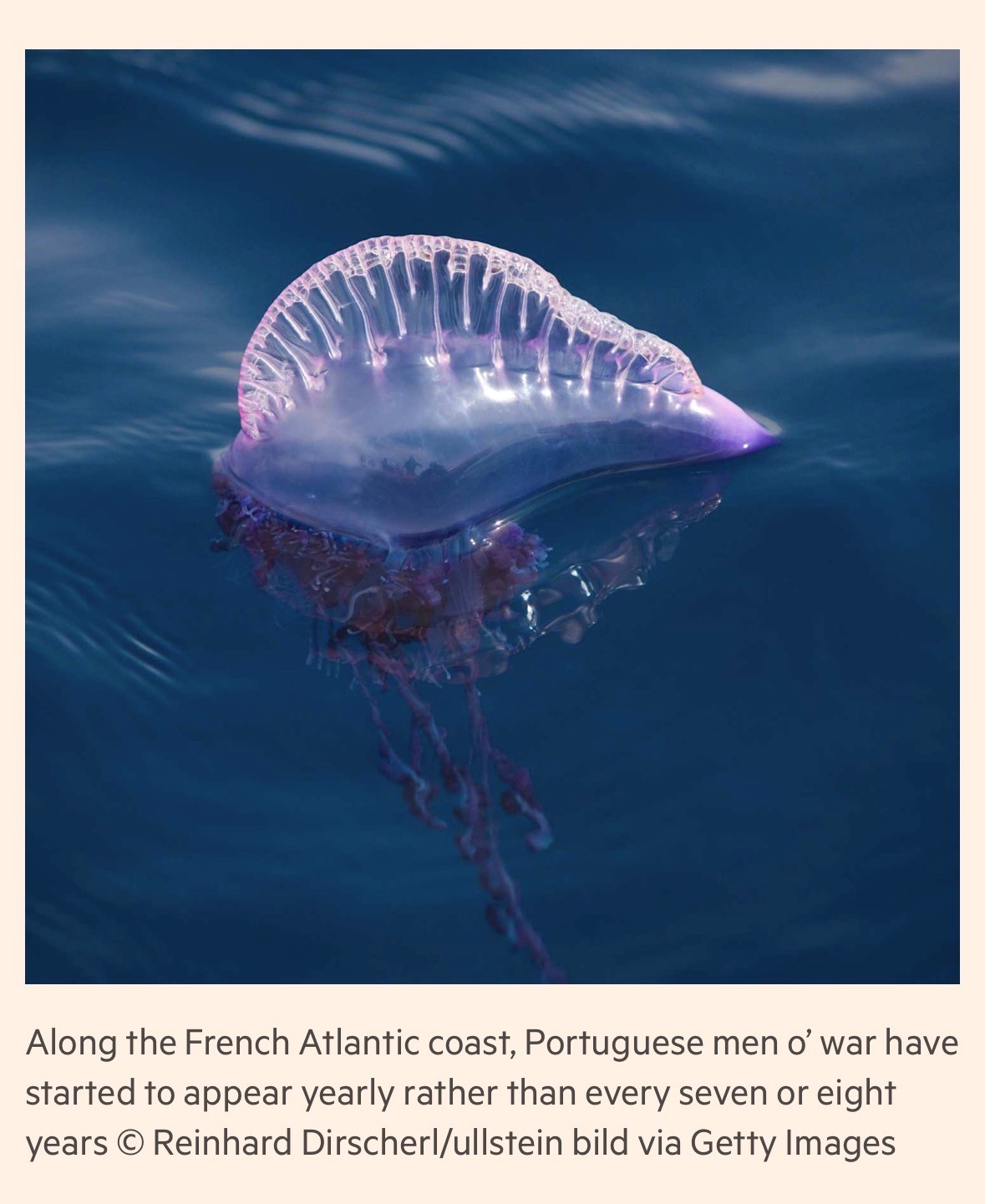
The return of the Portuguese man-of-war(photo above)
With the help of Atlantic currents, for example, the Portuguese man-of-war have returned to the waters off Sicily: often mistaken for jellyfish, they are in fact siphonophores, that is, colonies formed by the aggregation of several individuals. These Portuguese man-of-war are not strictly considered invasive species, as they originate from nearby subtropical oceanic regions such as the Atlantic and enter the Mediterranean Sea via the Strait of Gibraltar, but they are rarely sighted in Italy. In the past, they have been observed on several occasions between the Egadi and Aeolian Islands, and a few days ago a case of minor contact was recorded on Stromboli, fortunately without any consequences: Portuguese man-of-war, with their stinging tentacles up to 30 metres long, can in extreme cases be lethal to humans.
Japanese amberjacks in Salento
‘Especially in recent years, you need to keep a closer eye out when you’re out at sea,’ explains Francesco Tiralongo, a researcher and professor at the University of Catania and head of the AlienFish project, ‘because the presence of alien species is on the rise due to warmer waters. Sometimes these are species we’ve come to recognise, such as blue crabs; others are brand new and have never been seen here before, such as the Japanese amberjack’.
In Salento, over the last two months, two specimens have already ended up in fishermen’s nets: although they are fish prized for sushi, the ‘Japanese’ ones found off the coast of Nardo – native to the north-western Pacific – are a world away from our ecosystems. “It’s hard to understand how they got here; perhaps they were released from a fish farm,” the expert speculates.
Beware of spotted pufferfish
Also in Puglia, specimens of the dangerous spotted pufferfish and rabbitfish have been found in the past. The former, first sighted in Italy in 2013, is becoming increasingly common in Greece, for example: it possesses a powerful neurotoxin and remains toxic if consumed, even after cooking. Its bites are painful, just as the spines of rabbitfish (both the dark and the striped varieties) can be painful.
Sicily holds the record for invasions of new species
Among the most recent developments in Sicily – ‘which acts as a sort of barometer for invasions in Italy’ and where the Red Sea mullet has recently appeared – is the increasingly significant presence of the Golan sardine, which is also native to the Middle Eastern basin. ISPRA has reported that ‘over 100 specimens’ have recently been caught off the coast of Lampedusa, and further studies will need to determine what impact this invasion will have on the delicate balance of the ecosystems.
‘By now, particularly in southern Italy and Greece – which serves as a sort of preview of the species that will eventually reach us – we are witnessing a population explosion that was previously unthinkable, due to such warm waters and favourable habitats,’ adds Tiralongo.
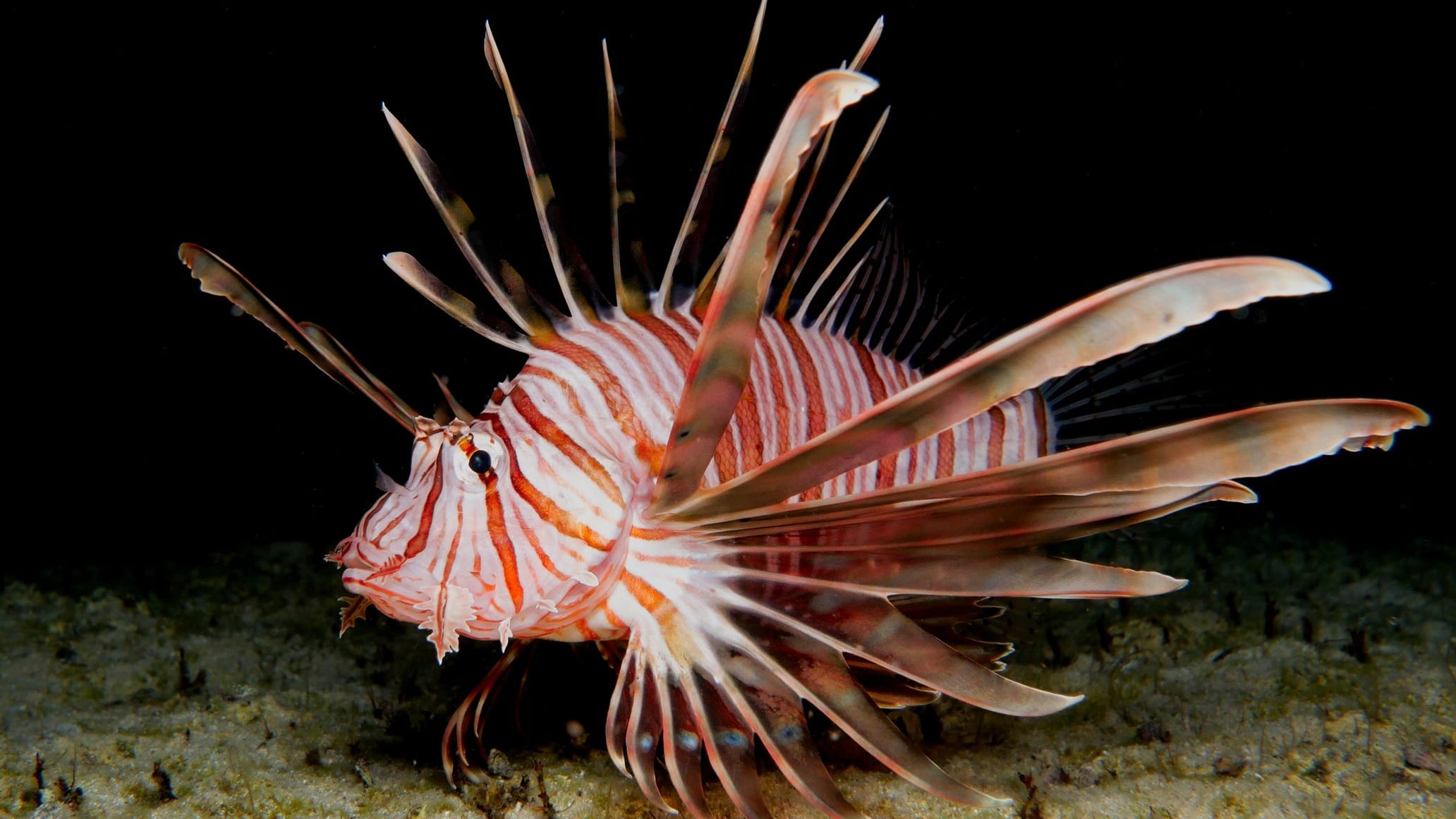
The dangerous scorpionfish (photo above – fish spotted personally in Greece)
One of the increases in sightings causing the most concern is that of the scorpionfish, which has recently been found and filmed both in Santa Caterina in Puglia and in the Ragusa area. Its spines can, in fact, cause very painful stings even two days after the animal’s death, and, above all, there is the problem that it has few natural predators: by feeding on native fish and crustaceans, it could therefore alter the ecosystem.
‘We will soon,’ says Tiralongo, ‘be publishing a report focusing solely on the last six years: it is striking to see how certain species have proliferated so much in our seas, such as the scorpionfish, but also the various alien crabs, from the blue crab to the red crab’. Among the relatives of the blue crab, which has been disrupting the northern Adriatic for years now, a specimen of the swimming blue crab (Portunus segnis) was spotted for the first time a few days ago in Sardinia, in the Tortolì lagoon; local authorities have stated that it must be monitored immediately.
“In short, there’s no need for alarm, but we must be careful,” the researcher adds, “because with the climate crisis, even a few extra degrees in the seas are now enough to accommodate new species capable of turning everything upside down.”
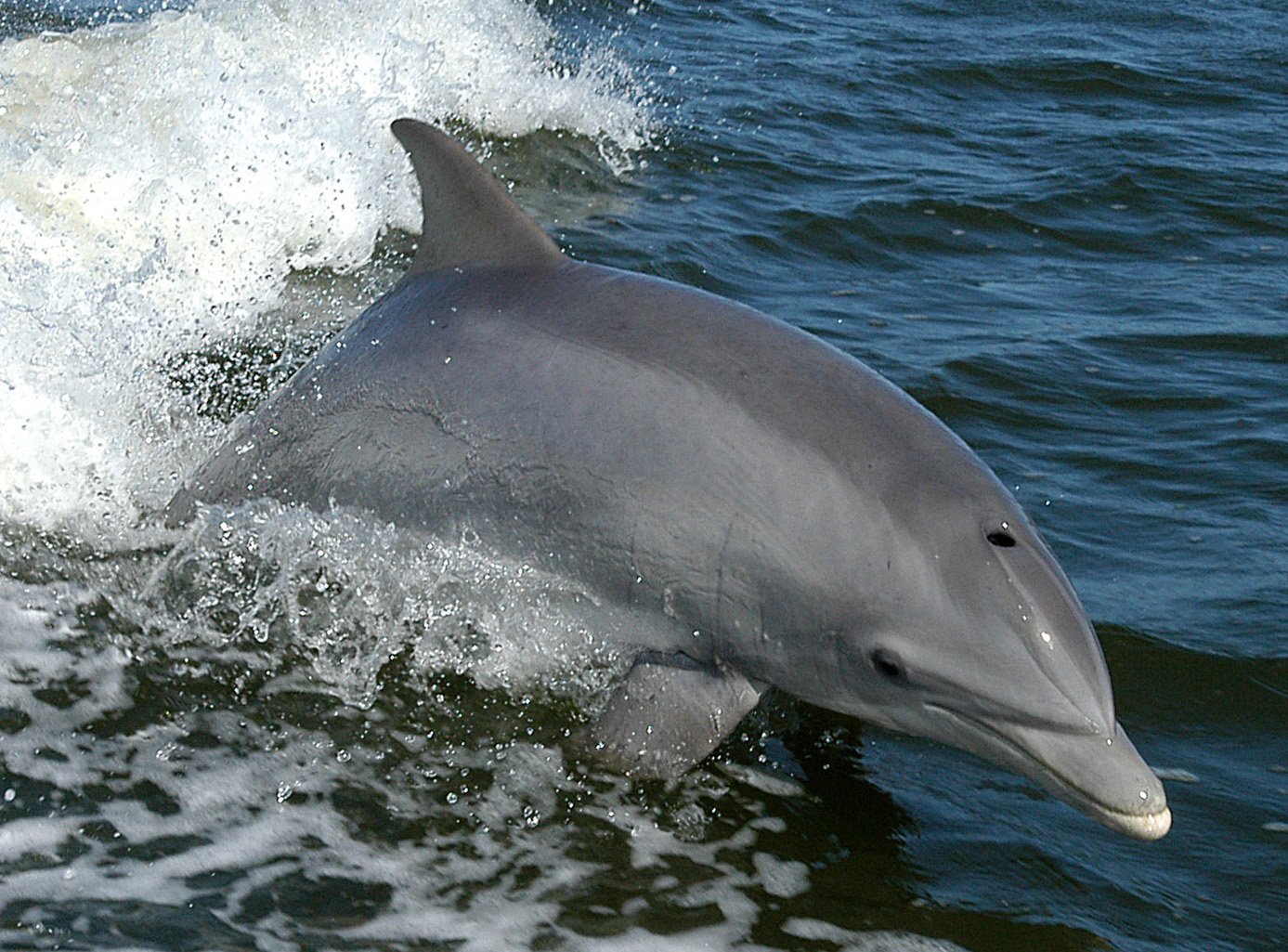
Most of the dolphins observed regularly follow trawlers in search of food, a phenomenon that experts link to the progressive depletion of fish stocks caused by decades of intensive fishing.
The researchers warn that this is not an example of positive adaptation, but a possible sign of the deterioration of the marine ecosystem.
Read also: On starfish, sea urchins and tropical fish in the Mediterranean