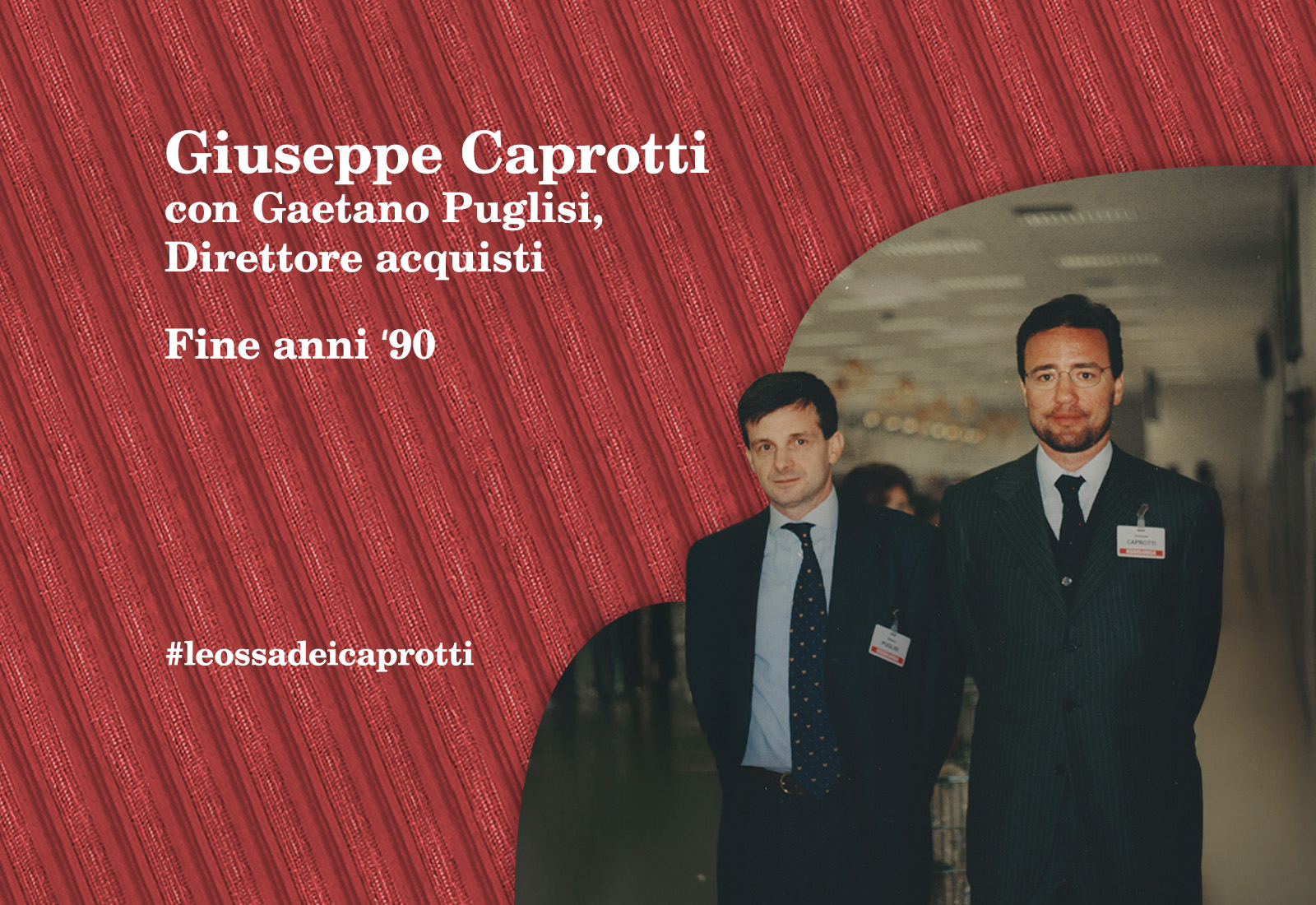
‘There is another battle I have to fight (…). It sounds like a paradox but the commercial part of Esselunga, at the end of the 1980s, is definitely the weakest. We are strong in development, in logistics, in the management of fresh food, but not in negotiations with suppliers. In those years, in fact, the market changed and Bernardo did not want to realise this: negotiations no longer took place on product margins. Suppliers, at the request of the French chains, started to pay the promotional contributions they give to supermarkets for reaching sales targets not in the form of discounts on the invoice, but during or at the end of each year. These are large sums, which have now reached over 15% of the turnover of a large retail chain. (…). (p. 201).
“I am starting to put things in order, not only on the shelves (…). One example is Barilla, with whom relations were very tense. It had all started in 1984, when my father had decided to eliminate the Parma company’s products from the Esselunga assortment. Pietro Barilla was trying to impose his commercial policy, charging lower prices in hypermarkets than in supermarkets. A rip-off, for us, because Esselunga at the time didn’t even have superstores, which would come later, let alone hypermarkets, which we never had. My father reacted harshly, and he was right to do so. The problem, however, was that in those years Barilla had a very effective commercial policy, with hammering advertisements that had a strong hold on the public, from Mulino Bianco to ‘where there’s Barilla there’s home’ pasta. Not having it on the shelves meant giving away customers to the competition: consumers would change supermarkets just to have their spaghetti, biscuits and snacks. After five years of a total ban, during which no Barilla products were sold in our supermarkets, my father had gradually begun to loosen up a bit, welcoming some of them back. But on Barilla, alas, we continued to make little money and we were losing money on their products. I made peace after more than ten years of fighting. It is not an immediate change. The first step is a meeting at the headquarters in Limito between myself and Luca Barilla. Later, on the sidelines of a large international convention in Boston, there is a further casual contact between Bernardo and Barilla’s late sales director, Manuel Gonzalez Valdeolivas, during which I do everything I can to defuse our father’s incandescent tones. He made it a personal matter, Bernardo Caprotti versus Pietro Barilla. Then I managed to re-establish a normal business relationship, leveraging the benefits that the new policy on promotional contributions generated for both of us. Between 1997 and 1999, sales of Barilla products in our supermarkets rose from 50.2 to 79.4 billion lire. Above all, however, promotional contributions doubled, from 5.4 to 10.6 billion lire. Result: in 1999 – for the first time since time immemorial – by selling Barilla biscuits and pasta we did not lose money, but gained 2.1 billion lire, when in 1997 we had lost 1.9 billion. An exceptional turnaround (plus 458 per cent in two years) in such a short time and considering that this is a supplier with whom we had been in difficulty for years and with whom I had to practically rebuild relations.” (pp. 202 -203).
“In the late 1990s it was (…) the turn of Coca-Cola, which was sued by PepsiCo for abuse of a dominant position. More or less at the same time, the Coca-Cola management came to us with absolutely unacceptable business conditions. At the suggestion of a friend, lawyer Filippo Donati, we contact Aldo Frignani, an antitrust specialist. At a meeting in Turin, I ask Frignani: ‘What are the chances of winning?’ He replies: ’50 per cent’. I decide to go ahead. A good bet, which allows us to end up on the front page of the ‘Wall Street Journal’. My father seems happy, he likes this David versus Goliath fight and at that stage he finds several opportunities to show me his appreciation for the work I am doing (…). In the end, the Antitrust ruled in our favour and the American company was condemned to pay a fine of 30.6 billion lire, equal to about 15 million euros. The president and commercial director of the Italian subsidiary are replaced. Coca-Cola appealed first to the Tar, then to the Council of State, but was defeated again (…). Obviously, for Coca-Cola, the 30 billion lira fine is a laughable sum, but at the same time, in the eyes of public opinion, and the world of mass consumption in general, it is certainly not a medal to pin on one’s chest. For us, success generates more respect: we manage to get the message across that you don’t mess around with Esselunga. From then on, other suppliers, before making moves that could hurt us, contact us to see what our reaction might be.”. (p. 181 – 184).