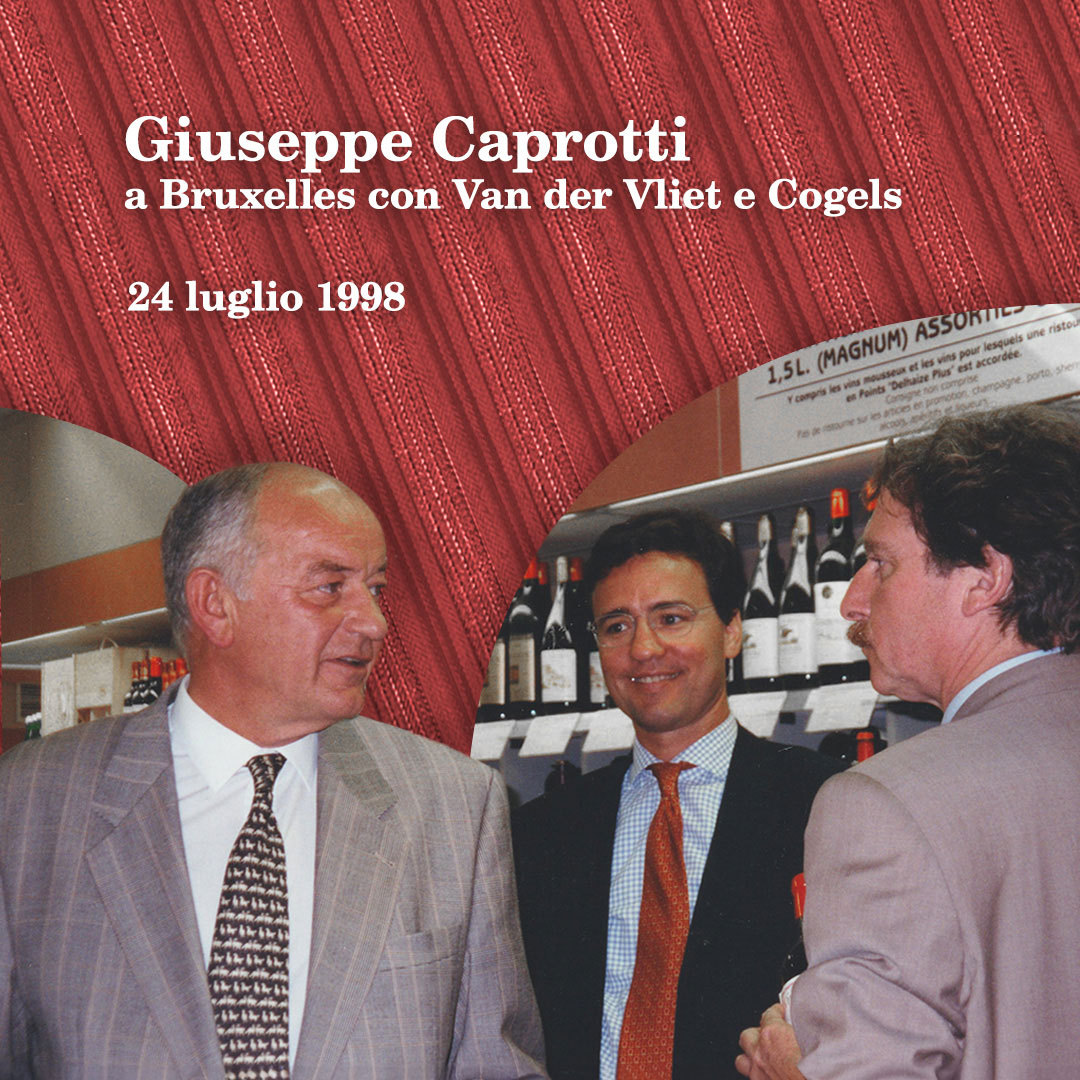
“The e-commerce project took shape in 1999. I work on it, with the help of Paolo De Gennis. My father gives his endorsement. I send him a report in which I point out, first of all, the advantages of the Internet, which can help us solve some strategic problems. On the one hand, city centre supermarkets are increasingly turning into small ‘superettes’ – this is what they call shops with very small floor space – where it is not possible to replicate the assortment that customers are used to in superstores or even hypermarkets. The other problem is to reduce the crowding in the shops or the queues at the checkouts. Bernardo has never heard of the Internet. I tell him that we have seen at Delhaize in Belgium a system that allows customers to do their shopping either via the web or by fax and have it delivered to their home. The example of Delhaize already presented extraordinary numbers at the time: the Caddy Home site for online shopping, in 1998, was already working very well, made 1 per cent of the chain’s turnover, was already in profit and an estimated 35 to 50 per cent of purchases were made by senior citizens. To put into context how advanced it was, it is good to remember that the Google domain was registered in 1997 and the company was born in that very year 1998. Amazon had started as an online bookstore a few years earlier, in 1995. When Delhaize was bringing groceries home to its customers, Jeff Bezos’ giant had not even begun to open its sales to items other than books.
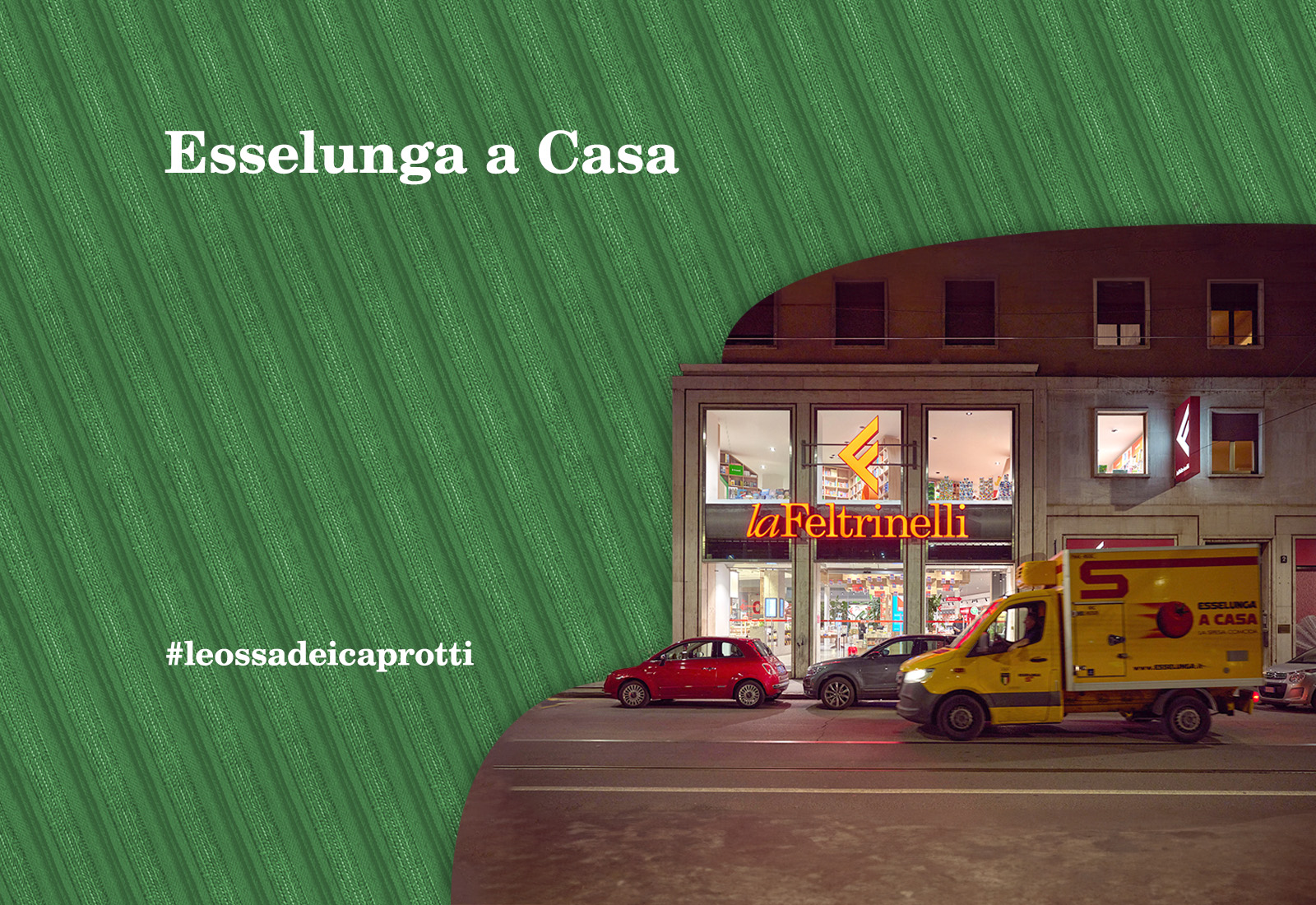
For the ‘Esselunga at home’ project, we formed two mixed teams and, as with the superstores and the loyalty card, looked for inspiration in the United States. De Gennis will manage the e-commerce division until I take over as managing director. I am very happy with this new position we have found for him, to the point that I propose to my father to formally appoint him as head of online. I find in fact that (…) he could bring to the team of people dedicated to the development of ‘Esselunga at home’ the knowledge of logistics and operations that has always been one of his and our strong points. With him, we visit several American operators and, once back from our tour, we start with e- commerce in Monza in March 2001. We use the warehouse of a supermarket in Via San Fruttuoso, which we partly adapt as a dark store, with the staff taking the shopping from the shelves, placed in the warehouse itself, to send to customers online. Within a few months we expanded to Brianza, arriving in July in Milan. A few more weeks passed and we opened in Prato, using the back of a supermarket in Via Valentini as our base of operations there too. (…).
“Esselunga at home’ reaches a turnover of 40 million euro. The bulk, 31 million, are orders that customers place directly on the site, the rest is for shopping done in the shop and delivered to their homes. In the summer of 2002 we made an agreement with the municipality of Milan to deliver groceries free of charge to pensioners, a great success. The boom of ‘Esselunga at home’ is so strong that a chain from Genoa copies our site, using the same supplier who designed ours. (…). When I was dismissed from Esselunga in 2004, work on building the e-commerce was obviously still in progress. Nobody could deny, however, that we were on the right track and that the inevitable mistakes of a start-up could be corrected by discussing them together. Since then, in fact, the opportunities of digital commerce in Italy have mainly been seized by Amazon, which has ended up devouring the market of traditional retail chains. Esselunga, which at the time offered 20,000 book titles for sale online, for example, missed out on those opportunities. Our father never liked e-commerce with all the technology. In 2012, in one of our court battles, he will have me accused of having ‘brought the company to ruin’ by creating it. An absurdity: the net result of Esselunga’s online division had in fact been positive since at least 2008, and in that very 2012 the operating result had reached 8 per cent of sales. Bernardo’s is just an ideological aversion, for the new in general and for what his son has done in particular. He cannot accept that I have looked too far ahead of him. In 2014, he will go so far as to open a new 10,000 square metre warehouse in Florence dedicated exclusively to online, but he will be careful not to communicate this to the outside world, so as not to have to admit he made a mistake. This is a pity, because today Amazon is the largest ‘non-food’ retailer in Italy and when Jeff Bezos’ company started its online shopping service here too, Esselunga did not even have an app for smartphones. But there’s more: it wasn’t just Esselunga that missed the train, but also all the other competitors, who followed what Bernardo Caprotti said left and right, who made a mockery of digital and then found himself with a colossus like Amazon at home dictating the law. (…)”. (pp. 193 – 197).
Follow Le Ossa dei Caprotti family
on Instagram
on Facebook
on Youtube
On LinkedIn
On X
Below: Giuseppe Caprotti in Bruxells at Delhaize’s, between sales director Paul Van der Vliet and CEO Renaud Cogels at the time of Sedd, the European purchasing centre.