Compiled 11 January, updated 10 August 2025
From an article by Enzo Di Rosa on LinkeDIN
What was the point of the ‘Signed By Italian Farmers’ label of Filiera Agricola Italiana Spa (#Coldiretti) based on an ethical management model?
Evidently to nothing, if ‘Filiera Pasta’, the umpteenth trademark launched by Coldiretti in the presence of the Minister of Agriculture, Food Sovereignty and Forestry Francesco Lollobrigida and the President of Coldiretti Ettore Prandini, is bornwithin Filiera Italia .
If the objective is traceability along the supply chain, innovation in production to increase productivity and sustainability, and ensuring a fairer distribution of added value between the various stages of the supply chain starting from national agricultural production, how does it differ from the ‘Signed By Italian Farmers’ trademark of Filera Italia?
And if the goal is to explain to consumers that spending a few cents more every day for a better quality Italian product is worthwhile, it helps to ensure a fairer distribution of value, it is not borrowing our words on #fairprice, if you are then unable to explain (as we did) how many more cents are needed in a packet of pasta to remunerate a fair price for the products.
Beyond the propagandistic distortions about the demonisation of foreign wheat, the sad truth is that in the global market, Italy cannot compete on cost with Eastern Europe or South America, which, thanks to low wages and different production standards, are able to impose rock-bottom prices. With just under 1.3 million hectares and a production of around 4 million tonnes, we manage to cover two thirds of our domestic needs. The rest of the durum wheat – around 2.5 million tonnes – comes from abroad (Canada, Ukraine and Russia above all).
If politics really wanted to incentivise and support Italian farmers in difficulty, it could help them to modernise cereal storage centres, considered by most to be the weak link in the chain, because they are unable to diversify the batches of wheat entering and leaving the warehouses (by origin, for example, specific weight or protein content), also in relation to the traceability of the chain. Better management of temperature and humidity in the storage environment would make it possible to limit the active ingredients traditionally used during storage, even if they are permitted by law.
We need to make sure that producers make a living when we buy their products…
Indeed there is a big difference between protecting farmers, through, for example, limiting unfair practices, and producing ‘some pasta’ in the latter case the investments to emerge, the professionalism, etc. that it takes are many and differ greatly from the political activity of Coldiretti or the agricultural activity of Bonifiche Ferraresi.
BF also makes pasta and claims to do so to increase farmers’ income but, given its promotions, it seems it cannot do so.
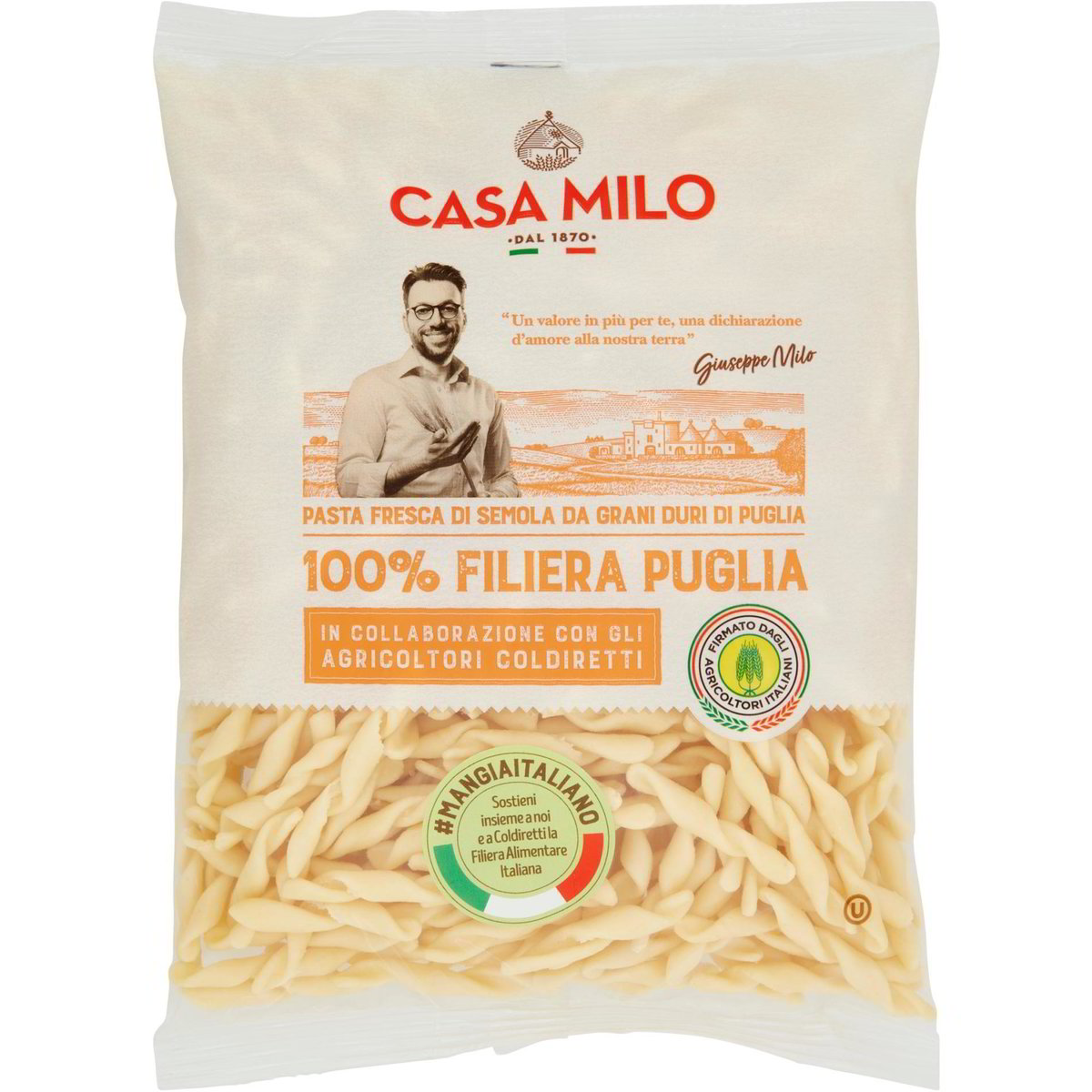
p.s.: not paying attention to this initiative, Coldiretti has broadened the spectrum of claims about this product, now present at Lidl and Carrefour (but the logo is also on industrial products such as Rigamonti and Coricelli)
As Enzo di Rosa reports from the Coldiretti website:
”the Fdai – Signed by Farmers project ensures transparency: on all nodal decision-making processes within the supply chain.
And then: ‘A sustainable production chain that recognises the value of agricultural work, through a system that promotesadequate remuneration, transparency and certainty in the production chain, and respect for the land, animals and the environment‘.
Unfortunately, the site lacks further insights…