[vc_column_textCompiled 5 November 2022, updated 14 June 2025
We start with this article:
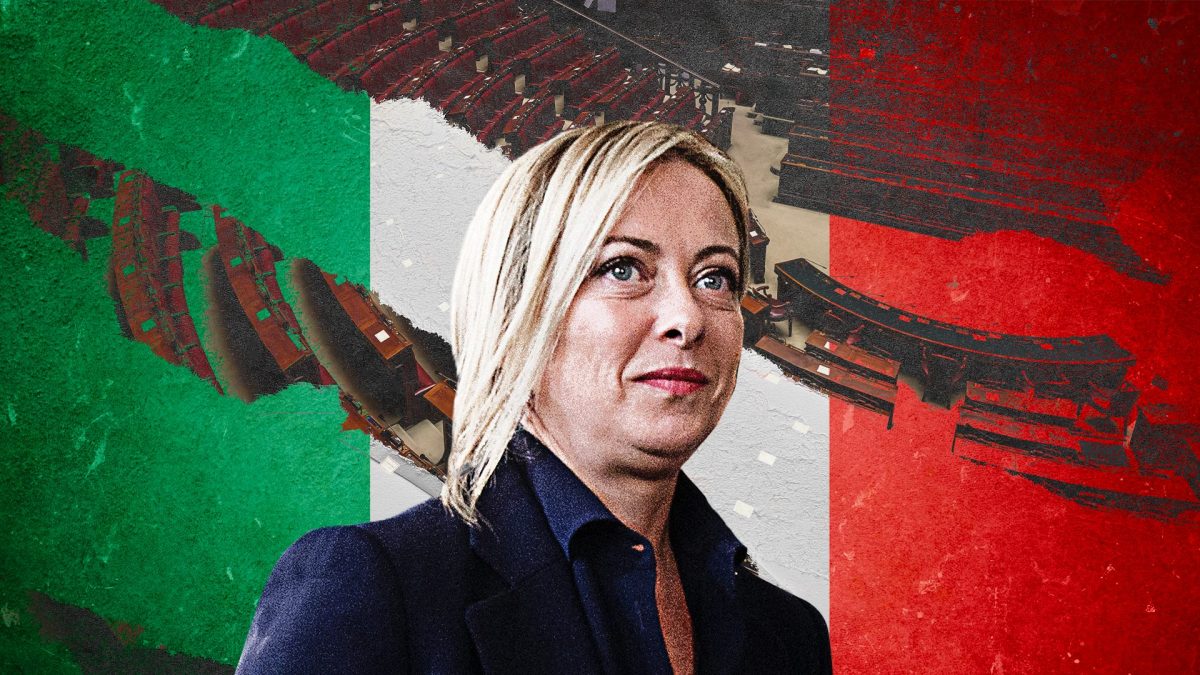
The Meloni government doesn’t give a damn about climate change, and this will be a big problem
For many, like Meloni and Tajani, it is a minor problem. For others, like Salvini and Santanché, it is a problem that does not exist. For still others, like the newly appointed environment minister Pichetto Fratin, it is something not even worth talking about. This is what awaits us, in terms of climate change, for the next five years.
Edited by Francesco Cancellato
A necessary premise: like any executive, even the newborn one led by Guido Meloni must be judged by what it will do, not by what it has promised to do, or what we expect it to do. That said, the hopes that this government will tackle the climate change issue head-on are really at an all-time low. And no, it is not a matter of prejudice. One only has to do a brief search on the internet, looking for statements on the subject by the new ministers, to get an idea of what the trend is and the tone, very similar to that of Trump and Bolsonaro.
Let’s start, of course, with Giorgia Meloni, the new prime minister, according to whom the problem is not atmospheric warming, nor are the extreme weather events that result from it, but rather, ‘climate fundamentalism’ that ‘will lead us to lose thousands of companies and millions of jobs in Europe’.
A position, this one, shared by Antonio Tajani, Foreign Minister and Vice-President of the Council, for whom ‘more time is needed for the ecological transition because we must safeguard the interests of industry’, and also by Giancarlo Giorgetti, newly appointed Minister for the Economy, for whom ‘if we push environmental sustainability we will have serious consequences on social sustainability’.
These are stances that express the ‘fossilist’ line of the executive and that have been substantiated, above all, in the vote by all the parties of the new majority against the European ban on the sale of petrol and diesel cars from 2035. Or in favour of including gas and nuclear power – on which they are all in favour, without distinction – as renewable energy sources. A position well summarised by newly appointed Defence Minister Guido Crosetto, according to whom, ‘The environment is a fundamental issue for our future, but energy is no less fundamental’.
The gold medal for climate denialism goes to others, however. Specifically, Matteo Salvini, Minister of Infrastructure and Deputy Prime Minister, and Daniela Santanché, Minister of Tourism. According to Salvini, who will be in charge of several chapters of the NRP, ‘since they launched the global warming alarm it’s cold, there’s fog. I’m waiting for this global warming’. For Santanché, on the other hand, the youth demonstrations against climate change are ‘an antics to skip school en masse’.
The only island of awareness, in an ocean of benalaltrism and denialism, is the minister with responsibility for the sea and the South, Sebastiano ‘Nello’ Musumeci, who in the summer just gone, as governor of the region of Sicily, touched with his own hands the devastation induced by extreme climatic events: “As we have repeatedly reiterated,” said Musumeci just a year ago, “we must tackle the increasingly evident effects of climate change on a twofold level: with measures to combat hydrogeological instability and with national government measures that, from extraordinary, must become ordinary, in line with the no longer exceptional frequency of these events.
Let us hope that someone listens to him, or that the air in Rome does not make him forget these words of his. Above all, let us hope that they reach the right ears. For example, those of the Minister for the Environment and Energy Security – and never was the name of a delegation more revealing – Gilberto Pichetto Fratin, whose statement on climate change is not recorded. Remarkable, if you think that the next five years – the UN Intergovernmental Conference on Climate Change says so, not us – will be decisive for the implementation of policies to mitigate the effects of global warming, and to try to reverse the course.
If the morning is any indication, it’s going to be a torrid five years. Literally.
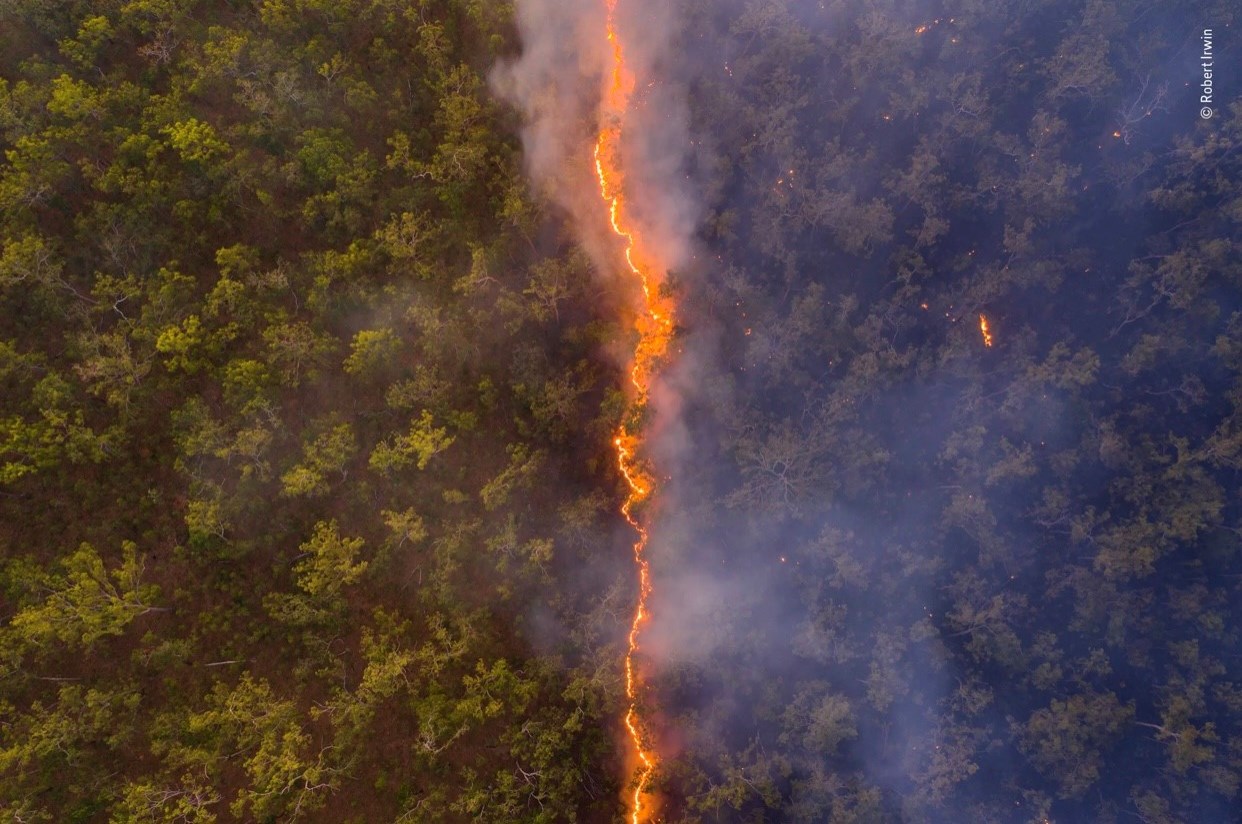
But a comparison with France, for example, does not make us any more optimistic about climate change policies.
Beyond the Alps, there is no denialism and some think that temperatures will rise by 3.8° by 2100.
But, for now, ‘the executive – the government – is struggling to integrate climate challenges into the political horizon’. Which translated into plain words means many fine words, few deeds. It is what the French have been holding against Macron for years.
It is no coincidence that Le Monde, on 28 October 2022, headlines – referring, however, to the world, not just to France: Climate efforts ‘terribly insufficient’.
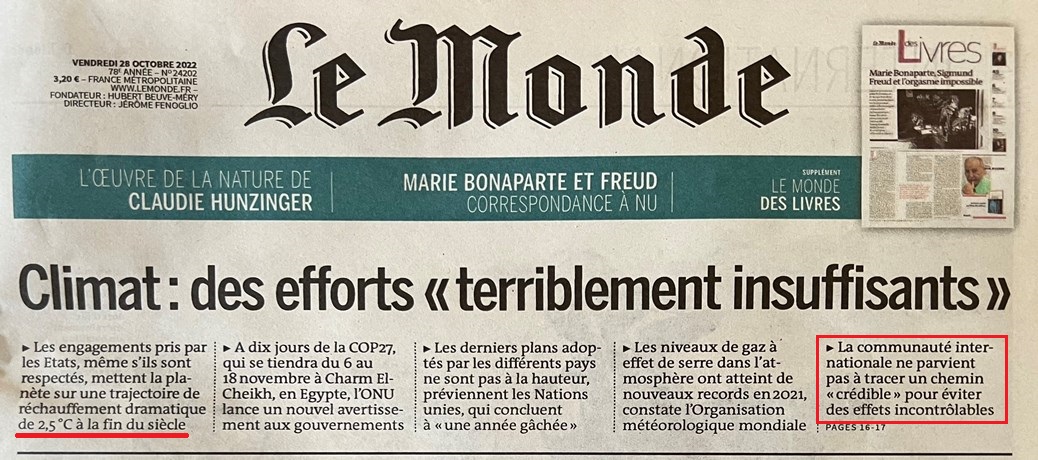
And then goes on to say that the international community is failing to chart a ‘credible’ path to avoid uncontrollable effects, including a 2.5 degree temperature rise by the end of the century.
In France, and elsewhere (e.g. Britain or the USA ) at least they talk about it, in our country they do not.
In Italy I have not read the news anywhere.
However, whether the temperature increase is 2.5° or 3.8°, depending on the source, the effects of climate change are now visible almost everywhere, in Italy as in France. And this will affect agriculture, food, inflation, etc. In essence on our lives.
Read also : Europe is warming up twice as fast as the average.
N.B.: In March 2023 Giorgia Meloni said in parliament that she does not deny climate change but that she does not want to ‘damage the economy or cause unemployment’.
That said, the funds to protect the environment would be part of the GDP if only they were used : the environment forgotten: eight billion unspent and task forces never born.
The economy and the environment should not be pitted against each other; they are interconnected.
We must initiate a gradual and sensible transition, without useless ideology, because global warming is increasing at an unprecedented rate
Below : Macron is accused of not having the climate as a priority, Le Monde September 2023 . Nothing has changed since last year.
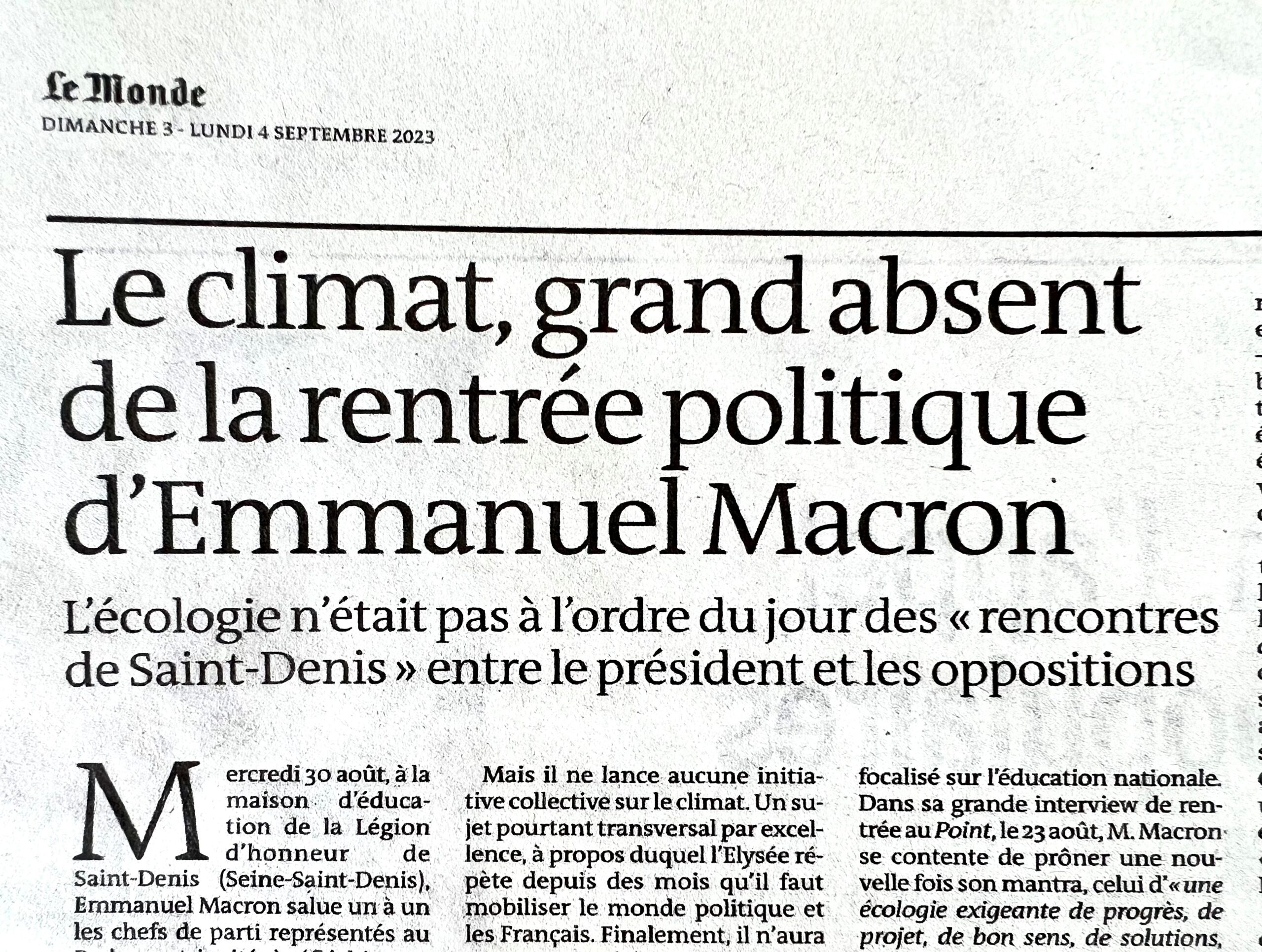
And in April 2024 on Macron’s last speech at the Sorbonne : Climate and environment relegated to the background in Emmanuel Macron’s speech on Europe.
Although Macron seems to have made the High Seas treaty his own , France has just taken away – we are in June 2025 – €55 million in support for organic farming which – as in Italy – is not doing well.
Back in Italy, the government’s wall-to-wall with environmental organisations continues with the law for the restoration of nature, opposed by the current government.
Under the statements of Francesco Lollobrigida and the director general of the WWF, who says he cannot make himself heard, even on concrete projects (e.g. renaturalisation of the Po River, 360 million in 5 years): the government seems to have already forgotten what has just happened in Emilia-Romagna.
According to the authoritative newspaper, 80 per cent of Europe’s natural habitats are in a ‘poor state’. Andall this comes at a time when the European Food Safety Authority (EFSA) is paving the way for the re-authorisation of glyphosate (138,000 cancer cases in the USA).
p.s.: the confirmation of what I say comes here: ‘Among the projects coming out of the PNRR also some related to the fight against hydrogeological instability with about half of the funds initially earmarked for the objective, i.e. 1.3 billion out of 2.5, being cancelled’.
Jobs that serve the economy, the whole country, are being abandoned.
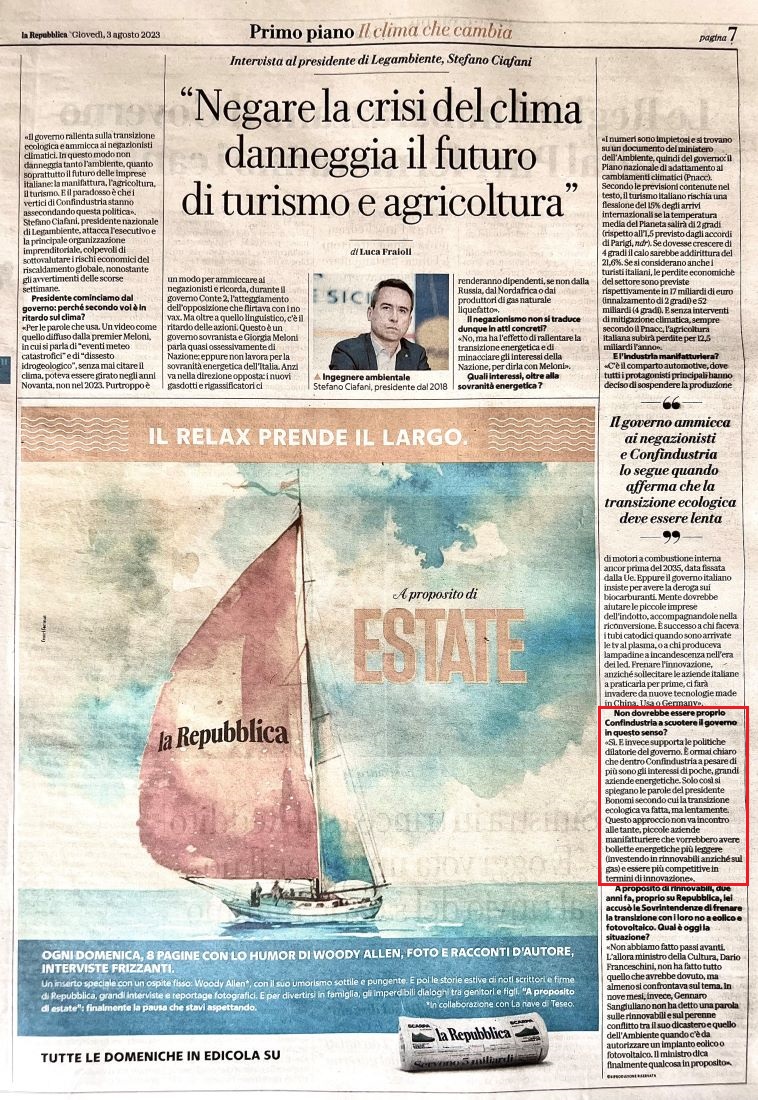
Interesting point of view from Legambiente :
“.. Inside Confindustria the interests of a few, large energy companies weigh most heavily…”.
I also find this insight found in The Economist stimulating:
climate scepticism – prevalent among Meloni’s voters – confronts the prime minister with an electoral dilemma: a poll last year found that the view that climate change is man-made is more widely accepted in Italy, by 82% of people, than in any other European country surveyed (in Norway it was 61%).
Unfortunately, however, the story of the denier Lo Palo – 2023 – seems to largely confirm what was said at the beginning of this article, namely that this government thinks exactly as she does!
After the regional council’s no-confidence vote against Lucia Lo Palo, thanks also to the vote of at least eight franchi tiratori in the ranks of the centre-right majority, Fratelli d’Italia rallied around the president of Arpa, the regional agency for protection and the environment. She ended up under indictment for stating, among other things, that ‘I do not believe that climate change is man-made’ (Repubblica 16 November 2023).
Reconfirmation comes from the budget manoeuvre The government cuts funds for the environment. Money for the Messina bridge and not for rehabilitating the water network and from these statements: Meloni at Cop28 rails against ‘synthetic food’, which would be ‘destined for the poor’. On this government’s useless ideological battle against synthetic meat read this article.
In April 2024, of the 4 .38 billion euro earmarked for water and land protection, nothing was known. And Sicily risks being the first Italian region to suffer the consequences.
Thanks to Guido Barendson