Nine days earlier, the UN agency had been more reassuring. It judged the risk to public health ‘low for the general population’ and the risk of contagion ‘low to moderate for occupationally exposed people’ taking into account that ‘the virus has not acquired mutations that facilitate transmission between humans and based on available information’.
A shift in tone that reveals the difficulty, for the experts, of balancing the reassuring and worrying elements of the epizootic. First of all, the worrying facts. They are related to the H5N1 strain of the virus, first identified in 1996 in a wild goose in China. Since 2020, the number of outbreaks has exploded among wild and domestic birds. And the number of affected mammals continues to grow, worldwide…
And even the Financial Times reports that : Climate change increases the chances of ‘spillover’ of zoonotic diseases. Habitat invasion means more opportunities for animal-to-human infection.
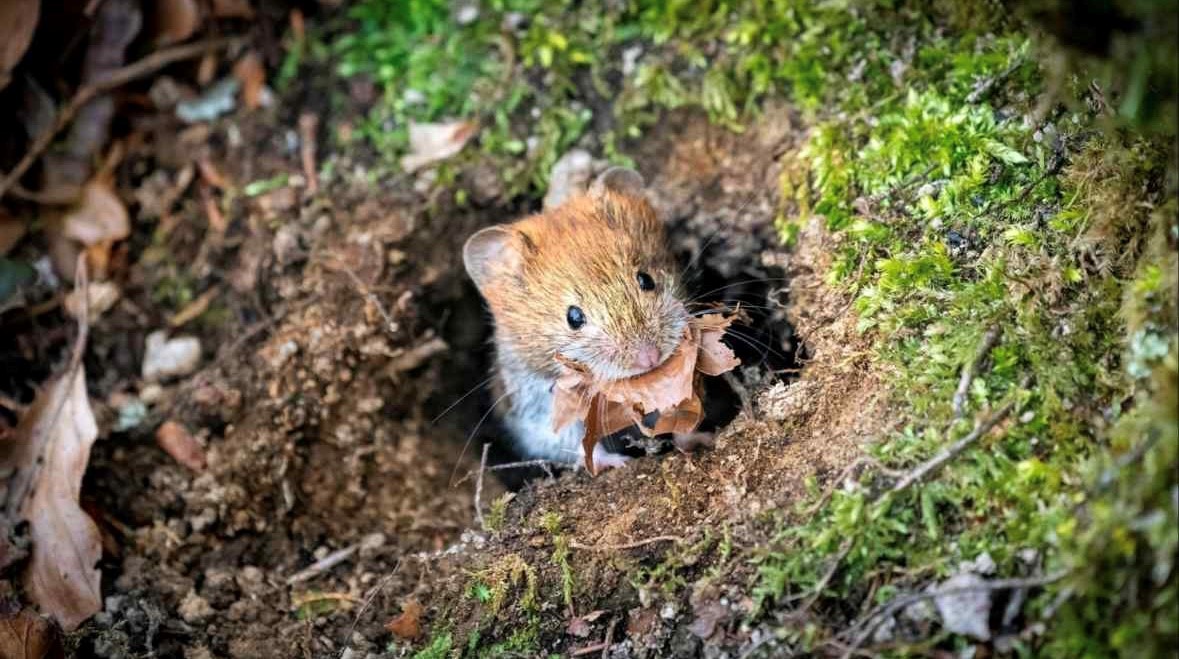
Below : Red-backed voles would carry smallpox into the US
In 2022, 131 million birds (ducks, etc.) died.
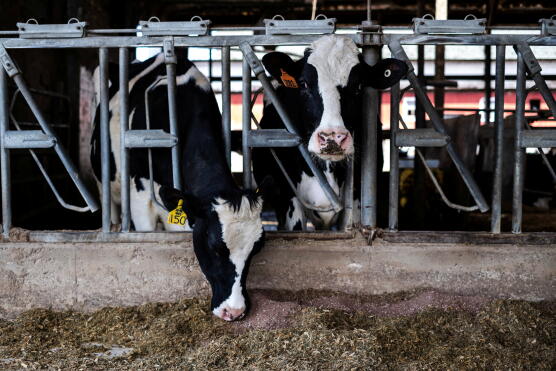
What is worrying is a new strain – 2.3.4.4b – which is very contagious and has made the species switch: from birdsit is now affecting cattle.
For the past month, it has been present in dairy cow herds in the US, in eight states.
Obviously , there is concern that it may pass to humans as 889 cases of bird flu contracted by people in 23 countries occurred from 1 January 2023 to 1 April 2024.
These cases are rare, but 463 people have still died, with a morbidity rate of 52%.
The level of surveillance in France and the US went up.
Vaccination campaigns are being considered. Not least because the US has also had outbreaks of HPAI [one of the acronyms of avian influenza] in the egg market this year, which have affected supplies and driven up prices. And traces of the avian flu virus have been detected in pasteurised milk.
Bird flu: new human contamination and epizootic disease accelerating in the US
The H5N1 virus continues to spread in US farms. Moderately concerned, scientists deplore the lack of transparency that would better control the risk of this animal-borne virus mutating and becoming transmissible from human to human.
A third man infected with the H5N1 virus in the United States, a first human case in Australia, a first man infected with H5N2 in Mexico: within a week, several bird flu outbreaks have caused concern by moving from animal to human species. Although these are not the same viruses nor the same public health problems, the World Health Organisation (WHO) considers in both cases that ‘the current risk to the general population is low’ .
However, the signs are accumulating and scientists are increasing calls for measures to be put in place to avoid any catastrophic scenario. “I think that the current circumstances justify raising the alarm and mobilising for vaccine production,” he explained to Le Monde
USA: first death of a human being due to the H5N1 strain of bird flu in cattle farms.
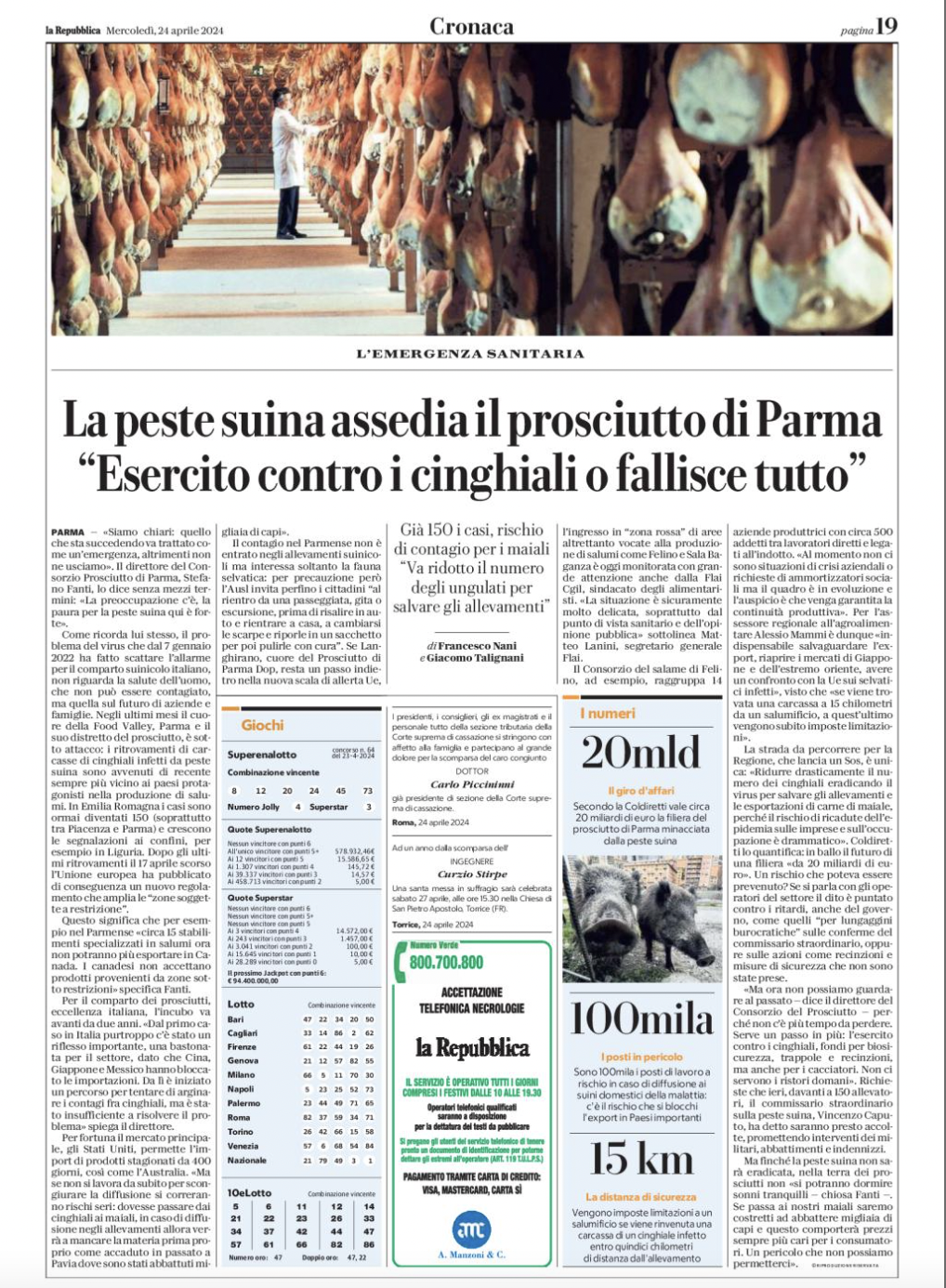
In Italy, where we had prosciuttopoli, a scandal that broke out in 2019 and was never seriously tackled, absolutely nothing is happening; despite the fact that swine plague licks the borders of Langhirano (Parma), where Parma ham is processed , and Canada has already closed its borders to our ham imports.
Moreover, there are seven times more wild boars in our country than the European average.
It is surprising that all this is happening given that Ettore Prandini, president of Coldiretti, is a farmer…
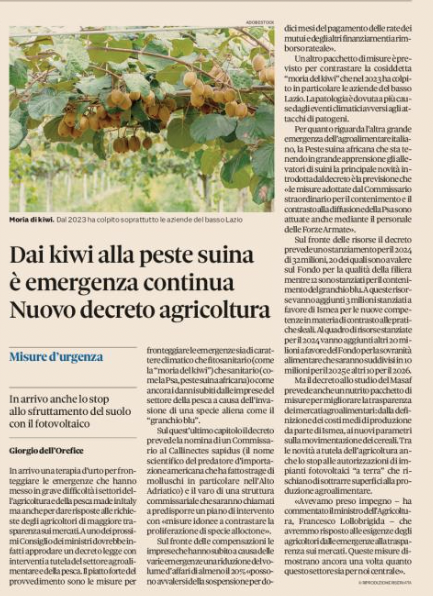
In this article in Il Sole 24 ore of 3 May 2024 we read, between the lines, that the army will be sent to deal with swine fever.
We are curious to understand “how” and “for what” it will be used.