Mauro Lusetti, vice president of Confcommercio, told Repubblica on 15 January that he was ‘at theAntitrust Authority‘s disposalto provide all the necessary information‘.
Repubblica: Prices have gone up on the shelves, but why not for farmers?
Lusetti: ‘Wedo not deal directly with individual farmers, but with large consortia, cooperatives, producer organisations, processing industries. We do not impose prices, but negotiate them in a logic of absolute transparency. The survey starts from a vision of the supply chain that does not take into account the intermediate part, consisting of processing companies and industry’.
A.: Not everything is processed though, there are products that go directly from the fields to the supermarkets.
L.: ‘Yes, but in any case we never have direct relations with farmers‘…
Below: Lusetti’s piece on farmers and an article from Corriere (15 January 2026) on the subject.
It is not clear whether Lusetti is speaking on behalf of Confcommercio or Conad but the fact that he does not have direct dealings with farmers CANNOT be a boast because it means that those who buy, in the large-scale retail trade, are not doing it well because they accept intermediaries and opacity in the purchase prices and margins of all the actors in the chain. Most probably, by negotiating directly with farmers, they could obtain better prices that would benefit their customers.
In 2020 I had suggested to Coldiretti an Observatory on this data: five years have passed, perhaps it would be time to act.
It is never too late to protect consumers, producers and farmers.
P.S.: in Esselunga we had direct relations with farmers with whom we planned fruit and vegetable purchases.
Those who have direct relations with them certainly have more control over inflationary effects and more control over the quality of the products they buy
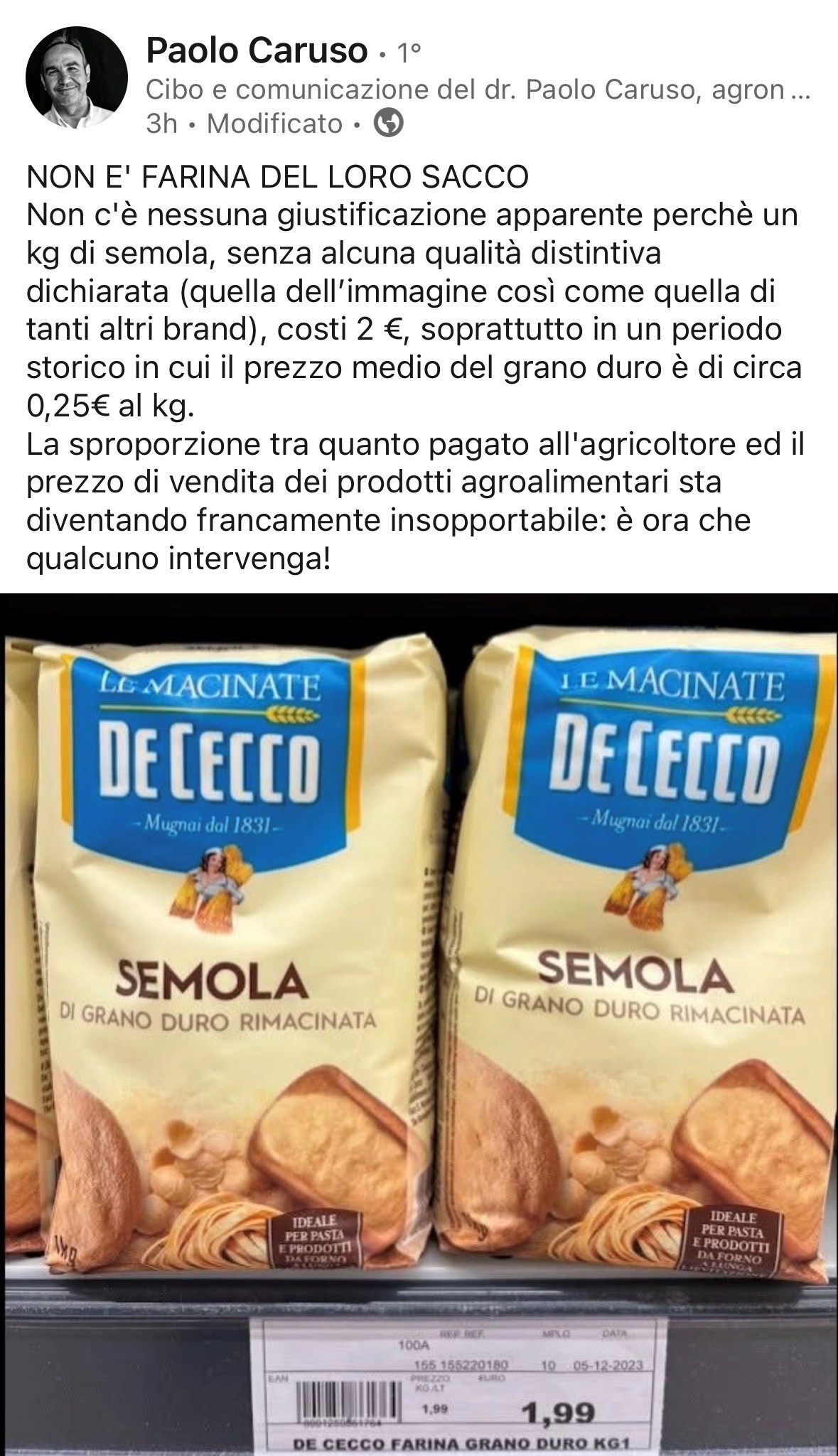
Below: two big differences between the starting price and the selling price concerning artichokes and flour.
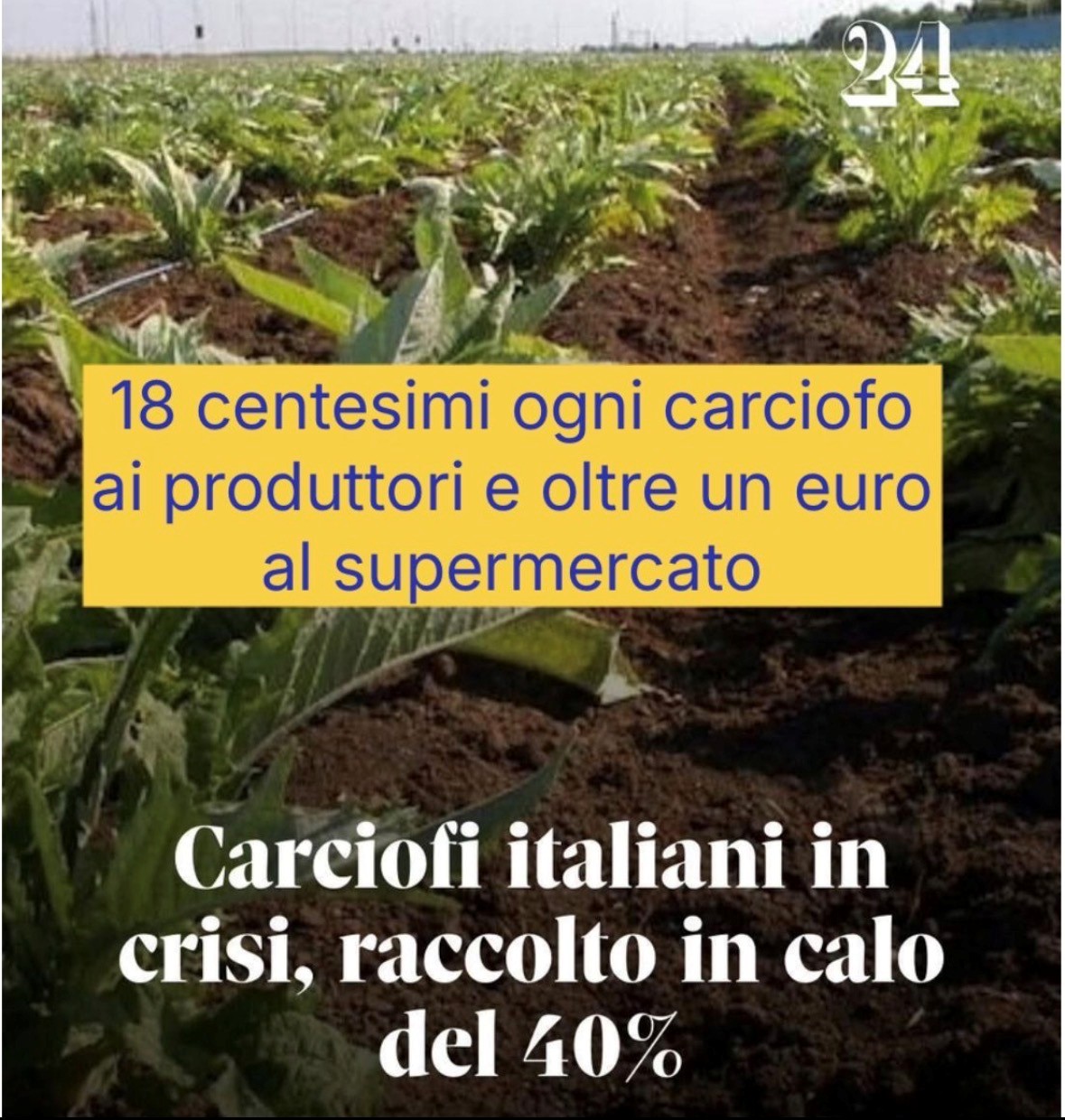
So there are not only :
- bureaucracy
- extreme weather events
- size of agricultural properties (too small – on average – in the EU)
- problems with mirror clauses and reciprocity
- unfair competition from third countries
- food labelling that does NOT enhance Italian products
- skyrocketing energy costs
- unfair practices always in place, thanks to failed legislation
but there are also the inefficiencies of the supply chain that penalise agricultural producers, whose profitability remains problematic.