(Image by Skyler Ewing from Pexels)
Introduction: this is not the first time I have been closely following the development of this phenomenon: in 2023, when the UN issued its first warning, I had already reportedon the heatwave that had swept across Europeandthe first rises in raw material prices linked to El Niño, which I then followed for years in relation to price rises and the deterioration in food quality, caused by climate change, disease and wars.
A rise of more than two degrees in the waters of the equatorial Pacific can trigger a chain of effects capable of reaching far and wide, right down to the products and prices we find on the shelves. In 2026, this phenomenon is reaching such proportions that it can be considered the most intense ever observed in living memory.
What is El Niño?
El Niño is the warm phase of ENSO (El Niño–Southern Oscillation), the full scientific name for the natural climate cycle of which El Niño is one of the two phases. It occurs when the trade winds weaken and the warm surface waters, normally driven towards Asia and Australia, shift towards the central Pacific and the coasts of South America.
This movement alters atmospheric circulation and affects rainfall and temperatures in many regions of the planet. Furthermore, it reduces the upwelling of deep, nutrient-rich waters along the South American coast, with possible consequences for marine ecosystems and fisheries.
It is a natural and periodic phenomenon that is causing concern among climatologists and economists due to its predicted intensity. The Met Office, the UK’s national meteorological service, has openly spoken of a signal never before seen in its long-term forecasts, whilst theUS NOAA has raised the probability to over 90 per cent that Pacific sea surface temperatures will exceed two degrees above normalbetween autumn and winter 2026–27. The World Meteorological Organisation confirms that the event will reach its peak intensity towards the end of 2026 and that, with a probability close to 100 per cent, it will persist at least until February 2027, with effects expected primarily in Central and South America, southern Africa and South Asia. It must be said that Europe is not directly affected by El Niño.The heatwaves we are currently experiencing are linked to global warming, as experts point out, but the food supply chain knows no geographical boundaries, and this is where the impact begins – one that ultimately reaches our dining tables.
Wheat and sugar are the most vulnerable commodities
Droughts and abnormal rainfall are affecting the planet’s major agricultural regions; harvests are falling, raw materials are becoming more expensive, and these cost increases are passed on throughout the supply chain, right up to the final price paid by consumers.
Wheat is among the most vulnerable crops. In Australia, according to the latest report fromABARES, the Australian government’s statistical agency, production for the 2026/27 season is forecast at 29.9 million tonnes, down 17 per cent on the previous year. In India,data from the India Meteorological Departmentshow that 397 of the country’s 741 districts have received below-average monsoon rainfall, affecting the sowing of rice, cereals and oilseeds. Not all areas are affected to the same extent. Argentina is one of the few countries to have historically benefited from El Niño, andthe US Department of Agriculture (USDA)reports above-average rainfall in the country’s main production areas, with favourable conditions for wheat and maize and a projected increase in wheat exports.
However, geopolitical risks are compounded by climate risks. Russia and Ukraine remain key players in the global cereals market, and growing tensions in the Black Sea are making export routes more vulnerable. Attacks on ports, terminals and commercial vessels have already prompted several Asian importers to turn to alternative suppliers such as Australia and Argentina, thereby propping up international wheat prices. The issue is particularly sensitive because Russia, Ukraine and Kazakhstan together account for around 30 per cent of global cereal exports, whilst China and India, despite being among the world’s largest wheat producers, absorb the bulk of their production on their respective domestic markets. Extreme weather and geopolitical instability are thus compounding their effects, reducing the supply available for international trade and driving up price volatility.
Sugar is the commodity considered by analysts to be most at risk. The FAO has already confirmed this today: the global food price index reached 133.3 points in August, its highest level since the end of 2022. Sugar is driving this rise, having increased by 11.9 per cent month-on-month due to a drop in production in Brazil and conditions linked to El Niño in Asia. Schroders points outthat, in the past, similar events have caused production in India and Thailand to plummet by up to 30 per cent, forcing these countries to become net importers.
Positive and negative effects
El Niño does not only cause damage.Some crops benefit from it because, for example, heavier rainfall in California boosts the production of avocados and almonds, as has also been seen with soya, maize and wheat harvests in Argentina. The overall balance, according to economic research, remains clearly negative:scientists Christopher Callahan and Justin Mankin of Dartmouth College analysed the effects of El Niño on the global economy in the five years following each episode, and estimated that the particularly severe event of 1997–1998 resulted in a loss of global gross domestic product amounting to 5,700 billion dollars, with the poorest countries in tropical regions bearing the brunt of the impact.
The coffee sector is also affected by El Niño, although the picture is more nuanced than for sugar. The USDA forecasts a record global harvest of 189.7 million bags for 2026/27, with Brazil alone accounting for 71.9 million (up 14 per cent on the previous season); the same agency, however, warns that a potential El Niño poses a risk to the latter part of the 2026/27 harvest and to the following cycle. The International Coffee Organisation has already reported that the growing likelihood of a ‘strong’ El Niño by the end of 2026 brought an end in June to six consecutive weeks of falling prices in New York. Analysts are now keeping a close eye on two critical periods: the September–October flowering season in Brazil and the dry season in Vietnam, the world’s leading producer of Robusta and historically the region most vulnerable to El Niño, as was the case in 2015/16.
In West Africa, however, the risk is the opposite: heavier rainfall increases the incidence of fungal diseases in cocoa plantations. The most recent estimates, released by COCOBOD, the Ghanaian regulatory body, suggest an expected harvest decline of between 18% and 38% for the 2026/27 season (between 470,000 and 620,000 tonnes, compared with 760,000 tonnes in the previous season), partly due to black pod disease, whilst in Côte d’Ivoire initial figures point to a double-digit decline.
The impact is not limited to the mainland.El Niño is also disrupting ocean fishing: warm waters moving eastwards are preventing colder, nutrient-rich waters from rising to the surface, reducing the amount of phytoplankton available to fish. In Peru,anchovies off the coast are moving towards deeper, colder waters, making them harder to catch. According to Enrico Bachis, markets director at IFFO – The Marine Ingredients Organisation, Peru accounts for a significant share of the global supply of fishmeal — the protein ingredient used in feed for aquaculture, pig farming and poultry farming — so disruptions to fishing rapidly restrict its global availability.
Extreme heat also puts stress on farm animals: cattle, poultry and pigs have an optimal temperature range, beyond which energy is used for cooling rather than for growth or milk production. Dairy cows are particularly sensitive: when the temperature-humidity index exceeds 68, both feed intake and milk yield decline. The same drought that affects crops also reduces pastureland and drives up the cost of feed, completing the cycle of rising costs that affects the entire livestock sector.
The combination of lower agricultural yields, reduced fish catches and livestock losses due to extreme weather conditions can threaten global food security: the United Nations World Food Programme has estimated that the current El Niño – forecast to be the strongest in the last seventy years – could push a further 49 million people into acute hunger by the end of 2027.
The same factors are contributing to rising prices of agricultural commodities on international markets. Oxford Economics forecasts an 11.8 per cent rise in global food prices in 2026 and a 4.8 per cent rise in 2027, the combined effect of El Niño and the geopolitical tensions already weighing on fertiliser and cereal prices. JPMorgan, in a more cautious estimate, puts the direct impact of a Super El Niño on global food inflation at its peak – which typically occurs between four and eight months after the phenomenon begins –at around 0.7 percentage points.
What might end up on our tables
For European households, the most likely effect is an indirect rise linked to the availability and costs of imported raw materials and the energy required for production. Pasta and bread, which rely on wheat, along with sugar, coffee and chocolate, are among the most vulnerable goods.
Experts point out that the full effect of El Niño on global temperatures tends to manifest itself a year later. This means that, if the 2026 event were to be confirmed as the most intense on record, the most severe consequences for food prices might not be felt in the coming months, but rather during 2027.
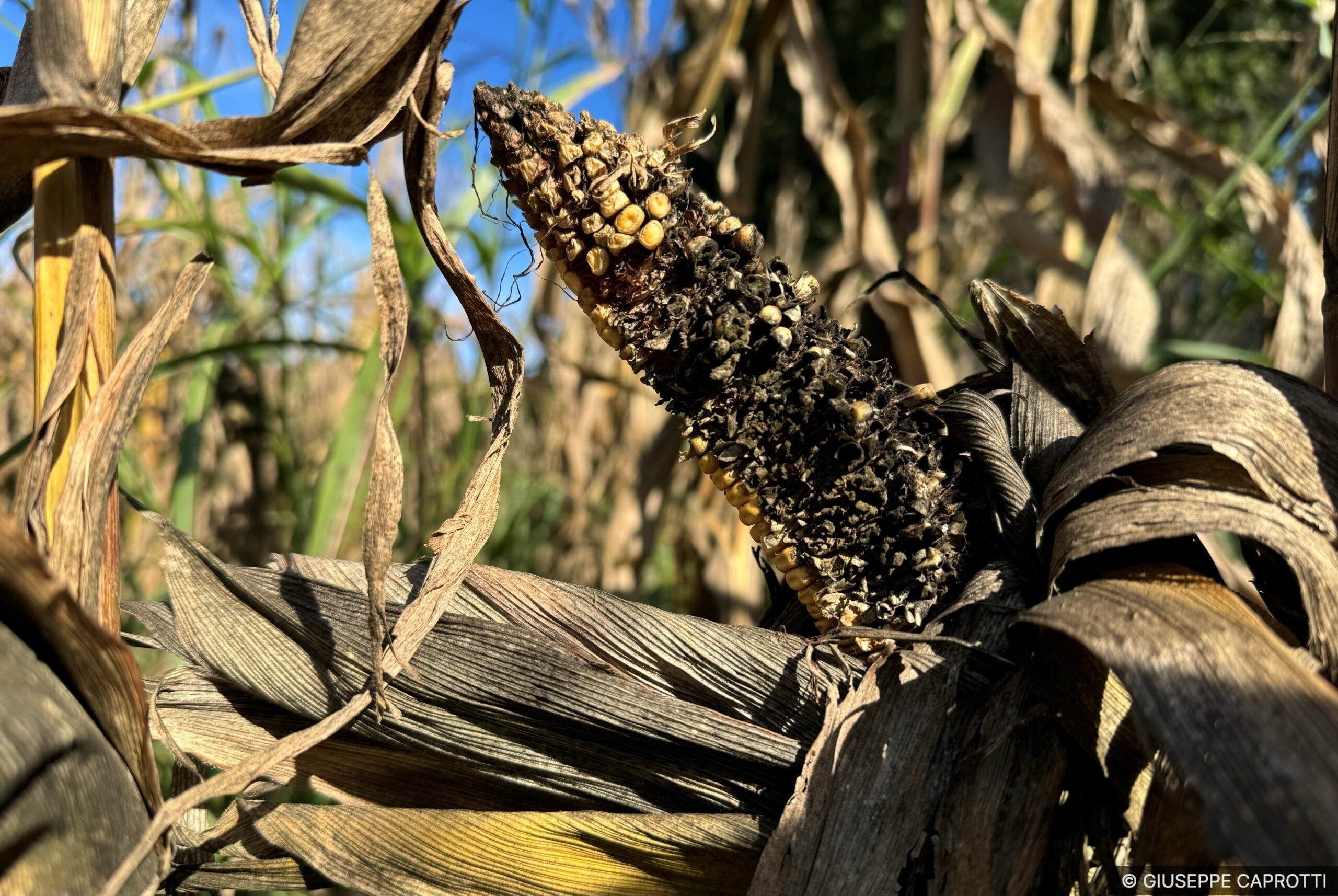
The downward revision in global cereal production is mainly attributable to maize
This El Niño could be entering uncharted territory.
As global temperatures continue to break records, scientists arewondering how climate change– caused mainly by the burning of fossil fuels – is altering the El Niño phenomenon itself.
“El Niño is behaving like a staircase,” said Dr Kim Cobb, a climatologist at Brown University. Global temperatures tend to soar during an El Niño event and, when the cycle ends, temperatures fall, but never return to their previous levels. “That’s what frightens me about El Niño,” she added.
Dr Cobb is collaborating with Dr Atwood on Christmas Island, where they are observing coral bleaching even before El Niño reaches its winter peak. Super El Niños are occurring at ever-shorter intervals, and fragile ecosystems no longer have enough time to recover between events.
This acceleration worries her. “People should prepare for the worst-case scenarios,” she said…
Returning to the subject of food and what was mentioned in the introduction to this article, we quote what Luigi Rubinelli wrote about the recently published Coop report:
…The decline of the branded goods industry, its brands and its products, is not a good sign and also leads to a reduction in quality. On the other hand, there is the sustained growth of private-label brands, which is a complex phenomenon. Behind this growth, behind its figures and market share, lie very diverse businesses and products, including numerous made-up brands and products with no guarantees whatsoever, which appear and disappear within the space of a few months.
There is a high risk that consumers will turn to buying and consuming these products. It is the overall standard of quality that is being called into question, even undermining the very concept of ‘Made in Italy’ – an area in which manufacturers and retailers have invested considerable resources in recent years, even when compared with other European countries…
Climate, wars and water shortages are taking their toll:
With heatwaves, prices are rising and quality is falling
These dynamics compromise food security not only in terms of availability due to falling productivity, but also in terms of food value (nutritional, organoleptic and functional quality). Lower productivity leads to rising prices…, exacerbated by the costs incurred in coping with adverse weather conditions (additional irrigation, shading, agricultural insurance, and repair of crop damage). Consequently , access to food is declining, particularly for the most disadvantaged sections of society, with the risk of widening inequalities…
Excessive heat not only reduces yields but also deteriorates the quality of produce. Prolonged heat and water stress lead to a reduction in nutrients, flavour and substances beneficial to our health… You only need to taste an apricot or a peach bought from the supermarket these days to notice the decline in food quality, which has now lost its visual and gustatory appeal
Ultimately, consumers end up paying more and more for food that is worth less and less…
Climate: the fresh-cut fruit and vegetable sector loses up to 40 per cent of available raw materials
Potatoes: European production down by up to 20 per cent; new prices set
Water shortages are driving up transport costs, exacerbating the situation: bottlenecks on rivers (the Mississippi and the Rhine – pictured below, in Europe) and canals (for example, 5 per cent of global trade passes through the Panama Canal)
Conclusion: what is worrying is not that cereal production is falling (-2 per cent) but rather that – in August – there was a sharp rise in prices: the FAO global food price index has risen to 133.3 points, marking a 1.9 per cent increase in a single month and a 2.5 per cent rise compared with a year ago.
With thanks to Roberta Liberale