Written on 26 August, updated on 12 September 2026
Behind the mixed fried seafood platter served in restaurants, there are often only imported, industrially processed, frozen and pre-fried squid and octopus
In Italy, we love squid, cuttlefish, prawns and octopus, but our seas do not provide enough to meet demand. The result? We import huge quantities. According to EUMOFA 2024 data, the cephalopod market (squid and octopus) is worth around 780 million euros in imports. Between January and September 2024 alone, we purchased over 34,000 tonnes of squid, mainly from India, Thailand and Argentina. And what about octopus? Morocco alone accounts for 45 per cent of what we eat, followedby Indonesia.
If, on the other hand, you find anchovies, sardines or pink prawns in your fried dishes, then yes: they are much more likely to be home-grown. But when it comes to squid and octopus, the image of ‘locally caught’ is often a myth for which we pay dearly.
The real problem isn’t the frozen product itself – which can be excellent if it’s of good quality – but the lack of transparency. Many restaurants, especially tourist or seasonal ones, don’t prepare anything from scratch in the kitchen. They use industrially processed semi-finished products: squid that’s already cut, breaded and pre-fried. The chef simply has to take them out of the freezer and ‘reheat’ them in boiling oil. It’s quick, cheap and the result is always the same…
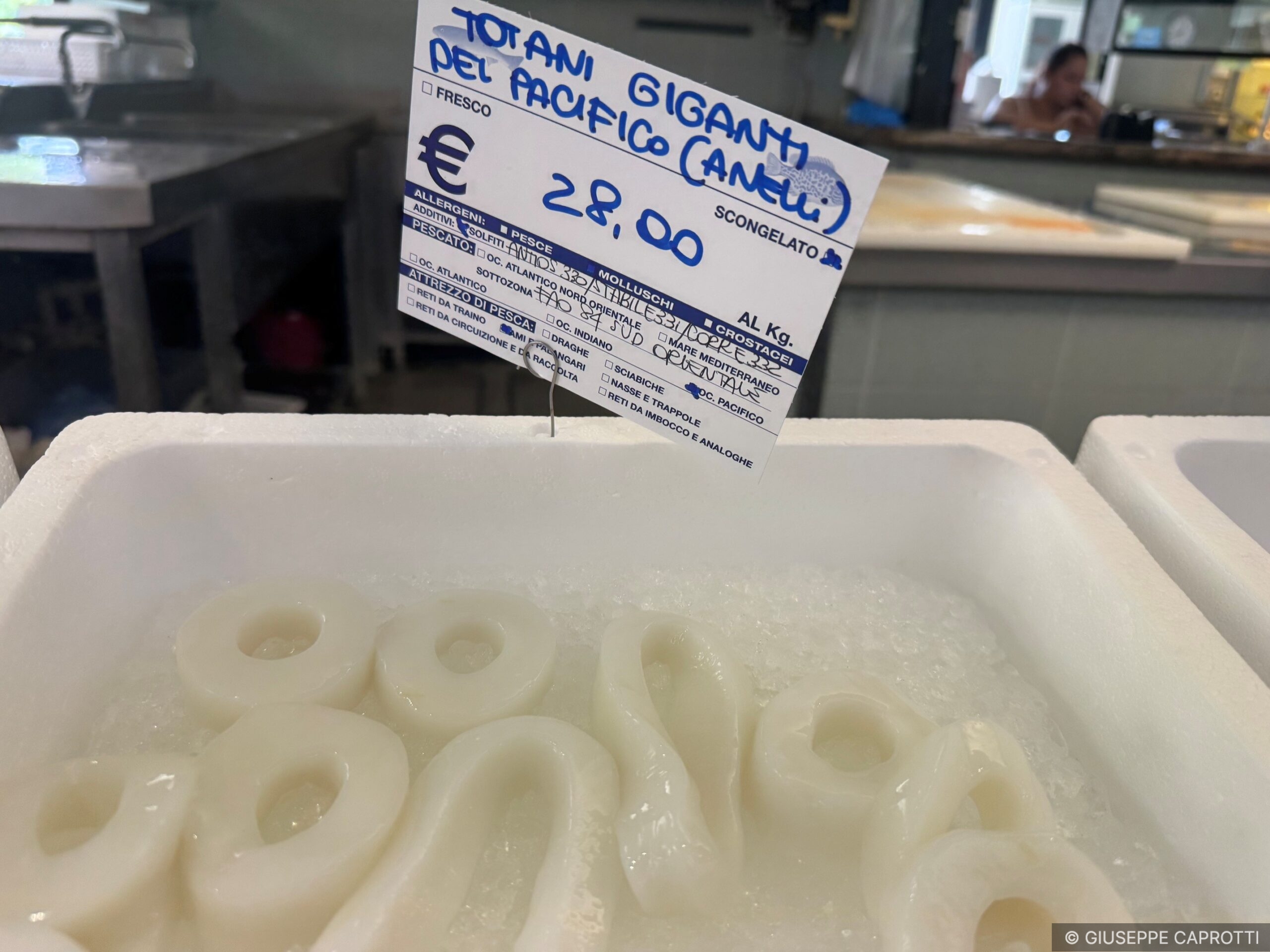
The prawn and shellfish counter at the Gi.Mar. fishmonger’s in Biassono (MB) stocks only prawns from Mazara del Vallo; everything else comes from far afield and is defrosted, like the giant squid in the photo.
they are the mainstayof Europeanaquaculture; they require neither feed nor antibiotics and can even contribute to water quality. Yet it is precisely mussels – the undisputed stars of European aquaculture – that are becoming one of the most obvious victims of a changing sea: warmer, less oxygenated, with a different nutrient profile compared to the past. And the figures are beginning to reveal a crisis that is hard to ignore. As highlighted in the latest report by theEuropean Parliamentary Research Service, which is entirely dedicated to mussels, European production has fallen by 20 per centover the last ten years and , in Italy, during the summer of 2024, some farms lost up to 100 per cent of their harvest…
This means an ever-decreasing supply of local produce, whether it be fish, shellfish or mussels.
Read also:
The best fish to eat in summer aren’t the ones everyone buys