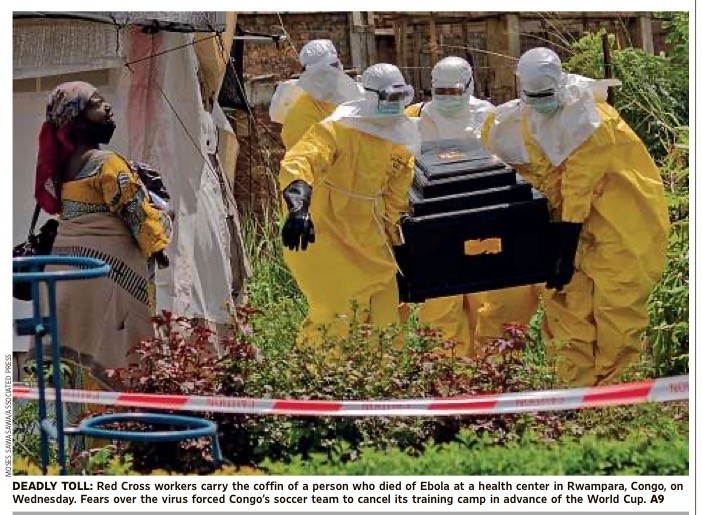
Drafted on 16 April 2025, updated on 12 September 2026, above: the Ebola outbreak in the Congo (The Wall Street Journal, May 2026).
“The outcry has been huge and shows no sign of abating. The US government has suspended most development aid payments for 90 days to reassess spending. What will happen next is uncertain. President Donald Trump is threatening to completely disband the US Agency for International Development ( USAID), which disburses the bulk of aid funds. He has placed the agency, once independent, under the supervision of Secretary of State Marco Rubio, arguing that it should be aligned withthegovernment’s‘America First’strategy.”
For the time being, Rubio has authorisedthe resumption of life-saving aid for the prevention, diagnosis and treatment of diseases such as HIV, tuberculosis and avian flu, but in most cases the funds have remained frozen.
Until a final decision is made, all other US-funded aid projects around the world – numbering in the thousands – remain on hold.
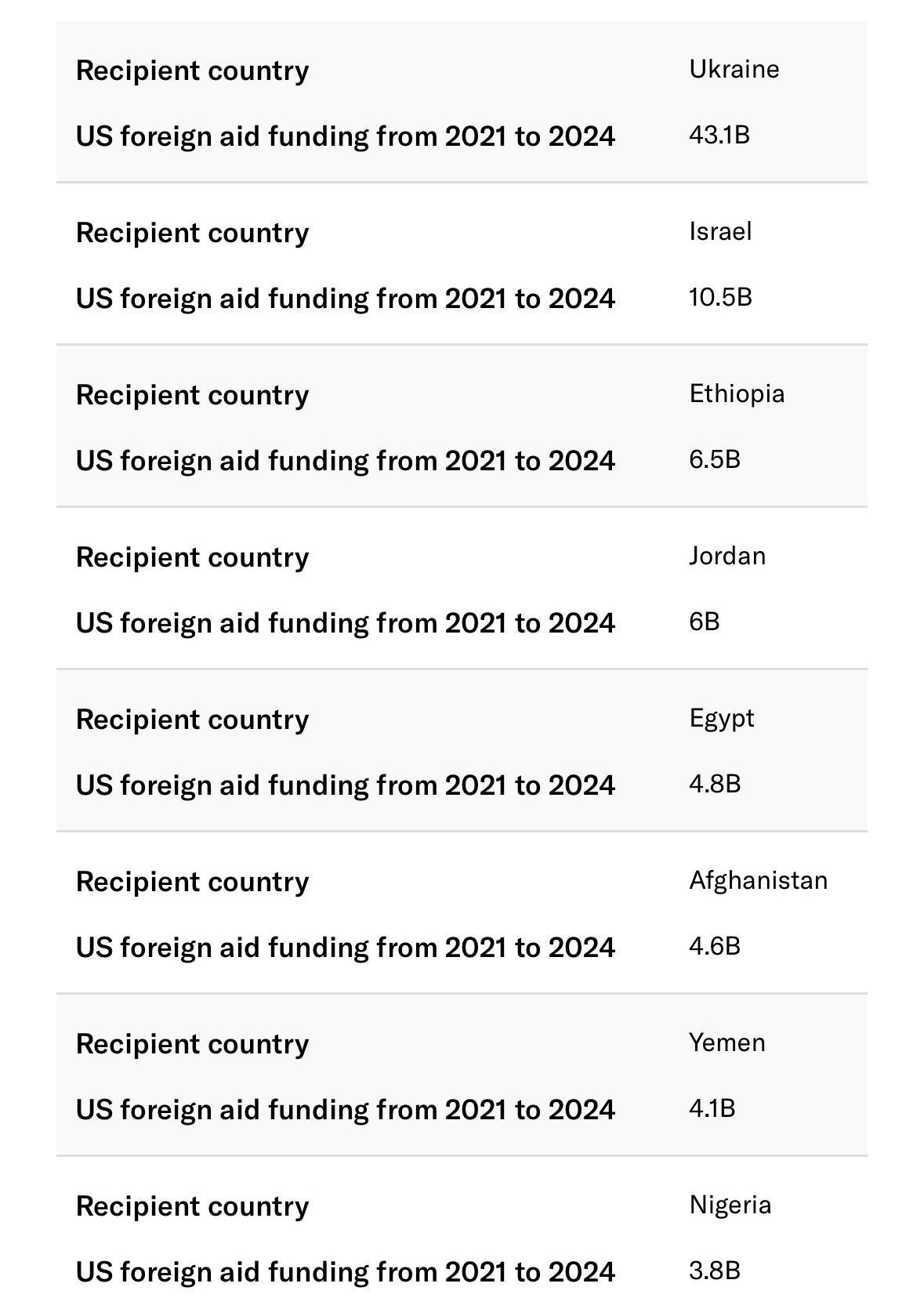
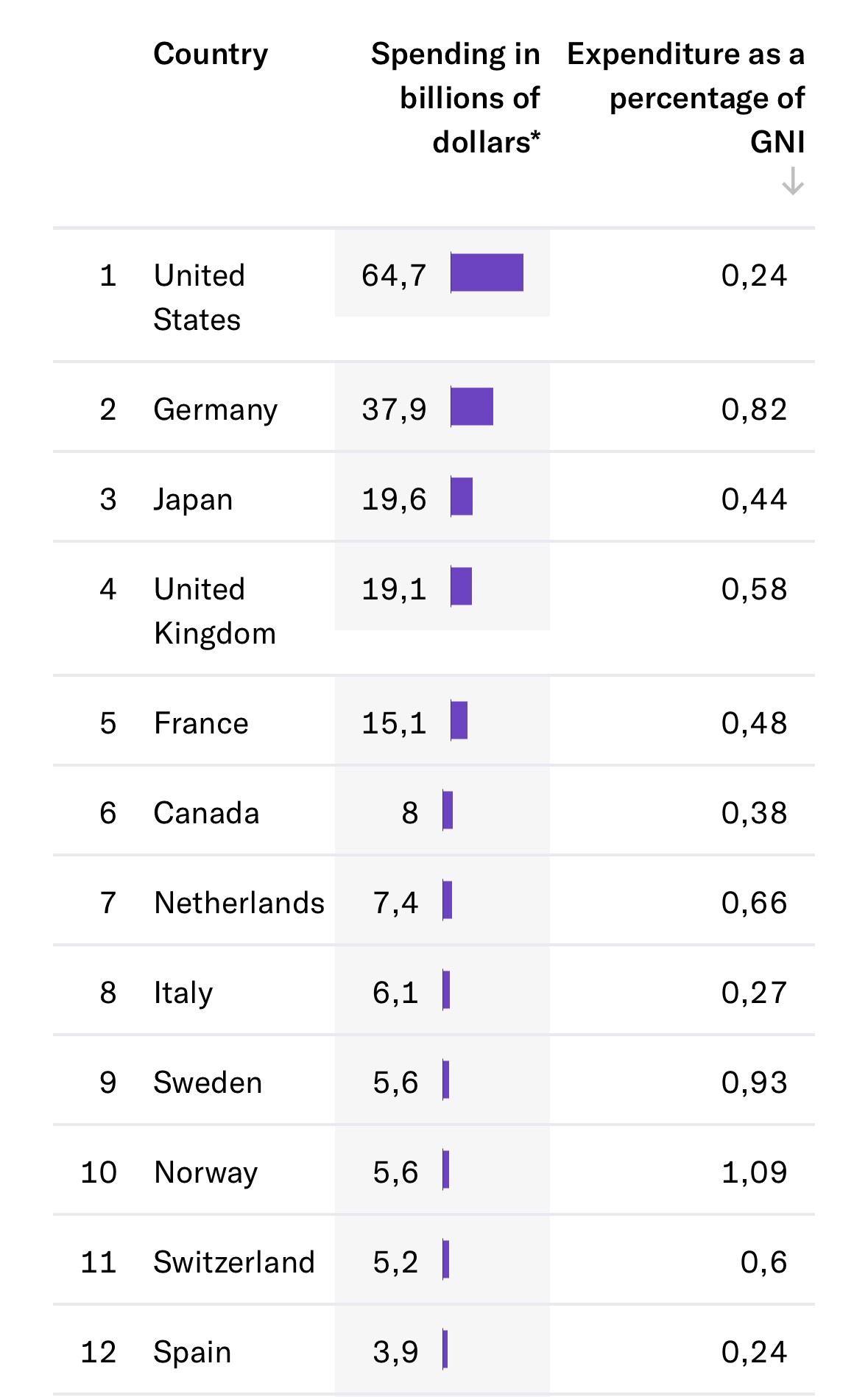
During the four years of the Biden administration, 181 countries received a total of around $240 billion in development aid from the United States.
TheCongressional Budget Officehas already projected nearly $60 billion in foreign aid for 2025, most of which is earmarked for USAID projects. In particular, countries in the Middle East, East Africa, South Asia and Latin America have benefited from these funds.
To be more specific, USAID also provides substantial amounts toUkraine and to many moderate African states (e.g.Kenya) or those ravaged by terrible wars (e.g. Sudan).
But also to Gaza (in 25th place, with $1.5 billion)and to Italy.
Françoise Thom,a Frenchhistorian and writer, Sovietologist, lecturer in contemporary history at the Sorbonne in Paris, and specialist in post-communist Russia, is the author of works and political analyses on that country and its leaders. Speaking to *Le Monde*, she says that:
“the list of favours Trump has done for Moscow is growing by the day”.
In an interview, the expert explains how the Russian president manages to manipulate his US counterpart, who has aligned his rhetoric and actions with the Kremlin’s interests.
Thom is convinced, based on the facts, that there is a link between the Trump administration’s desire to dismantle the federal state and Russia.
She adds: “It is said that Trump is sowing chaos in the United States. But there is a logic to this madness: most of the measures taken are in Moscow’s interests…
…Some members of the KGB and the GRU have never come to terms with the end of the communist bloc and the break-up of the USSR, which they attributed to an American conspiracy. This hard-line faction has found a theorist: Alexander Dugin”
…Regarding Tulsi Gabbard, whom Trump has chosen to head the intelligence services, Senator Mitt Romney said that “she is merely parroting Russian propaganda. Her treacherous lies could cost lives”. Thus, on 24 February 2022, Tulsi Gabbard retweeted the Kremlin’s argument justifying Russia’s aggression against Ukraine: “This war and this suffering could have been avoided if the Biden administration and NATO had simply taken into account Russia’s legitimate concerns about Ukraine’s possible accession to NATO”…
Among the various favours Trump did for Putin – which we shall return to – Thom argues that: “there is also the closure of USAID, the instrument of American soft power that Moscow feared most, not least because of the support it provided to Russian and Belarusian dissidents, not to mention aid to Ukraine”.
Founded by President John F. Kennedy in 1961, USAID administers the majority of US foreign aid. Additional funds are channelled through the Millennium Challenge Corporation, a development aid fund that focuses on the economic development of certain developing countries.
Military support and payments to international organisations such as the UNHCR, the World Bank or the International Organisation for Migration, on the other hand, are mainly channelled through the State Department and the Department of Defence.
Nevertheless, 46 per cent of respondentsin a recent surveybelieve that foreign aid is excessive.
Republican voters are particularly critical: 72 per cent recently described the aid as excessive.
But, apart from Ukraine, this aid was vital for Gaza and, for example, countries such as Ethiopia, Egypt, South Sudan, Mozambique, Tanzania, the Central African Republic, Chad, Mali, Burkina Faso and Niger.
1. The loss of funding for Gaza will exacerbate the horror and the personal war that Netanyahu is waging, which we witness every day.
P.S.: The funds to Israel were, and should remain,of a military nature.
2. Ukraine risks being further weakened following Trump’s about-turn.
3. In the case of African countries, the US aid suspensions will have the following effects:
– many deaths ( by cutting aid to the weakest countries, Donald Trump is putting millions of people at risk of death)
– resentment towards the US and ‘Westerners’ (in general)
– a rise in Islamic extremism
– increased migration (controlled by the Russians).
If all this is confirmed following the suspension of payments, it will therefore amount to a colossal strategic error.
Meanwhile, NGOs and developing countries are in a state of despair and total uncertainty, not least because:
On the ongoing humanitarian disaster ,read also Sudan: Trump’s cuts to USAID aid hit the starving in Khartoum, the capital, which is under bombardment and in the throes of famine; clashesbetween the Sudanese armed forces and the Rapid Support Forces paramilitary group havealready claimed more than 150,000 lives in two years.
The cuts to USAID were a point of contention between Pope Francis and Donald Trump’s government. And, ultimately, they will end up benefiting China and Russia.
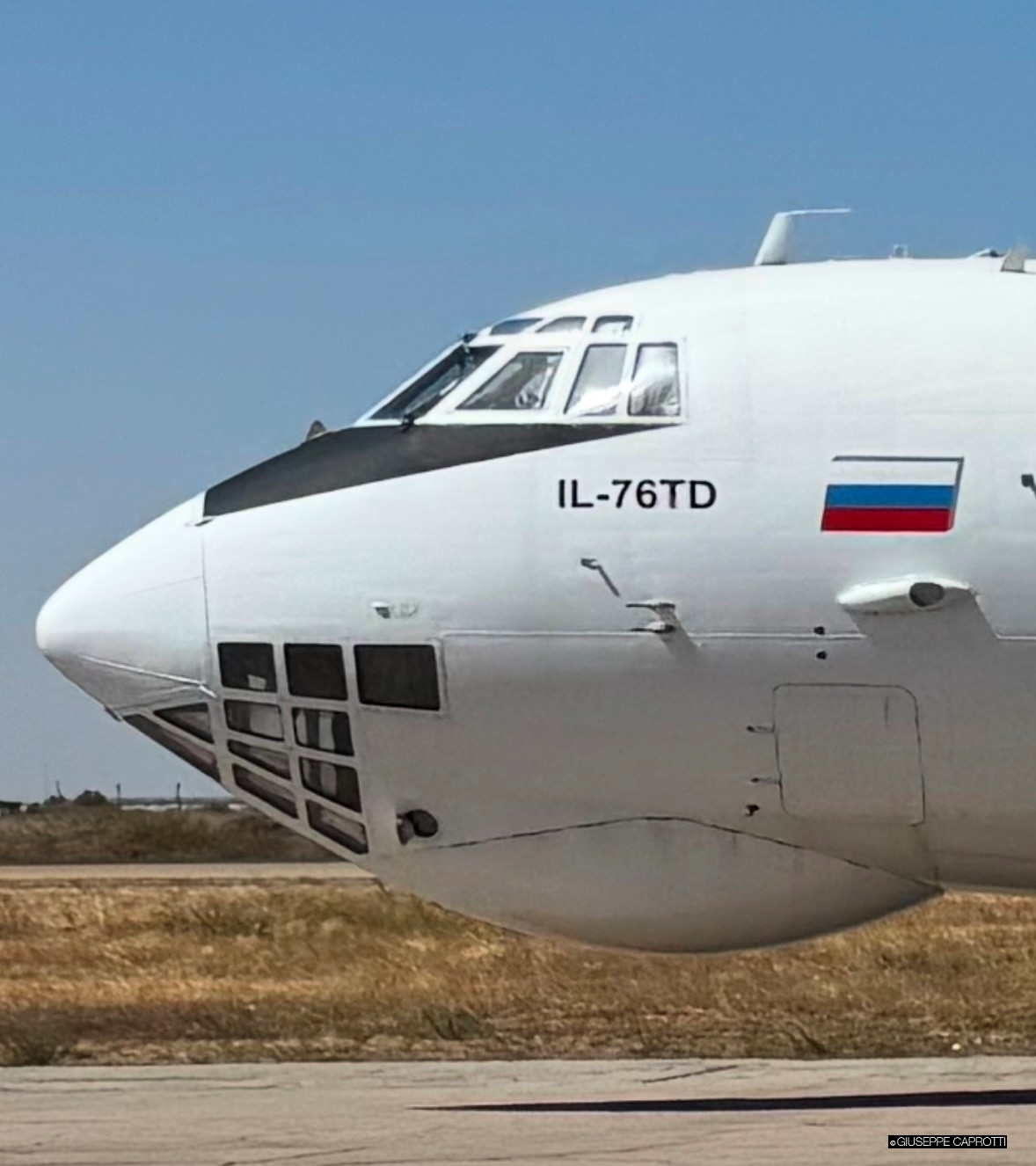
Beneath a Russian Ilyushin-76 that I personally photographed in N’Djamena, Chad, in 2025.
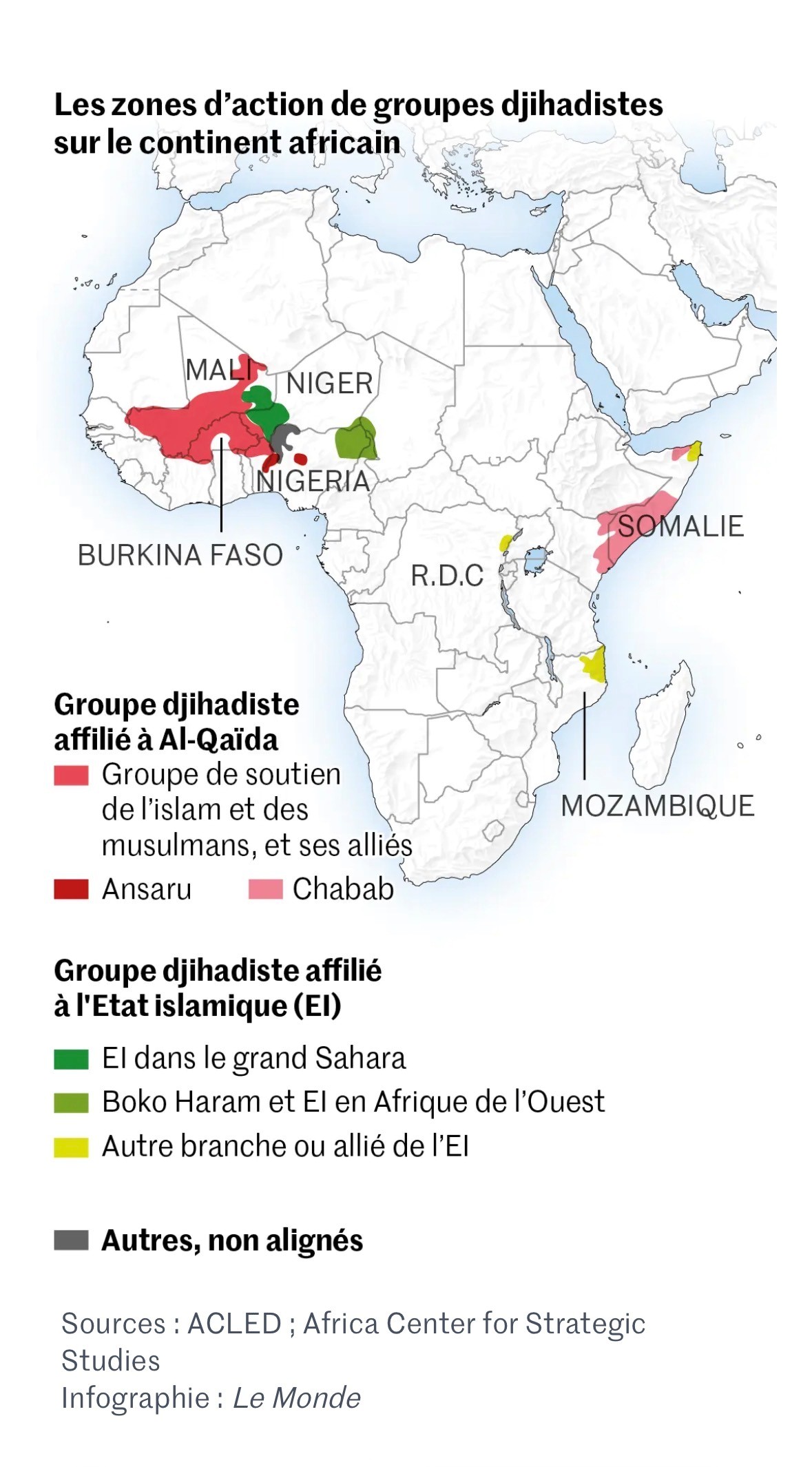
And indeed:From the Sahel to Somalia, how Al-Qaeda is reinventing itself in Africa.
Whilst struggling in its historic strongholds, the jihadist group is thriving in Africa, where it has never been so powerful or wealthy. However, the ideological link between these African branches and the organisation founded by Osama bin Laden is now tenuous.
Of its former strongholds in the Levant, the Gulf and Afghanistan, very little or nothing remains. Al-Qaeda has lost its historic bases one after another over the last decade. But the network founded by Osama bin Laden (1957–2011) is far from dead. Far from its original strongholds, it has established itself and reinvented itself on the African continent, particularly in the Sahel and the Horn of Africa.
The organisation now has its main branches in that region: the Group for the Support of Islam and Muslims (GSIM), based in Mali, Burkina Faso and Niger, and active in several countries in the Gulf of Guinea; the Harakat Al-Shabaab Al-Mujahideen group, commonly known as ‘Shabaab’, in Somalia; and, to a lesser extent, the Ansaru jihadists in Nigeria. “These are Al-Qaeda’s most powerful affiliates – those with the greatest capacity to carry out attacks and those that generate the most revenue,” summarises Stig Jarle Hansen, a research fellow at the Royal United Services Institute in London.
The African branches of the jihadist network are also the only ones to control and administer territory. With several thousand fighters – between 7,000 and 8,000, according to a United Nations (UN) report on the subject published in August – the GSIM (Group for the Support of Islam and Muslims) spans vast areas of Mali, where it now surrounds and threatens the capital, Bamako, and extends as far as neighbouring Burkina Faso. There, it enforces Sharia (Islamic law) and funds itself through zakat, a tax it imposes on the population, and various forms of illicit trafficking: small-scale gold mining, the livestock trade and the release of hostages in exchange for substantial ransoms.
As for Al-Shabaab – estimated by the United Nations to have between 7,000 and 120,000 members – the group controls large swathes of central and southern Somalia, whilst also collecting an informal tax.…
These affiliated African cells share little more than a name with Al-Qaeda: they no longer operate within the highly hierarchical structure created by Osama bin Laden, who was killed in 2011, and only vaguely share his vision of a global jihad against the West…
Beyond the Sahel region, Al-Qaeda’s other African branches, in Somalia and Nigeria, are also facing growing competition from the Islamic State (ISIS or Daesh), which is vying for the same territories and recruitment pools. The gradual establishment on the continent of the world’s two largest jihadist organisations is a cause for concern for Western intelligence agencies…
And this summer (2026), the Trump administration had a change of heart, particularly in certain areas such as the Democratic Republic of the Congo (DRC), where the Ebola epidemic is raging.
The United States has restored part of its global health aid with substantial grants, but there does not appear to be an overarching strategy that could help Africa, the United States and Europe.
EI = Islamic State (ISIS).