Compiled 23 August 2025, updated 2 March 2026
The false myth of ‘100% Italian’ food is the summarised and updated follow-up to this article
We often imagine the Made in Italy food industry as a self-sufficient system, capable of producing all the raw materials it uses in-house. The reality is quite different.
Behind many products that we find on the shelves and which the label presents as Italian, there is a large share of imported raw materials. In some cases, the real origin is not at all clear: the labelling system does not always specify what is really grown or bred in Italy and what instead comes from abroad.
Obviously, since we import large quantities of raw materials (oil, tomatoes, fish and wheat, for example) to process and re-export them, there are those who, on labelling, ‘play around’.
According to the ISMEA Report 2024 and updated data reported by Il Fatto Alimentare in 2025:
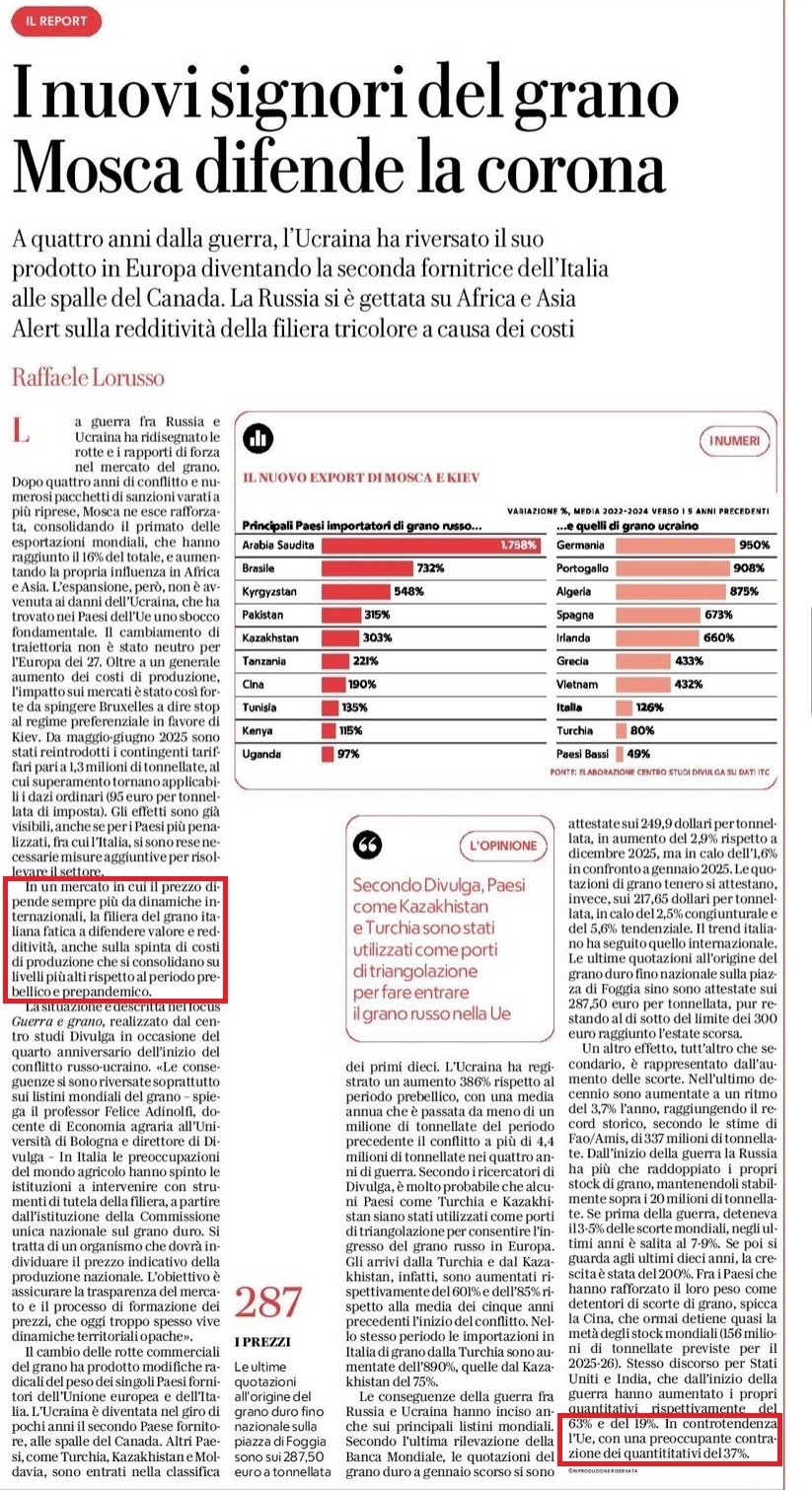
- soft wheat is imported for about 70%,
- durum wheat for pasta 40%,
An emblematic case concerns pasta: despite being one of the symbols of Made in Italy and produced in quantities far exceeding domestic needs, only one dish out of five is on average made with Italian wheat. The rest depends on blended wheat, with different origins (Canada, USA, EU countries, South America, Italy).
Italy is self-sufficient in the production of fresh tomatoes and derived products such as passata and preserves. However, this self-sufficiency is threatened by increasing imports, especially of tomato concentrate, and by foreign competition, which risk standardising the product and damaging the quality and reputation of real Italian tomatoes.
Bresaola della Valtellina IGP is also processed in Italy but with beef largely from Brazil.
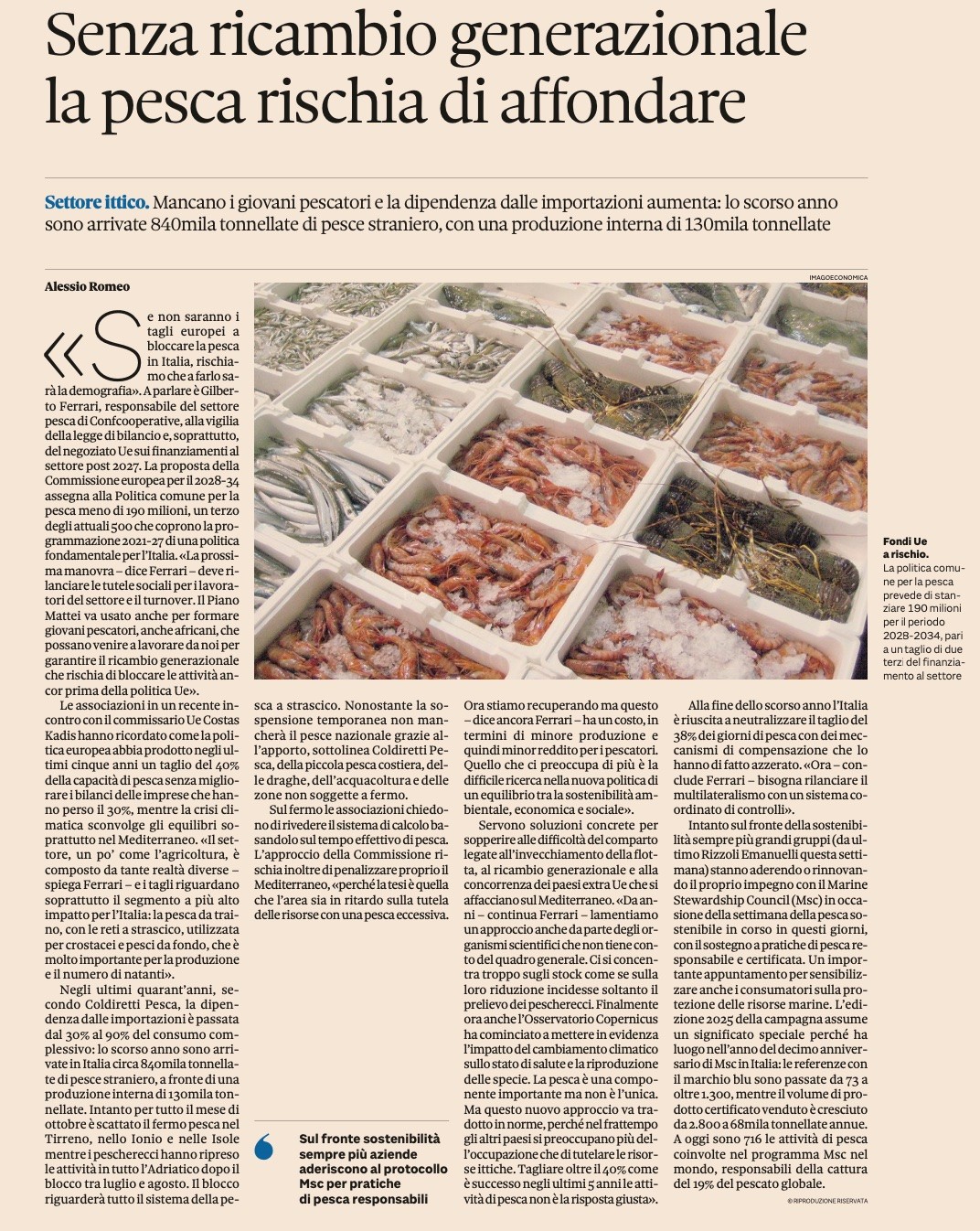
Below: the problems of Italian fishing (Il Sole 24 ore, 18 October 2025)
Foreign dependency levels also remain high for:
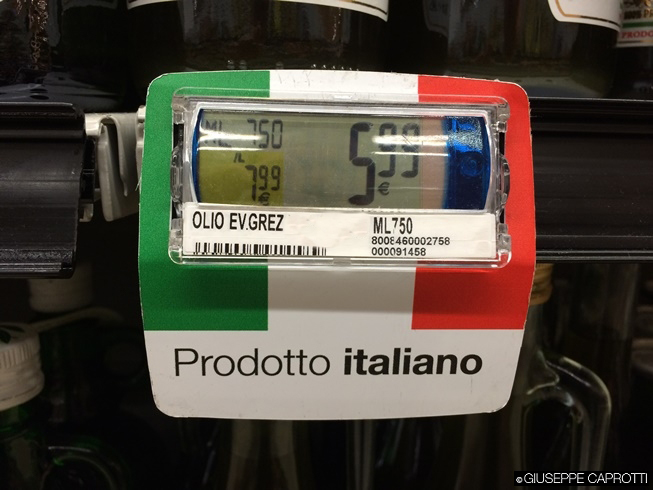
- extra virgin olive oil: 27% with national production in constant decline. (This is one of the few sectors for which we have a precise figure; for tomatoes, for example, there is nothing).
- unroasted coffee (100%)
- beef (60%).
- pork (40%). On this subject, read this article on ham.
- fish (70%)
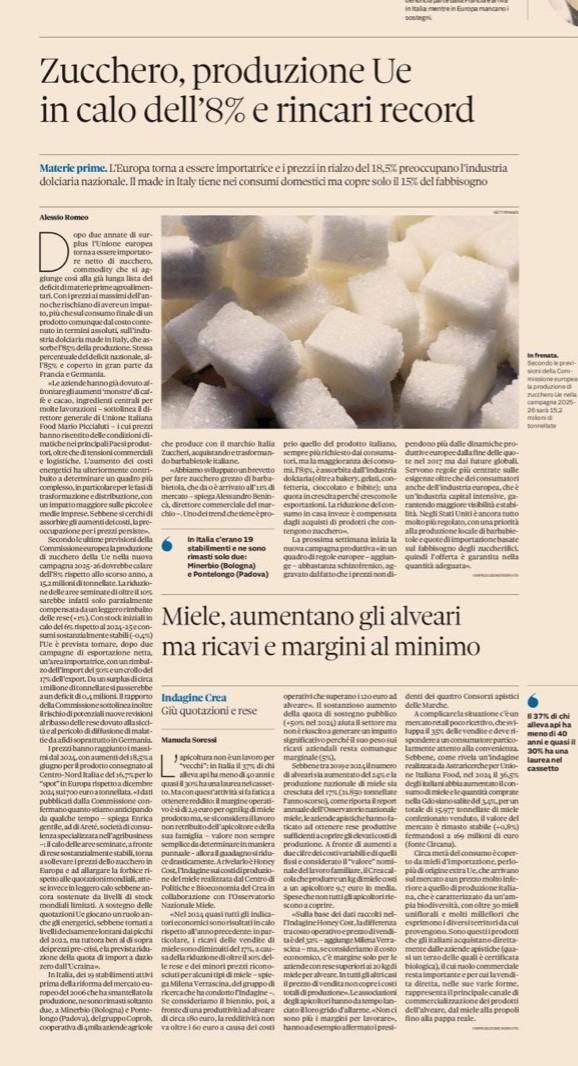
- sugar (85%). And on this topic we recommend reading: Plant closures and surplus imports: the structural sugar crisis in Europe and Italy
- palm oil (100%)
- soya (70%)
- pistachio (88%).
On the other hand, we are self-sufficient in rice, wine, fresh fruit, tomatoes, eggs and chicken. Only in these cases do we have the almost total certainty of buying a 100% made in Italy product.
This does not mean that products made with foreign raw materials are of low quality: food safety depends on controls and rules, not exclusively on the geographical origin of raw materials. But it definitely dispels the myth of ‘100% Italian’: our agri-food industry is based on global supply chains.
Understanding what we put on our plates is the first step to really defend Made in Italy: not with slogans, but with transparency, quality and awareness.
Obviously, tricolour flags on packaging are not necessarily synonymous with Italian style and ‘healthy’ marketing: at the supermarket, one product in four is Italian. Over 11.6 billion spent. Gs1 Italy, in 2024 the basket volume marks -0.7%. Save the PDOs. Thanks to Roberta Liberale
Below : the problems of Italian wheat and EU production (-37%, in four years).