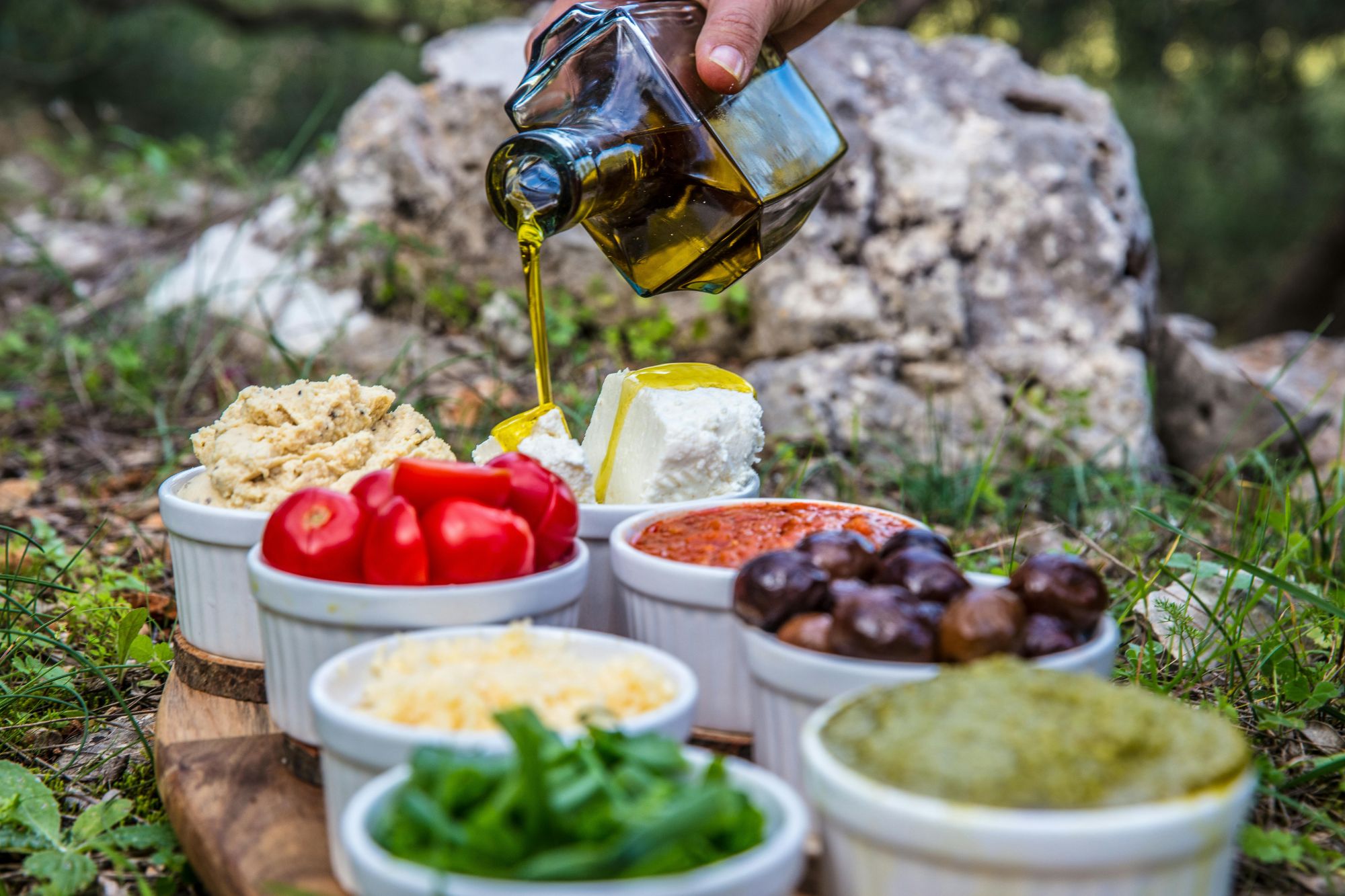
In Italy, the Mediterranean diet faces two main threats:
1) Eating habits are changing, and Generation Z does not follow this type of diet.
2) the climate crisis is putting the land on which its ingredients are grown at risk
The case of cheese is particularly interesting: Italy’s $4.7 billion cheese industry – climate change is threatening the banks that support the sector and hold wheels of Parmigiano as collateral for loans.
Producers typically receive between 60% and 80% of a wheel’s value up front… But the process has come a long way since the 1950s, as blockchain technology now allows farmers to pledge wheels even whilst the cheese remains on their premises, doubling Credem’s lending capacity.
The arrangement solves a real problem: Parmigiano requires at least 12 months’ ageing, often 24 or 36 months, and small family-run farms cannot easily keep such a large amount of stock tied up for so long without generating some cash. So the bank provides some funding before sales are made.
Therearealso major problems with milk, rice, wheat, fruit, vegetables and wine.
But it is the olive groves that have taken the hardest hit: on top of the damage caused by climate change, there is a very unclear political situation.
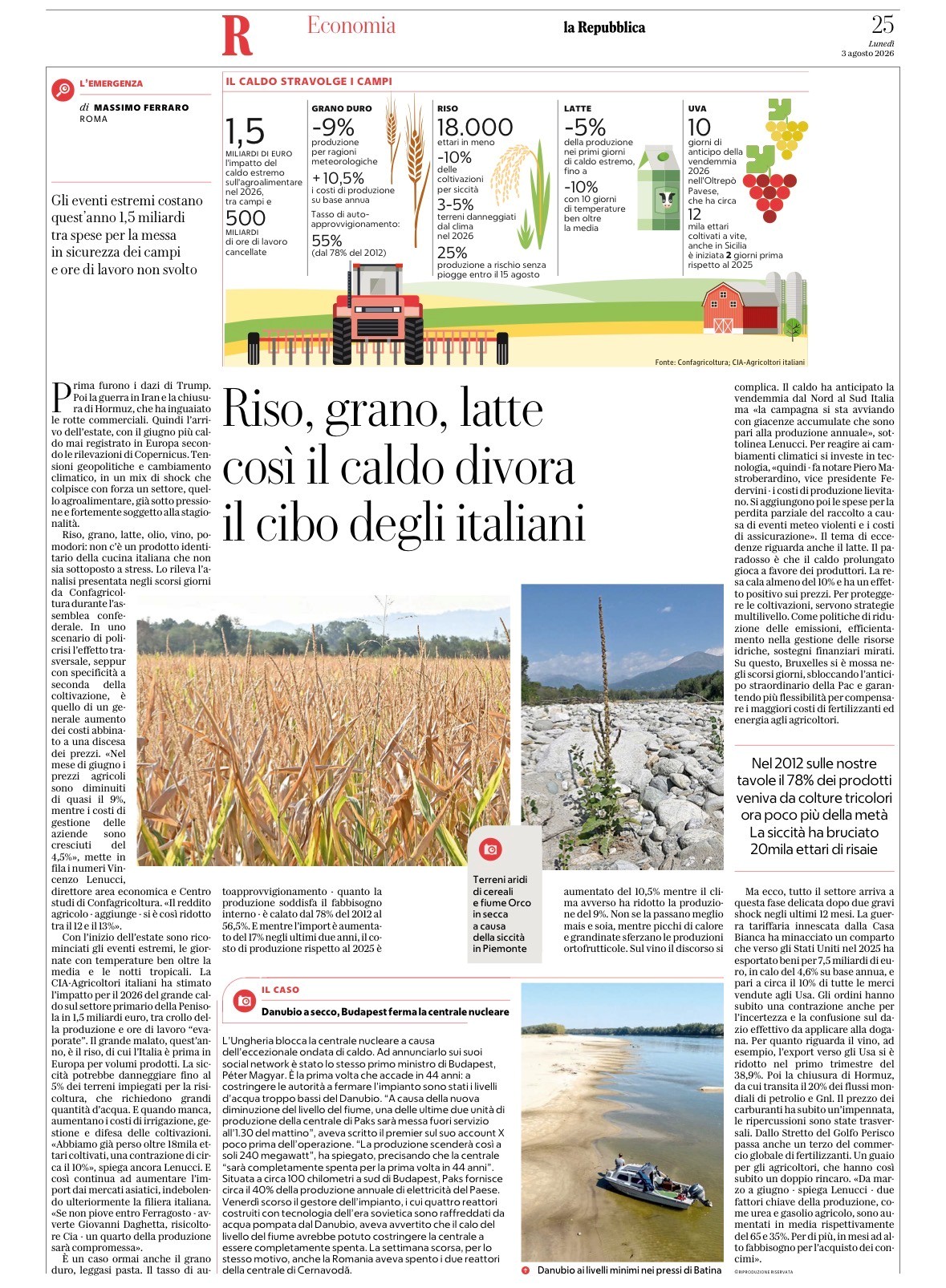
During the recent years of drought, production in Puglia has fallen by more than half in a single season.
“The 300 million is available to the National Olive Plan and therefore for the whole of Italy. Unfortunately, the slowness seen in recent years in adopting strategies to effectively combat Xylella has allowed the bacterium to spread across ever-larger parts of Puglia, and it has also appeared in other regions…”
In essence, Undersecretary La Pietra does not know whatheis talking about.
The ColtivaItalia bill will only become law in several weeks’ time (after passing through the Senate), and the €300 million for the National Olive Growing Plan risks arriving too late; furthermore, the use of European funds to combat an epidemic outside the areas where Xylella fastidiosa var. pauca is present could create some problems with Brussels.

The olive oil sector is plagued by the same confusion as the wine sector, which is a shame because, unlike wine, the global olive oil market continues to show solid prospects for growth.
Premium and organic oils now account for 27 per cent of total sales, compared with 19 per cent in 2019. This trend is particularly evident in North America and Asian markets, where rising disposable income means consumers are willing to pay a premium of between 20 and 30 per cent for certified, traceable oils that meet high quality standards…
The most promising growth prospects come from Asian markets. In 2023, China and India accounted for around 15 per cent of global olive oil imports and could reach 22 per cent by 2028.
Global production remains concentrated in Mediterranean countries. Spain remains the leading producer, accounting for around 44 per cent of global supply, followed by Italy with 15 per cent and Greece with 13 per cent.
At the same time, investment is increasing in emerging countries such as Tunisia, Turkey and Morocco, which are expanding their production capacity to strengthen their presence on international markets.
Companies are investing in increasingly efficient cold-extraction technologies and digital supply chain traceability systems – essential tools for ensuring quality, authenticity and transparency for consumers.
Rising temperatures and irregular rainfall in the Mediterranean basin have led to a reduction in olive yields estimated at between 3 and 5 per cent per year since 2020. This situation makes investment in efficient irrigation systems and the development of drought-resistant cultivars essential…
On the economic front, the volatility of olive oil prices – influenced by production trends, exchange rates and geopolitical tensions – continues to squeeze profitability, particularly for smaller farms.
Increasing regulatory obligations are also driving up costs. Businesses must make ever-higher investments to comply with requirements relating to labelling, residue testing and quality certifications, with costs that in some cases can reach up to 15 per cent of annual turnover.
This situation highlights not only missed opportunities but also points to a flood of additional costs for businesses, which will translate into higher inflation for Italian consumers.
And this is where:
1) large-scale retailers should keep prices in check rather than taking advantage of the situation, as they are doing, for example, withfruit: prices paid to producers are plummeting, by as much as 34 per cent. Meanwhile, prices are rising within the large-scale retail sector.
2) the government should launch a ‘water plan’, but all trace of it has been lost. Coldiretti reports: over 3 billion in damage to Italian agriculture due to heat, drought and fires. The north is in crisis and harvests are down by up to 70 per cent. Coldiretti is calling for more reservoirs: Italy retains only 11 per cent of its rainwater.