

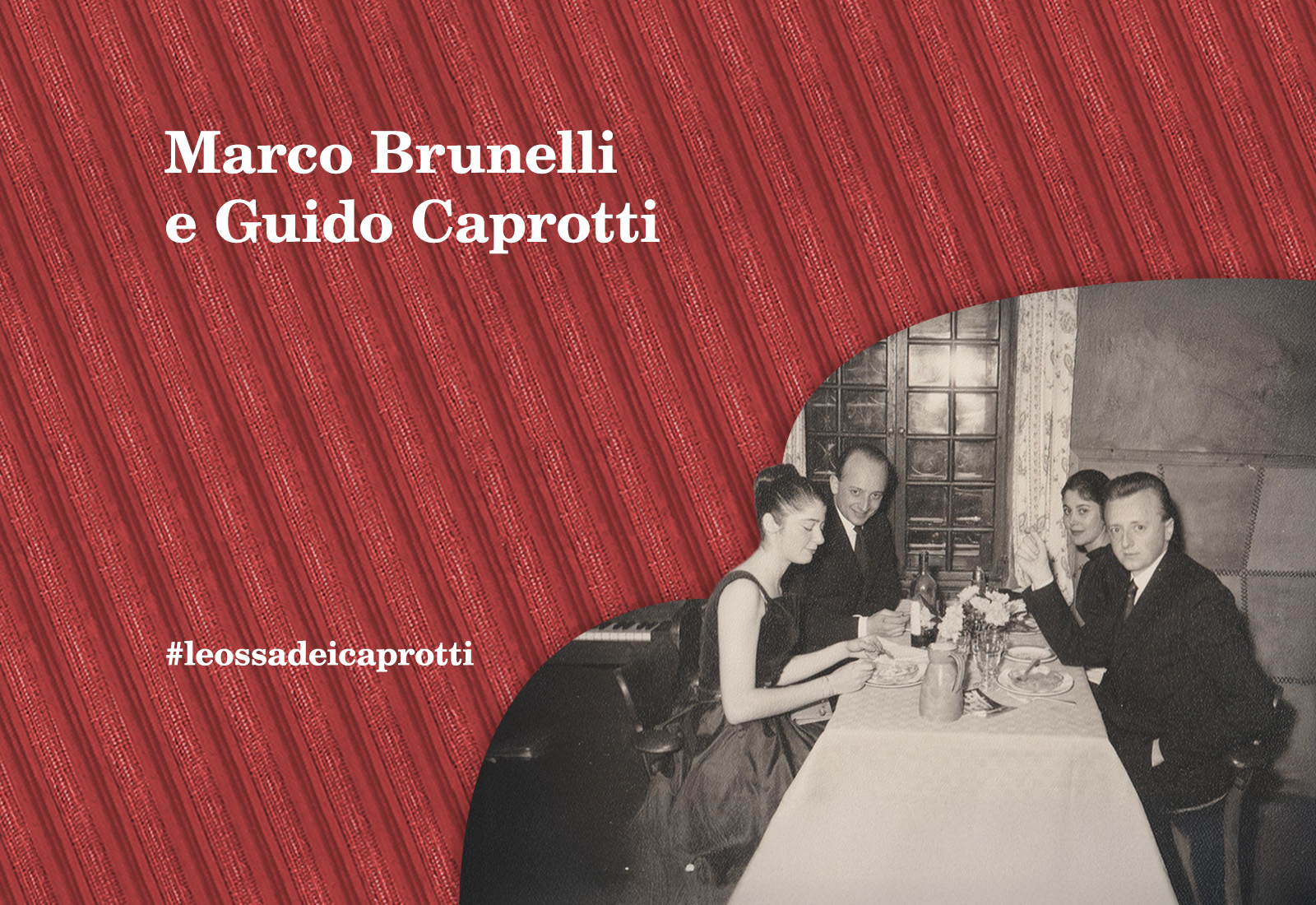
‘ A few sentences, spoken louder than necessary. In our family we used to say thatEsselunga had come into our lives like that, thanks to the chatter involuntarily overheard by my uncle Guido and his great friend Marco Brunelli in the toilet of the historic Palace Hotel in St. Moritz (…).
Speaking without caring enough who might be listening was Cesare Brustio (…). Brustio explained to an acquaintance that Nelson Rockefeller was planning to send some of his men to Italy with the aim of opening supermarkets and was looking for local partners who were willing to remain in the minority. With the energy of the 25-year-olds, Uncle Guido and Brunelli, who had become friends at the end of the war, rushed to Albiate to warn my father Bernardo and all together they managed to steal the deal from the Brustios and the Borlettis, going into partnership with Rockefeller and opening Italy’s first modern supermarket (…).
I had always considered this story as plausible, at least in broad strokes (…). However, on a summer’s day in 2019, I had the opportunity to meet Marco Brunelli, who revealed some facts I was not aware of (…).
Unfortunately, Marco Brunelli ‘s account clarifies, once and for all, that the story of St. Moritz is at the very least fictional. (…)”. (pp. 42-43). (…)
It was (…) Guido’s great friend who got my uncle and his brother Bernardo into a partnership with Rockefeller. This was confirmed by a (…) memorandum that was sent to the American tycoon (…) describing the shares that the Italians would have in the new company and indicating who should sit on the board of directors.
The writer was (…) Wallace Bradford, who refers to the key role of Brunelli, Bertolini and the Crespi family and (…) shows that he knows very little about the two newcomers: ‘It is foreseen that the oldest of the Caprotti families (I’m not sure which of the two is he) will be part of the board of directors’. (…)’ (pp. 59-60).
Confirmation that the Americans did not know who The Caprotti family were, and who the head of the family was, is given by Nelson Rockefeller‘s telegram of thanks, after the famous dinner with the rolls eaten by Guido Vergani,which was sent to Guido Caprotti.


