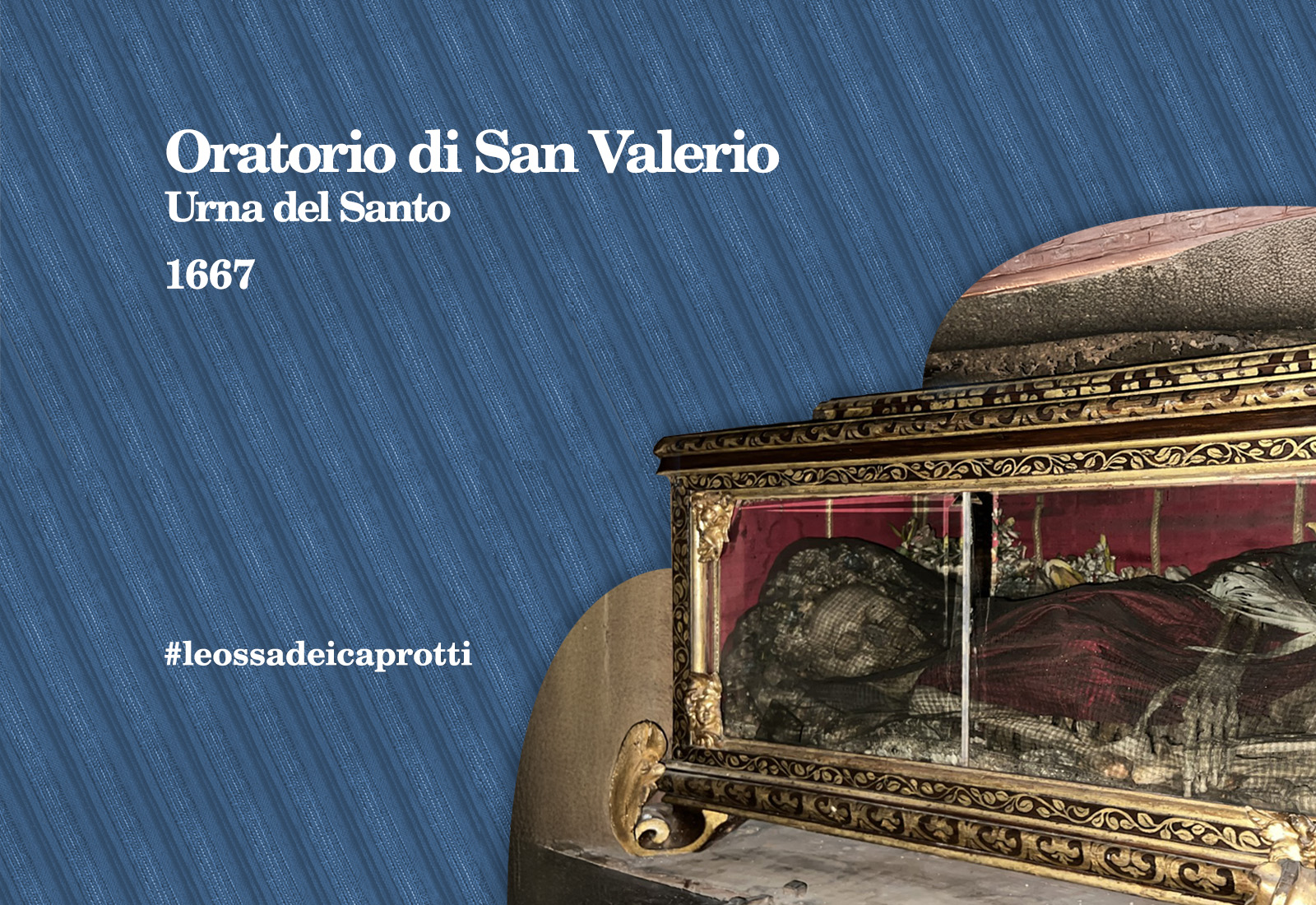
Drafted 25 February 2022, updated 24 July 2025 The Saint is an important figure in my book, Le Ossa dei Caprotti. In the martyrologies, books containing the lives and acts of Christian martyrs, the Church records several saints named Valerius. The relics preserved in the oratory of the same name in Albiate belong to a San Valerio who was martyred in Africa with Saint Rufinus at the time of the great anti-Christian persecutions (3rd-4th century AD), and whose name day is set, together with that of his companion, at 16 November, the day on which the oratory is opened and mass is celebrated. In the 1660s( c.1670 ) to Monsignor Carlo Francesco Airoldi, Bishop of Edessa and papal nuncio (i.e. ambassador) to some of the major potentates of the time (including the Grand Duke of Tuscany and the Republic of Venice) Franco Perego explains the historical event very well: ‘…Marcellino Airoldi (1610-1665), was a well-known Lombard financier-banker. Already in 1628, “versato nelli negozi di cambi” (versed in foreign exchange trading), he had registered with the “mercanti di strada” (street merchants) and in 1647 he acquired the fief of Lecco, taking the title of Count in 1649. His credit relations with Spanish exponents are also attested on Ligurian soil. One wonders if the seller of the villa was the renowned scholar-collector Marco Cremosano (1611-1704), coadjutor of the Milanese Notary Chamber of Commerce and author of a voluminous heraldic work, the so-called Stemmario Cremosano (1673), kept in the State Archives of the Lombard capital, in which the coat-of-arms of the Municipality of Albiate is also recorded. The contractual deed of purchase was drawn up by one of Milan’s most renowned notaries, Giovanni Battista Aliprandi ‘active between 1618 and 1655’. The enterprising Marcellino, son of Giovanni Battista and Drusiana Invitti, husband of Maria Diano, widow of Antonio de Lara, was the parent of Cesare and Carlo Francesco, who played an important role in the events of the villa. In fact, it was Cesare, invested in 1649 with the office of General Treasurer of the State of Milan (an office held by the Airoldi family ‘for four generations’), who in 1667 promoted the building of the adjacent Oratory, originally dedicated to the Immaculate Madonna. And his brother, the prelate Carlo Francesco, worked to place the body of San Valerio the martyr, from the Roman catacombs, in that church. The relic was given to him by the pope for merits acquired together with the other relics, a sign of his high regard. Hence the name, still widespread, of Villa San Valerio…’. It was the time when the Roman catacombs had only just been discovered, and the relics of the martyrs buried there, which were the object of particular devotion, were so sought after that the tombs were desecrated in order to steal them, so much so that the popes imposed excommunication on all those who took possession of the martyrs’ remains without authorisation. The pontiffs themselves, however, could make gifts of relics to meritorious prelates of the Curia, or to nuncios, or to laymen who had particularly distinguished themselves in the service of the Holy See. The greater the size of the relic, the greater the importance of the gift and, consequently, of the donee In order to worthily welcome the homage made to him personally and to his family, Airoldi had the oratory dedicated to the Immaculate Virgin Mary restored and enlarged, annexed to the family property in Albiate (now in the province of Monza), located opposite the entrance to the residential Villa San Valerio, and had it named after San Valerio. Below: the Airoldi coat of arms Airoldi coat of arms The donation document of the important relic – not everyone was given a whole body! – has not yet been traced in the Airoldi archive kept at Villa San Valerio: it may even have been lost, given the precarious state of preservation of the deed of donation of the relics of other saints still on display in the oratory Wax seal On the back of the wooden and crystal reliquary containing the body of San Valerio are clearly visible the wax seals with the coat of arms of Monsignor Carlo Francesco Airoldi who affixed them to guarantee their authenticity. [1] See P.P. Bosca, Martyrologium Mediolanense, Milan, 1695, ad datam. Brief information can then be found at Text edited by Eleonora Sàita. Read also : A brief history of Villa San Valerio and the adjacent chapel in Albiate San Valerio martyr, 3rd-4th century A.D. The interventions on the church of San Valerio (2010) Below : the first two pictures were taken during the mass officiated by Don Renato on 16 November 2024Original title : San Valerio Protomartyr of Africa