

First draft October 2016, last updated 1 August 2026
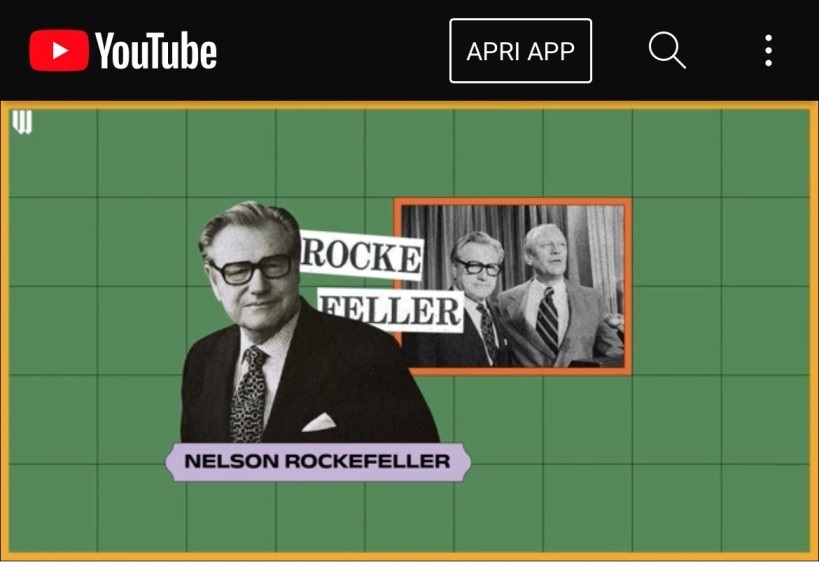
In the article on Ferdinando Schiavoni and the founding of Indicod, and in the one on the origins of Esselunga , I mentioned how Supermarkets Italiani – later Esselunga – was set up and run by Nelson Rockefeller ’s managers from 1957 to 1965.
The AmericansRichard W. Boogart (who was from Kansas), Dick Simpson, Wayne Broehl Jr. and Roland Hoodtaught the Italians Ferdinando Schiavoni, Paolo De Gennis and Claudio Caprotti (*) how to set up and run a supermarket with its own storage warehouse.
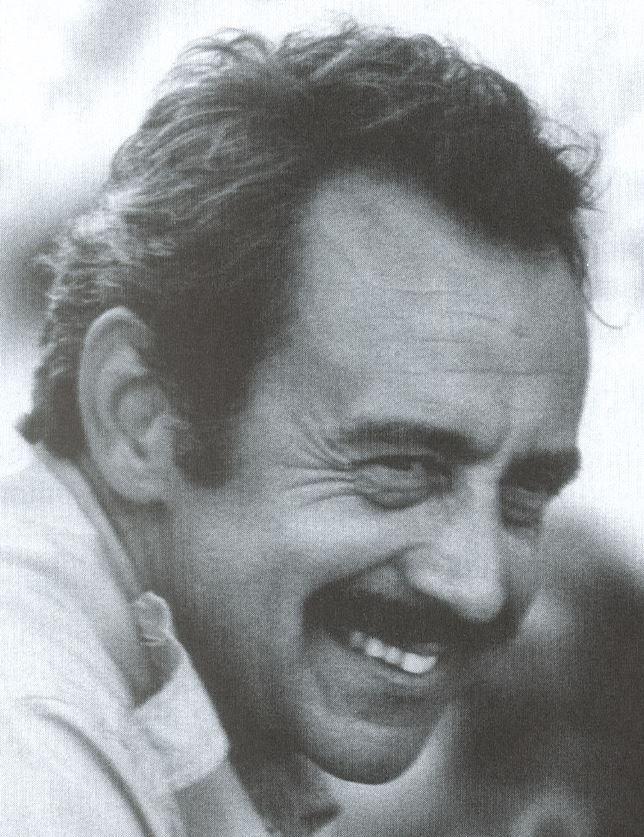
(*) Schiavoni – see photo above – was there in 1957; Claudio Caprotti joined the company in 1961, Paolo De Gennis in 1962, whilst Bernardo Caprottijoined in 1965, by which time Rockefeller’s managers had left.
Claudio learnt the trade at A&P in Philadelphia and Colonial Stores in Atlanta, Georgia
Ferdinando Schiavoni would be my mentor for a time when I joined the company in 1986.
The Americans would also teach the Italians how to implement a commercial policy.
In Emanuela Scarpellini’s *La spesa è uguale per tutti* (Shopping Costs Are the Same for Everyone), in the chapter on ‘The Early Days of Supermercati Italiani’, on page 52 – regarding product sourcing and private-label brands – we read:
Prices were in fact on average 15–25 per cent lower than the prevailing ones, depending on the sector, as shown by the detailed lists compiled and constantly updated by the supermarket’s management (**).
(**) Initially, there was only Regina Giovanna
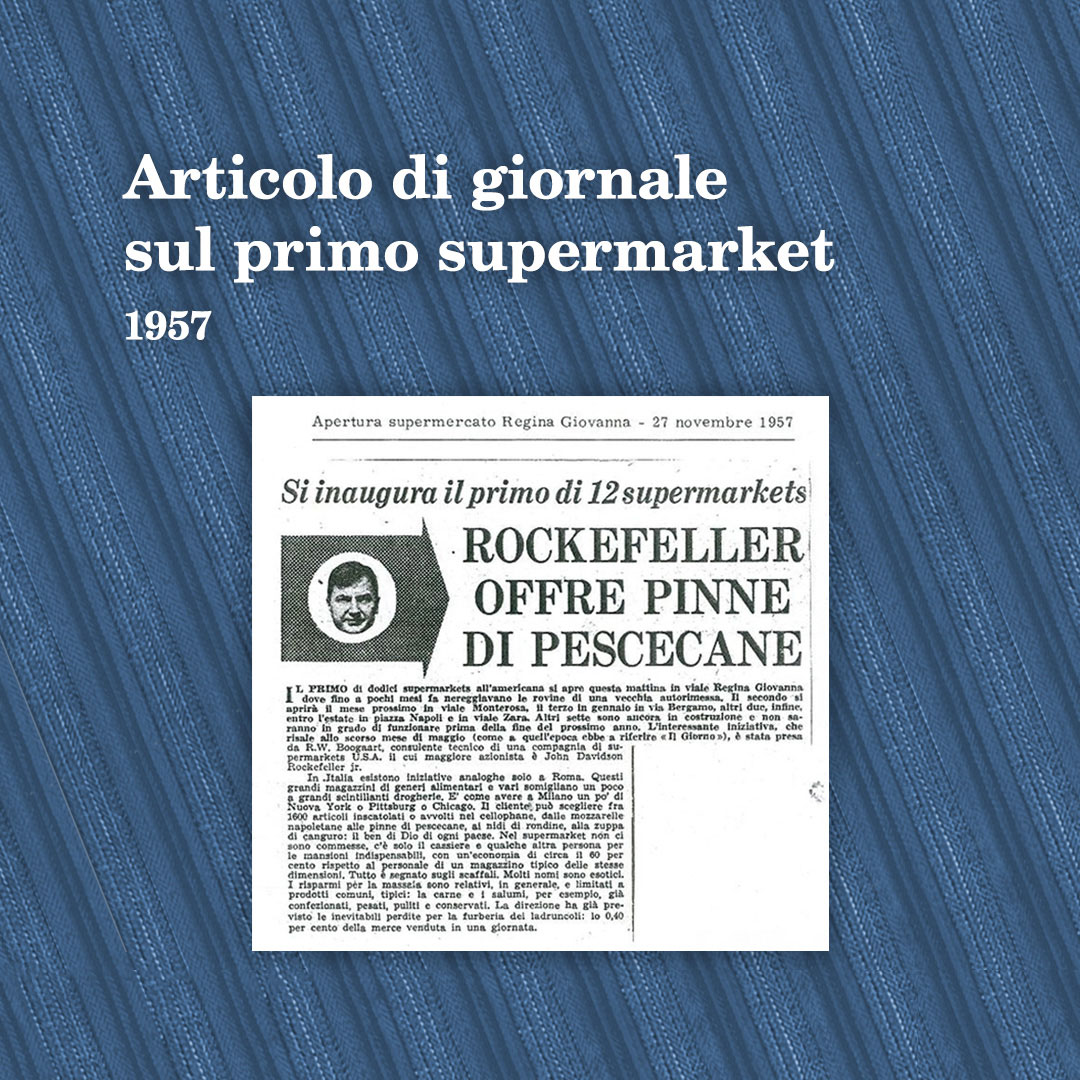
This was made possible by a policy of directly importing certain key goods (beef from Argentina, frozen fish, veal and certain types of cheese from Denmark, tinned fruit from South Africa), thereby bypassing the costly involvement of intermediaries.
As for fresh produce, however, the problem lay in the lack of suitably prepared and inspected goods; a shortfall, as mentioned, attributable to the characteristics and sales policies of the existing food industries.
Supermarkets Italiani therefore decided to start its own production as early as 1959, setting up a bakery whose products were immediately well received by customers (breadsticks and six types of bread, which increased sales fifteen-fold), a large pasta factory producing ravioli, tortellini and gnocchi (“The response in the shops has been excellent. […] The products are of excellent quality and people are saving 50 per cent. It was a real thrill for us to sell one of Italians’ favourite food products at a price they had never seen before”) and an ice-cream parlour ( which managed to sell even during the winter, unlike Italian producers who suspended their operations”)…..
In 1960, these were joined by a coffee roasting plant – which produced “a product of excellent quality at prices which, it is fair to say, are unrivalled on the Milanese market” – and a warehouse for the processing and storage of cured meats and cheeses, which were cut and packaged according to sales requirements, resulting in significant cost savings.Furthermore, for the production of eggs – which until then had largely been imported – the company utilised another US firm linked toIBEC, Arbor Acres, which had developed a particularly prolific and high-quality breed of poultry. From the mid-1960s onwards, Supermarkets Italiani then began to develop plans to produce eggs, chickens and rabbits in-house.
Nor were there any lack of early attempts to capitalise on the brand name. The supermarket entered into agreements with various producers to exclusively package a range of products (sweets, vegetables, soap, wine, oil and vinegar) under a specific label, with savings ranging from 10 to 50 per cent; savings that were largely passed on to consumers with the aim of increasing overall sales volume.
The solution to the supply problem was therefore to achieve vertical integration in order to control the production and processing of goods, both to keep costs down and to ensure the products met the desired specifications. At the same time, this approach at least partially circumvented the refusal of some suppliers to cooperate, due to their fear of being boycotted by small retailers… “many companies, for this reason, even refuse to submit offers for their products to us”.
Beyond the originality of the organisation – which combined specially packaged products with fresh produce particularly favoured by customers – it is worth noting that, in this case, large-scale retail adopted cutting-edge solutions compared to the food manufacturing sector, anticipating production methods that would only become widespread in subsequent years. And this provides further evidence that the new supermarkets’ competitive edge lay not so much, or not solely, in their prices, but in the quality factor, which partly distinguished the Italian case from other international examples.
The quoted statements are by Richard W. Boogart, the first managing director of Supermarkets Italiani: ‘Boogart’s policy not only centred on cheap prices but recognised that quality was also an all-important factor.’ (Boogart’s policy was not focused solely on low prices but also on quality.
As Alessandro Barrico later added: “When Boogart opened his supermarkets, he found himself up against a lot of people. Many were defending their own interests (the local butcher), many were looking to make a profit (a typical Italian trait) and many sensed the ideological implications – namely, the silent advance of the American cultural model…However, no one could come up with any truly convincing arguments against the supermarkets. The communists, who were usually quite adept at that sort of thing, could come up with nothing better than to denounce how, by not offering credit, the supermarkets were discriminating against the poorest people – those who paid the grocer when they could: not much to stem the tide of modernity. Thus, the absurd idea of the supermarket proved to be a move to which there were no answers, and in the long run one of the moves that led the United States to win the cultural and economic game they played against us on the chessboard of Europe…”
Among the winning moves – within the supermarket itself – was certainly that of the own-brand range, as it provided access to food at affordable prices for large sections of the population.
When I joined Esselunga in 1986, I found the following situation: a bakery, a pasta factory, an ice-cream parlour and a coffee roasting facility. I phased out the latter because the price of coffee fluctuated wildly: sometimes we made a profit on our own-brand coffee, but very often we lost money.
The fictional coffee brands (such as Khan, pictured below) are no longer produced by Esselunga but by the branded goods industry.
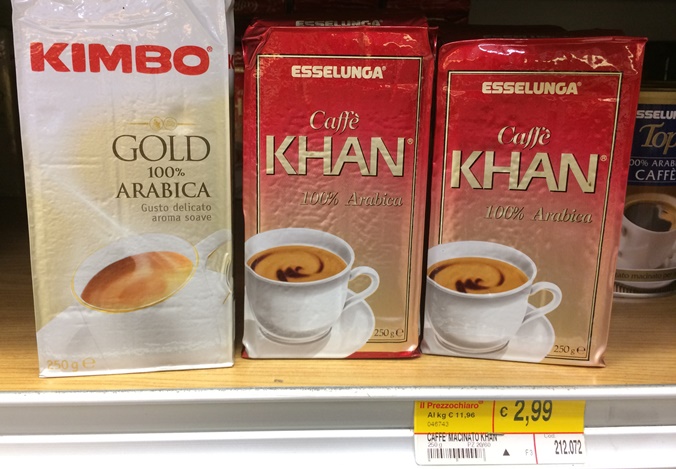
Esselunga-branded products already existed but co-existed alongside fictional brands such as Briciola, Nutron, Maggiolino, Kekasa and Naturama, designed by Max Huber in 1973.
In 2003, Naturama and Esselunga Bio accounted for 10 per cent of Esselunga’s food turnover.

Below is a letter of praise from a customer (*) regarding my environmental policies at Esselunga, which – in my mind – could have been the‘ItalianWhole Foods ’.
(*) Further letters from customers are available in the ‘What People Say About Me’ section of this website.

Below are some of the Esselunga brands I launched from 1994 onwards, in collaboration with Violetta Caprotti andArmando Testa of Turin. The only exceptions are the frozen vegetables, which were the first Esselunga-branded products launched by the Milan-based chain in 1979.
You can read about the origins of Esselunga Cola in *Esselunga vs Coca-Cola*.
On the ‘American dream’, exported from the USA, read: *Supermarkets: The Revolution is 50 Years Old*
All the events surrounding the birth of the Esselunga supermarkets and the own-brand range are recounted in the book*Le Ossa dei Caprotti* (The Caprotti Family), Milan, Feltrinelli 2023. Images: Giuseppe Caprotti archive, Albiate.


