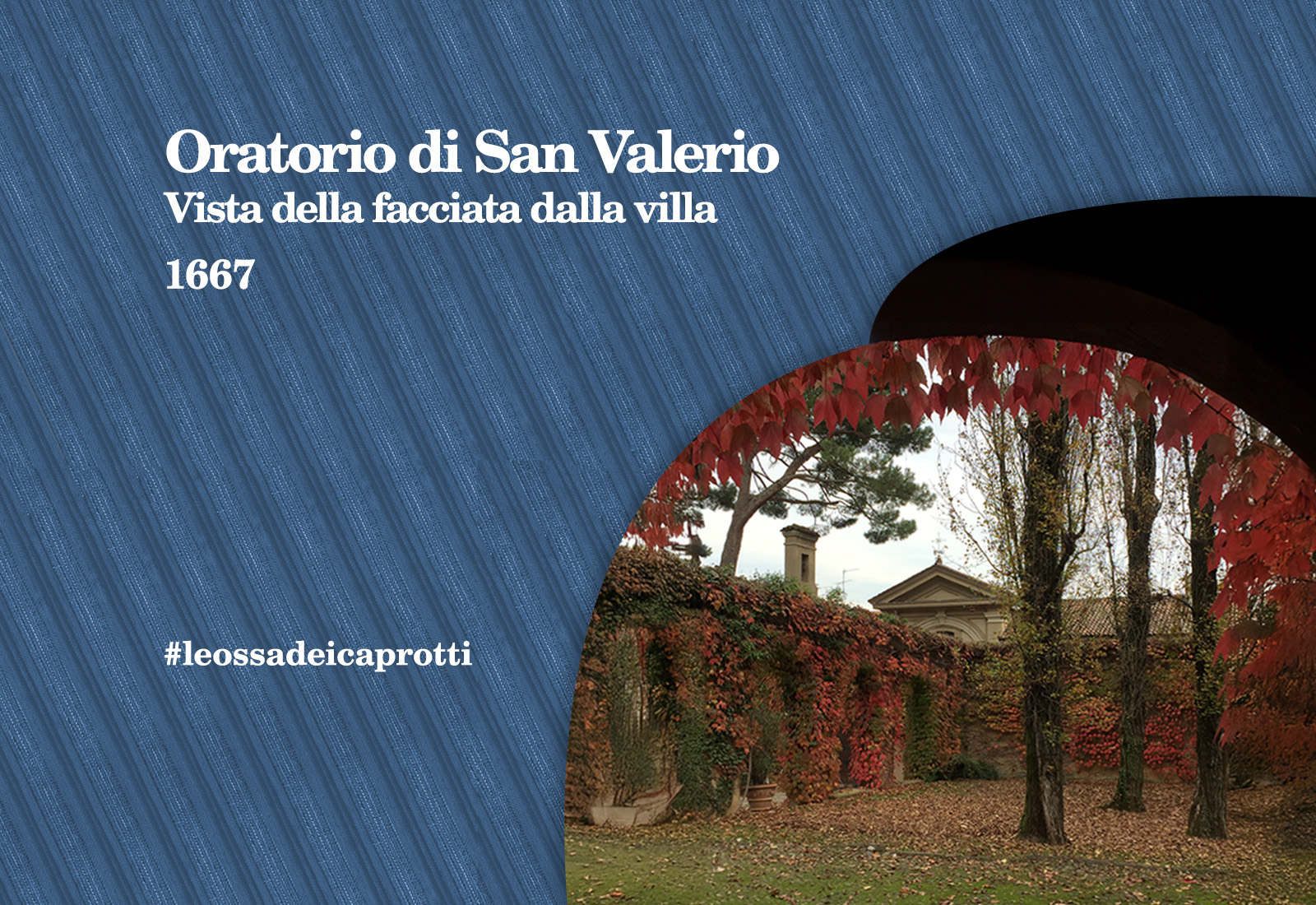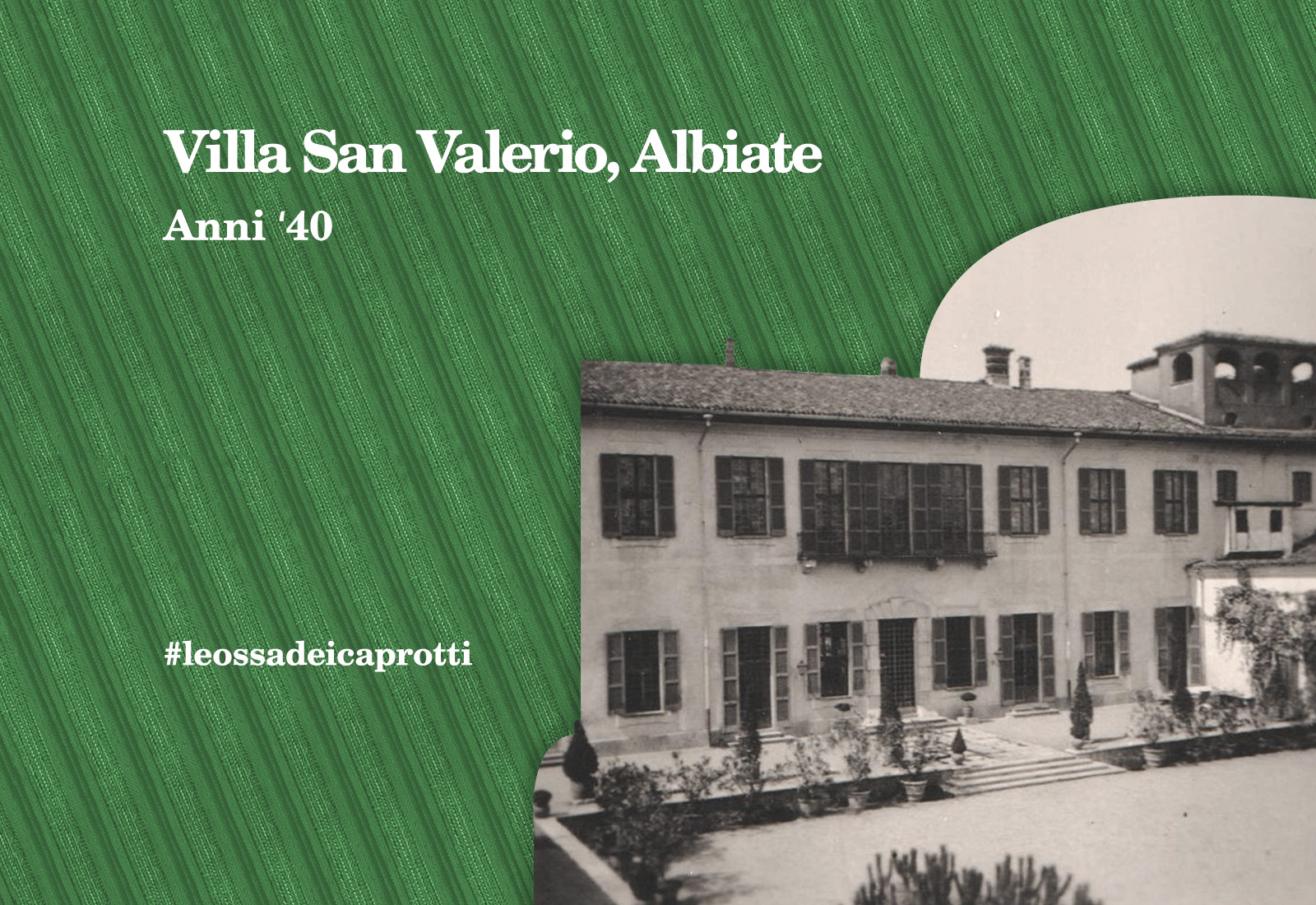
Villa San Valerio, formerly Airoldi (it is one of the places where the plot of my book, Le Ossa dei Caprotti, takes place ). Edited 16 October 2011, updated 23 July 2025 1573 From the ‘stato d’anime’, compiled by the curate pro tempore, Albiate has 49 families. Early 17th century The villa was built by incorporating three existing buildings. Built in a dominant position overlooking the Lambro valley, this location made it possible to create the spacious terrace-belvedere at the back of the building. Also of note are the vast green areas of the park with hedges and trees, including a majestic centuries-old oak that has reached the age of 180 years. 1640 1640 – 1720 ca. The Airoldi family, general treasurers of the state and army of the Duchy of Milan, undertook extensive extension and restoration works that gave the villa the structures and much of the decoration still preserved today. The building has stylistic elements close to those of Francesco Maria Richino (1584 – 1658), one of the best known architects in Milan at the time. 1666 – 1668 Construction and subsequent extension of the small private oratory dedicated to San Valerio, located opposite the entrance to the residential villa. Initially dedicated to the Immaculate Virgin, it was restored by Monsignor Carlo Francesco Airoldi, bishop of Edessa and papal ambassador to some of the major potentates of the time (including the Grand Duke of Tuscany and the Republic of Venice) when the body of the protomartyr Valerio (after whom the oratory was named) and the relics of other martyrs were donated to him by the Holy See. The altarpiece is the work of the painter Francesco Quadrio. 1685 First documentary news about the Caprotti family: Antonio, son of Giovanni Battista, buys some land in Albiate. 1751 The census of that year shows that the municipality, belonging to the parish of Agliate, had about 500 souls. 1830 – 1840 Around this date, the Caprotti family began its activities in the field of cotton textile manufacturing. In 1840, Bernardo Caprotti officially founded the company ‘Bernardo Caprotti di Giuseppe’. 1866 The company “Bernardo Caprotti di Giuseppe” was mechanised. 1876 On the death of the last Lombard Airoldi, Marquise Stefania, an inventory of her possessions was drawn up: furniture, linen, paintings, etc. room by room. 1893 When the main branch of the Airoldi family became extinct in 1768, the inheritance passed to a secondary branch that had moved to Sicily, whose last heirs at the end of the 19th century decided to liquidate the Lombard properties, which were sold at least in part (including the villa, but not the oratory, owned by the parish priest of Ranco) to the brothers Bernardo, my great-grandfather – known as Nardo-, Antonio, Emilio and Giovanni Caprotti di Giuseppe. With the sale, as was customary at the time, a large part of the family archive with the history of the properties sold and their administration, as well as the history of the Airoldi family itself from at least the 16th century, also passed to the new owners. 1945 The archbishop of Milan, Cardinal Idelfonso Schuster, wants to deconsecrate the oratory. The parish priest, Fr Felice Milanese, opposes this and manages to buy the building from Fr Edoardo Bonzi, parish priest of Ranco. 1950 The oratory of San Valerio is finally purchased by Giuseppe Caprotti – Peppino Caprotti’s grandfather– after an archiepiscopal decree allows the church to be rejoined to the villa. The deed contains the condition of use, established by the decree, according to which the parish priest pro tempore of Albiate retains the right to officiate there. Thus the wish expressed by Giuseppe Caprotti, my grandfather, mayor of Albiate from 1951 to 1952, the year of his tragic death in a car accident, was fulfilled. 1957 Major restoration and adaptation work was undertaken on the villa under the direction of architect Luigi Caccia Dominioni, particularly on the upper floors. The work brings to light an ancient medieval tower incorporated and perfectly absorbed structurally into the building, where the main kitchen is now located. Whether the ancient castle of the Visconti family mentioned as existing in Albiate by some historians could have found a home here, is a plausible question, given the nearby locality, in a higher position, whose toponym is precisely ‘Castello’. Eleonora Sàita, Francesca Albani, Giovanni Francesco Perego Sources and reference Bibliography: Albiate, Villa San Valerio, Airoldi counts of Lecco, House archives, inventory edited by E. Sàita Albiate, Villa San Valerio, Caprotti Archives, inventory list edited by G. Cappelletti Milan, State Archives of Milan, Notarial Archives, notary Gio. Battista Aliprandi fu Luigi, piece no. 27518, deed of sale 17 March 1640 Ministero per i Beni Culturali e Ambientali, Albiate – MI – Villa Caprotti garden and oratory. Historical-artistic report by arch. A.M. Terafina, 25 October 1991, datt.
Marcellino del fu Giovanni Battista Airoldi, General Treasurer of the Duchy of Milan, buys from the Milanese notary Marco Cremosano a vast property in the countryside comprising several buildings and land located in the territories of Albiate, Carate and Triuggio, including today’s Villa San Valerio, a stately building with a garden with a grotto and water features, a sign of considerable social distinction. Albiatese’s property, which was very extensive, also bordered on the property of the de Homodeis brothers (today’s palace in Piazza Conciliazione), as shown by the deed.
The 17th-century coffered ceilings inside the villa are for the most part authentic, as are the fireplaces, among which a large chimney with an 18th-century firewall stands out. Also 18th-century are the frescoes and decorations that still adorn many parts of the house.
In 1678, another cardinal of no little importance, Luigi Alessandro Omodei (1608-1685), whose family, as we have seen above, held property in Albiate but above all built the magnificent palace in Cusano Milanino, also obtained the whole body of a martyr, St Hadrian. Mindful of what the Airoldi had done in the oratory of their property in Albiate, Omodei repeated the scheme, placing the relics in a crystal urn placed above the altar and under a large altarpiece in a rich gilded wooden ancon. Unlike San Valerio, however, which is still there, St Hadrian’s urn was entrusted to the church of San Martino e l’Immacolata in 1985 due to work on the oratory, and it is still there.
That the oratory remained open to popular veneration was and is an important value, given that the devotion to the saint is still very much alive, as could be seen in November 1980, on the occasion of the temporary transfer of San Valerio’s body to the parish church, promoted, after agreement with the Caprotti family, by Father Giuseppe Sala, successor to Father Milanese, and every year on the occasion of the religious memory of the martyr Valerio, on 16 November, when the doors of the oratory open for the liturgical celebration in his honour, and the faithful and simple visitors crowd the small space all day long. San Valerio also has its own civic value with the awarding of the Prize named after him, which was established on 22 September 1990 by the local editorial office of the newspaper ‘il Cittadino’ in order to highlight, by means of an award, those citizens who work fruitfully without clamour. The munificence of Guido Caprotti (1929-2012) was significant for the implementation of the Prize. Since 2001, at the request of the then mayor Filippo Viganò, the editions of this event, which has now become a tradition, have been held under the aegis of the municipality.