Compiled 2 February, updated 14 February 2026
This is a translation of an excerpt from an October 2025 article highlighting consumption trends in the US market as seen through the index of Whole Foods, the organic food chain acquired by Amazon in 2017.
We have added some thoughts on the US Department of Health’s food guidelines.
Fibre is the new protein, while tallow is taking over
Whole Foods Market’s 2026 forecast predicts that shoppers will look to ‘kitchen couture’.
It is the most wonderful time of the year – the time when the food industry is awash with ‘Top 10 Food Trends’ lists.
But one annual forecast always stands out: the Whole Foods Market Trends Report.
Now in its ninth year, the 2026 edition reads like a retail roadmap – a reflection of how retailers should interpret consumer values when it comes to merchandising, sourcing and operations.
Developed by the retailer’s Trends Council, made up of binders , shoppers, category merchants and culinary experts, the list brings credibility that most forecasts cannot match.
“Each year, our Trends Report captures the pulse of what’s next in food, and 2026 is no exception,” said Sonya Gafsi Oblisk, Chief Merchandising and Marketing Officer at Whole Foods Market. “This year’s themes highlight how curiosity, creativity and conscious choices are shaping the way people eat and shop.”
For 2026, the Trends Council predicts a food landscape defined by what it calls “curiosity with a conscience”. The eight themes blend wellness, nostalgia, design and purpose – each rooted in observable behaviours from shops, trade shows and startup incubators.
Two of the clearest examples are Tallow Takeover and Focus on Fiber.
Both signal that health and functionality are moving away from novelty towards credibility [???].
Consumers are rediscovering ancestral ingredients such as beef tallow… for its flavour and sustainability benefits, while fibre is emerging as the new protein, advocated for gut health and balance.
Rather than chasing exotic ingredients, Whole Foods sees shoppers leaning towards simplicity, transparency and science-backed nutrition [???].
The US administration – for its guidelines – has followed certain fads such as tallow. It has also certainly been under pressure from the lobbies on alcohol, meat and milk.
The only positive sign is on ultra-processed products but … it is up to a point as the question is: “how do I as a US consumer avoid them if I don’t know what they are called and especially if I have no money to buy alternative food?”.
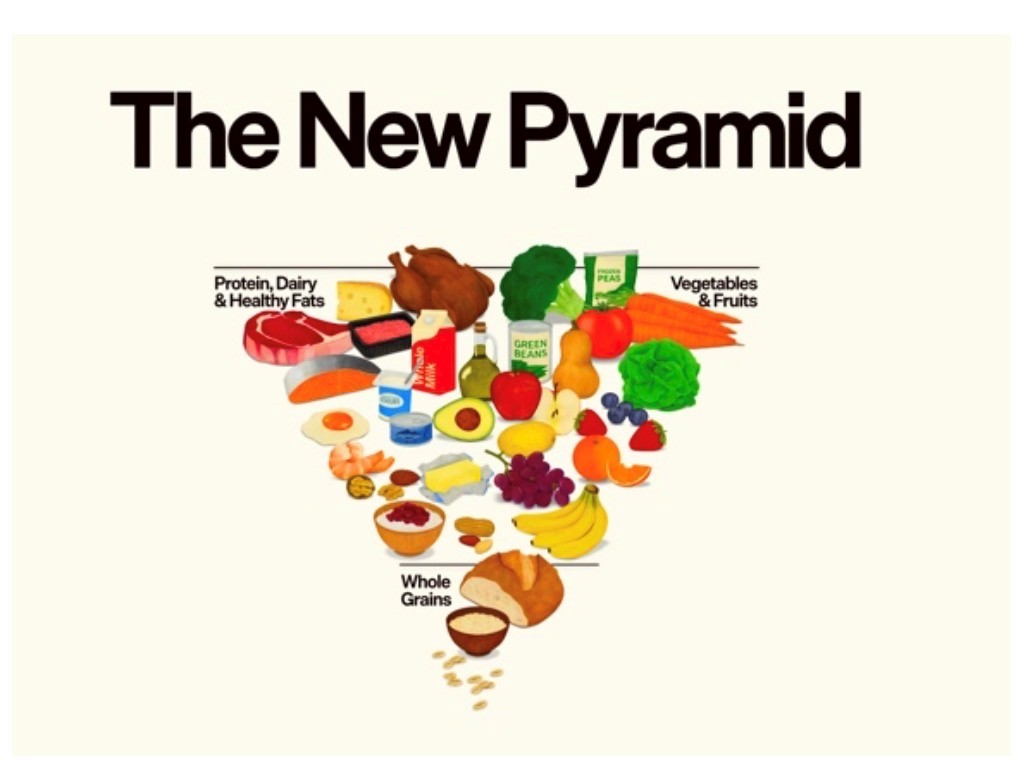
Heavy judgment from Le Monde: “Eat real food. The new slogan of the MAHA (Make America Healthy Again) movement, sounded on Wednesday 7 January by the Secretary of State for Health, Robert F. Kennedy Jr., who presented the latest US nutrition recommendations, will in itself find few detractors.
The United States is suffering from an epidemic of obesity (affecting about 40 per cent of the adult population) and chronic diseases, such as type 2 diabetes, which affects more than one in ten Americans. But while no nutritionist or doctor’s epidemiologist will find fault with the call to eat fresh, raw produce, reduce added sugars, and drink water rather than soda, the new recommendations are met with consternation from the scientific community despite these common sense messages.
In particular, the call to eat more protein, especially meat and dairy products, the emphasis on the consumption of saturated fats (especially animal fats, Robert Kennedy actively promoting cooking with butter and beef fat), and the abandonment of a clear slogan on alcohol consumption in favour of a more lax message calling simply to ‘limit’ alcohol consumption
Read more about this :
the controversial new US food pyramid.
And indeed in the US: the National Association of Wine Retailers (NAWR) applauded the guide ‘for its adherence to the science on alcohol consumption’.
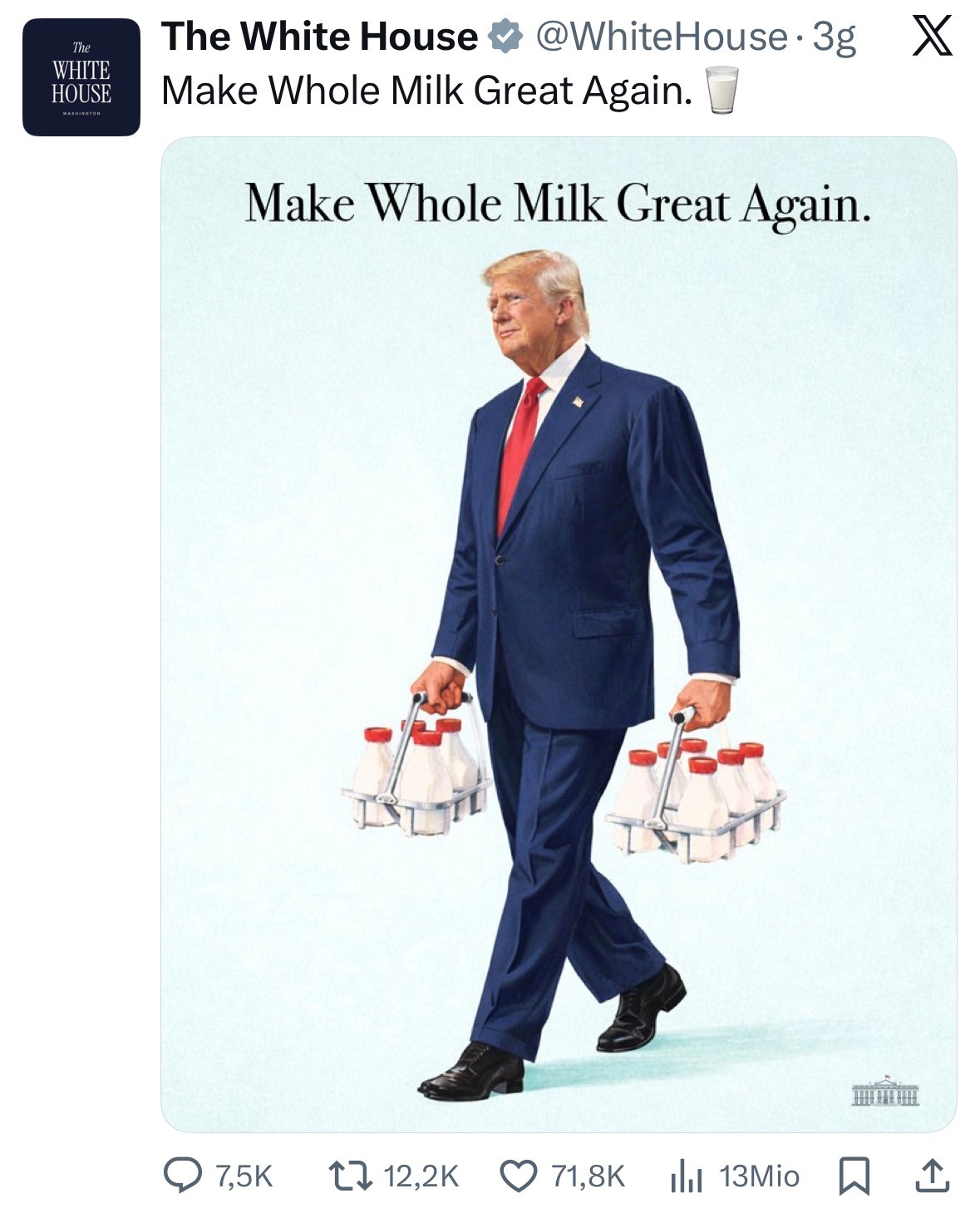
Under the White House’s ‘encouragement’ of whole milk consumption.