Compiled 15 July 2023, updated 8 July 2025
Foreword :
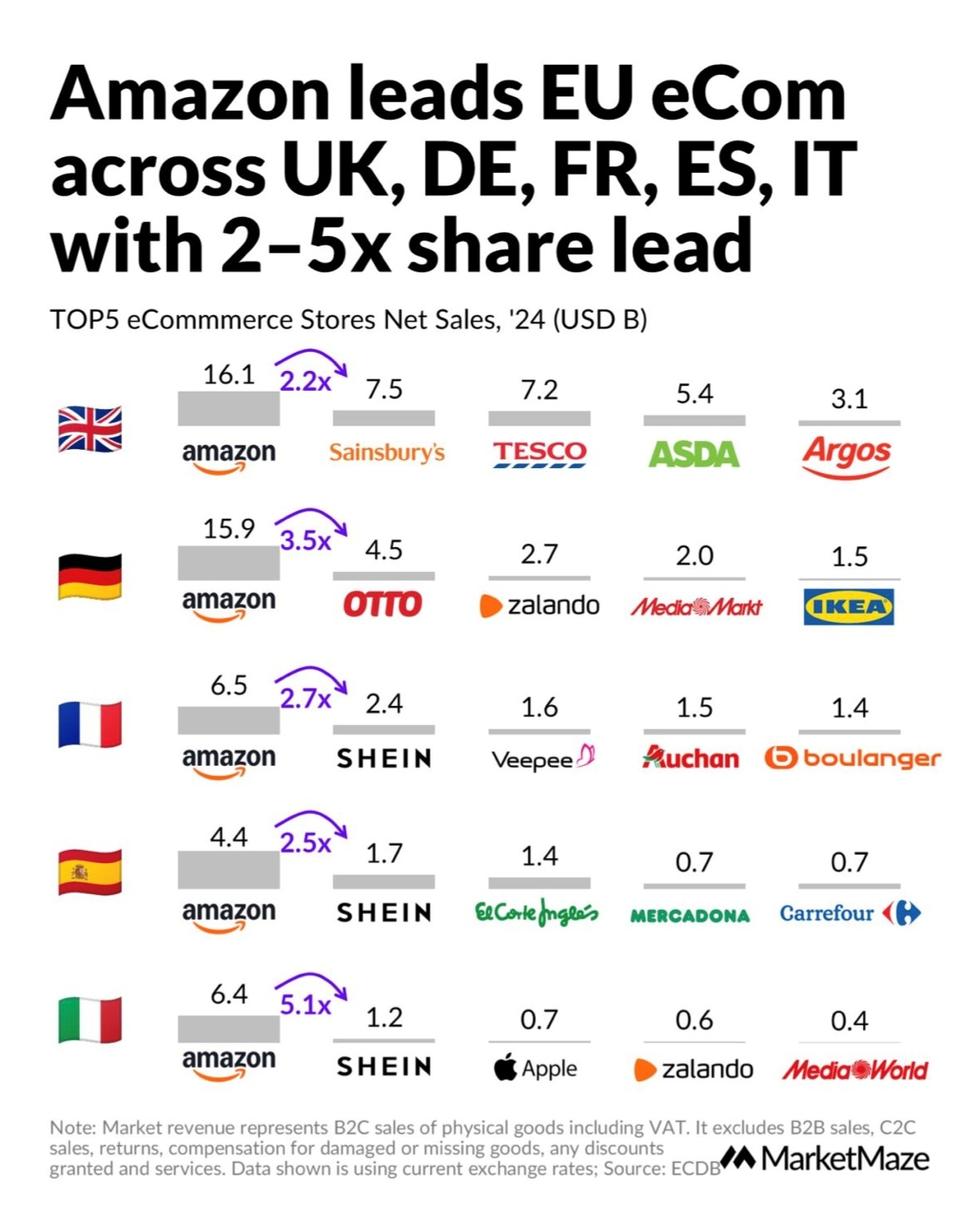
1) Amazon undisputedly dominates the Italian market.
2) Amazon’s data has always been completely opaque.
A study by Onilab (Bicocca University) confirms that Amazon pays less tax than corporations in Italy.
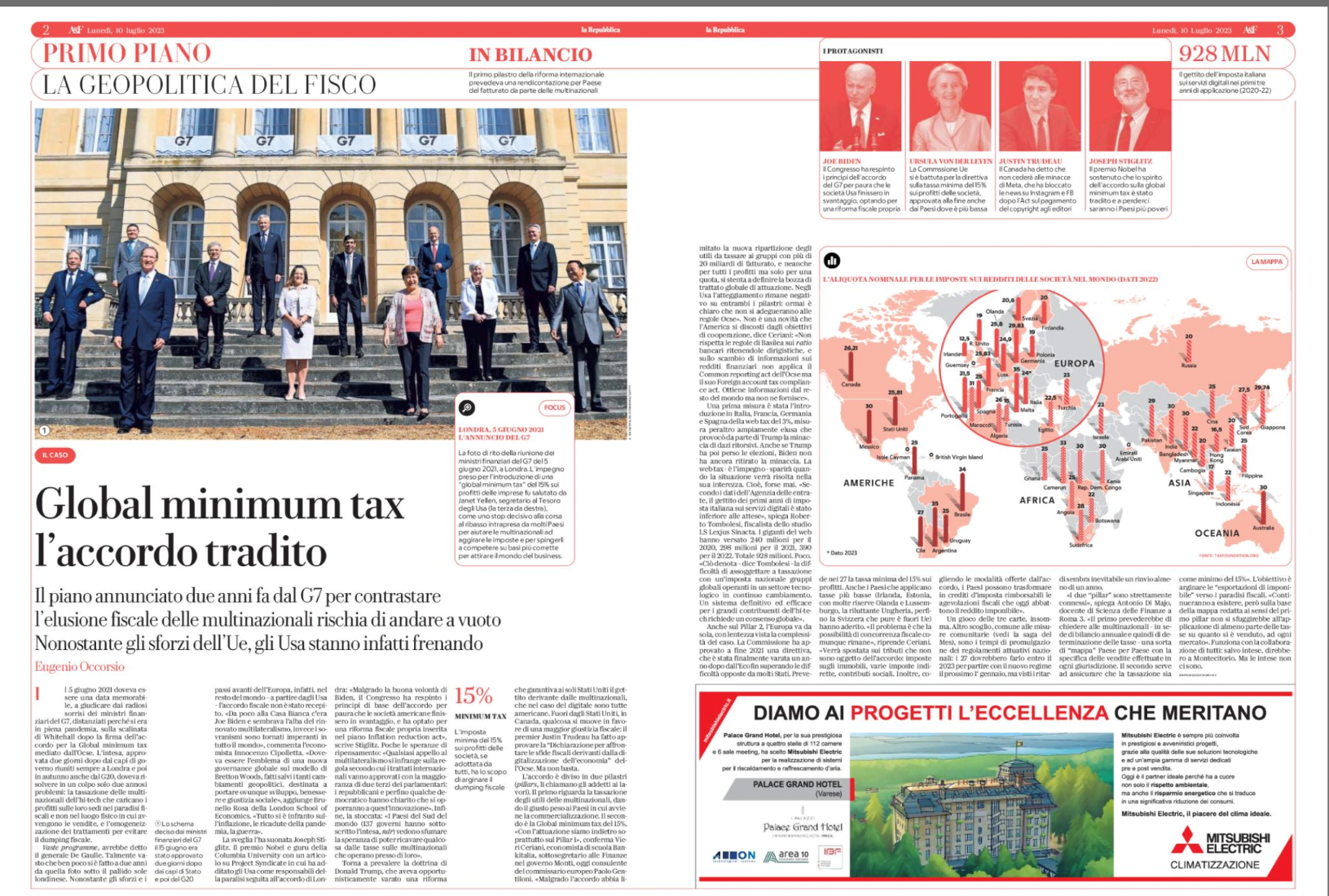
Based on these assumptions, an epochal change was expected, with the advent of the global minimum tax, negotiated at the OECD.
Unfortunately, everything seems to have come to a standstill: countries agree on another 18 months to approve global measures on the taxation of big tech companies – although Canada opposes this because it is launching yet another national tax, which will come into force in 2024.
Local taxes and fines serve little purpose, but other countries, among the 130 present, disagree with the OECD line.
Besides losing another year and a half , the risk of gridlock is high.
But above all, the Federal Trade Commission, Biden’s antitrust arm, which has been fighting Amazon for a long time, was heavily defeated in the Activision Blizzard case (a company that produces video games) : The Microsoft-Activision ruling is a setback for FTC Chairwoman Lina Khan:
In summary : “A California federal judge’s rejection of the U.S. Federal Trade Commission’s request to block Microsoft’s $75 billion acquisition of Activision Blizzard has inflicted an abrupt setback on the regulator’s ambitious effort to strengthen antitrust enforcement under Chairwoman Lina Khan.
Appointed by President Joe Biden, Khan had come to prominence with a paper calling for the dissolution of Amazon.
Judge Jacqueline Scott Corley ruled on Tuesday that the FTC had failed to prove that the mega-merger would harm competition in the video game industry. The details of her ruling revolved around whether Microsoft would restrict its rival Sony’s access to Activision’s hit game Call of Duty, but the resonance of the decision in Washington and corporate America will be much wider…
It has aroused animosity and fear in corporate America for its willingness to use new legal tactics to crack down on anti-competitive conduct, although its efforts have met with mixed results..”
This ruling weakens Khan and the FTC. Breaking up big tech companies or making them pay all the taxes owed to the IRS will be much more difficult from now on.
Although the FTC is trying again with Google (September 2024).
But, back in Europe, when I hear that the Italian government would like to apply and/or tighten the web tax, I can’t help but smile given that Europe’s weak point is the Irish tax haven, which, as of September 2024, has a tax revenue surplus of €8.6 billion from multinationals (and which Ireland ‘doesn’t know what to do with’, without generating inflation!).
And then if there is no concerted action, at the European level, not only will Amazon and the Big Techs continue to pay most of their taxes in tax havens but they will be able to circumvent the web tax, as happened in Great Britain where the government intervened but Amazon immediately demanded a rebate equal to % of the taxation from their suppliers.
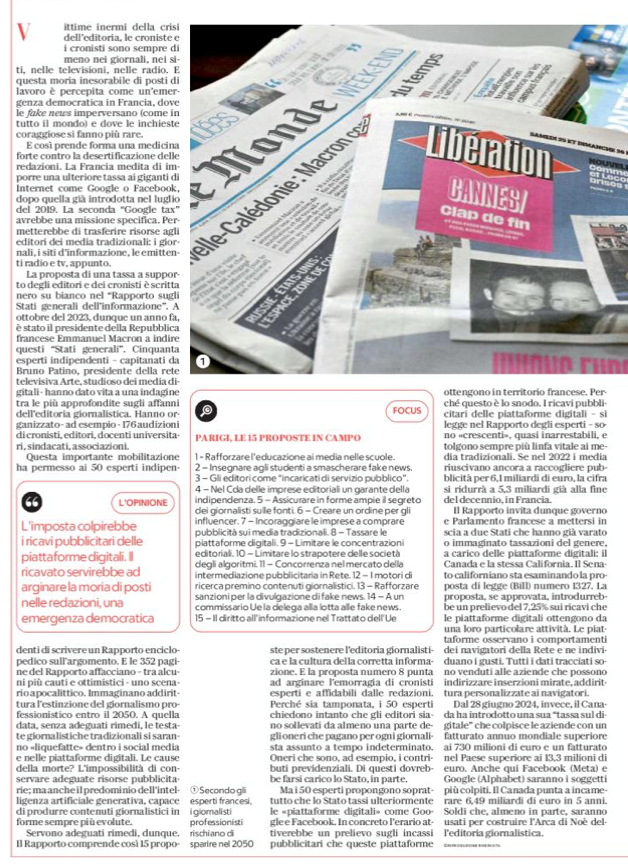
Only Canada has passed a web tax and California is considering it (AF Repubblica, 7 October 2024) .
Italy, as usual, has adopted a convoluted and complicated path :
- In October 2024, quietly, Italy had passed a digital tax targeting Meta, Google and Amazon
- Then in December 2024, it seemed that the Web Tax in Italy would be limited to groups exceeding EUR 750 million in value and thus only to network giants.
- In reality : the Web Tax was foreseen in the draft Budget Law 2025 : paragraph 1 of Article 4 of the draft Budget Law 2025, by amending paragraph 36 of Article 1 of Law 145/2018, simply eliminates the revenue limit to the application of the web tax, which, thus, becomes a tax on revenues to which all companies operating in the sale of digital services through the internet are subject.
With effect from January 2026.
The difference is substantial because all companies, even the smallest, and even start-ups still making a loss, that want to sell digital services in Italy will have to pay a 3% tax on sales revenue.
But of course this is not the end of the story!
Conclusion :
a divided continent and Trump’s return to power have dealt the death blow to the global minimum tax, Donald Trump, in fact, had already cancelled the Global Minimum Tax for the USA (February 2025).
And in April 2025 came this statement from the Vance- Meloni meeting in Rome:” Italy is with the United States to oppose “discriminatory” taxes on technologies” (translated into concrete facts, the Italian web tax will be eliminated).
The confirmation, at European level, came in June 2025: large American companies will be exempted from the OECD Global Minimum Tax established by an agreement of the G20 under the Italian presidency at the time of Mario Draghi.
Read also : The agreement reached at the G7 on the exclusion of American digital giants from paying the Global minimum tax (Gmt) is a cave-in (to try to avoid 50% duties ).
No longer able to focus on a web tax, European governments should aim at tax harmonisation ( this article by Federico Fubini on the subject is illuminating: Dublin’s tax secrets: why Ireland is the White House’s Trojan horse (and hurts Italy)).
Otherwise Amazon will continue undisturbed to dominate the European non-food market by competing unfairly with rival companies, in total opacity.
This is evident in the chart below.