Compiled 7 June, updated 19 April 2025
In 2022 it seemed that many companies wanted to leave Russia. Two years later it seems that Russia, like wheat, is winning the economic war with the West.
Western companies backtrack on their plans to leave Russia
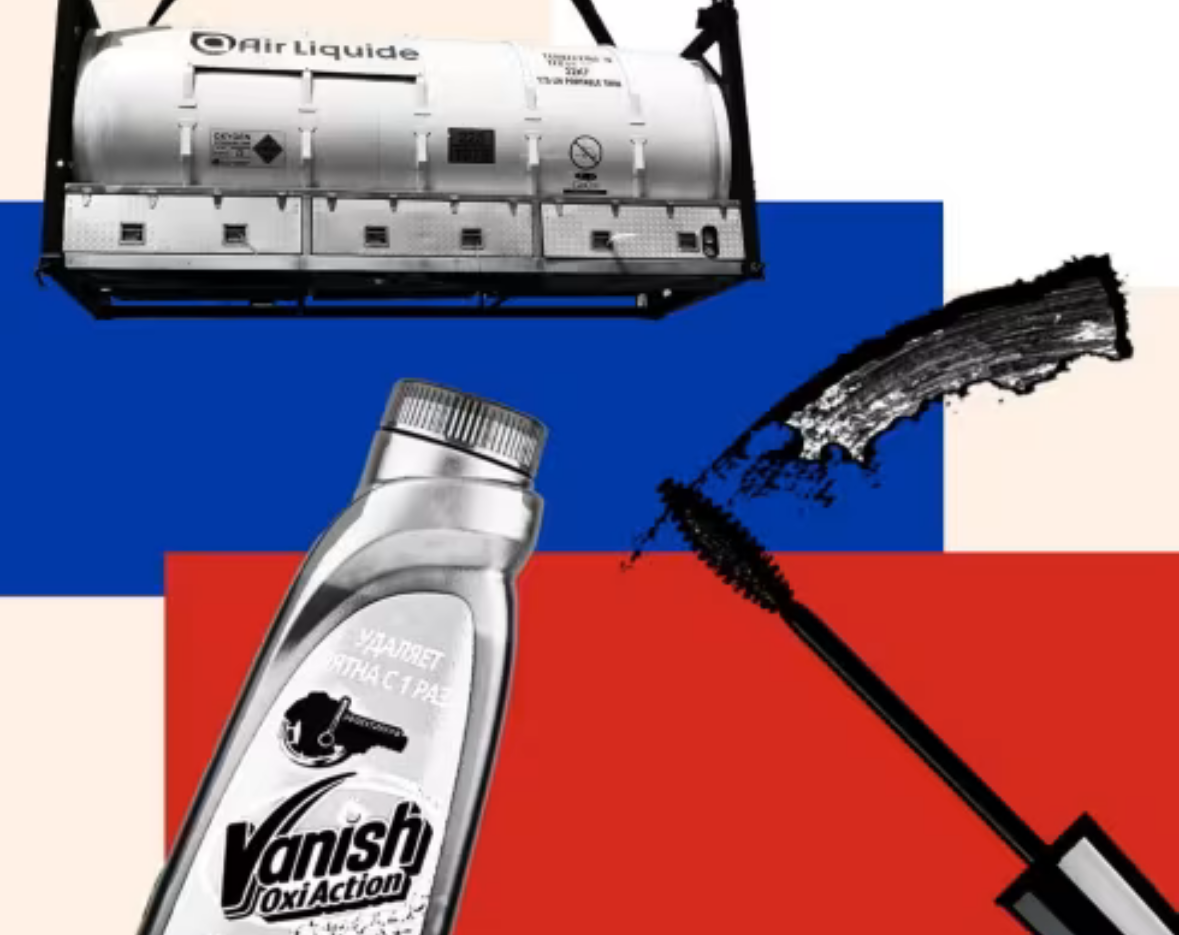
Companies such as Avon Products, Air Liquide and Reckitt remain in the country as bureaucratic obstacles to exit increase © FT montage/Alamy/Dreamstime/AFP via Getty Images
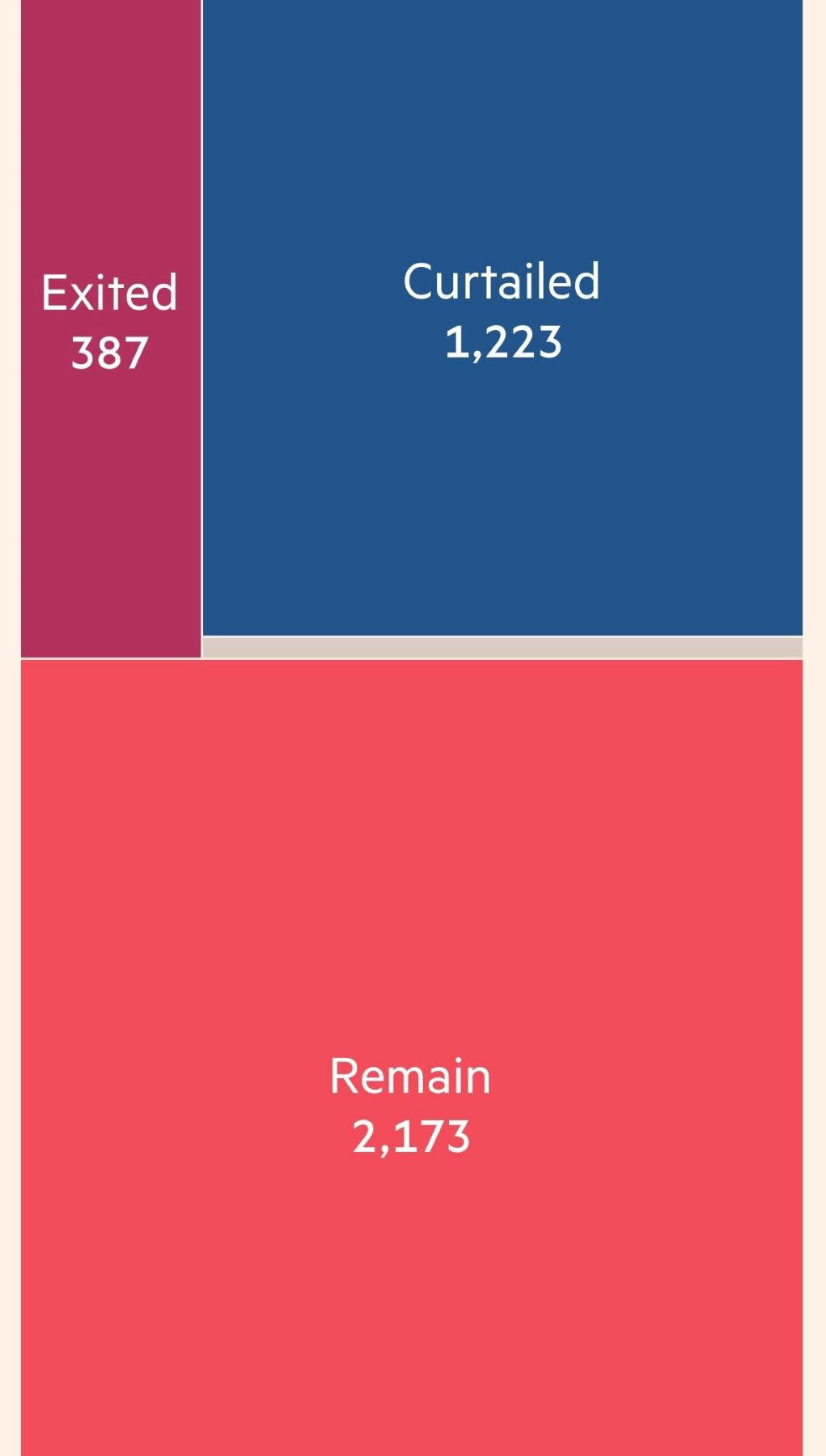
Western companies, including Avon Products, Air Liquide and Reckitt, have remained in Russia despite declaring their intention to leave after the invasion of Ukraine, as bureaucratic hurdles rise and consumer business picks up. The Natura-owned cosmetics brand, the French producer of industrial gases and the UK consumer group that makes everything from painkillers to condoms are among the hundreds of Western groups that have remained in the country since the full-scale invasion in 2022. “A lot of European companies have really been caught between a rock and a hard place,” said an executive working with Western companies in the country. “They said they would leave. They were presented with a choice of buyers that was unacceptable to them.” Overall, more than 2,100 multinationals have remained in Russia since 2022, the Kyiv School of Economics found, compared to about 1,600 international companies that have left the market or downsized operations.
Shortly after the 2022 invasion of Ukraine, dozens of such groups pledged to reduce their presence in Russia as the West sought to starve the country’s economy and the Kremlin’s war chests of foreign money. But Moscow gradually increased the cost of companies leaving, imposing a mandatory 50 per cent discount on goods from ‘hostile’ countries sold to Russian buyers and a minimum ‘exit tax’ of 15 per cent. It has also been increasingly difficult to find local buyers who are acceptable to both the seller and Moscow and whose involvement does not conflict with Western sanctions.
Air Liquide announced in September 2022 that it had signed a memorandum of understanding to sell its Russian business to the local management team that had run it. However, the deal never received approval from the Russian government, leaving the company in limbo. A Raiffeisen branch in Moscow. The Austrian bank came under fire after the Financial Times revealed its ambitious recruitment plans in Russia.
Below: 2173 companies stayed, 387 left and 1223 reduced their activities. Among the illustrious names of companies leaving Russia is France’s Auchan. While, for example, the Italians include Ferrero.
Multinationals were aware of the travails of Western companies such as Carlsberg and Danone, which had their assets seized after announcing their intention to leave. While Danone was eventually able to reach an agreement to sell the assets at a steep discount, Carlsberg remains locked in a protracted legal battle with Moscow and one of the brewery’s former top executives is in a Russian prison. Alexandra Prokopenko, a fellow at Carnegie Russia Eurasia, said rising wages and a brighter-than-expected economic situation have fuelled a spending boom, making Russia much more attractive to multinationals, particularly in the consumer sector. Prokopenko said a recent wave of nationalisations targeting both foreign groups and local players remained “the main risk for foreign nationals in Russia”, adding, “So if they see this risk as manageable, why don’t they stay?”
PepsiCo announced in March 2022 that it had suspended the sale and production of its flagship drink in Russia, but continues to run a dairy business in the country that employs 20,000 people directly and 40,000 farm workers indirectly. “As a food and beverage company, now more than ever we must remain true to the humanitarian aspect of our business. This means we have a responsibility to continue offering our other products in Russia,’ CEO Ramon Laguarta wrote in an email to employees in September 2022.
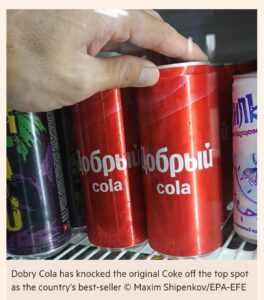
Rival Coca-Cola stopped sending its soft drink syrups to Russia, but the role was filled by the beverage giant’s bottler in the region, Coca-Cola Hellenic, in which it holds a 21 per cent stake. In August 2022, the bottler created an independent Russian company, Multon Partners, whose Russian versions of Coca-Cola brands include Dobry Cola, which ousted the original Coca-Cola from the top spot as the country’s best-seller. “Dobry Cola is an extension of an existing brand on the market, produced and distributed by Multon Partners. It has no connection with The Coca-Cola Company or its brands,” the bottler said. Dobry Cola has shaken the original Coca-Cola from first place as the country’s best-seller.
Among the more than 2,000 companies that have said they will stay in Russia – which include consumer groups Mondelez, Unilever, Nestlé and Philip Morris – some have become more open about their plans. The CEO of Mondelez recently told the Financial Times that investors do not ‘morally care’ if the groups leave the country. But there is a lack of clarity about the alleged divestments of some companies. US short seller Hindenburg Research revealed in March that the products of Polish fashion retailer LPP were still being sold in Russia, despite announcing it had left the market in June 2022 after selling its business to an unidentified Chinese consortium. Although LPP denied wrongdoing, it acknowledged that it had benefited from sales to ‘transfer agents’ to help finance the cost of the transition, a practice that would not be phased out until 2025.
Austria’s Raiffeisen Bank International also came under fire after the Financial Times reported that dozens of Russian-based job advertisements it had published indicated ambitious growth plans in the country, despite its promise to exit the market. A second executive working with Western companies in Russia said there was a noticeable shift in sentiment. Recommended in-depth newsWar in Ukraine Western business, the Kremlin and the war While companies that left in the first weeks after the invasion saw a moral imperative to do so, he said, “the current wave is more about the question: do you really have to leave? Do you want to leave? Some of these companies have built four, five factories in 30 years. They are not going to sell at a 90 per cent discount’.
Activist investor and Unilever board member Nelson Peltz told the Financial Times this year that he had lobbied the consumer goods group, which had been exploring options for a sale, not to leave. “If we pull out of Russia, they will take our brands. I don’t think that’s a good deal,” Peltz said, pointing out that rivals like P&G and Colgate-Palmolive have not left the country. “Why the hell should we?”
Read also : Butter thefts highlight the cost of Russia’s war economy
Below , pictured by © Maxim Shipenkov/EPA-EFE, Debry Cola has ousted Coca-Cola on supermarket shelves.