US net sales increased 5% to $114.9 billion, up from $109.4 billion a year earlier. Comparable sales in the US also increased by 5.3%, excluding fuel sales. E-commerce sales increased 27% globally and 22% in the US, driven in part by in-store pick-up and delivery and the company’s marketplace.
Consolidated operating profit grew 8.2% to $500 million due to higher gross margins, growth in shareholder income, and reduced losses in e-commerce. The company raised its full-year guidance and now expects net sales to increase 4.8% to 5.1%, up from its previous forecast of 3.75% to 4.75%.
‘Underwater Insight’:
Walmart was among US retailers hit by unexpected events in the third quarter: the US ports strike, two major hurricanes, and severe and widespread flooding that devastated Appalachian communities in late September.
At the height of the storms and flooding, some 400 Walmart, Sam’s Club and distribution centres were closed. They have all reopened, except for two Supercenters that the retailer is working to repair and reopen to shoppers, Chief Financial Officer John David Rainey said during an earnings call on Tuesday.
While the storms and the port strike increased sales growth by a small amount and negatively impacted operating income growth by a larger amount, Walmart was still able to deliver on its overall financial picture, CEO Doug McMillion said during the earnings call.
“This was clearly a strong quarter and the changes we have been working on for years continue to pay off,” McMillion said. “We are well positioned to serve people the way they want to be served, whether it’s walking into a shop, picking up an order or receiving it.”
According to Rainey, the popularity of express delivery has meant that more than 30 per cent of customer orders came from people who chose to pay a convenience fee to receive delivery in less than three hours, or even less than an hour.
“Traditionally, Walmart has competed primarily on value, but increased adoption and investment in e-commerce now allows Walmart to compete on the equally important and previously unavailable dimension of convenience,” said Roth MKM analysts led by Bill Kirk in a Tuesday note.
The combination of the company’s strong digital presence, shop improvements and a growing advertising business “is dramatically separating [Walmart] from its traditional physical competitors. Its model is shifting towards a more profitable, less volatile and broader ecosystem,’ Roth analysts said.
Walmart’s US marketplace grew 42 per cent in the third quarter, Rainey said, and the company has now posted growth of more than 30 per cent over the past five quarters. The company said the number of sellers on the platform continues to grow at double-digit rates and the number of SKUs in its marketplace has nearly reached 700 million items.
In addition, the fact that non-food [general merchandise] also performed better in the third quarter, with a low single-digit gain in comparable sales, is another positive for the quarter, said Neil Saunders, managing director of GlobalData, in an e-mailed commentary.
Saunders said that part of this increase was attributable to improved finances of key customers and part of this change was due to strong seasonal sales occasions such as back-to-school, Halloween and various promotions over the past three months.
“There is no denying that the period of inflation and economic challenge has served Walmart well, much more so than many other retailers,” Saunders said. “However, the company has not stood passively by and allowed these benefits to accrue; it has worked hard to adapt its proposition. The fact that it continues to do so as the consumer mood changes and the music changes will keep it in good stead for the last quarter and into the new year ahead.”
There are 4600 points of sale in the USA. And the results were also achieved thanks to an extensive promotional package and the sale of GLP-1 anti-obesity pharmaceuticals.
Below is another analysis by Theo Wayt (The Information).
There you will find my notes and comments in brackets
You can read my personal views on e-commerce in the book Le Ossa dei Caprotti or listen to them in my speech at the Stati Generali dell’Export.
Walmart reported solid third quarter figures today, highlighting what is surely a sore point for Jeff Bezos: no matter how hard Amazon tries, it cannot conquer Walmart.
The Arkansas-based retailer’s revenue grew 5.5% to $169.6 billion and the company showed optimism for the holiday season by raising its full-year sales forecast. Investors are pleased with the results: Walmart’s shares closed up 3 per cent on Tuesday. So far this year, the stock is up 63%, compared to Amazon’s 36%, even though Amazon is trading at a large premium to Walmart on a multiple of projected sales over the next 12 months.
Amazon is growing faster than Walmart, actually: even excluding Amazon Web Services, its revenue grew 9% in the third quarter. But Walmart is still the big kahuna [master, shaman] in the grocery business, despite Amazon’s years of [bungled] efforts to make its way into that territory, for example through its acquisition of Whole Foods Market in 2017.
One area that might worry Walmart is Amazon’s increased emphasis on what it calls everyday essentials such as shampoo and laundry detergent, which Amazon says have been major drivers of e-commerce growth this year thanks to faster delivery times. But so far, this growth seems to be doing more damage to other physical retailers like CVS, which has seen a steady decline in shop sales over the past two years, than to Walmart.
Meanwhile, Walmart is gaining ground in e-commerce. The company does not consistently break down online sales revenue in its results, but Chief Financial Officer John Rainey told analysts Tuesday that e-commerce sales accounted for 18 per cent of total revenue in the third quarter, up from 15 per cent in the same period last year.
Doing a little maths, that would mean Walmart’s online sales were about $30.5 billion from July to September [and 30.5 multiplied by 4 makes $122 billion, although in reality the last quarter in retail weighs much more], up 27% from a year earlier. Although Walmart is still a small player in e-commerce compared to Amazon, its online sales are growing much faster.
This is all to say that Amazon should not get too distracted by responding to China-related e-commerce newcomers like Temu and Shein. Its biggest threat may well still be its long-standing rival [Walmart] in its backyard.
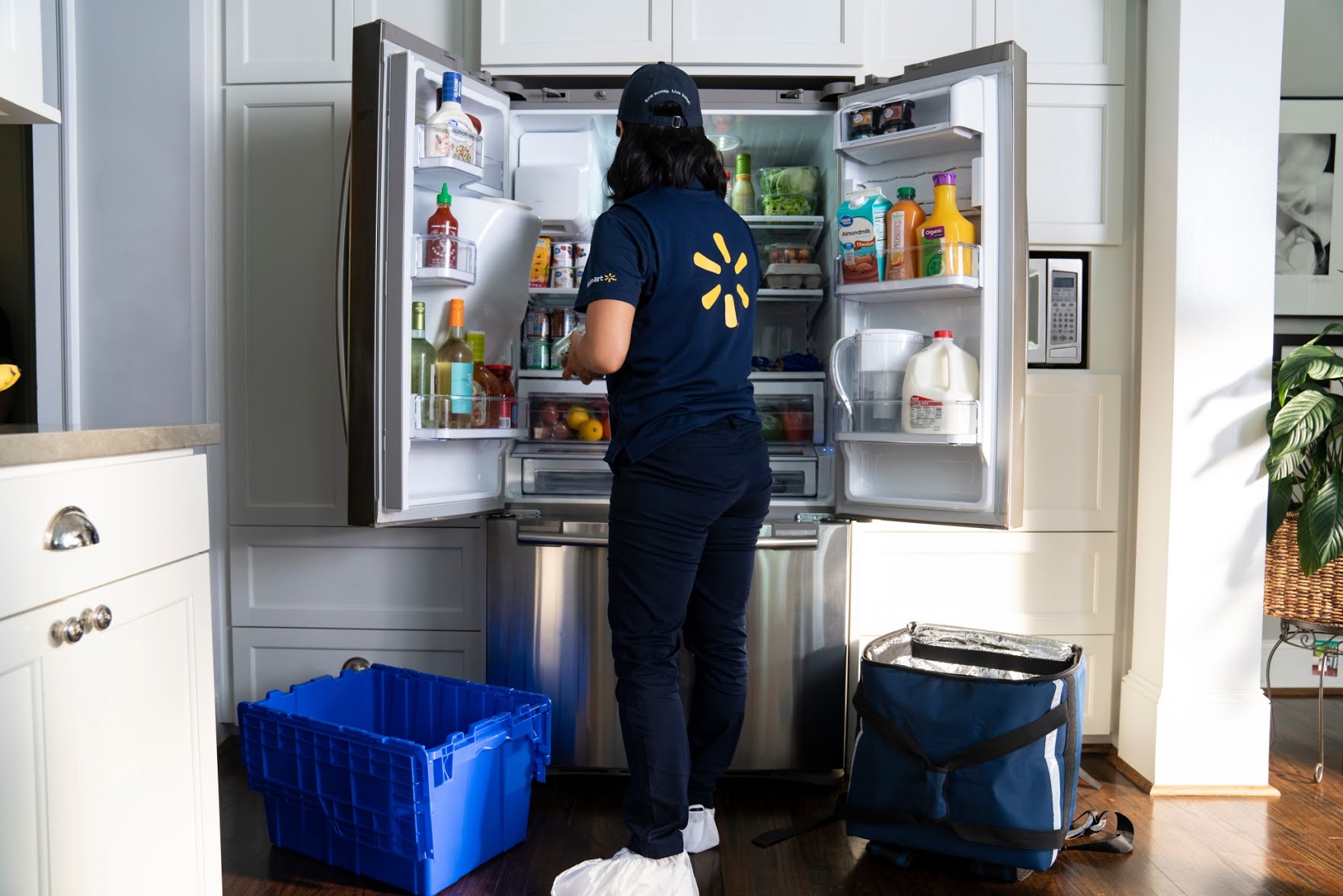
Let’s remember that Walmart’s In Home service allows 45 million homes to receive fresh groceries and essentials delivered to their doorstep or directly to their refrigerators.