Drafted 19 April, updated 16 September 2023
According to the Observatory of the Ministry of Made in Italy (1) pasta prices today range from 2.3 euros per kilo in Milan to 2.2 euros in Rome, from 1.85 in Naples to 1.49 euros per kilo in Palermo. On the other hand, wheat quotations are almost uniform throughout the Peninsula at 38 euro cents per kilo
PAOLO BARONI
19 April 2023
Is it possible that while durum wheat prices fall by 30% the price of pasta increases by 18%? A legitimate doubt: it is Coldiretti who, looking at the trend of average consumer prices, speaks of ‘clear distortion’ and declares war on producers and distributors. The pasta makers obviously defend themselves, explaining that the dynamics of wheat prices do not depend on them, while consumers instead go on the attack and ask the industries to reduce prices, after according to their estimates the prices of spaghetti, penne and tortiglioni have practically doubled in the last year.
According to the Observatory of the Ministry of Made in Italy, pasta prices in Italy today range from 2.3 euros per kilo in Milan to 2.2 euros in Rome, from 1.85 euros in Naples to 1.49 euros per kilo in Palermo, Coldiretti recalls. On the other hand, wheat quotations are almost uniform throughout the Peninsula at 38 euro cents per kilo. If in the first six months of 2022 durum wheat cost 550 euros per tonne, then the price dropped to 450 and in recent days has come to cost between 360 and 390 euros per tonne, depending on the marketplaces and the type of product.
For Coldiretti we are faced with an obvious ‘market anomaly that needs to be investigated, also on the basis of the new legislation on unfair practices to protect the 200 thousand farms that grow wheat’.
“Wheat has prices that fluctuate too much and it is not the pasta industry that determines the price of durum wheat, it is the global market with international mechanisms and quotations,” replied the president of the pasta makers of Unione Italiana Food to Coldiretti. Riccardo Felicetti. “Contrary to what is often said,” he continues, “foreign wheat costs even more than Italian wheat (an average of 10%), especially in this particular historical moment. It is unfortunate that Coldiretti continues to raise doubts about speculation, with the usual intent to confuse our consumers’. Felicetti, however, does not accept the challenge launched by Coldiretti, adding that ‘Italian pasta makers have always supported our country’s farmers with supply chain contracts to guarantee the right price and they buy all the durum wheat available in Italy, and the pasta we buy today is made with wheat bought months and months ago at higher prices. Moreover,’ he adds, ‘when we talk about pasta, a single-ingredient food, it is true that durum wheat and semolina have a significant impact on the final cost, but we must also consider other cost items such as energy, auxiliary materials (primary and secondary packaging) and logistics (local and international transport), all areas where price increases are still evident and high. In spite of everything,’ Felicetti concludes, ‘pasta continues to remain an affordable food, because with half a kilo of pasta and a few other ingredients (pulses and a drizzle of oil), you can prepare a tasty, nutritious and balanced meal for a family of five for less than two euros’.
The president of theNational Consumers’ Union, Massimiliano Dona, takes an entirely different view, citing even higher increases than those estimated by Coldiretti. “Pasta (fresh and dry), since the increases began, i.e. from August 2021,’ he explained to La Stampa, ‘according to the official ISTAT data processed by us, has risen by 35.6%. But the reality is that the same famous brand pasta, which at the time was on offer at the supermarket at 0.59 euro for a 500 gram packet, today sells for 1.29 euro, still on promotion, a jump of 118.6%, more than double’. This is why companies, which in the past months ‘have passed on the higher costs of their bills to end consumers, causing prices to take off, now that electricity and gas cost less, they must do the opposite,’ concludes Dona. ‘Unfortunately, the government’s decision to reduce their tax credits does not facilitate this conduct.
According to Coldiretti today, ‘revenues do not cover costs incurred by agricultural enterprises and put at risk not only sowing but also the country’s food sovereignty. The agricultural areas cultivated with durum wheat, according to the first forecasts of the Ministry of Agriculture for this year, are in decline for an investment of 1.22 million hectares with a reduction of about 2% compared to the previous year. The national production of pasta is 3.6 million tons, equal to about 1/4 of the entire world production,’ concludes Coldiretti, ‘with 200 thousand Italian farms engaged in supplying quality durum wheat to a supply chain that has 360 companies and about 7500 employees, for a total value of about 5 billion euros.
(1) until today I did not know of its existence
(2) prices are much lower than it is said: Le Monde of 19 April 2023 – read below – today gives wheat at €190 per tonne (“the price of wheat has plummeted from €390 to €190”).
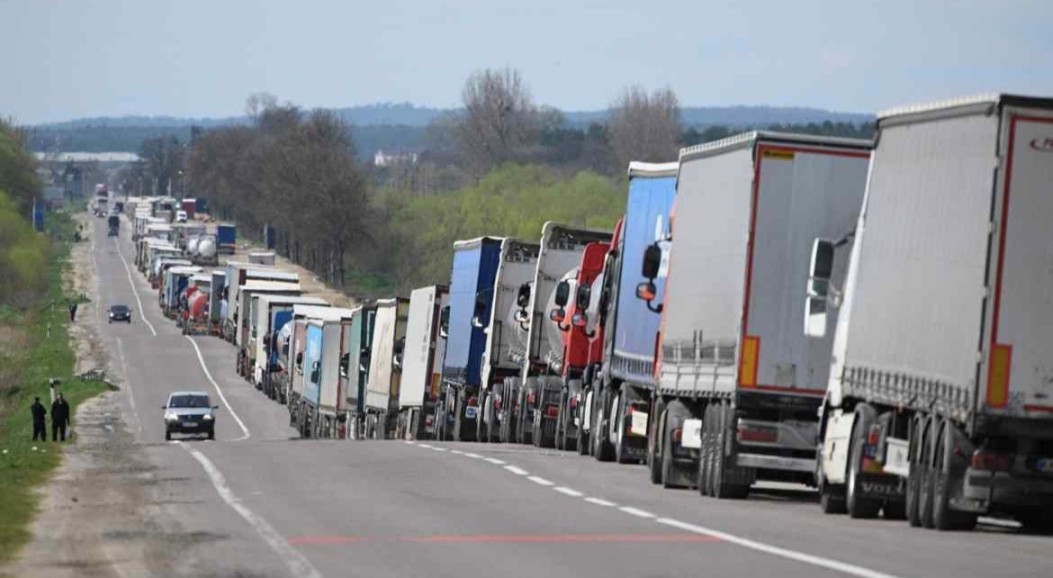
All this is due to the measures to support Ukraine, whose cereals have ‘invaded’ the markets of Central Europe. Wheat imports to Europe grew by 960% in volume between 2021 and 2022 (Le Monde below).
Wheat routes have also changed: wheat passes less and less by the Black Sea and more and more by European roads and railways.
But in defence of the industrialists, it must be added that Coldiretti forgets that stocks exist.
De Cecco, for example, has them, in various silos, outside the company I visited in the days of Esselunga, many years ago.
And the time to dispose of them is never short.
The problems are stockpiling, logistical or political as ‘Russia’s bumper wheat harvest has mitigated costs, bringing Chicago wheat futures to their lowest level in almost three years’.
Read also :
- Ukraine: wheat is blocked due to transport costs
- Pasta, prices rise again
- The second wheat battle: Russia uses it as a geopolitical weapon
- Ukrainian wheat agreement
- Pasta, the price watchdog intervenes on price rises: 17%, the ministry warns
- Pasta Molisana: we have stocks paid for when wheat was at its peak
- Italian authorities refrain from setting a ceiling on pasta prices
- Europe’s aid to Ukraine splits over wheat and grain
- Russian wheat piracy in the Black Sea
- Durum wheat crisis: war between large-scale distribution and industry